What the Chromium Discharge Standard Actually Measures
The chromium discharge standard is the maximum allowable concentration of chromium compounds — most often total chromium and hexavalent chromium Cr(VI) — in industrial effluent leaving a site. As of 2026, the headline global numbers are 0.05 mg/L Cr(VI) in drinking-water sources (WHO), 0.1 mg/L total chromium in US drinking water (US EPA), and 1 mg/L Cr(VI) / 5 mg/L total Cr for EU discharges to surface water (EU, 2005).
Total chromium is the sum of every species in solution: Cr(III), Cr(VI), and any residual metallic or organically complexed Cr. US EPA regulates total Cr at 0.1 mg/L (100 ppb) in drinking water, a level originally set in 1991 on the basis of dermatological effects and retained because Cr(VI) and Cr(III) interconvert in distribution systems (US EPA). Hexavalent chromium is the carcinogenic subset: chromate (CrO₄²⁻) and dichromate (Cr₂O₇²⁻) are anionic, mobile in groundwater, and classified as a known human carcinogen by inhalation (IARC Group 1). The WHO drinking-water guideline for Cr(VI) is 0.05 mg/L (WHO, 2003, 2019).
The two forms are not stable in isolation. Cr(VI) ⇌ Cr(III) equilibria are driven by oxidation-reduction potential (ORP), pH, and dissolved oxygen — a wastewater at pH 2 and +500 mV ORP will hold Cr(VI) in solution, while the same water at pH 9 and +150 mV ORP will reduce and precipitate it. That is why the US EPA standard covers both species and why no permit can be designed around a single number without controlling the redox window upstream.
Major industrial sources include metal finishing, electroplating, stainless-steel pickling, leather tanning and finishing, and landfill leachate (ResearchGate, 2026). In Bangladesh alone, tanneries and landfills dominate the chromium discharge profile, and the same pattern holds across South Asia and parts of East Africa.
Global Chromium Discharge Limits at a Glance (2026)
The table below consolidates the limit tiers a compliance engineer most often meets. Where a jurisdiction publishes only total Cr, the Cr(VI) cell is left blank; in practice, total-Cr permits still get enforced against Cr(VI) exceedances on a case-by-case basis.
| Jurisdiction / Standard | Receiving Body | Total Cr (mg/L) | Cr(VI) (mg/L) | Source |
|---|---|---|---|---|
| US EPA (drinking water) | Tap water / source water | 0.1 | — (covered under total Cr) | US EPA |
| WHO (drinking water) | Drinking-water source | — | 0.05 | WHO, 2003, 2019 |
| EU (surface water) | Aquatic environment | 5 | 1 | EU, 2005 |
| EU (urban sewer) | Municipal WWTP influent | — | 0.1 (typical national) | Member-state rules |
| China GB 8978-1996 (1st class) | Surface water / sewer | 1.5 | 0.5 | GB 8978 |
| China local tier-1 (2024–2025 revisions) | Sensitive receiving water | 0.5 | 0.05 | Provincial standards |
| India CPCB (inland surface water) | Rivers / lakes | 2.0 | 0.1 | CPCB schedule |
| South Africa NEMWA | Water resource | 0.5 (general) | 0.05 (special) | NEMWA |
| Bangladesh DoE (tannery sector) | Surface water | 2.0 | 0.1 | DoE / ResearchGate, 2026 |
EU member states are free to set stricter sector-specific limits. Italy, for example, applies tighter chromium ceilings to tannery discharges than the EU baseline — a recurring pattern where local environmental agencies have pushed Cr(VI) below 0.5 mg/L for tanneries discharging to sensitive waters (EU, 2005). Bangladesh's enforcement emphasis remains on the tannery-cluster CETPs near Dhaka and Savar, with tanneries and landfills identified as the dominant Cr sources (ResearchGate, 2026).
The EU's 2005 aquatic-environment rules are the baseline. The 2009 bioavailability-based framework is the direction of travel: permits are expected to shift from total-Cr compliance toward BLM (Biotic Ligand Model) or DGT (Diffusive Gradients in Thin Films) speciation, which directly measures the bioavailable fraction rather than the acid-digested total (EU, 2009).
Why Hexavalent Chromium Drives Most Compliance Risk
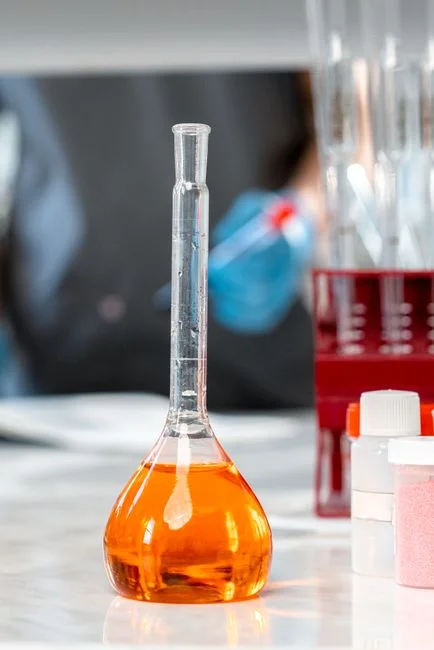
Cr(VI) drives compliance risk because it is the species regulators treat as carcinogenic, mobile, and analytically distinct. Cr(VI) compounds are confirmed human carcinogens via inhalation (IARC Group 1), and chromate is anionic at neutral pH, which is why it migrates through aquifers faster than Cr(III) and why landfill-leachate plumes are so persistent.
Toxicity is two to three orders of magnitude higher than Cr(III). Cr(VI) enters cells through non-specific sulfate channels, where it is reduced intracellularly and generates reactive Cr intermediates that damage DNA. Cr(III) is poorly membrane-permeable and is 100–1,000× less toxic (ResearchGate, 2026).
Analytical sensitivity sets the practical floor. The historical WHO 0.05 mg/L guideline was applied to total chromium because measuring Cr(VI) at low microgram-per-liter levels requires specific methods — 1,5-diphenylcarbazide (DPC) colorimetry at 540 nm, ion chromatography with UV detection, or ICP-MS coupled with a speciation module. Older photometric equipment cannot resolve Cr(VI) below ~0.05 mg/L, which is why some legacy permits still write the limit against total Cr. EPA's 2010 draft Toxicological Review of Hexavalent Chromium is the technical basis for an ongoing Cr(VI)-specific reassessment; when finalized, the 0.1 mg/L total-Cr rule is widely expected to be split into a Cr(VI)-specific MCL in the 0.02–0.06 mg/L range.
Process Chemistry: Reducing Cr(VI) to Cr(III) Before Precipitation
Every compliance-grade treatment train starts with a reduction step. Cr(VI) is soluble across the pH range; Cr(III) is not. The standard two-stage train is: (1) reduce Cr(VI) to Cr(III) under acidic conditions using a stoichiometric reductant; (2) raise pH to 8.5–9.5 to precipitate Cr(III) as Cr(OH)₃, then settle or filter.
Common reductants and their stoichiometric demand:
- Ferrous sulfate (FeSO₄·7H₂O): ~16 g per g Cr(VI). Cheap, but generates ~3–4× more sludge than sulfite routes because the iron co-precipitates.
- Sodium metabisulfite (Na₂S₂O₅): ~3.2 g per g Cr(VI). The default choice above 50 mg/L Cr(VI) inlet. Reaction is fast at pH 2–3.
- Sulfur dioxide (SO₂) gas: ~2.5 g per g Cr(VI). Lowest sludge, but needs scrubbing and certified gas-handling.
Operating window: ORP below +250 mV (typical target +200 to +300 mV) and pH 2.0–3.0 in the reduction reactor, then pH 8.0–9.0 in the neutralization/precipitation tank. Sludge from Cr(III) precipitation is a hazardous waste in most jurisdictions (US RCRA; EU Waste Framework Directive 2008/98/EC) and must be dewatered, stabilized, and consigned to a licensed facility — not landfilled as a raw cake. Inline ORP and pH probes on the reduction reactor are non-negotiable: a +50 mV drift in ORP can move effluent Cr(VI) by an order of magnitude.
An automatic chemical dosing system sized for the peak Cr(VI) loading keeps the FeSO₄:Cr(VI) ratio on target even under feed swings, and a plate and frame filter press brings the resulting Cr(OH)₃ sludge to 25–35% dry solids for licensed disposal.
Treatment Technologies Ranked by Target Discharge Limit
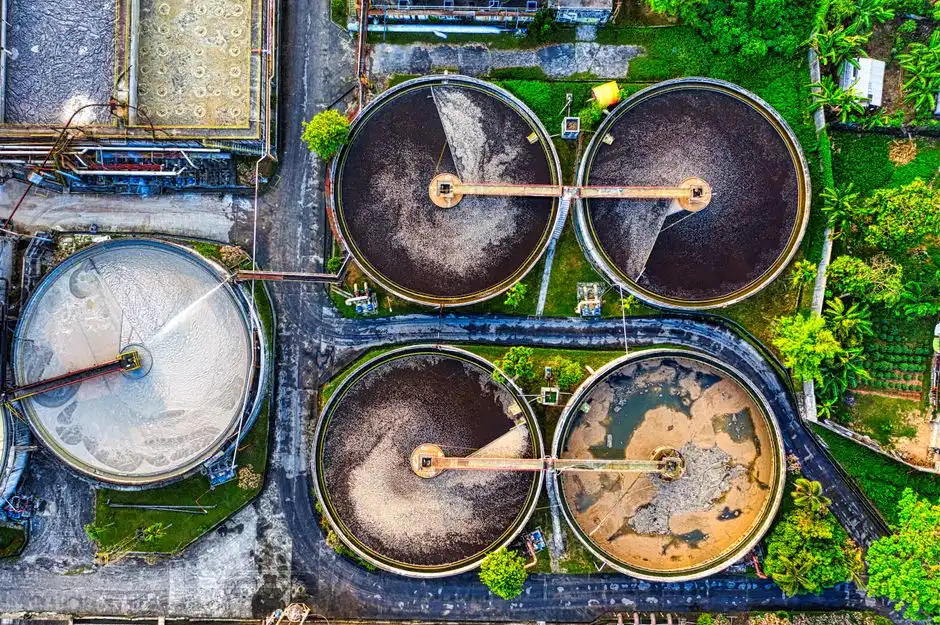
Pick the technology by the number you must hit. The table below ranks the standard options by the residual Cr(VI) and total Cr they can guarantee, with CAPEX and OPEX bands expressed per cubic metre of daily treatment capacity and per cubic metre treated, respectively. Cost figures reflect typical 2025–2026 industrial project data for flows of 50–500 m³/d and are intended for early screening, not bid evaluation.
| Technology | Cr(VI) Effluent | Total Cr Effluent | CAPEX ($/m³/d) | OPEX ($/m³) | Sludge Volume |
|---|---|---|---|---|---|
| Chemical precipitation only (reduction + clarifier) | 0.05–0.5 mg/L | 1–5 mg/L | 50–150 | 0.08–0.20 | High |
| Precipitation + sand filter / DAF polish | 0.05–0.2 mg/L | 0.5–2 mg/L | 80–180 | 0.12–0.25 | Moderate |
| Ion exchange (anion resin, after reduction) | <0.05 mg/L | <0.1 mg/L | 120–250 | 0.20–0.45 | Low |
| Reverse osmosis (after precipitation) | <0.01 mg/L | <0.05 mg/L | 250–500 | 0.35–0.70 | Concentrate stream |
| Adsorption (activated carbon / biosorbent / chelating resin) | <0.05 mg/L | <0.1 mg/L | 80–200 | 0.15–0.35 | Spent media |
| Electrochemical (Fe anode, in-cell reduction) | 0.05–0.2 mg/L | 0.5–2 mg/L | 150–300 | 0.25–0.50 | Low |
| MBR + RO polish (closed-loop reuse) | <0.01 mg/L | <0.05 mg/L | 300–600 | 0.40–0.80 | Concentrate + biosolids |
For ≤0.05 mg/L Cr(VI) compliance — the WHO drinking-water-source tier and the strictest local Chinese and South African rules — the practical train is reduction → precipitation → sand filter or DAF → ion exchange or RO polish. The MBR + RO combination is justified when the site also needs water reuse at >70% recovery, but the concentrate still needs Cr control. An industrial RO system as the terminal step is the only way to guarantee single-digit microgram-per-liter total Cr, and an MBR membrane bioreactor upstream protects the RO membrane from organic fouling when treating mixed streams such as tannery effluent.
OPEX for ion exchange is dominated by resin regeneration brine (NaCl + NaOH) and resin replacement every 2–5 years — see the field data in the ion exchange OPEX breakdown for a 2026 cost stack. MBR effluent quality for the upstream biological step is documented in the MBR effluent quality specifications guide.
Monitoring, Sampling, and Documentation for an Audit
A defensible chromium compliance file starts with online instrumentation on the reduction reactor. Install redundant ORP and pH probes with high/low alarms set at ORP < +300 mV and pH 8.0–9.5 before the clarifier — a single probe failure is the most common audit finding in tannery and electroplating inspections.
Daily field screening: 1,5-diphenylcarbazide (DPC) colorimetric test on the clarifier overflow, detection limit ~0.05 mg/L Cr(VI), run by a trained operator. Weekly confirmation: an accredited lab ICP-MS run for total Cr and Cr(VI) by ion chromatography, both at sub-0.01 mg/L detection limits. For permit reporting, use 24-hour flow-proportional composite sampling per ISO 5667-10; grab samples are acceptable only for spot checks or upset-event documentation.
Chain-of-custody forms, calibration logs for the online probes (weekly two-point check, quarterly third-party verification), and hazardous-waste manifests for the filter-press cake are the documents an inspector will request first. South Africa's NEMWA metal discharge standards compliance checklist is a useful template even outside South Africa because it lists the same records in the same order a regulator expects to see them.
2024–2026 Regulatory Outlook: Where Chromium Standards Are Headed
US EPA is finalizing its Toxicological Review of Hexavalent Chromium. When complete, a Cr(VI)-specific MCL in the 0.02–0.06 mg/L range is plausible, replacing the current 0.1 mg/L total-Cr rule (US EPA, 2010 draft). Sites that currently meet 0.1 mg/L total Cr by precipitation alone will need ion exchange or RO polish to meet a Cr(VI)-specific limit.
EU regulators are moving from total-Cr to bioavailability-based limits (EU, 2009). Future permits are expected to require BLM (Biotic Ligand Model) calculations or DGT passive samplers to demonstrate compliance, not just acid-digested total Cr. The implication: a site can be compliant on total Cr but fail on bioavailable Cr if chelating agents (EDTA, citrate, gluconate) from upstream processes keep chromium in solution at neutral pH.
China revised its GB 8978-1996 framework through 2024–2025 provincial updates. Several tier-1 surface-water zones now set total Cr ≤ 0.5 mg/L and Cr(VI) ≤ 0.05 mg/L — a de facto alignment with the strictest EU and WHO values. Bangladesh continues to focus enforcement on the tannery-cluster CETPs near Dhaka and Savar, with audits targeting both effluent quality and Cr mass-balance reconciliation (ResearchGate, 2026).
Frequently Asked Questions
What is the chromium discharge standard in drinking water?
0.1 mg/L total Cr under the US EPA drinking-water rule, and 0.05 mg/L Cr(VI) under the WHO drinking-water guideline (WHO, 2003, 2019).
What is the EU limit for hexavalent chromium in industrial discharge?
1 mg/L Cr(VI) and 5 mg/L total Cr to surface water under the EU 2005 baseline; member states can set stricter sector-specific values, and tannery effluent in several member states is held to ≤ 0.5 mg/L Cr(VI).
How do you remove hexavalent chromium from wastewater?
Reduce Cr(VI) to Cr(III) at pH 2–3 with FeSO₄ (~16 g/g) or Na₂S₂O₅ (~3.2 g/g) while holding ORP below +250 mV, then raise pH to 8.5–9.5 to precipitate Cr(OH)₃. Polish with ion exchange or RO if the target is below 0.05 mg/L Cr(VI).
Is chromium sludge hazardous?
Yes. In the US, Cr-bearing sludge falls under RCRA hazardous-waste codes; in the EU it is classified under the Waste Framework Directive 2008/98/EC. The sludge must be dewatered, stabilized, and sent to a licensed disposal facility.
What is the difference between total chromium and hexavalent chromium in a permit?
Total Cr is the sum of all chromium species in the sample after acid digestion; Cr(VI) is the carcinogenic subset measured by a selective method such as DPC colorimetry or ion chromatography. Most modern permits set both a total-Cr ceiling and a tighter Cr(VI) ceiling.
Related Equipment
- MBR membrane bioreactor — specifications, capacity range, and technical data