What a Spray Painting Wastewater Treatment Supplier Actually Delivers
A spray painting wastewater treatment supplier designs, builds, and commissions systems that remove paint overspray, suspended solids, COD, and solvents from wet spray-booth scrubber water. In 2026, a complete scope covers influent characterization, dissolved air flotation (DAF) with coagulant dosing, sludge dewatering, and optional biological or zero-liquid-discharge (ZLD) polishing to meet limits such as EPA 40 CFR 437 (TSS ≤52 mg/L) or China GB 8978-1996 Class I (COD ≤100 mg/L). Anything narrower than that — a DAF skid alone, a chemistry quote without a mass balance, a filter press without a sludge-handling plan — is a partial scope dressed up as a turnkey package.
The supplier's job runs in this order: on-site water analysis → jar-test chemistry selection → equalization and pH correction → DAF or equivalent separation → sludge thickening and dewatering → optional bio/RO polish → commissioning, operator training, and discharge sign-off. A credible 2026 vendor begins with a water analysis before sizing anything; Lenntech's standard pre-engineering protocol — sampling the actual scrubber water, not relying on generic paint-shop averages — is the baseline any shortlist should require (per Lenntech process, 2026). Equally, paint-specific operating history is the differentiator that generic industrial-WWTP builders cannot match; ALAR has been building paint and coatings wastewater systems since 1970, which is 55 years of accumulated jar-test data, sludge-handling know-how, and failure modes that a new entrant has not had time to accumulate (per ALAR company history, 2026).
Two wastewater streams must be addressed separately or jointly, and a supplier who conflates them is signaling inexperience. Water-soluble paint (electrodeposition, waterborne primers) carries high COD and dissolved organics but is amenable to coagulation and biological polishing. Non-water-soluble paint (solvent-borne topcoats, lacquers, 2K polyurethanes) generates a floating film and emulsified oil that demands a DAF or electrocoagulation step first. Most modern automotive and appliance coating lines run both streams through the same scrubber, so the proposed system must handle emulsified oils, isocyanates, and dissolved resins in a single train — not two parallel ones.
Spray Booth Wastewater Characteristics Buyers Should Hand to Suppliers
Wet-booth scrubber water is not generic industrial effluent, and treating it as such guarantees a non-compliant discharge. A typical 2026 automotive or appliance-coating booth produces an influent with SS 500–5,000 mg/L, COD 1,000–10,000 mg/L, TDS 50–500 mg/L, pH 6–9, plus trace xylene, toluene, and MEK from solvent-borne topcoats, and measurable Zn, Ni, Cr, and Pb from anti-corrosion primer layers (HydropureWater field data, 2026). The pollutant profile varies hour by hour because robotic spray patterns, color changes, and booth downtime all change the paint-to-water ratio entering the scrubber.
Flow variability is just as important as concentration. A single robotic spray booth discharges 2–10 m³/h of scrubber water; a full automotive paint line with primer, basecoat, and clearcoat booths typically runs 20–80 m³/h, with peaks during shift startup when accumulated overspray is washed off booth walls (HydropureWater field data, 2026). The wet-booth water curtain is what makes this stream so heavily loaded: it captures 60–90% of paint aerosol before it can reach the stack, transferring the air-emission problem into a wastewater problem. A supplier who sizes only on average flow, not peak wet-shift flow, will underspecify the equalization tank and overload the DAF on day one.
Three contaminant classes are routinely missed in buyer-supplied water analyses. Phosphates from pretreatment and phosphating rinses (often 5–50 mg/L) can precipitate with coagulants and blind the DAF. Surfactants from defoamers and booth detergents (1–20 mg/L) stabilize emulsions and defeat gravity settling, which is why DAF — not a lamella plate — is the correct primary separator. Isocyanates from 2K polyurethane topcoats are reactive, low-concentration, and toxic; they demand prompt hydrolysis in equalization and should appear on the supplier's jar-test panel even if laboratory detection is at low mg/L. The table below summarizes the parameter ranges a competent proposal should reference.
| Parameter | Typical Influent | Notes for 2026 Sizing |
|---|---|---|
| Suspended solids (SS) | 500–5,000 mg/L | Drives DAF surface-loading and sludge yield |
| COD | 1,000–10,000 mg/L | Determines whether bio-polish is required |
| TDS | 50–500 mg/L | Rises with water-reuse; triggers RO need |
| pH | 6–9 | Must be corrected to 7–8 before DAF |
| Solvents (xylene, toluene, MEK) | Trace–200 mg/L | Strip or biologically oxidize |
| Heavy metals (Zn, Ni, Cr, Pb) | 1–50 mg/L total | From primer coats; limits per 40 CFR 437 |
| Phosphates | 5–50 mg/L | From pretreatment rinses; can blind DAF |
| Flow per booth | 2–10 m³/h | 20–80 m³/h for full coating line |
Core Treatment Stages a Supplier Should Specify in 2026
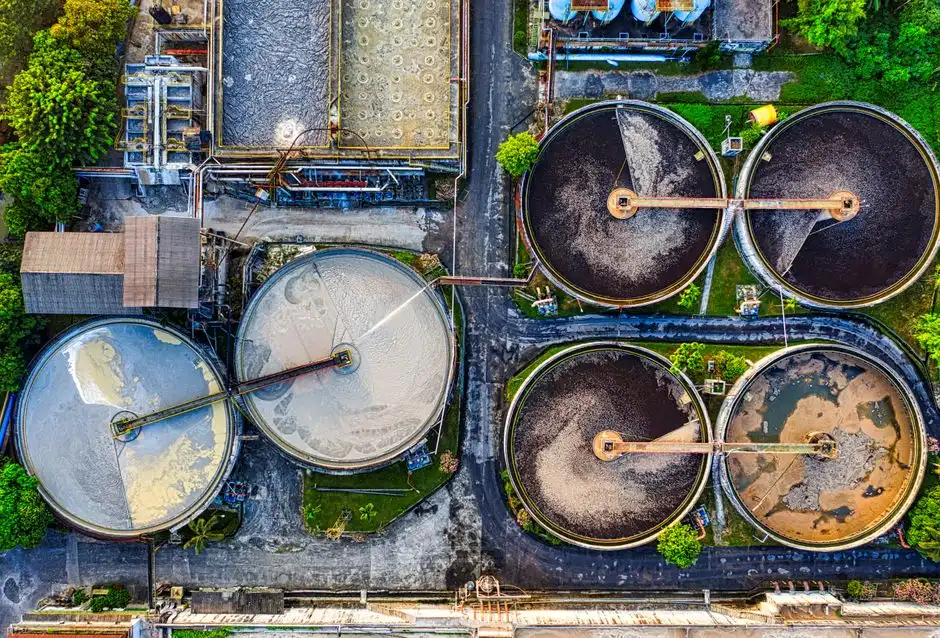
A vendor proposal that does not address each of the stages below — with concrete numbers, not generic phrases — is incomplete. The 2026 process train for spray-booth water is well established, and the sizing parameters are narrow enough that a serious engineer can spot hand-waving within a minute.
Stage 1 — Equalization and pH adjustment. Booth flows are pulsating because spray cycles, color changes, and shift breaks do not produce a steady hydraulic load. A correctly sized equalization tank with 8–24 hours of hydraulic retention time (HRT) is the buffer that lets every downstream unit run at design point. pH correction to 7.0–8.0 with NaOH or H₂SO₄ is done in the same tank or in a dedicated chamber ahead of coagulation.
Stage 2 — Coagulation and flocculation. The 2026 industry-standard chemistry is polyaluminum chloride (PAC) at 50–200 mg/L followed by anionic polyacrylamide (PAM) at 1–5 mg/L (HydropureWater field data, 2026). Jar-test data from the buyer's actual water must accompany the proposal; a vendor that quotes a single dose "suitable for paint wastewater" without test records is guessing. Dosing is delivered through a PLC-controlled coagulant and flocculant dosing skid with flow-paced metering pumps.
Stage 3 — Dissolved air flotation. DAF is the workhorse for paint-laden water because micro-bubble flotation captures both dispersed paint particles and emulsified oil in a single pass. The 2026 reference is the dissolved air flotation (DAF) system for spray-booth water, which spans 4–300 m³/h in 13 standard models with automatic skimming, 20–40 m³/(m²·h) surface-loading rate, and 50–80 kg/(m²·h) solids loading on the floated sludge. For water-reuse or low-discharge sites, an electrocoagulation alternative for paint-bearing wastewater can be considered, though it carries higher electrode OPEX.
Stage 4 — Sludge dewatering. DAF float is typically 2–5% dry solids — too wet for landfill disposal. A plate-and-frame filter press for paint sludge dewatering brings the cake to 25–40% dry solids, which most municipal and hazardous-waste haulers accept. Belt presses are cheaper but achieve only 18–25% DS and generate more filtrate recycle back to the head of the plant.
Stage 5 (optional) — Biological polish for water reuse. An MBR membrane bioreactor for water-reuse polish with PVDF submerged membrane (0.1 μm pore) drops SS below 10 mg/L and COD below 50 mg/L, suitable for closed-loop scrubber make-up. Compared with cross-flow RO, MBR uses 10–20× less energy but does not remove dissolved salts — see the 2026 BOD removal methods reference for the trade-offs.
Stage 6 (optional) — ZLD via RO + MVR evaporation. For plants in water-stressed regions or under strict local discharge bans, RO concentrate is fed to a mechanical vapor recompression (MVR) evaporator. Capital is heavy (see next section) and is only justified when the alternative is trucking brine off-site or shutting the line.
| Stage | Equipment | 2026 Design Parameter |
|---|---|---|
| 1. Equalization | FRP/Concrete tank, mixer, pH probe | HRT 8–24 h; pH 7.0–8.0 |
| 2. Coagulation | PAC + anionic PAM dosing skid | PAC 50–200 mg/L; PAM 1–5 mg/L |
| 3. DAF | DAF line, 13 models, auto-skim | 4–300 m³/h; 20–40 m/h surface loading |
| 4. Sludge dewatering | Plate-and-frame filter press | Cake 25–40% DS |
| 5. MBR polish (optional) | PVDF submerged membrane, 0.1 μm | SS ≤10 mg/L; COD ≤50 mg/L |
| 6. ZLD (optional) | RO + MVR evaporator | Recovery ≥95%; condensate TDS <50 mg/L |
2026 Compliance Targets the Supplier Must Hit
Discharge compliance is the criterion that turns a vendor comparison from a technical exercise into a procurement decision. A supplier who cannot point to documented projects meeting the buyer's specific local standard is a risk the EHS team will not sign off on. The three benchmarks a 2026 shortlist must cover are China GB 8978-1996 Class I, EPA 40 CFR 437, and EU IED 2010/75/EU.
China GB 8978-1996 Class I sets COD ≤100 mg/L, SS ≤70 mg/L, petroleum ≤5 mg/L, pH 6–9, and total Zn ≤2.0 mg/L, Ni ≤1.0 mg/L, Cr(VI) ≤0.5 mg/L, and Pb ≤1.0 mg/L — the limits applied to most industrial coating lines discharging to municipal sewer or surface water. EPA 40 CFR 437 (Metal Finishing category, frequently applied by analogy to coating lines) sets TSS at 52 mg/L daily max / 31 mg/L monthly avg, O&G at 26 mg/L daily max, and total metals limits for Zn (1.48 mg/L), Ni (2.38 mg/L), Cr (2.77 mg/L), and Pb (0.69 mg/L) (per EPA 40 CFR 437). EU IED 2010/75/EU BAT conclusions for surface treatment require suppliers exporting to EU customers to demonstrate BAT-AEL compliance with documented monitoring — not just a one-off commissioning sample.
For water-reuse loops, 2026 buyers increasingly demand ≤10 mg/L SS and ≤50 mg/L COD for closed-loop scrubber make-up water, which an MBR polish reliably delivers. Buyers should also cross-check the supplier's quoted oil-and-grease numbers against a current 2026 oil and grease discharge limit reference, because O&G limits vary widely by jurisdiction and the wrong number kills a permit application.
How to Compare Spray Painting Wastewater Treatment Suppliers in 2026
Two or three shortlisted vendors will all claim turnkey capability; the framework below is what separates a defensible PO recommendation from a sales-call summary. Each criterion carries a weight the buyer can tune to the project, but the top three should not move.
1. Paint-industry experience (weight 25%). Years building spray-booth systems specifically — not generic industrial WWTP work. The reference benchmark is 50+ years of dedicated paint-and-coatings focus (per ALAR, 2026). A vendor with five years of paint work and 20 years of dairy or textile work is a different risk profile.
2. In-house water analysis and jar-testing before proposal (weight 20%). Lenntech-style pre-engineering — sampling the actual scrubber water, running jar tests, and presenting a chemistry-mass balance before sizing equipment — is the 2026 baseline. A proposal that opens with "based on typical paint wastewater characteristics" without test data should be discounted.
3. Local compliance track record (weight 20%). Documented projects meeting GB 8978, EPA 40 CFR 437, or EU IED with discharge monitoring data the buyer can audit. Ask for the last three reference projects in the same jurisdiction and confirm with the end client, not the vendor.
4. Equipment ownership (weight 15%). Does the supplier manufacture DAF, dosing, and sludge handling in-house, or resell third-party skids? In-house manufacturing shortens lead times by 4–8 weeks and improves spare-parts support — a critical point given that 2026 supply chains for pumps, membranes, and control PLCs are still tight.
5. After-sales support (weight 20%). Response time, remote SCADA monitoring, and operator training packages. Spray-booth chemistry drifts daily with color changes and production mix; a supplier who hands over the system and disappears for 30 days is a production-stoppage risk.
| Criterion | Weight | What "Good" Looks Like in 2026 |
|---|---|---|
| Paint-industry experience | 25% | 50+ years dedicated to paint/coating lines |
| Pre-engineering (water analysis + jar test) | 20% | Sampled and tested before proposal issued |
| Local compliance track record | 20% | 3+ reference projects with discharge data |
| Equipment ownership | 15% | DAF, dosing, sludge handling all in-house |
| After-sales support | 20% | Remote SCADA, 48-h response, operator training |
2026 CAPEX and OPEX Benchmarks for Spray Booth Wastewater Systems
Vendor quotes that do not line up with market ranges are a signal to dig deeper into the scope. The benchmarks below are for turnkey 2026 systems in good-quality carbon-steel or FRP construction,不包括 civil works unless noted (HydropureWater field data, 2026).
DAF-only system (4–50 m³/h, single line). CAPEX $80,000–$250,000. OPEX $0.15–$0.40/m³, dominated by PAC/PAM coagulant ($0.05–$0.12/m³) and off-site sludge disposal ($0.05–$0.20/m³). This is the right answer for sewer-discharge with adequate local limits and no water-reuse requirement.
DAF + biological (MBR) for water reuse (10–100 m³/h). CAPEX $400,000–$900,000. OPEX $0.30–$0.70/m³, including membrane replacement every 5–8 years ($30,000–$80,000 event) and aeration energy. Justified when the local water tariff exceeds $1.50/m³ or the plant has a closed-loop scrubber water-reuse mandate.
Full ZLD with RO + MVR evaporator (20–80 m³/h). CAPEX $1.0M–$2.5M. OPEX $1.20–$2.50/m³. Justified only in water-stressed regions (Middle East, inland China, parts of India) or where local discharge bans force zero-liquid-discharge. Otherwise, the OPEX premium over DAF+MBR ($0.90–$1.80/m³) does not pay back within typical 7-year plant-depreciation horizons.
Hidden costs that routinely blow CAPEX budgets: civil works 15–25% of equipment CAPEX, operator training, first-year consumables, and discharge permit fees. Buyers should ask vendors to break out civil and consumables as separate line items rather than absorbing them into an "all-in" number.
| System Scope | Flow Range | CAPEX (USD) | OPEX (USD/m³) | Typical Justification |
|---|---|---|---|---|
| DAF only | 4–50 m³/h | $80,000–$250,000 | $0.15–$0.40 | Sewer discharge, lenient local limits |
| DAF + MBR (reuse) | 10–100 m³/h | $400,000–$900,000 | $0.30–$0.70 | Water-reuse mandate, high water tariff |
| Full ZLD (RO + MVR) | 20–80 m³/h | $1.0M–$2.5M | $1.20–$2.50 | Zero-discharge regions only |
Frequently Asked Questions
What pollutants are in spray painting wastewater? Suspended solids 500–5,000 mg/L, COD 1,000–10,000 mg/L, TDS 50–500 mg/L, pH 6–9, trace xylene/toluene/MEK solvents, and heavy metals (Zn, Ni, Cr, Pb) from primer coats at 1–50 mg/L total. Phosphates, surfactants, and isocyanates are common hidden contaminants.
Can spray booth water be recycled? Yes. DAF + MBR polish reliably delivers ≤10 mg/L SS and ≤50 mg/L COD, suitable for closed-loop scrubber make-up water and reducing fresh-water consumption by 60–90%.
How much does a spray painting wastewater treatment system cost in 2026? CAPEX ranges from $80,000 for a small DAF-only system (4–50 m³/h) to $2.5M for a full ZLD system (20–80 m³/h), excluding civil works at 15–25% of equipment cost.
Is DAF enough on its own for spray booth effluent? For sewer discharge to a POTW with lenient local limits, DAF alone usually meets compliance. For water-reuse loops or strict standards (China GB 8978 Class I, EU IED BAT-AEL), DAF must be followed by biological (MBR) or ZLD polishing.
How do I choose between DAF-only, DAF+biological, and ZLD? Decision rule: if discharge limit is ≥200 mg/L COD and there is no water-reuse requirement, DAF-only. If water-reuse or COD ≤100 mg/L is required, DAF+MBR. If zero discharge is mandated by local regulation or water cost exceeds $3/m³, full ZLD.