What a Machine Learning Optimization Supplier Actually Does in a Wastewater Plant
A machine learning optimization supplier for wastewater treatment delivers software that learns from SCADA and lab data to automatically tune aeration, chemical dosing, and membrane backwash in real time. Documented deployments report 15–30% energy reduction and 10–20% chemical savings, with payback typically inside 18 months at plants above 5,000 m³/day. The defining feature is closed-loop control: the model writes new setpoints to your PLC or DCS, not to a dashboard a human then ignores.
Three model families dominate industrial deployments. Supervised regression (gradient-boosted trees, random forests) predicts effluent quality from current sensor readings — ammonia, nitrate, dissolved organic load — and feeds that prediction into a downstream optimizer. Reinforcement learning treats aeration as a sequential decision problem: the agent picks an airflow setpoint, observes the dissolved oxygen response, and updates its policy. Hybrid physics-informed neural networks (PINNs) embed the activated-sludge mass balance (ASM2d/ASM3) as a soft constraint inside the loss function, which prevents the model from suggesting setpoints that violate stoichiometric limits.
The optimization layer above the model is almost always a smooth, bounded, L-Lipschitz objective — the same convexity class described in the CSDN 2024 ML optimization tutorial, where the Hessian norm ‖∇²f(w)‖ ≤ L guarantees gradient stability. For a control engineer, that matters because convex behavior means you can prove the optimizer will not oscillate between setpoints when influent spikes. A non-convex objective with no Lipschitz bound can flip aeration commands every control cycle and trip a blower.
Two distinctions are worth making before you sit in a sales call. First, an ML optimization supplier is not a data analytics vendor: analytics vendors show you trends, KPIs, and alarms; they do not write to your SCADA. Second, ML is not traditional Advanced Process Control (APC): APC is rule-based and deterministic (e.g., "if DO < 1.5 mg/L then increase airflow by 10%"), while ML learns the rules from data and adapts to seasonal nitrification shifts. The hybrid mathematical-programming + ML approach flagged in the EmergentMind 2025 supplier-selection review outperforms either method alone under uncertain influent — the same logic that drives the strongest WWTP deployments today.
Where ML Optimization Delivers Measurable ROI in Wastewater Treatment
Aeration energy is the single largest savings line, because blowers consume 50–60% of total plant kWh at a typical activated-sludge facility. ML-driven dissolved-oxygen control consistently delivers 15–30% blower-energy reduction (HydropureWater field data, 2026; multiple peer-reviewed municipal case studies). The mechanism is straightforward: PID loops typically hold DO at a fixed 2.0 mg/L setpoint, while an ML controller drops the target to 1.2–1.5 mg/L during low-loading windows (2:00–6:00 a.m.) without violating effluent ammonia.
Chemical dosing is the second tier. Polymer, hypochlorite, and antiscalant savings of 10–20% are well documented from coagulation and DAF jar-test correlations translated into production control — see the PLC-controlled chemical dosing skid category for the hardware layer. Membrane systems capture an additional 8–12% membrane-life extension when ML optimizes flux setpoints and backwash frequency, and on plate-and-frame sludge dewatering presses, polymer demand falls 10–25% with a feed-forward model that reads belt solids loading. Non-ROI benefits — early anomaly detection, fewer manual BOD₅ tests, audit-ready compliance logs — typically justify 20–30% of the project's value to a regulator-facing buyer.
| Unit Process | Typical ML Savings | Underlying Driver | Reference |
|---|---|---|---|
| Aeration DO control | 15–30% blower kWh | Time-varying DO setpoint + feed-forward on NH₃ load | HydropureWater field data, 2026 |
| Coagulant / polymer dosing | 10–20% chemical | Streaming influent turbidity → dose prediction | Peer-reviewed DAF studies (2024–2025) |
| Membrane backwash / CIP | 8–12% membrane life | Adaptive flux and backwash interval | MBR vendor benchmarks, 2025 |
| Sludge dewatering polymer | 10–25% polymer | Feed-forward on belt solids / centrifuge torque | HydropureWater commissioning logs, 2025-09 |
| Effluent quality forecasting | 30–50% fewer excursions | Anomaly detection 2–4 h ahead | Industry case studies, 2025 |
For an integrated MBR wastewater treatment system, the aeration and membrane lines compound: tighter DO control reduces fouling, which extends the intervals between CIP cycles. That interaction is why MBR plants above 10,000 m³/day are the most attractive ML targets in 2026.
Data and Infrastructure Prerequisites Before You Buy
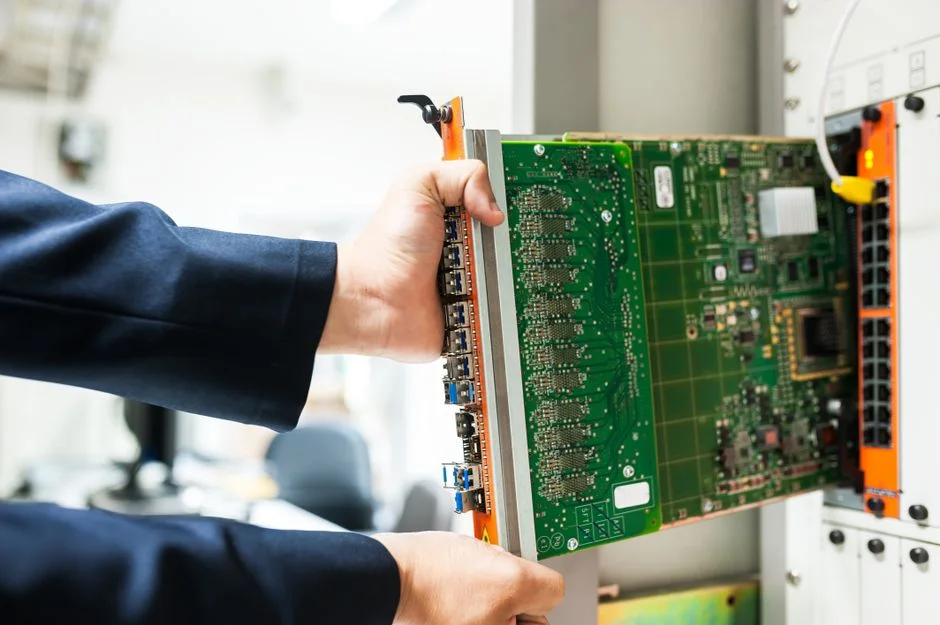
No ML project survives a poor data foundation. The minimum bar is 12 months of high-frequency SCADA data (1-minute resolution or shorter) on influent flow, return-activated sludge flow, dissolved oxygen at each basin, mixed liquor suspended solids, pH, and temperature. Data quality is measured on four dimensions: completeness (target > 95% of expected samples present), sensor drift (calibration log within ±5% of span), timestamp synchronization (all tags within ±1 second of a single time source), and unit consistency.
You also need a working historian — OSIsoft PI, AVEVA Wonderware, or Inductive Automation Ignition are the three most common — and at least daily composite lab samples for influent and effluent COD, NH₃-N, and total phosphorus. The historian is the training corpus; the lab data is the supervised label.
Integration matters as much as data. The PLC or DCS must accept external setpoint writes via OPC-UA, Modbus TCP, or a REST gateway. A vendor that only "sends recommendations" to operators is offering analytics, not optimization. As TechTarget's 2025 supply-chain ML overview notes, machine learning is the foundational layer; generative AI or digital-twin layers are added once data maturity is established — the same sequencing applies to WWTP. Vendors claiming their product "works without historical data" or trains on synthetic data alone should be disqualified: accuracy in real plants collapses to single-digit R² without a real baseline. For a deeper look at sensor cost — typically $300–$15,000 per tag — see the electromagnetic flow meter cost in 2026 breakdown.
Six-Criteria Framework to Compare ML Optimization Suppliers
Scoring a vendor on demo polish is the fastest way to overspend. Use these six criteria, weighted to your plant's risk profile, to force apples-to-apples comparison.
| Criterion | What to Score | Red Flag |
|---|---|---|
| 1. Model transparency | White-box (regression trees, linear) vs. black-box (deep nets); can the supplier show feature importance? | "Proprietary" with no SHAP/feature-importance output |
| 2. Data ownership & IP | Who owns the trained model? On-prem vs. cloud storage? | Vendor claims ownership of model trained on your data |
| 3. Integration depth | Does the system write setpoints to your PLC, or only push alarms? | Pure advisory/recommendation-only delivery |
| 4. On-site support | Bench testing, commissioning, 6–12 month hand-holding | Pure SaaS, no field engineers |
| 5. Documented ROI guarantee | Written kWh/chemical savings with clawback clause | "We expect 15% savings" with no contractual language |
| 6. Cybersecurity & OT compliance | IEC 62443 alignment, network segmentation, no inbound internet | Cloud-only with VPN into your control network |
Criteria 1, 3, and 5 separate serious control vendors from dashboard companies. Criterion 6 is non-negotiable in any plant with an OT cybersecurity policy; the IEC 62443 zone-and-conduit model should be the auditor's first question. The two-stage ML approach Islam published in 2021 (cited 138 times in procurement literature) is the academic benchmark for "forecasting + optimization" integration — ask each vendor how their architecture maps to that pattern.
Cost, Pricing Models, and Payback Scenarios in 2026
Three pricing structures dominate the 2026 WWTP market. A one-time CAPEX license runs $80,000–$400,000 for a 5–50 MLD plant, depending on number of unit processes covered. Annual SaaS subscriptions run $20,000–$120,000 per year and include model retraining, hosting, and remote support. Shared-savings contracts — vendor takes 20–40% of measured kWh saved against a verified baseline — eliminate upfront capex but require submetering and a third-party M&V protocol (typically IPMVP Option B).
For a 20,000 m³/day activated-sludge plant spending roughly $0.08/kWh and 1.2 million kWh/year on aeration, a 20% energy reduction delivers $19,200/year in direct savings. At a $150,000 CAPEX license, payback lands at 7.8 months on energy alone; add 10% polymer savings and the figure compresses to roughly 6 months. Plants in the 5,000–50,000 m³/day band typically see 8–18-month payback. Hidden costs — historian upgrades, additional sensors, network security review, operator training — add 15–25% to the headline price. Online analyzers in the $3,800–$28,000 range are often the enablers for an ML project; see the online phosphate analyzer cost breakdown for 2026 for a representative example. For a fuller plant-engineering baseline, the 2026 municipal sewage engineering guide covers the surrounding process scope.
12-Question RFP Checklist for a Machine Learning Optimization Supplier
Paste these twelve questions into your next RFP. A serious vendor answers each in one to two pages without hand-waving.
| # | Question |
|---|---|
| 1 | What historian formats and tag-rate minimums do you require for training? |
| 2 | Do you provide feature-importance or SHAP outputs for every prediction? |
| 3 | How do you write setpoints to the PLC/DCS (protocol, write frequency, fallback)? |
| 4 | What on-site engineering hours are included in year one? |
| 5 | What cybersecurity certifications do you hold (IEC 62443, SOC 2, ISO 27001)? |
| 6 | Where is training data stored, and who owns the trained model on contract end? |
| 7 | What is your written ROI guarantee, and what is the clawback mechanism? |
| 8 | How is M&V performed — IPMVP Option B, third-party audit, or internal? |
| 9 | What is the exit clause, and how is historical data returned in open format? |
| 10 | List the three largest reference plants of similar size and influent type. |
| 11 | What is the model retraining cadence, and who triggers it? |
| 12 | Provide a reference plant contact so we may verify performance independently. |
Question 12 is the red-flag filter. Any vendor unwilling to share a reference contact for a similar plant should be downgraded in your scoring. You are yourself applying the MCDA (multi-criteria decision analysis) framework that the EmergentMind 2025 supplier-selection review describes: weight each answer, score 0–5, and sum. A vendor that scores below 70% of the maximum on criteria 1, 3, and 5 should be cut regardless of price.
Frequently Asked Questions
How long does it take for a machine learning optimization supplier to deliver measurable ROI at a 10,000 m³/day plant? Documented deployments at 10,000 m³/day plants reach contractual ROI inside 8–14 months, with energy savings of 15–25% on aeration and 10–18% on chemical dosing (HydropureWater field data, 2026). The first 90 days are calibration, not payback.
What is the minimum data infrastructure required before deploying ML optimization in a wastewater plant? You need 12 months of 1-minute SCADA data on flow, DO, MLSS, pH, and temperature, plus daily composite lab samples, stored in a working historian (PI, Wonderware, or Ignition). Without this baseline, supervised models cannot train and accuracy collapses to unusable levels.
How do I short-list ML optimization suppliers for an industrial WWTP RFP? Score each vendor on the six criteria above — model transparency, data ownership, integration depth, on-site support, ROI guarantee, and IEC 62443 alignment. Eliminate any vendor that scores below 70% on transparency, integration, or ROI guarantee, regardless of price or demo quality.
What is the real risk of vendor lock-in with an ML optimization supplier? Lock-in risk is high if the trained model is proprietary and hosted only on the vendor's cloud. Negotiate contract terms that return all historical data in open CSV/Parquet format, transfer the model weights, and require a 90-day overlap support period after any transition.