Start with the Santiago de Cuba site water balance
A data center in Santiago de Cuba needs a site-specific cooling-tower blowdown and wastewater treatment train, but no Cuban water-quality, tariff, discharge-limit, permit-route or concentrate-disposal data was supplied. The defensible baseline is side-stream filtration at 1–5% of circulation flow, followed by ultrafiltration and brackish water reverse osmosis (BWRO) at about 75–80% recovery, with recovered water reused as cooling makeup. Higher recovery may require controlled precipitation and dynamic RO, which achieved about 95% overall recovery with approximately 1 mg/L permeate silica in an industrial case. Santiago de Cuba, Cuba, is not Santiago de los Caballeros, Dominican Republic; Dominican conditions must not be transferred to the Cuban site.
Cooling demand provides only a screening basis. The supplied research reports that cooling represents 80–90% of total site water demand and that a 100 MW facility can reach about 2 million liters of water use per day, according to HydropureWater’s Santiago de los Caballeros article and IDE Tech’s 2026 data-center water-reuse article. Neither figure establishes the project flow. The EPC team must calculate blowdown from measured makeup-water flow, evaporation, cycles of concentration and other water-bearing processes.
HydropureWater reports blowdown at 25–30% of makeup-water flow at four cycles of concentration. That ratio is a preliminary benchmark, not a Cuban design factor. The inventory must include cooling blowdown, once-through cooling discharge, wastewater, housekeeping water and domestic sewage, plus any future AI-load expansion. The Albuquerque data-center blowdown treatment comparison provides a useful structure for separating flows before treatment equipment is sized.
| Design-basis input | Evidence available | Required project action |
|---|---|---|
| Cooling share of site demand | 80–90%, reported by HydropureWater and cited in S2 | Replace with the site water balance |
| 100 MW facility scale | Up to about 2 million L/day, reported by IDE Tech in 2026 | Use only as a conceptual load check |
| Blowdown at four cycles | 25–30% of makeup-water flow, reported by HydropureWater | Recalculate from actual cycles and evaporation |
| Cuban site conditions | No verified flow, quality, tariff, permit or concentrate data supplied | Measure, document and confirm locally |
Characterize the contaminants that drive the design
Scaling chemistry, not suspended solids alone, sets the practical BWRO recovery ceiling for concentrated cooling blowdown. HydropureWater reports blowdown TDS of 1,200–6,000 mg/L, typically 4–8 times makeup-water TDS, and suspended solids of 10–50 mg/L arising from corrosion products, biofilm fragments and airborne dust. The supplied research gives no Cuban baseline, so salinity, osmotic pressure and membrane scaling cannot be finalized from those benchmarks.
The analytical program should measure conductivity/TDS, hardness as CaCO₃, silica, chloride, iron, manganese, free chlorine, pH, alkalinity, suspended solids and temperature. Biological investigation should also address planktonic bacteria, algae and biofilm-formers, which can compromise a hollow-fiber UF barrier and downstream membranes.
Calcium carbonate, calcium sulfate and silica are the principal scaling risks identified in the supplied research. NF may be preferable where selective divalent-ion removal adequately lowers hardness and silica loading, but the comparison requires actual feed chemistry rather than a catalogue claim. A full ion balance, including alkalinity and chloride, is needed to calculate osmotic pressure and assess concentrate composition.
The chemical inventory is a design input, not an afterthought. HydropureWater identifies biocides, corrosion inhibitors, scale inhibitors and dispersants as membrane and discharge constraints; legacy chromate and high-phosphate chemistry is particularly problematic because these substances concentrate in the blowdown. Bidders should identify all existing products, residuals and dosing-control limits. The equipment schedule should then cover the required treatment valves and filter media for the selected flow path.
| Parameter or contaminant | Research benchmark | Design implication |
|---|---|---|
| Blowdown TDS | 1,200–6,000 mg/L; typically 4–8× makeup TDS, per HydropureWater | Controls osmotic pressure and BWRO energy |
| Suspended solids | 10–50 mg/L, per HydropureWater | Requires side-stream filtration and a biological barrier before RO |
| Scaling species | Calcium carbonate, calcium sulfate and silica identified in S2 | Determine recovery through site-specific saturation and mass-balance analysis |
| Treatment chemicals | Biocides, corrosion and scale inhibitors, dispersants, plus possible legacy chromate or high-phosphate residues, per S2 | Document membrane compatibility and discharge implications |
| Cuban baseline chemistry | Not established in the supplied research | Complete the listed analytical program before sizing |
Set the reuse and discharge quality gates
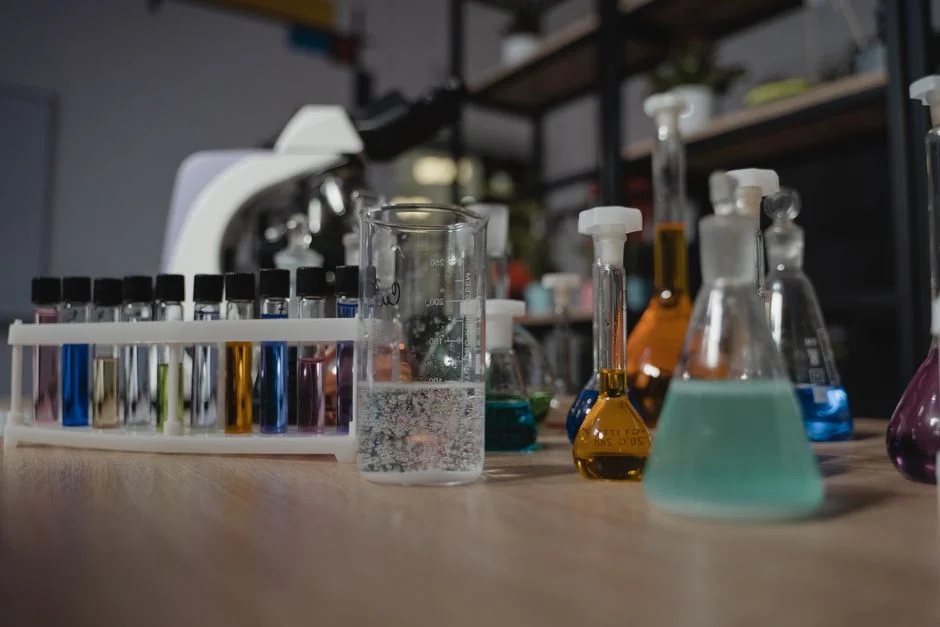
Cooling-water reuse must pass three separate acceptance tests: permeate quality, blended cooling-makeup quality and final discharge quality. HydropureWater publishes preliminary cooling-tower makeup targets of TDS 500–1,500 mg/L, hardness below 200–400 mg/L as CaCO₃, suspended solids 10–25 mg/L, bacterial counts below 10,000 CFU/mL, pH 6.5–8.5 and alkalinity 50–200 mg/L as CaCO₃. These are process benchmarks, not verified Cuban discharge limits.
A permeate result cannot be applied directly to the blended makeup stream without a mass balance covering recovery flow, concentrate flow and any bypass or reuse of treated wastewater. The same applies to discharge: permeate quality does not establish concentrate quality, temperature, treatment chemistry or monitoring compliance.
Open Engineering Inc’s 2026 study notes that tertiary-treated municipal wastewater typically falls within 600–1,200 mg/L TDS. That supports municipal reclaimed water as a screening comparison where a dependable supply exists, but the supplied research does not establish one for Santiago de Cuba. A source-availability investigation is therefore separate from the treatment design.
The permit and discharge dossier must identify applicable requirements for TDS, temperature, suspended solids, pH, treatment chemicals and monitoring. No Cuban numerical discharge limit was established in the supplied research. The EPC team must obtain the applicable rule from the responsible Cuban authority and project consultant before selecting ZLD or assuming sewer acceptance.
| Quality gate | Preliminary criterion | Verification required |
|---|---|---|
| Permeate | Must support the selected cooling reuse and membrane design | Test under proposed recovery and site feed chemistry |
| Blended cooling makeup | TDS 500–1,500 mg/L; hardness below 200–400 mg/L as CaCO₃; suspended solids 10–25 mg/L; bacteria below 10,000 CFU/mL; pH 6.5–8.5; alkalinity 50–200 mg/L as CaCO₃, per HydropureWater | Calculate from actual blending and confirm with the operator |
| Final discharge | No Cuban numerical limit established in the supplied research | Confirm permit, sewer or receiving-route criteria locally |
| Reclaimed-water supply | Tertiary municipal wastewater typically 600–1,200 mg/L TDS, per Open Engineering Inc, 2026 | Prove availability and quality for the Santiago de Cuba site |
If biological control remains unresolved, an on-site chlorine dioxide generator may be evaluated, subject to membrane-element compatibility and local approval.
Build the treatment train around a UF and BWRO baseline
Side-stream filtration, UF and BWRO form the defensible baseline because each stage addresses a different failure mechanism. HydropureWater specifies side-stream filtration at 1–5% of total circulation flow, removal of 10–25 micron solids and an indicated CAPEX range of $50,000–$200,000. This stage controls circulating solids; it does not remove dissolved scaling salts.
UF provides the biological and suspended-solids barrier before RO. HydropureWater reports 0.01–0.1 micron pores, 10–30 psi operation and 90–95% recovery. A hollow-fiber UF system for blowdown pretreatment should be evaluated with automatic backwash and air scour, but the final selection remains subject to feed chemistry, flux, cleaning frequency and temperature.
BWRO then controls dissolved solids and hardness. HydropureWater reports 95–99% dissolved-solids removal, permeate at 10–50 mg/L TDS, 50–85% recovery and 150–400 psi operating pressure. IDE Tech’s 2026 article cautions that conventional brackish water RO commonly reaches 75–80% recovery before scaling becomes unmanageable. For initial design, the project should use approximately 75–80% recovery and test the higher range only against site chemistry and a validated scaling model.
NF should be compared with BWRO when feed analysis shows that selective divalent-ion removal can control hardness and silica sufficiently. NF does not remove the entire dissolved-solids load, so the final cooling-water target and recovery remain mass-balance constraints.
The chemistry program must be documented with the membrane supplier. Legacy chromate, high-phosphate residues and concentrated biocides or inhibitors can foul membranes or create discharge issues. Specify a PLC-controlled antiscalant and pH dosing skid, require bidders to name the proposed chemicals, and include start-up, cleaning and membrane-replacement procedures.
| Stage | Research-defined function | Purchase criterion |
|---|---|---|
| Side-stream filtration | 1–5% of circulation; 10–25 micron solids removal; $50,000–$200,000 indicated CAPEX, per HydropureWater | Guarantee solids removal and operating availability at site flow and chemistry |
| UF | 0.01–0.1 micron; 10–30 psi; 90–95% recovery, per HydropureWater | Provide membrane material, flux, backwash and cleaning design |
| BWRO | 95–99% dissolved-solids removal; 10–50 mg/L permeate TDS; 50–85% recovery, per HydropureWater | Guarantee site-condition recovery, permeate quality and energy use |
| NF alternative | Selective divalent-ion removal | Compare against BWRO using measured hardness, silica, alkalinity and recovery |
| Chemical control | pH, antiscalant and biocide compatibility, per S2 | Name products and provide membrane and discharge compatibility evidence |
An industrial RO system for cooling-water recovery should therefore be tendered as a performance-guaranteed package, not selected from permeate conductivity alone.
Choose higher recovery only when residual risk justifies it
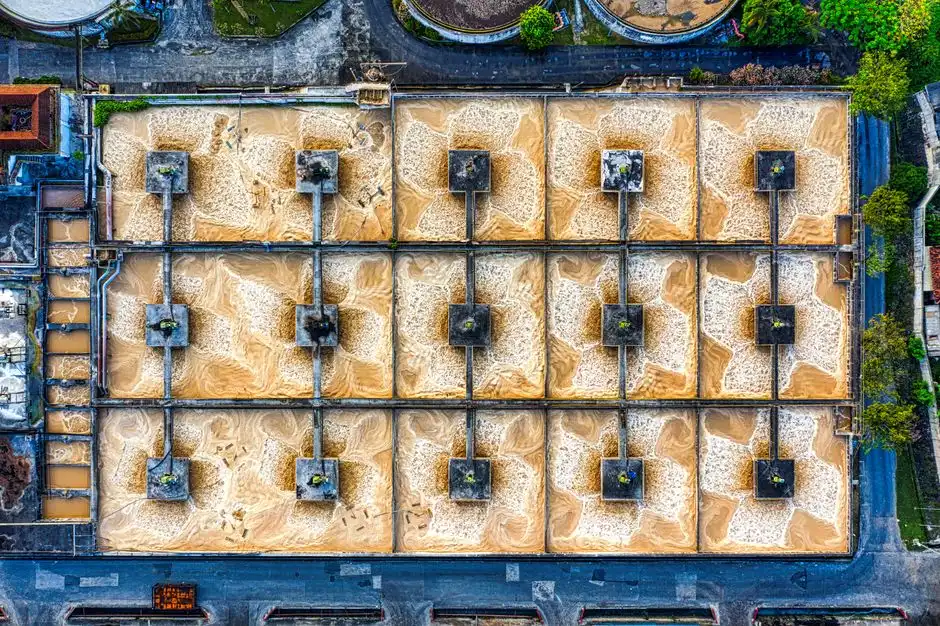
Controlled precipitation should be considered only when the conventional BWRO recovery ceiling leaves an unacceptable concentrate volume or no viable disposal route exists. IDE Tech’s 2026 reference architecture removes calcium carbonate, calcium sulfate and silica as dense solids before dynamic RO; the cited industrial deployment achieved approximately 95% overall recovery and approximately 1 mg/L permeate silica. That case establishes a technical reference, not a guaranteed result for Cuban water.
MVC or MLD is appropriate when the permitted route can accept the resulting concentrated brine. HydropureWater reports MVC recovery of 95–98%, distillate below 10 mg/L TDS and a 20–30% solids brine. Saltworks Technologies’ August 2025 data-center recovery document likewise states that MLD produces a high-salinity, low-volume brine requiring discharge to a sewer or transport to a receiver.
Full ZLD is the fallback where no viable liquid-discharge route exists and the utility can support its capital and energy burden. HydropureWater reports 95–99% overall recovery for combined RO, evaporation and crystallization. The plate-and-frame filter press may be relevant to controlled precipitation solids, but solids classification, handling and disposal still require local confirmation.
| Option | Research benchmark | Go/no-go condition |
|---|---|---|
| Conventional BWRO | Typically 75–80% recovery before scaling becomes unmanageable, per IDE Tech, 2026 | Use first if measured chemistry and concentrate route permit |
| Precipitation plus dynamic RO | Approximately 95% overall recovery and 1 mg/L permeate silica in the cited industrial case, per IDE Tech, 2026 | Require feed-specific precipitation and membrane projections |
| MVC/MLD | 95–98% recovery; distillate below 10 mg/L TDS; 20–30% solids brine, per HydropureWater | Proceed only with an accepted brine route, power and waste-heat review |
| Full ZLD | 95–99% overall recovery, per HydropureWater | Use where no viable liquid-discharge route exists and economics support it |
| Cuban route | No permitted sewer, pond, hauling, groundwater or solids route established | Obtain written local confirmation before design freeze |
Evaluate cost, carbon and payback with Cuban inputs
The only usable cost figures are preliminary screening benchmarks, not Cuban quotations. HydropureWater quotes $250,000–$500,000 installed for a 50,000 GPD blowdown RO system and $1.50–$3.00 per 1,000 gallons in OPEX. The same source gives $1–3 million for 10,000–30,000 GPD MVC and $3–8 million for full ZLD, making route selection a capital decision as well as an environmental decision.
Energy remains a major sensitivity. HydropureWater reports 15–25 kWh per 1,000 gallons for MVC and $5–15 per 1,000 gallons OPEX for full ZLD. Cuban electricity prices, reliability, outages and backup-generation requirements were not supplied, so bidders must price the complete electrical load and include redundancy assumptions.
HydropureWater also reports discharge fees of $5–15 per 1,000 gallons in water-stressed regions. No Cuban water, electricity or discharge tariff was established in the supplied research; these non-local benchmarks must not enter a payback calculation as Cuban inputs.
Open Engineering Inc’s 2026 life-cycle analysis reports that the wastewater scenario has about twice the GWP of the freshwater case, with treatment energy explaining roughly 80% of the difference. Its UF+RO scenario uses more than five times the freshwater scenario’s energy before accounting for the benefits of higher cycles of concentration. The business case must therefore compare water, energy, chemical demand, blowdown volume and discharge charges together.
| Cost or sustainability item | Published screening value | Cuban treatment |
|---|---|---|
| 50,000 GPD blowdown RO | $250,000–$500,000 installed, per HydropureWater | Request a site-specific quotation |
| Blowdown RO OPEX | $1.50–$3.00 per 1,000 gallons, per HydropureWater | Replace with local power, chemical, labor and disposal inputs |
| MVC | $1–3 million for 10,000–30,000 GPD, per HydropureWater | Price locally and check waste-heat integration |
| Full ZLD | $3–8 million; $5–15 per 1,000 gallons OPEX, per HydropureWater | Obtain vendor and local utility inputs |
| Discharge fees | $5–15 per 1,000 gallons in water-stressed regions, per HydropureWater | Do not use without a verified Cuban tariff |
| Carbon | Wastewater scenario about twice the freshwater GWP; energy explains roughly 80% of the difference, per Open Engineering Inc, 2026 | Evaluate with the site electrical and water plan |
The Sorocaba data-center treatment decision framework can inform scenario assembly, but its cost inputs must not be relabeled as Cuban.
Issue a site-specific procurement and compliance checklist
Final sizing should follow a representative-period water analysis, a complete site water balance and local verification of the concentrate route. The tender should include climate data, the electrical profile, waste-heat availability and an inventory of cooling, wastewater and treatment chemicals. These inputs are more defensible than sizing from a regional water-quality assumption.
Require each bidder to guarantee recovery, permeate quality, energy consumption, cleaning frequency, membrane life and concentrate volume at the proposed site conditions. A performance guarantee at catalogue-best conditions is not an acceptable basis. The bidder should provide membrane compatibility with the actual feed analysis and identify antiscalant, biocide, corrosion-control and dispersant products on the equipment schedule.
Supplier due diligence should include comparable tropical or Caribbean reference projects at the proposed scale, operating evidence, membrane-life data and a documented failure-response plan. The wastewater-equipment supplier reliability checklist provides a structure for checking references and documentation, but the acceptance test remains site performance.
| Gate | Evidence required before award | Reason |
|---|---|---|
| Water and process basis | Representative analysis, complete water balance, climate data and chemical inventory | Prevents unsupported scaling and capacity assumptions |
| Commercial performance | Guaranteed recovery, permeate quality, energy use, cleaning, membrane life and concentrate volume | Transfers measurable risk to the supplier |
| Compatibility | Actual-feed membrane evidence and named treatment chemicals | Protects RO performance and reuse quality |
| Experience | Comparable tropical or Caribbean references at proposed scale | Tests operating relevance |
| Cuban compliance | Permit pathway, water-allocation conditions, sewer criteria, groundwater restrictions, hauling, chemical handling and concentrate-route legality | No Cuban permit or disposal route was established in the supplied research |
Frequently Asked Questions
What is the preliminary treatment train for cooling tower blowdown at a Santiago de Cuba data center?
Use side-stream filtration at 1–5% of circulation flow, followed by UF and conventional BWRO at approximately 75–80% recovery. The recovered stream should then be blended to meet the cooling-makeup acceptance matrix. Escalate to controlled precipitation, MVC/MLD or ZLD only after measured scaling chemistry and the permitted concentrate route justify the added complexity and energy.
What does a blowdown treatment system cost?
For initial budgeting, HydropureWater quotes $250,000–$500,000 installed for a 50,000 GPD blowdown RO system and $1.50–$3.00 per 1,000 gallons OPEX. These are preliminary benchmarks, not Cuban prices. Request Cuban quotations based on the measured flow, feed chemistry, required recovery, electrical supply, concentrate route, equipment scope and local operating inputs.
How should treatment capacity be sized?
Capacity depends on measured flow, TDS, hardness, silica, cycles of concentration and the selected concentrate route. The supplied research does not support a definitive Santiago de Cuba flow rate. Bidders should receive the completed water balance, representative feed and blowdown analyses, evaporation basis and disposal constraints, then guarantee treatment performance at the proposed conditions.
What should be checked when selecting a treatment supplier?
Require actual-feed membrane compatibility, site-condition performance guarantees, chemical disclosure, membrane-life evidence and comparable tropical reference projects. Also verify the Cuban permit pathway and each proposed concentrate route before design freeze; the supplied research establishes no Cuban discharge limits, permit procedure or sewer, hauling, groundwater, pond or solids-disposal option.