Industrial Wastewater Treatment in Cebu: 2026 Engineering Specs, Costs & Zero-Risk Compliance Guide
Industrial wastewater treatment in Cebu requires systems capable of 92–97% TSS removal and ≤50 mg/L BOD to meet DENR Administrative Order 2016-08. For food processing plants common in Mandaue and Lapu-Lapu, DAF systems for Cebu food processing effluents remove 95%+ FOG at 4–300 m³/h, while membrane bioreactors (MBRs) achieve near-reuse quality (<10 mg/L COD) for electronics manufacturers. CAPEX ranges from ₱5M for small DAF units to ₱50M+ for centralized MBR plants, with OPEX of ₱15–₱40/m³ treated. Local vendors offer turnkey solutions, but MBR systems for zero-discharge compliance in Cebu require specific pre-treatment for high-strength effluents found in distilleries and tanneries to avoid rapid membrane fouling.
Why Industrial Wastewater Treatment in Cebu is a 2026 Compliance Crisis
DENR Administrative Order 2016-08 (DAO 2016-08) mandates that industrial effluents discharged into Class C inland waters—which include most of Cebu’s major river systems like the Butuanon and Guadalupe—must maintain a Biochemical Oxygen Demand (BOD) of ≤50 mg/L and Total Suspended Solids (TSS) of ≤70 mg/L. Failure to comply results in daily fines ranging from ₱50,000 to ₱2,000,000 per incident, as enforced by the Pollution Adjudication Board (PAB). In 2025, the DENR Environmental Management Bureau (EMB) Region 7 reported a 30% increase in enforcement actions within Cebu’s industrial corridors compared to the national average, driven by the rehabilitation of the Cebu Strait and local water security concerns.
Operational risks reached a peak in early 2024 when a major distillery in Mandaue City was served a Cease and Desist Order (CDO) after its effluent was recorded at 1,200 mg/L BOD, drastically exceeding the 50 mg/L limit. The resulting ₱1.8M fine was secondary to the catastrophic 6-month operational shutdown required to overhaul their primary and secondary treatment stages. For facilities in Mandaue, Lapu-Lapu, and Consolacion, the margin for error has disappeared as the EMB Region 7 transitions to real-time telemetry for large-scale dischargers.
local Cebu City wastewater ordinance 2023-04 has introduced a "Zero Discharge" mandate for new industrial developments and expansions within the Cebu Business Park and South Road Properties (SRP). This policy requires facilities to either achieve 100% water recycling for cooling towers and irrigation or connect to a centralized treatment grid that charges premium volumetric fees. For facility managers, the choice is no longer about "if" to treat, but how to engineer a system that survives the 2026 regulatory environment while remaining cost-competitive.
Cebu’s Top 5 Industrial Pollutants and Treatment Technologies That Work
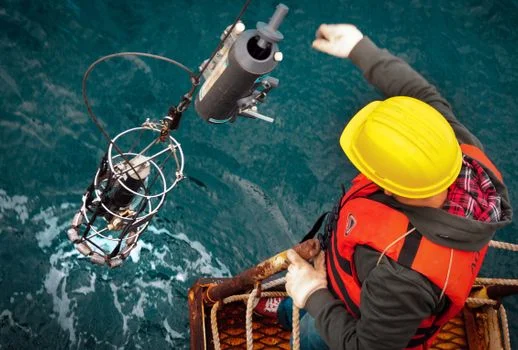
Cebu’s industrial landscape is categorized by high-strength organic loads in food processing and toxic inorganic streams in the electronics and textile sectors. Engineering a solution requires a precise match between the pollutant’s chemical behavior and the separation technology employed. For instance, how Vietnam’s food processing plants solve similar wastewater challenges often involves multi-stage flotation, a strategy now being adopted in the Mactan Economic Zone (MEZ).
In the food processing sector (Mandaue and Lapu-Lapu), Fats, Oils, and Grease (FOG) concentrations often reach 500–2,000 mg/L. Standard grease traps are insufficient for these loads. Dissolved Air Flotation (DAF) systems, utilizing micro-bubbles (20–50 microns) and coagulants like Polyaluminum Chloride (PAC), are the regional standard, achieving 95% FOG removal. Meanwhile, the electronics sector in Cebu IT Park deals with ammonia and copper stripping. Here, Reverse Osmosis (RO) or advanced electrocoagulation for heavy metals is required to meet the strict 0.5 mg/L copper limit set by DAO 2016-08.
| Pollutant | Source Industry | Removal Efficiency | Recommended Tech | CAPEX Range (₱) |
|---|---|---|---|---|
| FOG (500-2000 mg/L) | Food Processing | 95% - 98% | DAF System | 5M – 15M |
| BOD (5000+ mg/L) | Distilleries | 85% - 92% | Anaerobic Digestion | 20M – 60M |
| Chromium/Dyes | Textiles/Tanneries | 99% (Cr) | Resin Adsorption/EC | 8M – 20M |
| Ammonia/Copper | Electronics | 98% (Ammonia) | MBR + RO | 15M – 50M |
| Pathogens | Hospitals/Labs | 99.9% | ClO₂ Generators | 2M – 7M |
For high-strength distillery waste in Consolacion, a single-stage aerobic process will fail due to organic shock loading. These facilities require anaerobic pre-treatment to reduce BOD by 80% before entering an aerobic polishing stage, such as an activated sludge process or an MBR, to reach the final discharge limit of 50 mg/L.
DAF vs. MBR vs. Electrocoagulation: Which System Fits Your Cebu Facility?
Selecting between DAF, MBR, and Electrocoagulation (EC) depends on the physical characteristics of the suspended solids and the desired end-use of the treated water. DAF systems are the "workhorses" of Cebu’s manufacturing sector. They excel at removing low-density solids and emulsified oils that do not settle easily. A DAF system typically requires a footprint of 20–100 m² and operates at a low OPEX of ₱8–₱12/m³, making it the most economical choice for slaughterhouses and snack food manufacturers (HydropureWater field data, 2025).
MBR technology represents the "gold standard" for facilities targeting zero-liquid discharge (ZLD). By combining biological treatment with ultrafiltration membranes (pore size 0.03–0.1 μm), MBRs eliminate the need for secondary clarifiers. This reduces the footprint by 50% compared to conventional activated sludge plants—a critical advantage in land-scarce areas like Mandaue. While CAPEX is higher (₱10M–₱50M), the permeate quality is high enough for boiler feed or cooling tower make-up, providing a hedge against Cebu’s rising industrial water rates.
Electrocoagulation (EC) is gaining traction in Cebu’s metal finishing and tannery industries. Unlike chemical coagulation, EC uses sacrificial anodes (usually aluminum or iron) to release coagulants via electrolysis. This process is highly effective for breaking oil emulsions and precipitating heavy metals like hexavalent chromium. EC systems are modular and have the smallest footprint (10–50 m²), though they require higher electricity consumption, contributing to an OPEX of ₱10–₱20/m³.
| Feature | DAF Systems | MBR Systems | Electrocoagulation |
|---|---|---|---|
| Primary Target | FOG, TSS, Algae | BOD, COD, Bacteria | Heavy Metals, Emulsions |
| Compliance Risk | Low (for FOG) | Zero (Near-Reuse) | Low (for Metals) |
| Footprint | Moderate | Small (No Clarifier) | Very Small |
| OPEX (₱/m³) | ₱8 – ₱12 | ₱15 – ₱40 | ₱10 – ₱20 |
| Maintenance | Mechanical/Sludge | Membrane Cleaning | Anode Replacement |
A recent case study involves a seafood exporter in Lapu-Lapu that faced closure due to FOG levels exceeding 1,200 mg/L. By installing a 20 m³/h DAF system, they reduced FOG to 30 mg/L and TSS to 45 mg/L. This not only cleared their DENR violations but also allowed them to avoid ₱1.2M in annual fines, achieving a technical ROI in under 18 months.
Cebu Wastewater Treatment Plant Costs 2026: CAPEX, OPEX, and Payback Periods
Budgeting for a wastewater treatment plant (WWTP) in Cebu requires a granular understanding of both the initial investment and the long-term operational burden. In 2026, equipment costs account for approximately 60% of the total CAPEX. Civil works in Cebu, particularly in reclamation areas like the SRP, can be 20% higher than in inland provinces due to the need for specialized piling and corrosion-resistant concrete coatings. Similar to Riyadh’s CAPEX benchmarks for industrial wastewater treatment, Cebu buyers must factor in the high cost of imported membrane modules and specialized sensors.
OPEX is dominated by energy (40%) and chemical dosing (25%). In Cebu, the cost of sludge disposal has risen significantly, now accounting for roughly 10% of OPEX. Facilities must utilize accredited third-party treaters (TSDs) for hazardous sludge, which can cost ₱5,000–₱15,000 per ton depending on the heavy metal content. Implementing a filter press to dewater sludge from 2% to 30% solids is often a high-ROI upgrade that slashes hauling costs by 70%.
| System Type | Capacity (m³/day) | CAPEX (₱) | OPEX (₱/m³) | Payback (Years) |
|---|---|---|---|---|
| Small DAF | 50 | 5M – 7M | ₱10 – ₱14 | 2.5 – 3.5 |
| Medium MBR | 200 | 18M – 25M | ₱18 – ₱25 | 4.0 – 5.5 |
| Large EC Plant | 500 | 35M – 50M | ₱12 – ₱18 | 3.0 – 4.5 |
| Hospital WWTP | 100 | 8M – 12M | ₱15 – ₱22 | 3.5 – 5.0 |
To offset these costs, the Cebu City government’s 2024 Green Industry Tax Rebate offers a 10% refund on the CAPEX of DENR-certified wastewater systems. For a ₱10M system, this ₱1M rebate effectively reduces the payback period by 6–8 months. When compared to the alternative—paying ₱50,000/month in "minor" violation fines plus the risk of a CDO—the financial justification for high-efficiency treatment is absolute.
How to Select a Wastewater Treatment Vendor in Cebu: A Zero-Risk Framework
The technical complexity of industrial effluent treatment means that selecting the wrong vendor can lead to "white elephant" systems that fail to meet DENR standards despite significant investment. A zero-risk selection process begins with verifying that the vendor is accredited by the DENR EMB Region 7 and has a proven track record within the specific industrial zones of Cebu. Local environmental conditions, such as high salinity in coastal Lapu-Lapu, require equipment with SS316 or FRP construction to prevent premature corrosion.
Facility managers should follow this 4-step evaluation framework:
- Step 1: Technical Validation and Pilot Testing. Never purchase a system based on a theoretical data sheet. Request a 15–30 day pilot trial using your actual effluent. This validates the coagulant dosage rates and the flux stability of membranes under real-world fluctuations.
- Step 2: Local Service and Spare Parts. Ensure the vendor has a dedicated service team based in Cebu (not just Manila). A 48-hour downtime in wastewater treatment can lead to a tank overflow and immediate DENR reporting requirements.
- Step 3: Performance Guarantees. Contracts must include a specific performance guarantee linked to DAO 2016-08 parameters. If the system fails to hit <50 mg/L BOD during the commissioning phase, the vendor should be contractually obligated to rectify the engineering at their own cost.
- Step 4: Sludge Management Integration. Ask the vendor for a detailed sludge production estimate and a plan for dewatering. A vendor that ignores the "solid" side of wastewater treatment is leaving you with a massive hidden OPEX.
Red flags include vendors who offer "one-size-fits-all" solutions without performing a laboratory wastewater characterization (WWC) or those who cannot provide a local reference site in Mandaue or the Mactan Economic Zone. For large-scale projects, looking at Gujarat’s cost-effective industrial wastewater solutions can provide insights into how modular, scalable designs can reduce initial risk.
Frequently Asked Questions
What are the DENR effluent limits for industrial wastewater in Cebu?
Under DENR Administrative Order 2016-08, the limits for Class C waters are BOD ≤ 50 mg/L, TSS ≤ 70 mg/L, pH 6.5–8.5, and Oil & Grease ≤ 5 mg/L. Specific industries like electronics or tanneries have additional limits for heavy metals like Copper (0.5 mg/L) and Chromium (0.1 mg/L).
How much does a 100 m³/day DAF system cost in Cebu?
A 100 m³/day DAF system in Cebu typically costs between ₱8M and ₱12M CAPEX. This estimate includes the flotation unit, chemical dosing pumps, air saturation system, and basic civil works. OPEX is expected to be around ₱10/m³ treated.
Can I discharge treated wastewater into Cebu’s sewer system?
Only if the water meets the standards set by Cebu City Ordinance 2023-04, which generally aligns with DENR Class C limits. If your raw effluent exceeds these limits, pre-treatment is mandatory before discharge into the municipal line to avoid heavy surcharges or legal action.
What’s the best technology for food processing wastewater in Cebu?
DAF (Dissolved Air Flotation) is the most effective technology for food processing. It provides 95%+ removal of FOG and 92%+ removal of TSS, which are the primary pollutants in this sector, at a lower OPEX (₱8–₱12/m³) compared to biological-only systems.
Are there government incentives for wastewater treatment in Cebu?
Yes, the Cebu City Green Industry Tax Rebate (2024) provides a 10% CAPEX refund for companies that install DENR-certified wastewater treatment systems. Additionally, the Board of Investments (BOI) may offer income tax holidays for large-scale environmental infrastructure projects.