Why a Semiconductor Fab Generates Three Wastewater Streams
GlobalFoundries treats fab wastewater in three segregated streams because the chemistry of each drain would destroy the others if blended. The CMP stream carries slurries (silicon, resists, polyimide), metals (copper, iron, aluminium), soaps, surfactants, and dispersants. The biological or "dilute organic drain" (DOD) carries IPA, ethylene glycol, n-butyl acetate (NBA), propylene glycol monomethyl ether acetate (PGMEA), and rinse water. The industrial or "concentrated waste" (CW) stream carries ammonia, fluoride, phosphorus, peroxide, and acid/base rinses, plus Cu, Fe, and Al.
Segregation is non-negotiable: an HF or buffered oxide etch (BOE) spike from CW will destroy nitrifying biomass within minutes if it reaches the SBR, and CMP slurry is itself a separate hazardous-waste stream under the China hazardous waste catalogue (HW06 for copper-bearing waste, HW17 for surface treatment sludge). A third segregated flow — sanitary effluent from bathrooms and cafeterias — is routed around the chemical train and blended only at final polishing.
The corporate context for tighter stream-side recovery is the Fab 8.2 water-demand target — a 40% reduction in projected water demand with a 65% UPW (ultrapure water) reuse and recycle rate (Malta IRR, 2013). Wastewater is treated on site to conform to Clean Water Act pretreatment standards (40 CFR) and local sewer-use ordinances, as set out in the Malta IRR for Fab 8 and in the Vermont DEC discharge permit for Fab 9.
| Stream | Source | Key Pollutants | Treatment Train |
|---|---|---|---|
| CMP | Polishing, cleaning, post-CMP rinses | Cu, Si, alumina slurries, polyimide, surfactants | Equalisation → coagulation → DAF/clarifier |
| Biological (DOD) | Photoresist strip, solvent rinses | IPA, ethylene glycol, NBA, PGMEA, low COD | SBR (anoxic/aerobic) → decant |
| Industrial (CW) | Wet etch, HF/BOE, SC1/SC2 cleans | NH₃, F⁻, H₂O₂, H₃PO₄, Cu, Fe, Al | Bisulfite reduction → lime precipitation → clarifier |
| Sanitary | Bathrooms, cafeteria | BOD, TSS, pathogens | Bypasses chemical train |
CMP Stream Treatment: Equalisation, Coagulation, and Dissolved Air Flotation
CMP wastewater arrives at the equalisation basin at pH ~3 because the slurry carriers and post-CMP cleans run acidic. From the equalisation basin the flow is pumped to Reaction Tank 1, where sodium aluminate is dosed at 0.60 mL/gal as a coagulant and the pH is raised to 9.6 with H₂SO₄ or NaOH to destabilise the colloidal silica and metal-oxide particles. The flow then drops to pH 7.5 with H₂SO₄ and is dosed with Amerifloc 485 polymer at 2.25 mL/gal to build settleable floc (per the Fab 9 process diagram, cpeo.org 2024).
The flocculated stream goes to a clarifier; underflow is dewatered to a separable hazardous waste (the CMP sludge is a manifest-tracked stream), and the clarified water is recombined with the SBR decant and the IW clarifier overflow for final polishing. In a retrofit where the original gravity clarifier is hydraulically limited or cannot meet a tightened TSS or Cu limit, a dissolved air flotation system drops in ahead of or in place of the clarifier to lift TSS to below 30 mg/L and Cu to below 1 mg/L on a footprint roughly 30% of an equivalent gravity unit (HydropureWater field data, 2026). Dewatered sludge then routes to a plate and frame filter press for cake dryness of 35–40% before manifest off-site.
| Parameter | Value / Range | Notes |
|---|---|---|
| Raw pH | ~3.0 | Set by slurry carriers and post-CMP cleans |
| Coagulant | Sodium aluminate 0.60 mL/gal | Dosed in Reaction Tank 1 |
| Target pH (high) | 9.6 | Set with H₂SO₄ or NaOH |
| Target pH (post-floc) | 7.5 | Set with H₂SO₄ |
| Polymer | Amerifloc 485, 2.25 mL/gal | Anionic flocculant |
| Expected TSS removal | 85–95% | Influent 200–1,500 mg/L → effluent <30 mg/L |
| Expected Cu removal | 90–98% | To <1 mg/L at design dose |
Biological (DOD) Treatment: Sequencing Batch Reactor Cycles
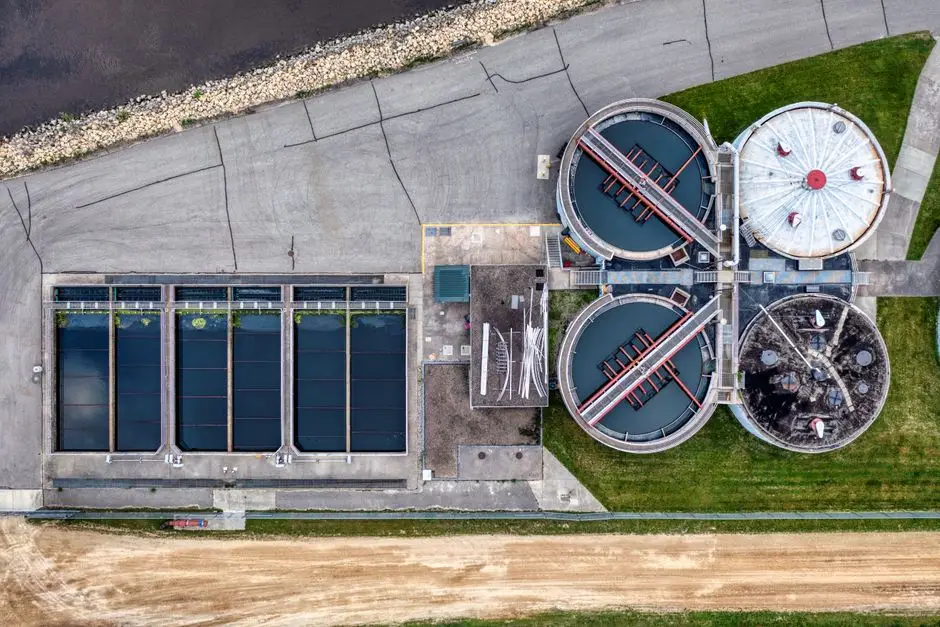
The DOD stream feeds a sequencing batch reactor (SBR) that runs a timed cycle to give nitrification, denitrification, and COD reduction in a single tank. The published Fab 9 sequence is: anoxic fill (mix only, no air), aerobic fill (air on + mix), aerobic react (air on, no mix) to break down IPA, ethylene glycol, and PGMEA, anoxic react (no air + no mix + food spike) to drive NO₃→NO₂→N₂, a second aerobic react for polishing, settle, decant, and waste to thickener and filter press (per the Fab 9 process diagram, cpeo.org 2024).
Decant water is returned to the start of the industrial water (IW) process for polishing rather than discharged directly, and the wasted sludge is thickened and dewatered before manifest. Conventional activated sludge is acutely fluoride-sensitive — concentrations above ~10 mg/L in the mixed liquor suppress nitrification within hours — which is why any fab ETP with a high F⁻ load standardises on a membrane bioreactor (MBR) when retrofitting biological capacity (HydropureWater field data, 2026). An integrated MBR membrane bioreactor retrofitted into the SBR footprint delivers 60% smaller tankage than an equivalent conventional activated-sludge system, eliminates the suspended-solids breakthrough that confounds the SBR decant step, and holds MLSS at 8,000–12,000 mg/L for a fluoride-tolerant operating envelope.
Industrial (CW) Treatment: Reduction, Lime Precipitation, and Clarification
Concentrated waste is held in 7.5 Mgal holding tanks at pH 2.5 ± 3 before being pumped to the IW equalisation basin. The first chemistry step is reduction: sodium bisulfite is dosed to break down residual peroxide, free chlorine, and hexavalent chromium to their trivalent forms so they precipitate in the next stage rather than pass through. The reduced flow is then sent to the IW clarifier, where lime is dosed to pH 10.0 for hydroxide precipitation of Cu, Fe, and Al; Aries 3638 polymer (or an equivalent anionic flocculant) is added to build settleable floc. Underflow routes to industrial sludge handling, and the clarified overflow joins the CMP and biological streams for final polishing (per the Fab 9 process diagram, cpeo.org 2024).
In a 2026 retrofit, the bisulfite and lime doses are the variables that drift first, because feed pH and peroxide residual swing across a shift. A PLC-controlled automatic chemical dosing skid holds the bisulfite and lime doses inside ±2% of setpoint on a redox and pH cascade, which is what keeps the clarifier underflow consistently within the metal-limit envelope and prevents the chromium slip that triggers a non-compliance upload to the Vermont DEC or SCSD #1 self-monitoring portal.
| Parameter | Value / Range | Notes |
|---|---|---|
| Raw pH | 2.5 ± 3 | From 7.5 Mgal holding tanks |
| Reductant | Sodium bisulfite (stoichiometric on ORP) | Reduces H₂O₂, free Cl₂, Cr(VI) → Cr(III) |
| Precipitation pH | 10.0 | Set with lime dosing |
| Flocculant | Aries 3638 polymer | Dosed post-lime |
| Expected Cu removal | >99% | To <0.3 mg/L at design dose |
| Expected F⁻ reduction | Partial (chemical) | Bulk F⁻ handled in downstream RO/precipitation train |
| Sludge destination | Industrial sludge handling → filter press | Cake to manifest |
Final Polishing and PFAS in the Effluent
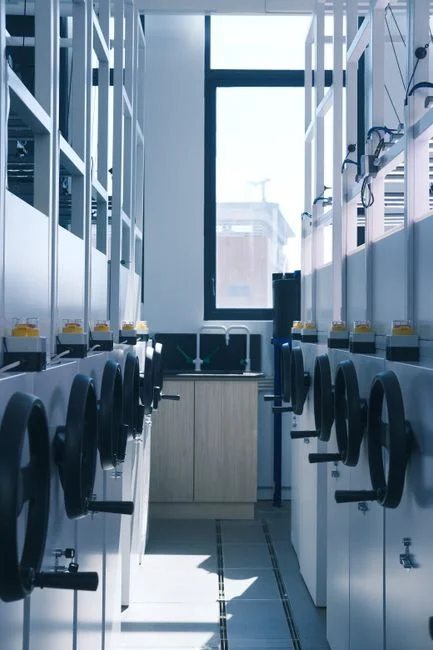
Decant water from the SBR, clarified CMP overflow, and clarified IW overflow combine at the final polishing step. Fab 9 (Essex Junction, Vermont) discharges the combined effluent to the Winooski River under a 2021 Vermont DEC permit; Fab 8 (Malta, New York) discharges to the local sewer-use ordinance (SCSD #1) for downstream municipal treatment. Neither permit currently sets a numerical limit for PFAS, but Vermont DEC has required quarterly monitoring under EPA Method 1633 since October 2023.
The published quarterly results (cpeo.org 2024) show: 4Q23 total Method 1633 PFAS 398.10 ng/L, 1Q24 290.37 ng/L, 2Q24 417.34 ng/L — averaging 368.60 ng/L across the three quarters. The five regulated compounds (PFBA, PFPeA, PFBS, PFHxA, PFOA) account for only ~14% of the Method 1633 total; non-target analysis of semiconductor wastewater suggests total PFAS loading could be ~70× higher than the regulated subset, or roughly 4,000 ng/L (per Jacob, Barzen-Hanson, and Helbling, ES&T 2021). Average species include PFBA 126.67 ng/L, PFOA 19.33 ng/L, and PFOS 1.38 ng/L. As of 2026, no Vermont or federal numerical limit exists for PFAS in fab discharge, but the 2024 US EPA PFAS reporting rule changes the trigger logic for any new permit, M&A, or ESG disclosure, and is treated as an automatic Phase II trigger in the GlobalFoundries acquisition ETP due diligence guide.
| Species | 4Q23 (ng/L) | 1Q24 (ng/L) | 2Q24 (ng/L) | Average (ng/L) |
|---|---|---|---|---|
| PFBA | 145.00 | 105.00 | 130.00 | 126.67 |
| PFPeA | 56.20 | 37.00 | 48.60 | 47.27 |
| PFBS | 53.20 | 43.40 | 43.60 | 46.73 |
| PFHxA | 38.20 | 28.00 | 36.50 | 34.23 |
| PFOA | 20.00 | 16.00 | 22.00 | 19.33 |
| PFOS | 1.50 | 1.49 | 2.66 | 1.38 |
| Method 1633 total | 398.10 | 290.37 | 417.34 | 368.60 |
2026 Retrofit Benchmarks for a GlobalFoundries-Class Fab ETP
Retrofit cost for a fab ETP is driven by design flow (m³/day), influent loading, and the discharge destination. HydropureWater field data for 2024–2026 Chinese industrial ETP retrofit projects puts the indicative range at USD $150–$2,400 per m³ of design flow, presented as three bands: basic (equalisation + pH correction + DAF pre-treatment, for low Cu and low fluoride sites targeting local Class 1B limits), mid (biological upgrade + MBR + PLC-controlled chemical dosing skid, for fluoride 10–30 mg/L, Cu 5–20 mg/L, with ammonia polishing), and high (full MBR + RO reuse loop + ZLD polishing, for UPW reject reclaim, fluoride >30 mg/L, and PFAS compliance work).
Soil and groundwater work is a separate workstream. Under the 2019 Soil Pollution Prevention Law (土壤污染防治法), legacy contamination beneath CMP sludge storage, dosing skids, or lagoons adds +30% to +100% on top of the water-side capex when Phase II confirms a finding. Hold the cost-contingency escrow at 1.5× the contingency-loaded estimate for 36 months post-close — the 1.5× factor reflects the 20–40% cost overrun observed on Chinese industrial ETP retrofits where influent characterisation was incomplete at the design stage (HydropureWater field data, 2026). For a peer benchmark on fab-side reuse, the recent note on Samsung's 330,000 t/day fab reuse programme shows the UPW reclaim economics that justify the high-band MBR + RO + ZLD envelope.
| Train | Indicative USD / m³ design flow | Typical Influent | Use Case |
|---|---|---|---|
| Basic — equalisation + pH correction + DAF | USD $150–$400 | Low Cu, low F⁻ | Local Class 1B discharge limits |
| Mid — biological upgrade + MBR + PLC dosing skid | USD $600–$1,200 | F⁻ 10–30 mg/L, Cu 5–20 mg/L | Ammonia polishing required |
| High — MBR + RO reuse loop + ZLD polishing | USD $1,400–$2,400 | F⁻ >30 mg/L, PFAS in scope | UPW reject reclaim, PFAS compliance |
| Soil & groundwater (separate) | +30% to +100% on top of water-side capex | Triggered by 2019 Soil Pollution Prevention Law findings | 0–6 m beneath CMP sludge / dosing skid |
Frequently Asked Questions
What are the three wastewater streams at a GlobalFoundries fab and what pollutants does each carry?
The CMP stream carries slurry solids (silicon, polyimide, resists) and Cu/Fe/Al metals; the biological (DOD) stream carries IPA, ethylene glycol, NBA, and PGMEA; the industrial (CW) stream carries ammonia, fluoride, phosphorus, peroxide, and acid/base rinses. Segregation is required because an HF or BOE spike from CW destroys SBR biomass within minutes, and CMP slurry is a separate hazardous-waste stream under the China hazardous waste catalogue.
How much total PFAS is GlobalFoundries Fab 9 discharging to the Winooski River?
Quarterly Method 1633 monitoring averages 368.60 ng/L of total PFAS across 4Q23 (398.10 ng/L), 1Q24 (290.37 ng/L), and 2Q24 (417.34 ng/L), with PFBA averaging 126.67 ng/L, PFOA 19.33 ng/L, and PFOS 1.38 ng/L. Non-target analysis suggests total PFAS loading could be ~70× higher, or roughly 4,000 ng/L.
What does a 2026 retrofit of a GlobalFoundries-class fab ETP cost per cubic metre of design flow?
HydropureWater field data for 2024–2026 Chinese industrial ETP retrofit projects puts the indicative range at USD $150–$2,400 per m³ of design flow, with three bands: basic (equalisation + DAF), mid (MBR + PLC dosing skid, F⁻ 10–30 mg/L), and high (MBR + RO + ZLD, F⁻ >30 mg/L, PFAS in scope). Soil and groundwater under the 2019 Soil Pollution Prevention Law adds a separate +30% to +100% multiplier on top of the water-side capex when Phase II confirms legacy contamination, and the cost-contingency escrow should be held at 1.5× the contingency-loaded estimate for 36 months post-close.
Why is MBR the reference biological train for a fab ETP retrofit?
Conventional activated sludge is acutely fluoride-sensitive — concentrations above ~10 mg/L in the mixed liquor suppress nitrification within hours — and a GlobalFoundries-class fab routinely carries F⁻ into the biological train from CW cross-connection or inadequate equalisation. An integrated MBR membrane bioreactor holds MLSS at 8,000–12,000 mg/L inside a fluoride-tolerant envelope, eliminates the suspended-solids breakthrough that confounds the SBR decant step, and fits a retrofit footprint 60% smaller than the equivalent conventional activated-sludge system.