In Riyadh, wastewater treatment plant costs for 2026 projects range from SAR 5M (small-scale MBR systems) to SAR 50M (large oxidation ditch plants), with OPEX of SAR 0.8–3.2/m³ treated. Land costs (SAR 1,200–2,500/m² in industrial zones) and Vision 2030’s 75% water reuse mandate add 20–40% to CAPEX. MBR systems, while 30% more expensive upfront, reduce OPEX by 25% via lower sludge disposal and chemical costs—critical for high-salinity Riyadh wastewater.
Why Wastewater Treatment Plant Costs in Riyadh Are Unique: 5 Key Drivers
Riyadh’s land costs in industrial zones currently range from SAR 1,200 to SAR 2,500/m², which is 2–3x higher than global averages, making land-intensive technologies like oxidation ditches up to 40% more expensive in total project cost (HydropureWater field data, 2025). Unlike temperate regions, Riyadh’s wastewater presents specific chemical and physical challenges that necessitate robust engineering. High salinity, with Total Dissolved Solids (TDS) ranging from 1,500 to 3,000 mg/L, and extreme temperature fluctuations (15°C to 45°C) increase pretreatment costs by 20–30% compared to plants in more moderate climates. Effective pretreatment requires dedicated grit removal, equalization tanks to buffer temperature spikes, and precise pH adjustment systems to prevent membrane scaling or biological upset.
Vision 2030’s mandate for 75% water reuse is a primary driver for CAPEX inflation in the 2026 budget cycle. To meet these standards, plants must incorporate tertiary treatment stages such as Reverse Osmosis (RO), Ultrafiltration (UF), or Chlorine Dioxide (ClO₂) disinfection. For a 1,000 m³/day facility, these requirements typically add SAR 1.5–3M to the initial investment. the Riyadh region is serviced by only three licensed landfills capable of handling industrial sludge, driving disposal costs to a premium of SAR 800–1,200/ton. Technologies like DAF systems to reduce sludge disposal costs are becoming essential, as they can reduce sludge volume by up to 30% compared to conventional secondary clarifiers.
Energy remains a significant OPEX variable. At SAR 0.24/kWh, Riyadh’s electricity costs for industrial users are approximately 15% higher than in neighboring regions like the UAE. This makes aeration-intensive processes, such as oxidation ditches with long solids retention times, roughly 10% more expensive to operate annually. Consequently, procurement managers are increasingly prioritizing MBR systems for Riyadh’s high-salinity wastewater, which utilize low-pressure membranes and high-efficiency blowers to optimize the energy-to-permeate ratio.
CAPEX Breakdown for Riyadh Wastewater Treatment Plants: 2026 Cost Models by Technology
Civil works dominate the CAPEX for traditional treatment methods in Riyadh, accounting for 40–50% of the budget for oxidation ditches due to their massive concrete footprints and excavation requirements. Per technical specifications, these ditches often require depths of 1.5–2.5 meters and channel widths up to 2.5 meters to maintain the necessary hydraulic detention time (per King Saud University research). In contrast, Membrane Bioreactor (MBR) systems allocate only 20–30% of CAPEX to civil works, as their compact design significantly reduces the concrete and land required.
| Cost Component (SAR Millions) | MBR (1,000 m³/day) | Oxidation Ditch (1,000 m³/day) | DAF + Activated Sludge |
|---|---|---|---|
| Civil Works & Excavation | 1.8 - 2.4 | 4.5 - 6.0 | 2.5 - 3.5 |
| Mechanical & Electrical | 2.2 - 3.0 | 3.5 - 4.5 | 2.0 - 2.8 |
| Membranes / Specialized Equip. | 1.2 - 1.8 | 0.5 - 0.8 | 0.8 - 1.2 |
| Automation (PLC/SCADA) | 0.6 - 0.9 | 0.4 - 0.6 | 0.5 - 0.7 |
| Contingency (20%) | 1.1 - 1.6 | 1.8 - 2.4 | 1.1 - 1.6 |
| Total Estimated CAPEX | 6.9 - 9.7 | 10.7 - 14.3 | 6.9 - 9.8 |
While membrane costs for MBR systems (averaging SAR 1.2–1.8M for a 1,000 m³/day plant) represent a significant upfront equipment cost, they are largely offset by the 30% reduction in civil engineering expenses compared to oxidation ditches. Dissolved Air Flotation (DAF) systems, often priced between SAR 4.5M and 6M for the core unit, offer a CAPEX advantage of 25% over conventional clarifiers by utilizing micro-bubble technology to separate solids, which requires a much smaller physical footprint. investing in high-level automation (PLC and SCADA systems) typically adds 5–10% to the CAPEX but is proven to reduce long-term OPEX by 15–20% through optimized chemical dosing and predictive maintenance schedules.
OPEX in Riyadh: How Energy, Chemicals, and Sludge Disposal Drive Costs

Energy consumption accounts for approximately 40% of the total OPEX for Riyadh wastewater plants, with oxidation ditches being the most energy-intensive due to extended aeration requirements and solids retention times of up to 48 days. This results in energy costs of SAR 0.45–0.65/m³ of treated water. MBR systems, despite their mechanical complexity, can achieve lower energy costs of SAR 0.35–0.50/m³ when paired with low-pressure membranes and automated dissolved oxygen (DO) control systems.
| OPEX Category (SAR/m³) | MBR System | Oxidation Ditch | DAF + Activated Sludge |
|---|---|---|---|
| Energy (Aeration/Pumping) | 0.35 - 0.50 | 0.45 - 0.65 | 0.40 - 0.55 |
| Chemicals (Coagulants/CIP) | 0.15 - 0.25 | 0.10 - 0.20 | 0.25 - 0.45 |
| Sludge Disposal | 0.20 - 0.40 | 0.40 - 0.80 | 0.30 - 0.50 |
| Labor & Oversight | 0.10 - 0.20 | 0.25 - 0.45 | 0.20 - 0.35 |
| Maintenance & Parts | 0.20 - 0.35 | 0.15 - 0.25 | 0.15 - 0.25 |
| Total OPEX (SAR/m³) | 1.00 - 1.70 | 1.35 - 2.35 | 1.30 - 2.10 |
Chemical costs vary significantly by the chosen technology path. MBR systems require periodic Clean-In-Place (CIP) chemicals and antifoaming agents, totaling roughly SAR 0.15/m³. DAF systems, however, rely heavily on coagulants and flocculants to facilitate air-flotation, which can drive chemical costs to SAR 0.25–0.45/m³ depending on influent oil and grease concentrations. To manage these costs, many Riyadh plants are integrating automatic chemical dosing systems to prevent over-consumption. Sludge disposal remains the most volatile OPEX component; since DAF and MBR systems produce 30% less sludge volume than conventional clarifiers, they offer a significant hedge against Riyadh’s rising landfill fees. Additionally, utilizing a plate and frame filter press for dewatering can further reduce the weight of sludge hauled to landfills, cutting disposal costs by half.
Vision 2030 Compliance: How Water Reuse Mandates Impact Your Budget
Vision 2030 requires 75% of all treated wastewater in Saudi Arabia to be reused for industrial, agricultural, or landscape purposes, a mandate that necessitates tertiary treatment for 90% of new projects in Riyadh. This compliance requirement typically adds SAR 1.5–3M to the CAPEX of a standard 1,000 m³/day plant. For industrial buyers, achieving this often involves installing RO systems for tertiary treatment in Riyadh. These systems can achieve 95% water recovery but require rigorous pretreatment—such as DAF or multimedia filters—to protect the sensitive membranes from the high TDS levels common in Riyadh’s groundwater and industrial discharge.
Disinfection is another critical compliance cost. UV disinfection systems (SAR 500K–1M) are frequently selected for their small footprint, though they consume approximately 30% more energy than chemical alternatives. Conversely, ClO₂ generators for Vision 2030-compliant disinfection offer lower energy profiles and superior biofilm control, which is vital for reclaimed water distribution networks. While the initial investment in reuse technology is high, the ROI is compelling: reclaimed water in Riyadh is valued at SAR 1.5–2.5/m³, whereas desalinated water costs can exceed SAR 5/m³. This price delta allows many MBR + RO installations to achieve a full payback within 5 to 7 years. For example, a Riyadh industrial park recently saved SAR 4M annually by switching from desalinated water to MBR-treated effluent for its cooling tower makeup, demonstrating the financial viability of high-spec compliance.
MBR vs. Oxidation Ditch vs. DAF: Cost and Performance Comparison for Riyadh Projects
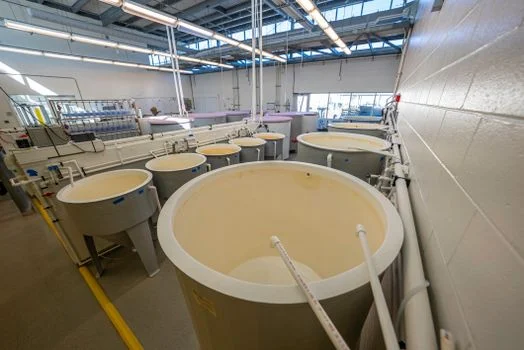
Choosing the right technology in Riyadh requires a balance between land availability, effluent requirements, and long-term energy budgets. MBR technology is currently the benchmark for urban and industrial sites where land is at a premium (SAR 2,000+/m²), as it requires a 60% smaller footprint than traditional biological processes. MBR effluent typically meets COD levels of ≤50 mg/L and TSS of <1 mg/L, making it directly compatible with Vision 2030 reuse standards without additional clarifiers.
| Metric | MBR | Oxidation Ditch | DAF + Activated Sludge |
|---|---|---|---|
| CAPEX (SAR/m³/day) | 6,900 - 9,700 | 10,700 - 14,300 | 6,900 - 9,800 |
| OPEX (SAR/m³) | 1.00 - 1.70 | 1.35 - 2.35 | 1.30 - 2.10 |
| Footprint (m²/1k m³) | 500 - 800 | 1,500 - 2,000 | 1,000 - 1,500 |
| Effluent COD (mg/L) | < 50 | 80 - 120 | 60 - 100 |
| Sludge Vol. (kg/m³) | 0.2 - 0.4 | 0.6 - 0.9 | 0.3 - 0.5 |
| Energy (kWh/m³) | 0.8 - 1.2 | 1.2 - 1.8 | 1.0 - 1.5 |
Oxidation ditches remain a viable option for large-scale municipal projects where land is less expensive and shock load resistance is a priority. However, their effluent TSS (20–30 mg/L) often fails to meet reuse standards without significant tertiary filtration, adding to the total lifecycle cost. DAF systems offer a unique middle ground, providing a 25% lower CAPEX than secondary clarifiers and excellent removal of oils, fats, and suspended solids. In high-salinity industrial applications, hybrid DAF + MBR systems are gaining traction; the DAF unit acts as a robust pretreatment stage, reducing the organic load on the MBR membranes. This hybrid approach can reduce overall CAPEX by 10% compared to a standalone MBR system by downsizing the membrane requirements while still ensuring the plant meets stringent reuse mandates.
Step-by-Step Budgeting Checklist for Riyadh Wastewater Treatment Projects
To accurately estimate the cost of a wastewater project in Riyadh for 2026, engineers and procurement managers should follow a structured decision-making framework that accounts for both visible and hidden costs.
- Define Influent Quality: Characterize COD, TSS, and TDS. If COD exceeds 1,000 mg/L, budget an additional 30% for equalization and enhanced aeration.
- Select Core Technology: Choose MBR for small footprints/high reuse, or DAF for high oil/grease loads.
- Calculate Design Capacity: Use peak daily flow (m³/day) rather than average flow to avoid system bypass.
- Estimate Land Costs: Use current Riyadh industrial rates (SAR 1,200–2,500/m²). Factor in a 20% buffer for access roads and buffer zones.
- Add Tertiary Treatment: Include cost models for high-salinity industrial wastewater, specifically RO or UF units for reuse compliance.
- Factor in Automation: Budget 5–10% of CAPEX for PLC/SCADA to ensure long-term OPEX stability.
- Include Sludge Management: Account for dewatering equipment and transport to one of the three regional landfills (SAR 800–1,200/ton).
- Apply a Contingency: Add 20% to the total CAPEX to account for fluctuating material costs and site-specific civil challenges.
- Project Annual OPEX: Calculate energy, chemicals, and labor using Riyadh-specific benchmarks (SAR 0.8–3.2/m³).
- Calculate ROI: Compare the cost of reclaimed water (SAR 1.5–2.5/m³) against desalinated supply to determine the payback period.
Navigating the regulatory landscape is equally important. Saudi Water Authority (SWA) approvals can add 6–12 months to project timelines. It is recommended to budget SAR 200K–500K for third-party engineering studies, environmental impact assessments, and compliance reports required for these permits. For additional regional context, planners may also review cost benchmarks for arid-region wastewater treatment to see how Riyadh compares to other high-temperature, water-scarce industrial hubs.
Frequently Asked Questions
Q: What is the average cost per m³ for wastewater treatment in Riyadh?
A: OPEX typically ranges from SAR 0.8 to 3.2/m³. MBR systems usually operate at the lower end (SAR 0.8–1.5/m³) due to high automation and lower sludge volumes, while oxidation ditches can reach the higher end (SAR 2.0–3.2/m³) due to intensive energy use and high sludge disposal costs. CAPEX averages between SAR 5,000 and 50,000 per m³/day of capacity.
Q: How does Vision 2030 affect wastewater treatment plant costs in Riyadh?
A: The 75% water reuse mandate requires tertiary treatment (RO, UV, or ClO₂) for nearly all new plants. This adds SAR 1.5–3M to the CAPEX for a 1,000 m³/day plant but significantly reduces long-term water sourcing costs, often by more than 50% compared to using desalinated water.
Q: What are the land requirements for a 1,000 m³/day wastewater treatment plant in Riyadh?
A: Oxidation ditches require the most land (1,500–2,000 m²), followed by DAF + activated sludge systems (1,000–1,500 m²). MBR systems are the most compact, requiring only 500–800 m². Given Riyadh's high land prices, the smaller footprint of MBR can make it 40% more cost-effective than an oxidation ditch.
Q: What are the most cost-effective technologies for Riyadh’s high-salinity wastewater?
A: Hybrid DAF + MBR systems are often 10% cheaper than standalone MBR for high TDS (1,500–3,000 mg/L) because the DAF unit reduces the burden on expensive membranes. RO systems are necessary for reuse but add SAR 2–3M to the initial investment.
Q: How can I reduce OPEX for my Riyadh wastewater treatment plant?
A: Implementing energy-efficient aeration and low-pressure membranes can cut energy costs by 25%. Additionally, using DAF for primary solids removal reduces sludge disposal costs by 30%, and high-level automation (PLC/SCADA) can lower labor costs by up to 15%.