Why Fruit Processing Wastewater Is a Hard Fit for Continuous-Flow Biology
Fruit and citrus campaigns produce a wastewater stream that swings 3–8× in flow between production and wash-down periods, and the pollutant load swings with it — BOD commonly lands at 1,500–6,000 mg/L, COD 3,000–10,000 mg/L, TSS 500–3,500 mg/L, and pH drops to 3.5–6.5 during citrus runs (per the fruit/vegetable processing effluent design guide). Continuous-flow activated-sludge plants are tuned for a steady F/M ratio and steady clarifier loading; when the carbohydrate pulse arrives, the clarifier sees a Zoogloea bloom, the sludge volume index climbs past 200 mL/g, and the plant washes out within days. The root cause is kinetic mismatch: the biology cannot be re-tuned in real time on a plug-flow train.
Good housekeeping limits the damage before biology sees it — up to 95% of in-plant water can be reduced by segregating high-strength concentrate streams from wash water (per the same design guide), which shrinks the SBR tankage and blower duty downstream. The remaining stream still carries a 3–8× load swing, which is exactly what the SBR Fill–React–Settle–Decant–Idle cycle absorbs: each batch is a complete treatment train, and the React phase is stretched or compressed per cycle to match the day's BOD. The five-stage cycle documented in EarthTek's 2024 cost guide (Fill, React, Settle, Decant, Idle) is the engineering reason batch biology tolerates what continuous flow cannot. For a side-by-side view of the regulatory numbers this design must hit, see the 2026 global guide to COD and BOD discharge limits.
SBR Design Parameters for Fruit and Citrus Effluent
An SBR designed for fruit effluent runs at HRT 18–36 h, MLSS 3,500–5,000 mg/L, F/M 0.05–0.15 kg BOD/kg MLSS·d, and SRT 15–30 days; the decant rate must be held at or below 1.5 m/h or rising-sludge drift contaminates the supernatant (HydropureWater field data, 2026). The cycle splits into Fill 1–1.5 h, React 2–4 h, Settle 0.75–1 h, Decant 0.5–1 h, and Idle 0.25–0.5 h, giving 4–8 h per cycle. The Idle window is not wasted time — it is the reserve that lets the operator extend React on a heavy campaign day without violating discharge timing.
| Parameter | Fruit / citrus design range (2026) | Notes |
|---|---|---|
| HRT | 18–36 h | Longer for high-sugar campaign streams |
| MLSS | 3,500–5,000 mg/L | Lower end during cold wash-season |
| F/M | 0.05–0.15 kg BOD/kg MLSS·d | Below 0.05 → pinpoint floc; above 0.20 → bulking |
| SRT | 15–30 days | Shorter SRT risks losing nitrifiers |
| Decant rate | ≤ 1.5 m/h | Limits sludge drift in supernatant |
| DO setpoint (React) | 1.5–2.5 mg/L | Higher end for high-sugar BOD |
| Cycle time | 4–8 h | 3–6 cycles/day per basin |
The selector zone at the head of the Fill phase is the difference between an SBR that works and one that bulks: a 20–40 minute anoxic/anaerobic contact window at the start of Fill lets readily-degradable sugars adsorb onto the floc before the air goes on, suppressing Zoogloea and controlling low-F/M bulking that is endemic to high-carbohydrate streams. DO during React is set at 1.5–2.5 mg/L — high enough to push high-sugar BOD to completion, low enough that the blowers are not feeding air to stripping rather than to biology, which is a real OPEX lever at $0.08–$0.12/kWh. Cycle flexibility is the structural advantage of SBR: a fruit-season schedule may run Fill 1 h, React 4 h, Settle 1 h, Decant 1 h, while a wash-season schedule compresses to Fill 1.5 h, React 1.5 h, Settle 0.75 h, Decant 0.5 h, Idle 0.25 h — same tank, different day. The cycle-by-cycle tuning argument is the same one made in the 2026 SBR vs AAO process comparison, and it is what makes SBR the right shape for seasonal fruit duty.
Pretreatment That Protects the SBR
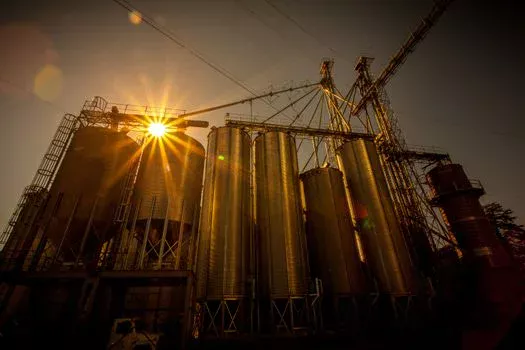
An SBR fails when pH, FOG, or grit arrive unconditioned — pretreatment is not optional, and the standard sequence for fruit lines is rotary screening (1–3 mm openings) → flow equalization (24–48 h buffer) → pH adjustment to 6.5–7.5 → dissolved air flotation (DAF) system for suspended solids and FOG → SBR (per the fruit/vegetable processing effluent design guide). The equalization buffer absorbs the 3–8× flow swing and lets the DAF dose coagulant on a steady solids load rather than chasing peaks.
DAF in this duty typically removes 60–90% TSS and 70–95% FOG from fruit wash and pulping streams, and the downstream payoff is concrete: SBR sludge yield drops 25–40%, the Settle phase is no longer fighting floatables, and the decanted supernatant is consistently under 30 mg/L TSS. Rotary drum and vibrating screens are the preferred mechanical pretreatment for fruit/vegetable effluent because they handle fibrous pulp without blinding (per the same guide). For pH correction and coagulant feed ahead of DAF, an automatic chemical dosing system sized to the equalized flow keeps the SBR feed in the 6.5–7.5 range without operator intervention. For plants with high rag and screenings loads, a rotary mechanical bar screen ahead of the fine screen is a low-cost insurance policy for the DAF pump.
SBR CAPEX Breakdown for Fruit Plants in 2026
A fruit-plant SBR sized for 50–500 m³/day lands at $80,000–$1,200,000 in total CAPEX in 2026, with a working rule of thumb of $1,500–$2,500 per m³/d of design capacity for civil works, tankage, and equipment (HydropureWater field data, 2026). The per-m³·d number is the line item to bring to a CFO: it converts a vague "around a million dollars" into a defensible budget indexed to the design flow. Buried fiberglass tanks typically sit at the lower end of that band for plants with adequate footprint; epoxy-coated concrete tanks add 10–20% but buy longer service life in aggressive fruit-acid service.
| CAPEX line item | Share of total | 2026 USD for 200 m³/d example |
|---|---|---|
| Tankage and civil works | 35–45% | $140,000–$180,000 |
| Aeration blowers and diffusers | 12–18% | $48,000–$72,000 |
| Decanters, valves, and piping | 8–12% | $32,000–$48,000 |
| PLC, instrumentation, and HMI | 10–15% | $40,000–$60,000 |
| Installation and commissioning | 10–15% | $40,000–$60,000 |
| Engineering and contingency | 5–10% | $20,000–$40,000 |
Variable-speed blowers and a well-sized DO loop are the two aeration-package decisions that swing the blower line item by ±20%. The MBR premium for fruit duty runs 1.2–2.5× SBR CAPEX in real projects, which buys membrane modules, a higher MLSS envelope, and a tighter effluent — and that premium is only worth paying when the plant has a reuse or zero-liquid-discharge mandate, as covered in the 2026 food processing wastewater engineering guide for Singapore and in regional SBR design notes. MBBR CAPEX typically lands between SBR and MBR for the same fruit load, with savings on tankage offset by carrier media cost.
SBR OPEX: What Drives the $0.18–$0.55/m³ Number
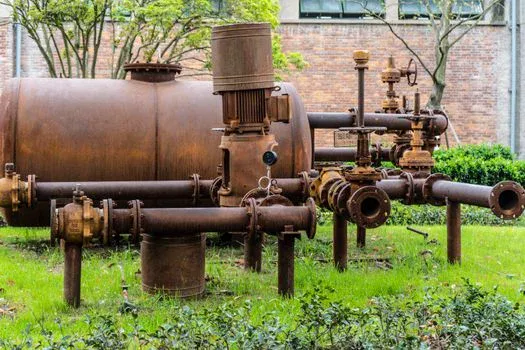
SBR operating cost for fruit effluent runs $0.18–$0.55 per m³ treated in 2026, with electricity at 35–50% of the total — blowers are the single largest line (HydropureWater field data, 2026). Aeration demand for a fruit influent at 3,000 mg/L BOD with a 2.0 mg/L DO setpoint typically lands at 0.8–1.6 kWh/m³; variable-speed blowers cut that figure 15–25% versus fixed-speed units running against a throttling valve, and the payback on the VSD is usually under 24 months. Sludge handling is the second line at 20–30% of OPEX: observed yield is 0.3–0.6 kg DS per kg BOD removed, and the dominant cost is dewatering, where a plate and frame filter press producing 22–28% DS cake is the standard endpoint.
| OPEX line item | Share of total | 2026 lever |
|---|---|---|
| Electricity (blowers dominant) | 35–50% | Variable-speed blowers, DO control |
| Sludge handling and dewatering | 20–30% | Plate-and-frame to 22–28% DS |
| Chemicals (pH, coagulant, polymer) | 5–10% | DAF-side coagulant dose control |
| Labor and operations | 10–20% | PLC automation, seasonal staffing |
| Maintenance and spares | 5–10% | Decanter and valve service kits |
Seasonal shutdown is the OPEX lever unique to fruit processing, and it is real money: storing mixed liquor at low temperature with intermittent aeration during the 2–4 month off-season, or draining the basin and reseeding at startup, both cut annual OPEX 15–25% versus running the SBR near-empty through the winter. Power and chemical benchmarking against the 2026 DAF operating cost breakdown and the 2026 activated carbon filter OPEX breakdown gives a complete picture of the side streams around the SBR.
SBR vs MBBR vs MBR for Fruit Processing: 2026 Comparison
For a 50–500 m³/d fruit-processing duty, the three technologies split clearly on CAPEX, footprint, effluent quality, and seasonal load tolerance — and the right answer depends on whether the plant is constrained by plot area, reuse targets, or budget. Waterform NZ's 2024 food-and-beverage comparison confirms that SBRs carry a lower initial investment than MBR and MBBR, that MBBR is more modular and easier to expand, and that MBR delivers the smallest footprint and the highest reuse quality at the cost of energy and membrane replacement.
| Parameter | SBR | MBBR | MBR |
|---|---|---|---|
| CAPEX (USD per m³·d, 2026) | $1,500–$2,500 | $1,800–$2,800 | $2,500–$4,500 |
| Footprint (m² per m³·d) | 0.20–0.35 | 0.15–0.25 | 0.08–0.15 |
| Effluent BOD (mg/L) | < 30 | < 30 | < 5 |
| Effluent TSS (mg/L) | < 30 | < 30 | < 1 |
| Operator skill required | Moderate (cycle tuning) | Low (continuous flow) | High (membrane care) |
| Seasonal load tolerance | High (cycle retuning) | Moderate (carrier population lag) | High (high MLSS buffer) |
| Reuse suitability | Limited (needs polishing) | Limited (needs polishing) | Strong (irrigation/cleaning) |
SBR wins on CAPEX and on the cycle-by-cycle retuning that matches a fruit campaign's daily load — the central trade-off Waterform NZ highlights between MBBR's robustness to load swings and SBR's per-batch flexibility. MBBR wins on modularity and lower maintenance for a plant that plans to scale capacity by 30–50% within five years. MBR wins where footprint is the binding constraint, where the plant has a water-reuse target, or where the discharge consent is below 10 mg/L BOD — and the MBR membrane bioreactor system page covers the equipment envelope for that scenario. For most 50–500 m³/d fruit plants with adequate plot area and a 30 mg/L BOD consent, SBR is the lowest-CAPEX path; the MBR premium is justified only when reuse revenue or consent tightening pays for it.
When SBR Is the Wrong Choice — and What to Buy Instead
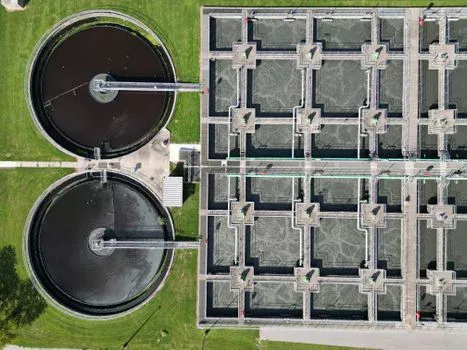
There are four fruit-processing scenarios where SBR is the wrong answer. The first is chronic bulking on high-sugar streams without a selector zone — if the influent regularly exceeds 8,000 mg/L COD from fruit concentrates and the cycle cannot accommodate a true anoxic Fill, an anaerobic UASB upstream of the SBR cuts aeration OPEX 40–60% by removing 60–80% of the COD before the air goes on. The second is plot area: if the available footprint is below 0.15 m² per m³/d, an MBR membrane bioreactor system with submerged DF series flat-sheet membrane modules is the only way to hit the effluent consent in the available envelope. The third is flow scale: above 2,000 m³/d, continuous-flow activated sludge or MBBR typically wins on CAPEX, and the per-batch overhead of SBR stops paying back. The fourth is reuse: when the plant wants on-site water for CIP or irrigation, SBR alone is not enough, and an RO polishing step downstream of a multi-media filter is the right finishing train.
Frequently Asked Questions
How much does an SBR cost for fruit processing wastewater in 2026? For a 50–500 m³/d plant, total CAPEX runs $80,000–$1,200,000, or $1,500–$2,500 per m³·d of design capacity, with OPEX in the $0.18–$0.55 per m³ range (HydropureWater field data, 2026). The full regional context for fruit processing is in the 2026 food processing wastewater engineering guide.
What influent BOD and COD should I design an SBR for in a juice or jam plant? Design for 1,500–6,000 mg/L BOD and 3,000–10,000 mg/L COD at HRT 18–36 h, with pH equalized to 6.5–7.5 upstream of the basin.
Is SBR or MBBR better for seasonal fruit processing? SBR's cycle retuning absorbs a 3–8× load swing better; MBBR's continuous-flow simplicity and lower maintenance win when the load is steadier or when future expansion is planned.
Can an SBR meet fruit processing discharge limits for BOD, COD, and TSS in 2026? Yes — a properly tuned SBR with DAF pretreatment delivers 95% BOD removal, effluent BOD under 30 mg/L and TSS under 30 mg/L, comfortably meeting China GB 30485 cider/fruit processing limits and EU food BREF discharge ranges where applicable.
How do you prevent sludge bulking in an SBR treating fruit wastewater? Run an anoxic selector zone at the head of Fill, hold F/M at 0.05–0.15, SRT at 15–30 days, DO at 1.5–2.5 mg/L during React, keep influent pH at 6.5–7.5, and remove FOG and TSS upstream with DAF.