In Rotterdam, wastewater treatment plant costs vary widely by technology and scale. For a 1 MGD (3,785 m³/day) underground plant, expect €12–18M CAPEX (€3,200–4,800/m³/day) and €0.30–0.50/m³ OPEX, driven by EU Directive 91/271/EEC compliance and high labor costs (€45–60/hour). Modular MBR systems reduce CAPEX by 20–30% but require higher membrane replacement costs (€0.10–0.15/m³). This guide breaks down costs by tech, capacity, and local factors—plus a step-by-step ROI calculator for your project.
Why Rotterdam’s Wastewater Treatment Costs Are Higher Than the EU Average
Rotterdam’s industrial wastewater treatment labor costs currently range from €45 to €60 per hour, representing a 20–30% premium over the European Union average of €35–45 per hour, according to 2024 data from the Dutch Bureau for Economic Policy Analysis. These elevated labor rates directly impact the installation, commissioning, and long-term maintenance phases of any wastewater project. the specialized nature of the Dutch engineering sector, while highly efficient, commands higher consultancy and project management fees compared to Southern or Eastern European markets.
Land scarcity in the Port of Rotterdam and surrounding industrial zones creates a significant financial hurdle for facility planners. In high-density areas, the premium on surface land often necessitates the construction of underground or multi-level facilities. Data indicates that land constraints increase the cost of underground plants by 40–50% compared to surface plants, with costs rising from €1,200–1,500/m³/day for surface systems to €2,000–2,500/m³/day for underground infrastructure. This does not account for the complex soil conditions in the region—primarily peat and clay—which require extensive piling and soil stabilization, adding further to the civil engineering budget.
Regulatory compliance is another primary cost driver. EU Directive 91/271/EEC mandates stringent tertiary treatment for all plants with a capacity exceeding 2,000 Population Equivalent (PE). In Rotterdam, this often requires the integration of advanced technologies such as Dissolved Air Flotation (DAF) or sand filtration to meet phosphorus and nitrogen discharge limits. For a 1 MGD system, these compliance-driven additions can increase CAPEX by €1.5–3M. When compared to other regions, how Rotterdam’s costs compare to other EU markets highlights the impact of these localized environmental and economic pressures.
Finally, the permitting process in the Netherlands is rigorous. Obtaining the necessary environmental and building permits (Omgevingsvergunning) typically takes 6 to 12 months. This extended timeline increases "soft costs," including legal fees, environmental impact assessments, and prolonged engineering overhead, which can account for 10–15% of the total project budget before a single cubic meter of soil is moved.
CAPEX Breakdown: How Much Does a Wastewater Treatment Plant Cost in Rotterdam?
Capital expenditure (CAPEX) for a 1 MGD (3,785 m³/day) underground wastewater treatment plant in Rotterdam typically falls between €12M and €18M, depending on the required level of nutrient removal. This figure includes the technology package, civil works, and installation. Because Rotterdam is a global maritime hub, logistics for equipment delivery are efficient, but the costs of specialized civil engineering for water-tight underground basins remain high.
| Technology Type | 0.5 MGD (1,892 m³/day) | 1.0 MGD (3,785 m³/day) | 5.0 MGD (18,925 m³/day) | 10.0 MGD (37,850 m³/day) |
|---|---|---|---|---|
| Underground (WSZ) | €7.0M – €9.5M | €12.0M – €18.0M | €45.0M – €55.0M | €80.0M – €95.0M |
| Integrated MBR | €5.5M – €7.5M | €9.5M – €14.5M | €35.0M – €42.0M | €65.0M – €75.0M |
| Conventional (CAS) | €4.0M – €6.0M | €7.5M – €11.0M | €28.0M – €35.0M | €50.0M – €62.0M |
| DAF (Pre-treatment) | €4.0M – €5.5M | €7.0M – €9.5M | €22.0M – €28.0M | €40.0M – €50.0M |
Underground plants require significant investment in excavation, reinforced concrete waterproofing, and sophisticated ventilation/odor control systems. These factors result in a CAPEX range of €3,200–4,800/m³/day. In contrast, compact MBR systems for Rotterdam’s tight spaces offer a more cost-effective footprint. While MBR systems are 20–30% cheaper than full underground civil works at €2,500–3,800/m³/day, they require higher ongoing investment in membrane modules.
For industrial pre-treatment, high-efficiency DAF systems for pre-treatment are often the baseline. DAF systems range from €1,800–2,500/m³/day. However, it is critical to note that DAF usually serves as a primary clarifier or for FOG (fats, oils, and grease) removal; for full discharge compliance in Rotterdam, it must be paired with secondary biological treatment, which brings the total cost closer to the conventional or MBR ranges mentioned above.
It is important to understand that CAPEX scales non-linearly. Due to economies of scale in civil engineering and procurement, a 10 MGD plant does not cost ten times more than a 1 MGD plant. Typically, a 10x increase in capacity results in only a 3.5x to 4.5x increase in total CAPEX, as the costs for control systems, administrative buildings, and primary headers do not increase proportionally with volume.
OPEX Deep Dive: Energy, Labor, and Chemical Costs for Rotterdam Plants
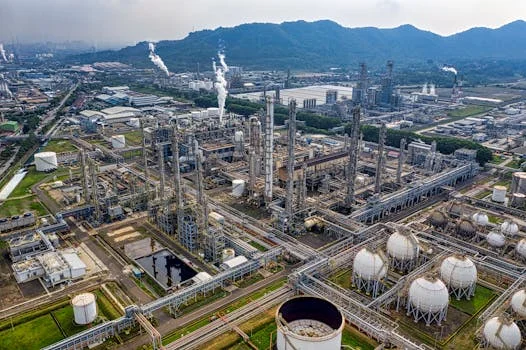
Operational expenditure (OPEX) for Membrane Bioreactor (MBR) systems in the Netherlands averages €0.40–0.60/m³, with energy consumption for aeration accounting for approximately 40% of total running costs. Energy prices in the Rotterdam industrial sector fluctuate between €0.12 and €0.18/kWh, making energy efficiency a critical factor in technology selection. Systems with high oxygen transfer efficiency or automated aeration controls are essential for minimizing these recurring costs.
| Cost Category | MBR System (€/m³) | Conventional (CAS) (€/m³) | DAF + Bio (€/m³) |
|---|---|---|---|
| Energy (Aeration/Pumping) | €0.16 – €0.24 | €0.10 – €0.15 | €0.12 – €0.18 |
| Labor (Rotterdam rates) | €0.08 – €0.12 | €0.10 – €0.14 | €0.09 – €0.13 |
| Chemicals (Polymer/Coagulant) | €0.04 – €0.06 | €0.05 – €0.08 | €0.08 – €0.12 |
| Maintenance/Replacement | €0.12 – €0.18 | €0.05 – €0.08 | €0.06 – €0.10 |
| Total OPEX per m³ | €0.40 – €0.60 | €0.30 – €0.45 | €0.35 – €0.53 |
In an MBR setup, membrane replacement represents a significant portion of the maintenance budget, typically costing €0.10–0.15/m³ over the lifecycle of the membranes (usually 5–8 years). However, the superior effluent quality of MBR often reduces the need for expensive downstream polishing. Conversely, Conventional Activated Sludge (CAS) systems have lower maintenance costs but generate significantly higher sludge volumes. In Rotterdam, sludge disposal costs are rising, and sludge dewatering costs for Rotterdam plants can add €0.05–0.10/m³ to the OPEX of high-sludge-yield technologies.
Chemical costs are primarily driven by the need for phosphorus removal (coagulants) and sludge conditioning (polymers). Because Rotterdam’s discharge limits are strictly monitored by the DCMR Environmental Protection Agency, chemical dosing must be precise. Over-dosing not only increases costs but can also lead to secondary compliance issues with chemical oxygen demand (COD).
Underground vs. Surface Plants: Which Is Right for Your Rotterdam Project?
Underground wastewater treatment plants in Rotterdam require 70% less surface area than conventional surface-level configurations but incur a 40–50% increase in initial construction costs due to specialized excavation and waterproofing. For many industrial projects in the Port of Rotterdam, where land lease rates are at a premium, the high CAPEX of an underground system is often offset by the value of the land saved for production or logistics.
| Criteria | Underground Plant | Surface Plant |
|---|---|---|
| Footprint | Minimal (70% reduction) | Large (Standard) |
| CAPEX | High (€3,200–4,800/m³/day) | Low (€1,200–1,500/m³/day) |
| OPEX | Higher (Ventilation/Lighting) | Lower (Natural Ventilation) |
| Aesthetics/Noise | Excellent (Hidden/Silent) | Poor (Visible/Noisy) |
| Scalability | Difficult/Fixed | Easy/Modular |
| Maintenance Access | Complex (Confined Space) | Standard |
For developers prioritizing neighborhood relations and ESG (Environmental, Social, and Governance) goals, Rotterdam-ready underground sewage treatment plants offer the advantage of total noise and odor containment. This allows industrial facilities to operate closer to commercial or residential buffer zones without triggering complaints. However, the lack of scalability is a major drawback; once an underground concrete basin is poured, expanding capacity requires significant additional excavation.
Surface plants remain the standard for large-scale municipal or heavy industrial applications where land is available. They offer easier access for heavy machinery during membrane replacement or tank cleaning. The choice ultimately depends on a "Land Value vs. Construction Cost" analysis. If the saved surface area can generate more revenue than the €3M–€5M CAPEX premium, the underground option is the logical choice.
Modular vs. Custom-Built Plants: Cost, Timeline, and Scalability Trade-Offs
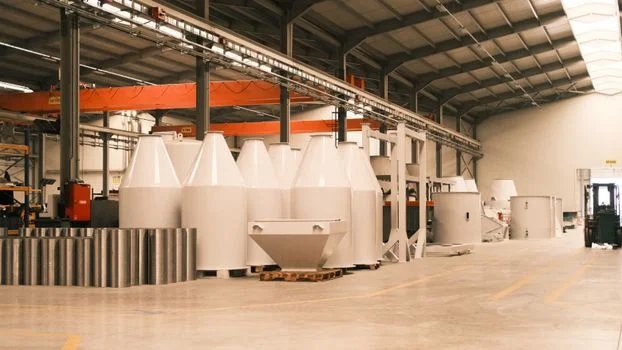
Modular wastewater treatment plants reduce project delivery timelines by up to 50% compared to site-built concrete structures by shifting 90% of the construction phase to a controlled factory environment. In the Rotterdam context, where site labor is expensive and weather can delay outdoor construction, the modular approach offers a significant financial safeguard. While a custom-built concrete plant may take 12–24 months to complete, a modular MBR or DAF system can be operational in 3–6 months.
From a cost perspective, modular systems typically offer a 25–30% lower CAPEX for capacities under 5 MGD. This is achieved through standardized design, bulk procurement of components, and minimized on-site civil works. However, for very large facilities (>10 MGD) or those dealing with highly complex industrial influent (e.g., high concentrations of heavy metals or complex organics), a custom-engineered solution is often necessary to ensure process stability and energy optimization.
A recent case example in the Rotterdam port area demonstrated these benefits: a chemical processing facility required a 2 MGD expansion. By selecting a modular MBR system instead of a traditional custom-built concrete expansion, the firm saved €2.5M in CAPEX and avoided 8 months of construction-related operational disruption. the modular nature allows the facility to relocate or sell the assets if production requirements change. For more on this, reading about how prefabricated plants reduce CAPEX and timelines provides a deeper look into the engineering behind these savings.
ROI Calculator: Step-by-Step Guide to Justifying Your Wastewater Treatment Investment
The return on investment (ROI) for industrial wastewater treatment in Rotterdam is increasingly driven by water reuse incentives, which can provide up to €0.50/m³ in direct savings or subsidies. To justify the investment to stakeholders, follow this five-step calculation framework based on current Rotterdam market data.
- Step 1: Estimate Total CAPEX. Use the technology tables above. For a 1 MGD MBR plant, use a baseline of €12M. Subtract any available Dutch government subsidies (often up to 40% for innovative water reuse or energy-neutral projects).
- Step 2: Calculate Annual OPEX. Multiply your daily volume by the OPEX per m³. For 1 MGD (3,785 m³/day) at €0.50/m³, the annual OPEX is approximately €690,000.
- Step 3: Quantify Annual Savings. Calculate the cost of avoided discharge fees (Heffing) and the value of recovered water. If reusing 80% of effluent in a cooling tower, and fresh water costs €1.50/m³, the savings are: (3,028 m³/day * €1.50) * 365 = €1.65M/year.
- Step 4: Determine Net Annual Benefit. Subtract Annual OPEX from Annual Savings. In this example: €1.65M - €0.69M = €960,000 net benefit per year.
- Step 5: Calculate Payback Period. Divide the (CAPEX - Incentives) by the Net Annual Benefit. If the net CAPEX after subsidies was €7.2M, the payback period is 7.5 years.
Beyond the direct financial payback, industrial buyers must factor in intangible benefits. Future-proofing against stricter EU water regulations, improving ESG scores for investors, and ensuring operational continuity during water scarcity periods are critical factors that do not appear on a simple balance sheet but provide significant long-term value.
Frequently Asked Questions
What are the discharge limits for wastewater treatment plants in Rotterdam?
Rotterdam adheres to EU Directive 91/271/EEC. Typical limits for plants >2,000 PE include BOD <25 mg/L, COD <125 mg/L, and TSS <35 mg/L. Industrial sites often face stricter local limits for heavy metals (<0.5 mg/L) and specific chemical pollutants enforced by the DCMR.
How much does a 10,000 m³/day (2.6 MGD) wastewater treatment plant cost in Rotterdam?
CAPEX for this scale ranges from €9M for a modular DAF + biological system to €18M for a fully integrated underground MBR facility. OPEX typically falls between €0.30 and €0.60/m³. Permitting and engineering fees usually add €200,000 to €500,000 to the total.
Are there government incentives for wastewater treatment in Rotterdam?
Yes. The Dutch government provides several subsidies, including the MIA (Environmental Investment Allowance) and Vamil (Random depreciation of environmental investments), which can cover up to 40% of CAPEX for technologies that exceed standard environmental requirements or enable water reuse.
What’s the cheapest wastewater treatment technology for small industrial plants (<500 m³/day)?
Prefabricated underground plants (WSZ series) are the most cost-effective for small flows, with CAPEX starting at €150,000–€300,000. These systems offer low maintenance and a small footprint, making them ideal for food processing or small-scale manufacturing.
How long does it take to build a wastewater treatment plant in Rotterdam?
Modular plants can be installed in 3–6 months once permits are secured. Custom-built concrete plants require 12–24 months. In both cases, the permitting phase adds an additional 6–12 months to the total project timeline.