Taichung industrial wastewater treatment engineering specs in 2026 design to COD <100 mg/L, BOD <30 mg/L, and TSS <30 mg/L under MOENV tables amended 18 December 2024, with CAPEX near $50K–$12M by capacity and OPEX $0.15–$0.40/m³.
Why Taichung Plant Effluent Is Harder Than Hospital Wastewater
Taichung plant effluent runs harder than hospital wastewater because manufacturing chemistry shifts by shift and product mix. Electronics lines carry copper 5–20 mg/L, nickel 2–10 mg/L, and fluoride 10–50 mg/L; food plants exceed TSS 1,200 mg/L and FOG 300 mg/L; textile dyeing exceeds COD 500 mg/L and color 500 ADMI.
Wastewater treatment in Taichung commonly designs to COD <100 mg/L, BOD <30 mg/L, and TSS <30 mg/L for high-tech and park discharges. CAPEX ranges from about $50K for a 20 m³/day DAF unit to $12M for a 2,000 m³/day MBR plant. OPEX typically runs $0.15–$0.40/m³ under those design conditions, with metals, FOG, and dye color driving pretreatment choices.
Plant influent in Taichung industrial parks varies more than hospital effluent because manufacturing chemistry changes by shift and product mix. Electronics lines carry copper 5–20 mg/L, nickel 2–10 mg/L, and fluoride 10–50 mg/L. Food plants commonly exceed TSS 1,200 mg/L and FOG 300 mg/L. Textile dyeing streams often exceed COD 500 mg/L and color 500 ADMI.
Electronics manufacturers need chemical precipitation at pH 6.5–8.5 with ferric chloride or aluminum sulfate before sedimentation. Food processors usually need Dissolved Air Flotation (DAF), which removes about 92–97% TSS when flocculated correctly. Textile dyeing wastewater often needs Advanced Oxidation Processes (AOPs) or Membrane Bioreactors (MBRs) for recalcitrant COD and color.
In 2023, a Taichung textile plant was fined TWD 2.5 million after COD stayed above 180 mg/L; the upgrade path used MBR plus AOP. Similar industrial wastewater treatment selection logic appears in other manufacturing cities, but Taichung permits still turn on local MOENV tables and park sewer contracts.
City scale explains the load mix. Taichung is Taiwan's second-largest city, with more than 2.86 million residents (Wikipedia), and it hosts six main manufacturing industries: tool machines, mechanical components, photoelectric panels, bicycles, woodworking machinery, and aerospace manufacturing (Wikipedia). Each sector lands on a different MOENV industry table, so permit numbers differ plant to plant even inside the same park.
| Sector | Typical Influent Characteristics | Primary Pre-treatment Needs | Key Contaminants |
|---|---|---|---|
| Electronics | COD: 200–800 mg/L BOD: 100–400 mg/L TSS: 100–500 mg/L |
Chemical precipitation, pH adjustment, fine screening | Copper (5–20 mg/L), Nickel (2–10 mg/L), Fluoride (10–50 mg/L) |
| Food Processing | COD: 800–3,000 mg/L BOD: 400–1,500 mg/L TSS: 500–2,000 mg/L FOG: >300 mg/L |
Dissolved Air Flotation (DAF), grease traps, coarse screening | High TSS, High FOG, high BOD/COD |
| Textile Dyeing | COD: 500–2,500 mg/L BOD: 200–1,000 mg/L TSS: 200–1,200 mg/L Color: >500 ADMI |
Equalization tanks, Advanced Oxidation Processes (AOPs), MBR | Recalcitrant organics, dyes, high COD |
Taichung Industrial Wastewater Treatment Engineering Specs: Influent and System Design
Electronics wastewater typically shows COD 200–800 mg/L, BOD 100–400 mg/L, and TSS 100–500 mg/L with copper and nickel as above. Food plants often run COD 800–3,000 mg/L, BOD 400–1,500 mg/L, and TSS 500–2,000 mg/L. Textile dyeing commonly sits at COD 500–2,500 mg/L, BOD 200–1,000 mg/L, TSS 200–1,200 mg/L, plus strong color. Most plants we size for Taichung parks start with equalization at 2–4 hours HRT and 1–3 mm screening.
Electronics trains then add precipitation and pH control ahead of sedimentation. Food lines benefit from DAF for TSS and FOG, with costs covered in the food section below. Textile streams often need oxidation or MBR systems for stubborn COD and color.
| Sector | Typical Influent COD (mg/L) | Typical Influent BOD (mg/L) | Typical Influent TSS (mg/L) | Key Heavy Metals (mg/L) | 2026 EPA Effluent Limits (mg/L) |
|---|---|---|---|---|---|
| Electronics | 200–800 | 100–400 | 100–500 | Cu: 5–20, Ni: 2–10 | COD <100, BOD <30, TSS <30 |
| Food Processing | 800–3,000 | 400–1,500 | 500–2,000 | N/A | COD <100, BOD <30, TSS <30 |
| Textile Dyeing | 500–2,500 | 200–1,000 | 200–1,200 | N/A | COD <100, BOD <30, TSS <30 |
Taichung MOENV Effluent Limits for Electronics Factories
MOENV effluent limits for electronics factories in Taichung come from industry-specific tables, not one city-wide number. The Effluent Standards were most recently amended on 18 December 2024 under Order Huan-Bu-Shui-Tzu No. 1131081975; limits are industry- and table-specific rather than uniform (MOENV, 2024). Earlier guidance cited Order No. 1120005310 and a common design envelope of COD <100 mg/L, BOD <30 mg/L, TSS <30 mg/L, and E. coli <1,000 CFU/100mL. Many Taichung science-park and high-tech permits still size to that COD/BOD/TSS envelope, so it remains a practical design target.
Benchmark facilities such as the Futian Water Recycling Center show what hybrid trains can deliver for reuse. That site is about 50,000 CMD, reports ~95% reuse, and often holds effluent COD below 50 mg/L with DAF + RO + MBR. Electronics dischargers add metals lines: copper and nickel permit values usually push precipitation and pH control ahead of any biological stage, and fluoride lines keep the polishing choice open between co-precipitation and adsorption.
Regional permit comparisons follow the same logic. The Ajman Industrial Effluent Guide: 2026 Specs and Compliance maps another market's discharge tables and sewer contracts plant by plant. Buyers who read both guides usually tighten influent sampling before they tighten treatment hardware.
Technology Comparison: MBR vs. DAF vs. A/O for Taichung Plants
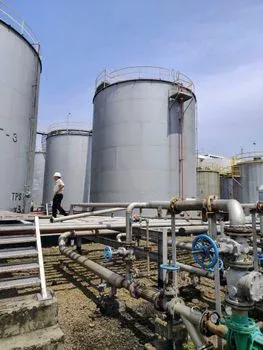
MBR trains for Taichung industrial parks routinely deliver effluent COD below 50 mg/L and more than 99% pathogen removal when membranes are intact, which suits reuse or tight discharge permits. CAPEX is about $12 million for a 2,000 m³/day MBR plant, and OPEX runs $0.35–$0.40/m³, with membrane replacement every 5–7 years. DAF units remove 92–97% TSS and cut FOG before biology; at 2,000 m³/day CAPEX is about $4.8 million and OPEX $0.15–$0.25/m³, usually with PAC dosing at 50–200 mg/L.
A/O (anoxic/oxic) biology removes about 85–90% COD; CAPEX near $3.2 million for 2,000 m³/day and OPEX $0.20–$0.30/m³, but a secondary clarifier can add about 30% footprint versus MBR. Food plants with high TSS often use DAF then MBR or A/O. Electronics reuse trains often pair MBR with RO. One Taichung electronics site cut CAPEX by about 40% by using DAF plus A/O instead of a standalone MBR while still meeting its permit.
Cost and footprint trade-offs also show up in the Christchurch engineering cost and compliance checklist. Footprint, energy, and membrane duty drive most of the spread between those bids. Tight plots next to production halls in Taichung parks often decide the MBR-versus-A/O question before cost does.
| Technology | Typical Effluent COD (mg/L) | TSS Removal (%) | Pathogen Removal (%) | Approx. CAPEX (2,000 m³/day) | Approx. OPEX ($/m³) | Footprint Consideration |
|---|---|---|---|---|---|---|
| MBR | <50 | >99 | >99 | $12M | $0.35–$0.40 | Compact |
| DAF | Varies (pre-treatment) | 92–97 | Low | $4.8M | $0.15–$0.25 | Moderate |
| A/O | <100 (85–90% removal) | Moderate | Moderate | $3.2M | $0.20–$0.30 | Requires secondary clarifier (+30% footprint) |
| DAF + MBR (Hybrid) | <50 | >99 | >99 | ~ $16.8M (sum of individual) | ~$0.50–$0.65 | Moderate to Large |
| MBR + RO (Hybrid) | <10 | >99.9 | >99.9 | ~ $18.8M (sum of individual) | ~$0.45–$0.55 + RO | Large |
Food Processing DAF FOG Removal Cost Taichung
Food processing DAF FOG removal cost in Taichung starts near $50K for a 20 m³/day package on roughly 15 m², and scales to about $4.8 million at 2,000 m³/day on about 200 m². Plants above TSS 1,200 mg/L or FOG 300 mg/L get 92–97% TSS removal when polymer and PAC dosing at 50–200 mg/L are tuned by jar test. OPEX for DAF duty runs $0.15–$0.25/m³, mostly chemicals and skimming labor. A DAF pre-treatment package ahead of biology cuts the load that would otherwise foul membranes or overload clarifiers.
Industrial Wastewater CAPEX OPEX Taichung Science Park
Industrial wastewater CAPEX OPEX planning for the Taichung Science Park starts with the site itself. The Central Taiwan Science Park spans 1,486 hectares and concentrates semiconductors, precision machinery, biotech, and optoelectronics (Wikipedia), so sewer contracts and reuse pressure run tighter than average. At 20 m³/day, a DAF package is about $50K on roughly 15 m², while a compact MBR system is about $120K on about 10 m². At 2,000 m³/day, DAF is about $4.8 million (200 m²), A/O about $3.2 million (250 m²), and MBR about $12 million (120 m²).
OPEX is typically 40–60% energy, 20–30% chemicals, and 10–20% labor; MBR membrane replacement adds about $0.10–$0.15/m³. Where reuse is bankable, MBR plus RO at about 95% recovery can pay back. A Taichung electronics plant with $2.5 million CAPEX for MBR + RO estimated about $800,000 per year in water and discharge savings, for a 3–5 year payback.
Budget also needs equalization (+$100K–$300K), sludge dewatering (+$200K–$500K), and annual permit fees (TWD 50K–200K). Disinfection to meet coliform or E. coli permit lines often uses chlorine dioxide; a Chlorine dioxide disinfection for Taiwan EPA E. coli limits unit is sized after the biological or membrane stage.
| System Type | Capacity (m³/day) | Estimated CAPEX (USD) | Estimated Footprint (m²) |
|---|---|---|---|
| DAF | 20 | $50,000 | 15 |
| DAF | 2,000 | $4,800,000 | 200 |
| MBR | 20 | $120,000 | 10 |
| MBR | 2,000 | $12,000,000 | 120 |
Who This Is For, Selection Checklist, and Next Step
Taichung plant engineers, EPC contractors, and procurement managers use this page when sizing pretreatment through polishing for electronics, food, or textile loads under MOENV tables and park sewer contracts. Look elsewhere if you only need municipal domestic sewage without industrial toxics, or if your permit is solely a soft municipal connection with no onsite metals or color control.
Use this short selection checklist before freezing the P&ID:
- Match the correct MOENV industry table and park sewer contract limits, not a generic COD <100 mg/L assumption alone.
- Measure peak COD, BOD, TSS, FOG, metals, fluoride, and color on the worst production week, not the monthly average.
- Set equalization HRT at 2–4 hours when batch dumps exceed 1.5× average flow.
- Choose DAF when FOG exceeds about 300 mg/L or TSS stays above about 500 mg/L after screening.
- Choose MBR when effluent COD must stay below 50 mg/L or reuse is planned; add RO when conductivity or ions block reuse.
- Reserve A/O when land is available, COD is biodegradable, and CAPEX must stay near the $3.2M / 2,000 m³/day band.
- Include sludge dewatering, permit fees, and membrane replacement in the OPEX model before ROI claims.
If you already have flow, pollutant peaks, and permit limits, send them for a sized train and budget band via request a project quote with your m³/day and key contaminants.
Frequently Asked Questions
What effluent limits apply to factories in Taichung?
Many Taichung science-park and high-tech permits still design to COD <100 mg/L, BOD <30 mg/L, and TSS <30 mg/L, with E. coli often held near <1,000 CFU/100mL where that line is written into the permit. MOENV Effluent Standards amended on 18 December 2024 (Order Huan-Bu-Shui-Tzu No. 1131081975) set industry-specific tables, so the controlling numbers are the table that matches your industry plus any stricter park sewer contract.
How much does a 2,000 m³/day Taichung system cost?
At 2,000 m³/day, approximate CAPEX is $3.2 million for A/O, $4.8 million for DAF, and $12 million for MBR, with hybrid DAF+MBR or MBR+RO summing higher when units are priced separately. OPEX typically lands between $0.15 and $0.40/m³ for single-process trains, rising toward $0.45–$0.65/m³ for hybrids that include membranes and reuse polishing.
When should a Taichung plant choose DAF versus MBR?
Choose DAF first when TSS or FOG dominates, especially food plants above about 1,200 mg/L TSS or 300 mg/L FOG, because 92–97% TSS removal cuts biological load cheaply. Choose MBR when the permit or reuse goal needs COD below 50 mg/L and >99% pathogen removal in a compact footprint. Most plants we size for mixed food or textile loads run DAF ahead of biology rather than MBR alone.
What hidden costs break Taichung WWTP budgets?
Equalization tanks add about $100K–$300K, sludge dewatering about $200K–$500K, and annual Taiwan permit fees about TWD 50K–200K. MBR owners should also carry $0.10–$0.15/m³ for membrane replacement on a 5–7 year cycle. Energy usually remains 40–60% of OPEX, so aeration and blower selection move payback as much as membrane brand choice.
Can treated water be reused inside a Taichung electronics plant?
Yes, when MBR effluent is polished with RO. Trains targeting about 95% recovery have supported reuse in electronics and food plants. One Taichung electronics case cited $2.5 million CAPEX and about $800,000 per year in freshwater and discharge savings, for a 3–5 year payback. Final reuse quality still depends on conductivity, silica, and fluoride limits set by the process owners.