Why an EV plant acquisition changes the wastewater risk
An EV plant acquisition changes both the wastewater profile and the legal basis for managing it, even when the acquired site continues producing vehicles under the same operating plan.
Ford acquisition environmental due diligence must separate two questions. First, can the buyer legally continue the seller’s discharge, reuse and sludge-management arrangements after closing? Second, will the existing treatment train remain adequate if Ford changes the product mix or introduces battery-cell or battery-module operations? The buyer should verify permit status and transferability, discharge authorizations, treatment ownership, sludge-disposal routes, compliance history, land and groundwater considerations where applicable, and pending capital obligations. The effluent treatment plant buyer’s guide provides a useful general framework for separating permit, process and ownership questions.
Assembly and battery production present different wastewater risks. Vehicle assembly generates wash water, paint wastewater, oil-bearing floor water and stormwater, while battery production adds process waters, cleaning solutions, metals and chemical-bearing wastes. The actual production inventory must be confirmed; an assembly-era treatment system cannot be assumed to address battery-derived contamination.
Ford’s Wixom project illustrates both the value of segregation and the limits of historical benchmarks. HRC reported that chrome and electrocoat paint waste received separate initial treatment before entering the general waste stream. HRC also reported a 1 MGD pretreatment design, two filter presses and an $11 million construction cost. These figures describe a project-specific U.S. facility with its own site, process and regulatory conditions; they are not estimates for an acquired Mexican EV plant.
Map every wastewater stream before selecting equipment
Equipment selection begins with a measured inventory of each wastewater source, its destination and its chemical variability, rather than a preference for a particular treatment system.
Create a process-area inventory covering domestic sewage, cooling-tower blowdown, boiler blowdown, compressed-air condensate, vehicle washing, floor washing, paint and pretreat operations, machining coolant, battery-related process water, laboratory drains, stormwater and waste sludge. For each stream, request flow, operating schedule, pH, oil and grease, suspended solids, metals, conductivity, toxicity indicators, relevant chemical constituents and variability during production, shutdown, cleaning and upset conditions.
Ford’s 2019 CDP Water Security response states that the company monitors process-water discharge and standard effluent parameters at 100% of Ford sites. This corporate reporting practice does not substitute for site-specific baseline data, but it establishes the type of evidence the buyer should request.
Source reduction precedes treatment. Ford’s 2010 CDP announcement described a parts-washing system that reduced wastewater generation by 95% compared with previous systems and cut energy consumption by approximately 60%. Whether that technology applies to the acquired plant depends on its process equipment and parts-cleaning requirements.
Evaluate industrial water reuse against the receiving process, not a generic reuse percentage. Torque News reported that Hermosillo’s membrane biological reactor could make up to 65% of wastewater suitable for facility reuse or irrigation. This is a historical reference point, not a default design target for an EV acquisition.
| Stream group | Required characterization | Route to evaluate |
|---|---|---|
| Sanitary sewage and office drains | Flow, operating pattern, local discharge limits | Sanitary sewer or permitted on-site treatment |
| Cooling, boiler and condensate | Flow, pH, conductivity, scaling constituents, variability | Reuse, pretreatment or controlled discharge |
| Vehicle and floor washing | Oil and grease, suspended solids, detergents, metals | Segregated pretreatment followed by reuse or discharge |
| Paint and pretreat waste | Process-specific constituents, metals, suspended solids | Separate treatment, general treatment after assessment, or disposal |
| Machining coolant | Oil and grease, metals, suspended solids, toxicity indicators | Source reduction, segregation, pretreatment and reuse assessment |
| Battery process water | Identified chemical inventory, pH, metals, toxicity indicators, batch variability | Characterization-based treatment or controlled disposal |
| Stormwater | Contaminated versus clean drainage areas, rainfall exposure, pollutants | Segregation, treatment where required, and permitted outfall |
| Waste sludge | Origin, characterization, dewatering needs, disposal acceptance | On-site dewatering and licensed or otherwise authorized route |
A DAF system for automotive plant wastewater is a candidate only for streams whose data support oil, solids or colloid removal. An MBR system for industrial wastewater reuse becomes relevant when biological treatment and membrane filtration are required by the organic load and reuse specification.
Build the treatment train around contamination and destination
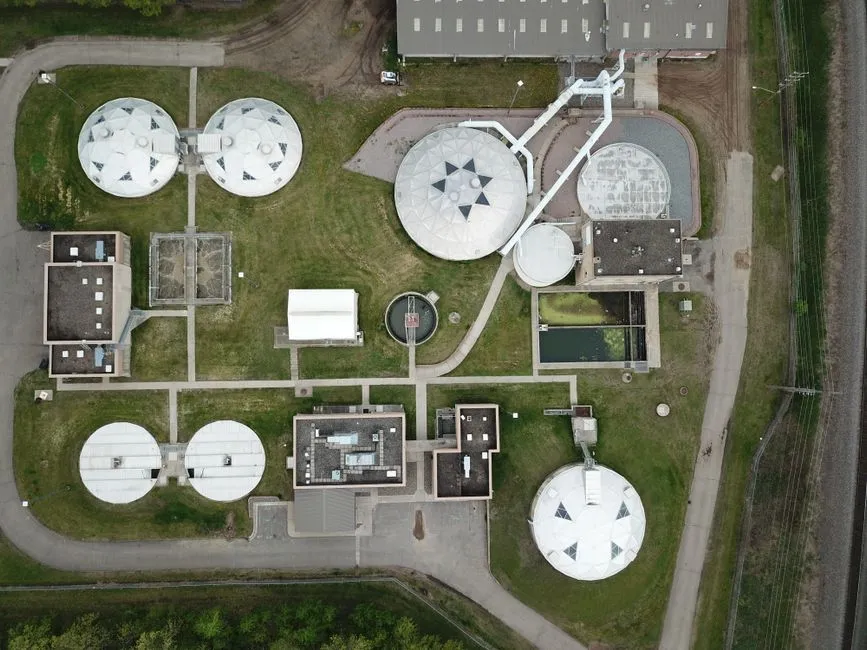
The treatment train should be arranged around the contaminants, the final destination and the sludge route; no single process can be specified before representative testing.
Where streams contain oil, grease, suspended solids or colloidal material, DAF can be considered as a front-end separator. HydropureWater’s stated DAF range covers 4–300 m³/h across 13 models, but that product range is not a sizing result. Final selection requires measured flow, contaminant loading, peak factors and the required performance of the downstream treatment and discharge route.
For biodegradable organic loads and water-reuse applications, biological treatment or MBR may be appropriate. HydropureWater states that its MBR system is offered from 10–2,000 m³/day and combines activated sludge with submerged PVDF membrane filtration below 1 μm. These specifications describe the offered system; they do not establish that MBR is required at the acquired site.
Chemical precipitation should be considered only after the metals inventory and treatment objective are established. At Wixom, HRC specified chemical precipitation to remove environmentally toxic heavy metals, followed by sludge dewatering. A chemical dosing system cannot be selected from the presence of metals alone: dose, pH, residual metals, sludge volume and disposal route must be established through characterization.
The destination defines the required finish. HRC reported that Wixom final effluent went to the City of Wixom municipal wastewater treatment facility. Ford’s 2019 CDP Water Security response identifies a Ford vehicle assembly facility in Mexico that discharged to fresh surface water. These precedents demonstrate different regulatory paths; they do not establish the route for the acquired plant.
Sludge management belongs in the same decision. HRC reported that the Wixom installation used two filter presses and arranged transport of dry solids to a licensed hazardous-waste disposal site. The applicability of a filter press for industrial wastewater sludge depends on solids generation, dewatering performance, handling requirements and the authorized disposal route. Sludge classification must be based on site-specific characterization and applicable law.
| Contamination or objective | Treatment function to evaluate | Decision evidence required |
|---|---|---|
| Oil, grease and floatable solids | DAF or another controlled separation process | Stream flow, loading, emulsification, downstream sensitivity |
| Biodegradable organics | Biological treatment, potentially followed by MBR | Organic loading, biodegradability, reuse quality, variation |
| Suspended solids and fine particles | Clarification or filtration within the treatment train | Solids profile and destination-specific limits |
| Specific metals | Precipitation and solids separation where justified | Metal species, pH, dose response, residual discharge criteria |
| Variable or high-salinity streams | Segregation and dedicated pretreatment | Batch-generation pattern and impact on common treatment |
| Dewatered sludge | Mechanical dewatering | Solids characteristics, required consistency, transport and disposal acceptance |
Decide whether water reuse or discharge is the better route
Reuse should be ranked first only where the receiving process has a defined quality specification and the route is legally and operationally viable.
Use this order of evaluation: manufacturing reuse; controlled irrigation or another approved non-potable use; or treatment for lawful discharge. For each option, identify the receiving user, required water quality, monitoring burden, public-health constraints, seasonal variability and authorization. Technical treatment performance alone does not authorize reuse.
Ford reported that the Chihuahua Engine Plant in Mexico used reverse osmosis to recycle water for production processes. That 2010 announcement demonstrates a Mexican manufacturing reuse precedent, but it concerns an engine plant and does not establish suitability for battery-related wastewater. A reverse osmosis system for water purification must be evaluated against the actual feed chemistry, recovery requirements, concentrate-management route and end-use quality specification.
Discharge alternatives must remain destination-specific. Ford’s 2019 CDP response identifies a Mexican assembly facility discharging to fresh surface water, while HRC reported that Wixom final effluent went to a municipal wastewater treatment facility. A municipal sewer, industrial pretreatment system, surface-water outfall and hazardous-waste route impose different pretreatment, monitoring and liability requirements.
Compare options through the complete water balance rather than a headline reuse percentage. Hermosillo’s reported ability to make up to 65% of wastewater suitable for reuse or irrigation is useful as historical context. It is not an assurance that the acquired plant can achieve the same result under a different product mix, climate, production schedule or regulatory route. The 2026 industrial wastewater market review can support broader planning, but site data must govern the decision.
Complete the wastewater acquisition due-diligence checklist
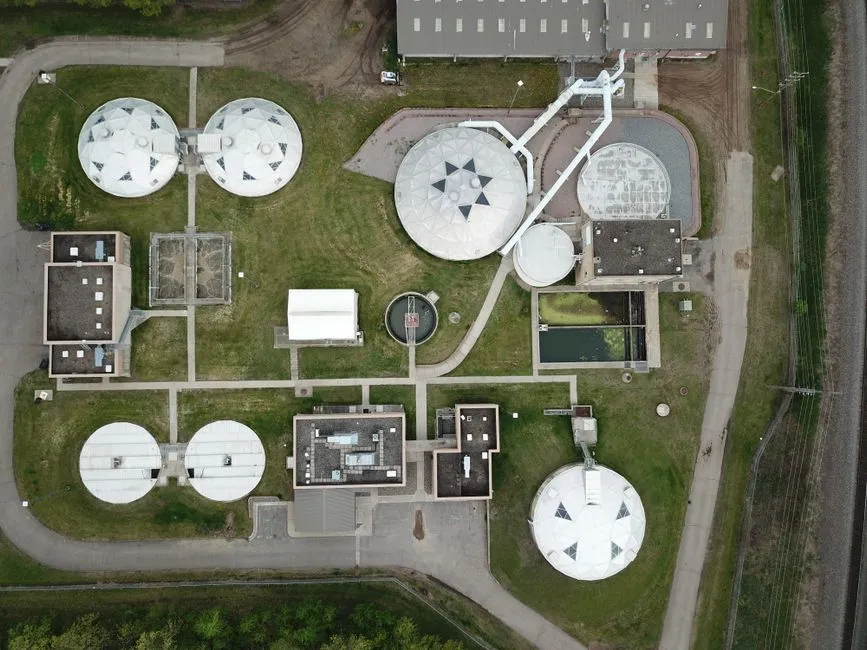
Capital approval should follow a documented diligence gate that distinguishes verified facts from unresolved design inputs.
- Permits and contracts: Obtain the current authorization, discharge limits, monitoring obligations, reporting history, sewer or surface-water agreements, stormwater requirements and permit-transfer status. Identify whether treatment is owned by the seller, municipality or third party and whether the agreement survives closing.
- Process facts: Verify current and planned product mix, production shifts, water balance, peak flows, chemical inventory, source-control equipment, treatment-train condition, redundancy, automation, power supply and available footprint. Confirm whether battery-cell or battery-module operations are planned.
- Compliance facts: Review sampling results, exceedances, notices, consent orders, remediation obligations, sludge destinations and allocation of environmental liabilities under the acquisition agreement.
- Operating data: Obtain actual flow, pH, oil and grease, suspended solids, metals, conductivity and toxicity data by stream and production condition, including startup, shutdown and cleaning events. Do not size equipment from Wixom’s 1 MGD benchmark.
- Commercial facts: Price source reduction, treatment, reuse, discharge monitoring, sludge handling, contingency, commissioning and long-term operation as separate scopes. Compare options using verified site inputs rather than a generic cost-per-ton figure.
The commercial review should also test who bears operating costs, chemical supply risk, sludge-transport obligations and permit-compliance liability after closing. A more detailed 2026 wastewater capital and operating cost breakdown can structure that estimate, but its location-specific assumptions must be replaced with verified Mexican site inputs.
Turn diligence findings into a funded wastewater roadmap
The acquisition should set a deadline for evidence, not merely for issuing a capital plan.
- Phase 1—Preserve coverage: Confirm immediately after closing who controls treatment, monitoring, sludge transport and reporting, and whether every existing discharge remains authorized.
- Phase 2—Establish the basis: Characterize every stream under representative production conditions, verify the water balance, and model peak loads and water-quality excursions.
- Phase 3—Compare alternatives: Evaluate source reduction, segregation, pretreatment, reuse and discharge using an engineering basis that includes labor, chemicals, sludge disposal, monitoring and residual compliance risk.
- Phase 4—De-risk and implement: Pilot uncertain separations or reuse applications, then procure and commission equipment in a sequence that protects production continuity and downstream permits.
HRC reported that Ford’s Wixom project used early engineering, separate bid packages and construction management to complete complex treatment work within schedule. The reported $11 million cost remains site-specific, but the project-management sequence is transferable: establish evidence and discharge obligations before committing major capital.
Frequently Asked Questions
How much does a new wastewater treatment system cost for an acquired EV plant in Mexico?
No defensible site price can be stated without the acquired plant’
Frequently Asked Questions
How much does wastewater treatment cost for an acquired EV plant in Mexico?
Operational costs for industrial wastewater treatment in Mexico typically range between $0.80 and $2.50 USD per cubic meter, depending on the complexity of the influent and local electricity tariffs. Capital expenditure for retrofitting existing infrastructure to meet strict EV battery manufacturing standards can range from $2 million to $10 million USD, contingent on the plant's capacity and the concentration of heavy metals like nickel, manganese, and cobalt in the process streams.
What flow and water-quality data should Ford use to size treatment equipment after an acquisition?
Engineers should analyze at least 24 months of historical flow data, focusing on peak hourly flow rates and daily hydraulic loading, which often fluctuate by 20-30% in automotive assembly. Critical water-quality parameters must include Chemical Oxygen Demand (COD) ranging from 500 to 3,000 mg/L, Total Suspended Solids (TSS), oil and grease levels, and specific heavy metal concentrations; baseline sampling should be conducted during both dry and rainy seasons to account for variations in stormwater infiltration.
Should Ford choose DAF, MBR or a combined treatment train for an EV plant?
For modern EV plants, a combined treatment train is generally recommended over standalone systems. Dissolved Air Flotation (DAF) is essential as a primary pretreatment step to remove emulsified oils, greases, and suspended solids, while Membrane Bioreactor (MBR) technology should follow to achieve high-quality effluent, consistently reducing COD to below 50 mg/L and meeting stringent reuse standards that conventional activated sludge cannot reliably achieve.
What permits and compliance records should Ford review before acquiring a Mexican plant?
Ford must conduct due diligence on the plant's "Descarga de Aguas Residuales" permit issued by the National Water Commission (CONAGUA). Key compliance records to review include the "Registro de Descargas," adherence to NOM-001-SEMARNAT-2021 (which sets maximum permissible limits for pollutants in national water bodies), and documentation of hazardous waste manifests if the facility handles toxic sludge from battery production processes.
Is wastewater reuse cheaper than municipal or surface-water discharge for an automotive plant?
Wastewater reuse is increasingly cost-effective in Mexico, particularly in water-stressed regions where municipal water tariffs for industrial use can exceed $1.50 USD per cubic meter. While the initial investment in a reverse osmosis or advanced oxidation stage for water reclamation is higher, the long-term operational savings are significant due to reduced water procurement costs, lower discharge fees, and the mitigation of legal risks associated with non-compliance in regions where water rights are strictly regulated.