What changes when HEINEKEN acquires a Texas brewery?
No HEINEKEN-specific wastewater rule is triggered solely by acquiring a Texas plant. The buyer must determine whether the transaction changes permit ownership, the legal operator, the permitted activity, wastewater flow or composition, treatment operation, reuse planning, or discharge routing. For direct discharge, this means reviewing the NPDES permit, transfer requirements, effluent limits, monitoring, and anti-backsliding issues. For indirect discharge, the buyer must assess the POTW pretreatment permit, local limits, categorical standards, monitoring, surcharges, and industrial-user status. HEINEKEN reports that brewery wastewater can contain organic materials and cleaning agents, making the site’s actual water balance, ETP performance, and historical compliance record essential before closing.
The acquisition team should answer four separate questions: Who owns the permit? Who operates the facility? What activity does the permit authorize? And will flow, composition, treatment, reuse, or routing change under HEINEKEN’s post-close production plan? These are not interchangeable. A transfer application may correct the permit holder, but it does not establish that the existing permit remains technically appropriate for a materially different operation. The review should follow the structure in this beer plant acquisition wastewater due-diligence workflow.
HEINEKEN’s company-level disclosure provides context, not a Texas site finding. The company states that brewery processes generate wastewater containing organic materials and cleaning agents and that 97% of wastewater volume was treated before discharge at the end of 2020 and in 2019. That figure describes the company’s portfolio at those dates; it does not establish treatment performance, permit compliance, or remaining capacity at the acquired brewery.
Map every wastewater stream before reviewing the permit
The permit review should begin with a physical and chemical inventory of every wastewater pathway, because a transfer application cannot cure an unidentified or disconnected stream. Prepare before-and-after diagrams for the proposed production plan, then tie each stream to its governing permit, treatment step, reuse destination, and final discharge point.
| Stream | Diligence focus | Change to map |
|---|---|---|
| Brew-house and production drains | Organic loading, suspended solids, flow variability, product losses | Production volume, product mix, segregation, equalization |
| Equipment and floor cleaning | Cleaning agents, pH, surfactants, biodegradable organics | Chemical inventory, concentration, collection practice |
| Cooling loops and blowdown | TDS, conductivity, temperature, residual biocides | Cooling demand, segregation, reuse and disposal |
| Sanitary outlets | Hydraulic load, ammonia, treatment interaction | Population, flow, and equalization demand |
| Stormwater outfalls | Discharge authorization, exposed pollutants, historical drainage | Impervious area, chemicals, access controls |
| Startup, shutdown, upset, and maintenance discharges | Concentrated organic or chemical loads, bypass risk | Operating sequence, storage, treatment response |
The water balance must connect freshwater make-up to process use, wastewater generation, equalization, treatment, reuse, and final discharge. It should reflect HEINEKEN’s proposed schedule rather than the seller’s forecast. Continuous base flow must be separated from startup, shutdown, upset, maintenance, and intensive cleaning discharges because those events can concentrate pollutants or exceed equalization capacity.
Evaluate legacy brewery streams separately from cooling blowdown. Process water may carry organic material and cleaning chemicals, while cooling blowdown can introduce high TDS, thermal loading, and residual biocides. Combining the streams may require a more complex treatment train; segregating them may avoid unnecessary expansion, but only if the piping, controls, and operating procedures support that separation.
Require representative sampling under documented operating conditions for flow, pH, temperature, BOD, TSS, TDS, conductivity, oil and grease, metals, ammonia, and process-specific constituents. Separate samples should distinguish normal production from peak, startup, shutdown, upset, and cleaning conditions. A low average result does not establish peak compliance or adequate treatment capacity.
Choose the applicable Texas approval path
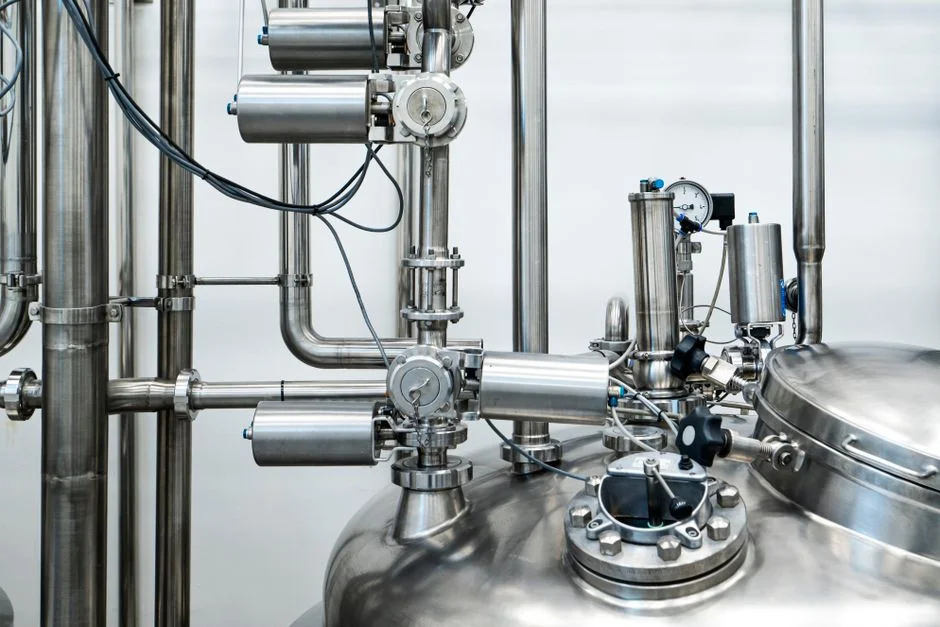
The controlling approval path depends on the final destination: an NPDES permit for direct discharge or a POTW pretreatment instrument for indirect discharge. The buyer should not infer the path from the word “brewery,” because the permit record and actual piping determine who regulates the discharge.
| Decision | Direct discharge | Indirect discharge |
|---|---|---|
| Obtain | Complete NPDES permit, modifications, transfer application, DMRs, self-monitoring records, monitoring plan, compliance schedules, and agency correspondence | POTW pretreatment permit or agreement, local limits, applicable categorical standards, DMRs, surcharge calculations, denials, notices of violation, and consent orders |
| Test | Site-specific effluent limits, monitoring frequency, whole effluent toxicity requirements where applicable, operating conditions, discharge point, and flow | Industrial-user status, flow acceptance, constituent limits, surcharges, monitoring, and sewer restrictions |
| Ask the authority | Whether transfer or modification is required and whether the permitted activity remains appropriate | Whether the buyer is an industrial user and whether changed flows require a new permit, revised limits, monitoring, or surcharges |
| Review together | Whether ownership, operation, pollutants, flow, treatment, reuse, or discharge-point changes have anti-backsliding implications; the permit authority determines the legal consequence | |
For direct dischargers, the governing NPDES permit may impose site-specific limits and conditions that cannot be reconstructed from general rules. Confirm that the permit remains appropriate for the post-close brewery operation, including any change in chemicals, discharge route, treatment process, or reuse. The practical treatment of pretreatment limits and industrial wastewater characterization in Texas illustrates why permit-specific evidence controls the conclusion.
For indirect dischargers, approval of a sewer connection does not establish that the existing discharge may continue at the proposed flow or composition. Obtain the sewer authority’s written position on the buyer’s industrial-user status, flow acceptance, revised monitoring, surcharges, and any required permit modification. Record every unresolved item as an approval dependency with the authority, required information, transaction owner, and deadline.
Test whether the existing ETP can support HEINEKEN's operation
The acquired brewery effluent treatment plant should be classified as either a usable asset or a post-close capital liability by testing it against the proposed water balance and chemistry. Historical performance under the seller’s production schedule does not establish capacity under HEINEKEN’s plan.
Review equalization, clarification, biological treatment, filtration, disinfection, and dewatering for physical condition, design basis, hydraulic capacity, controls, redundancy, and maintenance records. Compare the ETP with proposed flow, temperature, TDS, chemical inventory, and solids loading. Evaluate equalization volume against peak flow; MLSS, SVI, and dissolved oxygen for biological performance; sludge dewatering; instrument completeness; SCADA historian quality; online-analyzer reliability; and calibration records.
HydropureWater’s commercial acquisition article identifies operation above 85% of design capacity as a high-risk integration screening reference. That benchmark is not a finding about this brewery. The buyer should obtain the ETP’s documented design basis and compare it with both average and peak loads under the proposed production plan.
| Treatment issue | Relevant technology | Evidence required before selection |
|---|---|---|
| Suspended solids, oil and grease, FOG, or colloidal material | Clarification or a DAF system for brewery wastewater pretreatment | Representative solids and FOG data, peak hydraulic profile, oil separation requirement, and equipment condition |
| Biodegradable organics plus solids separation | MBR treatment for brewery wastewater reuse | Organic loading, temperature, MLSS and SVI behavior, membrane fouling risk, solids handling, and reuse specification |
| Bacteria, colloids, and suspended solids | UF | Feed chemistry, required permeate quality, recovery, pretreatment needs, and concentrate disposition |
| Dissolved-solids control for reuse | Industrial RO | TDS and ionic profile, recovery, energy demand, pretreatment, concentrate management, and authorized reuse destination |
Do not recommend a treatment train until representative chemistry, required effluent quality, reuse specifications, recovery, energy demand, and concentrate disposition are established. For a broader design check, use an integrated treatment plant design for food-processing wastewater as a framework, not as a substitute for site-specific design and permit review.
Review compliance history and baseline performance

A current permit does not prove sustained compliance, so the buyer should establish the operating baseline before accepting the treatment system or assigning post-close liability. Following the HydropureWater recommendation, review five years of Discharge Monitoring Reports for BOD, TSS, heavy metals, and temperature.
The longitudinal review should identify recurring excursions, missing data, exceedances masked by averages, changing operating patterns, and discrepancies among monitoring reports, laboratory records, and permit limits. Apply each result to its operating context. A sample collected during startup, shutdown, upset, maintenance, or a peak production day may not represent stable compliance under the buyer’s proposed schedule.
Obtain sampling methods, chain-of-custody records, laboratory contracts, monitoring plans, and raw analytical data. Reconcile permit limits with laboratory results and confirm who collected, analyzed, reviewed, and reported each data point. Missing or unreliable data is itself a diligence finding because it weakens the buyer’s ability to demonstrate performance after closing.
HydropureWater reports average administrative penalties of $12,000 to $45,000 per Notice of Violation, citing EPA ECHO 2023. It also states that consent orders frequently require supplemental environmental projects exceeding $500,000. These figures are diligence signals, not predictions of liability at this site. Texas counsel should assess the actual violations, enforcement history, responsible parties, and available remedies.
The same historical review should identify unresolved corrective actions, denied pretreatment discharges, bypass events, equipment outages, and changes in chemical use. These findings need to be assigned a transaction remedy and operating owner rather than left in a consultant report.
Translate wastewater findings into transaction protections
Material wastewater findings should become enforceable transaction protections with objective evidence. An administratively curable permit-transfer deficiency may warrant a closing condition; a treatment-capacity gap may justify a price adjustment, seller-funded capital obligation, escrow, or measurable operating covenant.
| Finding | Potential protection | Objective completion evidence |
|---|---|---|
| Outstanding permit transfer or required notification | Closing condition plus seller-cooperation covenant | Accepted filing, effective permit, or written agency confirmation |
| ETP capacity gap | Price adjustment, seller-funded capex, escrow, or performance covenant | Approved design, installed equipment, baseline testing, and verified stable discharge performance |
| Pre-closing violations or corrective action | Specific indemnity, reserved claim, or funded corrective-action plan | Agency acceptance, completed remedy, and verified compliance |
| Contamination or third-party sewer claims | Defined indemnity or remediation escrow with access obligations | Scoped investigation, agreed remedy, milestone evidence, and claim closure |
| Uncertain post-close performance | Operating covenant with corrective-action threshold | Stable monitoring results, treatment records, and operator sign-off |
Allocate responsibility for permit transfer or modification, corrective action, pre-closing violations, contamination, third-party sewer claims, equipment replacement, and post-close operating performance. Do not allow a broad environmental indemnity to obscure technical work that still requires a named owner, funded plan, and dated milestone.
HydropureWater’s article reports environmental-indemnity caps of 15% to 25% of purchase price and five-to-seven-year survival periods, citing the ABA M&A Study 2023. It also suggests a dedicated remediation escrow or a 1.5-times estimated-remediation reserve. These are negotiation structures to evaluate, not legal advice, Texas requirements, or default terms. Texas counsel should tailor enforceability, duration, caps, escrows, and covenants to the transaction structure, seller credit, contamination uncertainty, and actual permit exposure.
Objective milestones should include an accepted transfer filing, written agency confirmation where appropriate, approved design, completed baseline sampling, installed equipment, operator training, and verified stable discharge performance. Avoid vague obligations such as “compliance maintained.”
Plan readiness from closing through the first 100 days
Closing does not establish wastewater operating readiness. Before closing, appoint a wastewater lead, preserve historical records and agency correspondence, establish the baseline water and energy balances, and restrict unauthorized changes to production, chemicals, treatment operation, cooling, reuse, and discharge routing. Baseline samples should use documented methods, chain of custody, and representative operating conditions.
At closing, complete required ownership and operator notifications, reconcile every permit condition with actual operations, confirm laboratory and monitoring contracts, and document the baseline. Access to maintenance records, chemical inventories, treatment-plant controls, SCADA history, and permit files must be in place. If a transfer remains unresolved, establish an interim compliance plan with named responsibility, required actions, and dates.
During the first 100 days, review discharge samples and DMR trends, verify SCADA and laboratory data, and test treatment under the post-close operating profile. Train operators on chemical controls, representative sampling, startup and shutdown procedures, bypass prevention, equipment operation, and reporting deadlines. Assign each permit condition an owner, evidence record, and corrective-action threshold.
After stabilization, screen every production, chemical, cooling, reuse, or discharge modification against NPDES conditions, POTW limits, groundwater controls, and treatment capacity. A proposed change should not proceed until the responsible engineer and operator can document its compliance effect and the receiving authority’s approval where required.
Frequently Asked Questions
Does HEINEKEN need a new wastewater permit merely because it acquires a Texas plant?
Not necessarily. The answer depends on the permit’s transfer conditions, the identity of the legal operator, the discharge route, and whether the acquisition changes the permitted activity. The buyer should obtain the permit file and request agency or POTW confirmation of whether transfer, notification, modification, or a new authorization is required.
Does every brewery wastewater stream require the same treatment?
No. Organic and cleaning-agent loads, suspended solids, cooling-blowdown TDS, residual biocides, thermal loading, and reuse specifications can produce different treatment objectives. The buyer should segregate streams where practical and base treatment selection on representative chemistry, peak flow, required discharge quality, and the authorized reuse destination.
How much should the buyer budget for wastewater treatment integration?
No site-specific quotation is available from the supplied research. HydropureWater reports complete MBR, RO, and crystallizer integration costs of $7 million to $12 million and an RO cooling-blowdown operating-cost benchmark of $1.50 to $2.50 per cubic meter. These are planning references, not quotations for a Texas brewery. Request a scoped estimate based on the proposed water balance, representative chemistry, required recovery, concentrate disposition, energy demand, civil work, controls, and current ETP condition.
How should an equipment supplier be selected?
Require the supplier to demonstrate sizing against the proposed water balance and chemistry rather than historical flows. The evaluation should include treatment guarantees, pretreatment needs, controls integration, maintainability, spare-parts strategy, energy demand, concentrate management, and compatibility with the authorized discharge or reuse destination. A process-selection check should be separate from commercial pricing.
What evidence proves the plant is ready to close and operate after acquisition?
Require the permit and transfer status, completed notifications, accepted permit conditions, representative baseline data, verified ETP performance, assigned operators, laboratory contracts, monitoring calendars, and documented startup controls. For unresolved transfer issues, require agency correspondence and an interim compliance plan rather than relying on closing as the approval milestone.