What Changes When CATL Acquires a Texas Plant?
There is no single CATL-specific wastewater rule triggered merely by acquiring a Texas plant. Requirements depend on the site’s existing permit, discharge route, operator, wastewater profile and post-close operations. TCEQ or another Texas permitting authority may require a permit transfer or modification, while a POTW may require industrial-user approval, revised pretreatment limits or monitoring. The buyer must test whether CATL’s proposed production, cooling, chemical use, flow and reuse plans alter permitted activity or treatment capacity. Historical discharge reports, pretreatment records and a complete water balance should be reviewed before closing, with unresolved permit or capacity issues converted into closing conditions, price adjustments, escrows or seller covenants.
Legal ownership, permitted activity, discharge characteristics and operating responsibility are separate questions. The buyer should identify the permit holder, industrial user, operator, receiving authority and responsible corporate entity because those roles may not be identical. It must also determine whether production, power generation, cooling demand, potable-water use, chemicals, wastewater flow and discharge routing will continue, expand, cease or change after closing.
A transfer application may be administrative, but the agency can separately review whether the proposed activity or discharge basis has changed. Change-of-ownership language alone does not answer whether the permit remains appropriate for CATL’s operating plan.
NextEra Water’s July 13, 2022 acquisition provides only a transaction precedent: it covered 23 water and five wastewater systems in eight counties near Houston and approximately 2,700 customers. It does not establish CATL’s obligations or identify any CATL-specific Texas permit.
Map Every Wastewater Pathway Before Closing
The acquisition team should diagram every wastewater pathway before evaluating a permit file. A before-and-after drawing should cover process drains, cooling loops, stormwater outfalls, sanitary outlets, treatment units, discharge points and reuse destinations. Each stream must be linked to its permit, destination and post-close operating condition.
Build a water balance from freshwater make-up, process usage, cooling-tower evaporation and blowdown, wastewater generation, reuse and final discharge. It should reflect CATL’s proposed production schedule rather than the seller’s historical forecast. Separately identify continuous base flow and startup, shutdown, upset and maintenance discharges, which can concentrate pollutants or exceed equalization capacity.
Evaluate legacy industrial contaminants separately from cooling-blowdown characteristics. The HydropureWater source identifies heavy metals, VOCs and complex organics as potential legacy-process contaminants, while cooling blowdown can carry high TDS, thermal loading and residual biocides. If the streams are combined, treatment must accommodate both contaminant classes. Segregation may avoid unnecessary expansion, but it must be supported by actual piping, controls and operating procedures.
| Diligence object | Required comparison | Decision question |
|---|---|---|
| Wastewater pathways | Before and after closing | Will any stream change destination, composition or routing? |
| Water balance | Historical use versus CATL’s operating plan | Will freshwater demand, blowdown, reuse or discharge rise? |
| Wastewater chemistry | Legacy process streams and cooling blowdown | Can the streams be segregated, or must treatment handle both? |
| Intermittent discharges | Startup, shutdown, upset and maintenance | Does equalization capacity cover peak and concentrated discharges? |
| Receiving obligations | Direct discharge or indirect discharge | Which permit or sewer restrictions govern the final destination? |
Determine Which Texas Permit Governs the Discharge
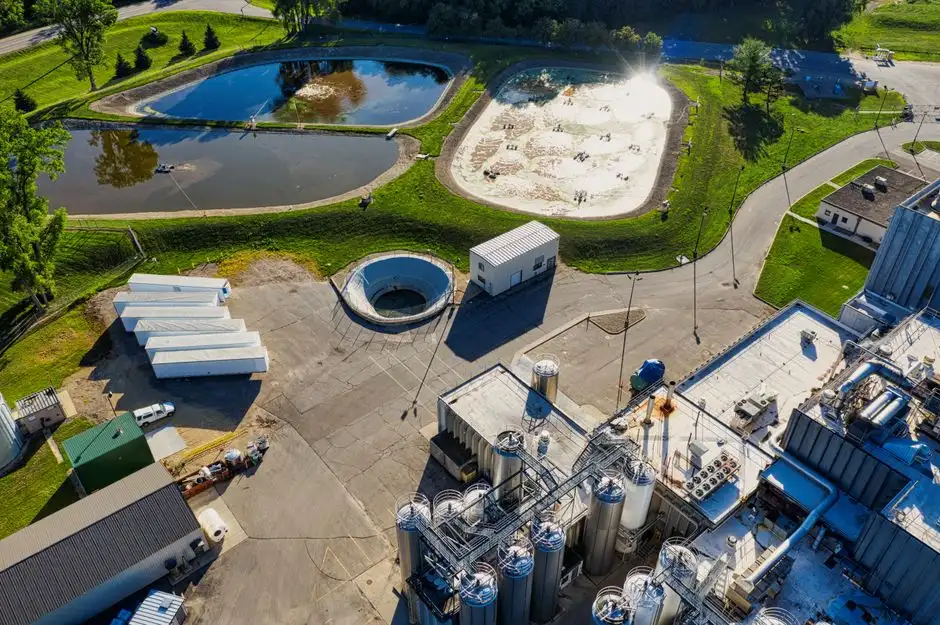
The governing requirement depends on whether the plant directly discharges to surface water or sends wastewater to a POTW. For a direct discharger, obtain the complete NPDES permit, modifications, transfer application, discharge monitoring reports, self-monitoring records, monitoring plan, compliance schedules and correspondence with the Texas permitting authority. The site-specific permit may contain effluent limits, monitoring frequencies, whole effluent toxicity requirements and operating conditions that cannot be reconstructed from general rules.
Review any anti-backsliding implications before relying on an administrative transfer. The key question is whether ownership, operation, discharge point, pollutants or flow change in a way that affects the permitted basis.
For an indirect discharger, obtain the POTW pretreatment permit or agreement, local limits, applicable categorical pretreatment standards, discharge monitoring reports, surcharge calculations, denials, notices of violation and consent orders. Ask the sewer authority whether it regards the buyer as an industrial user after the transaction and whether changed cooling or process flows require a new permit, modified local limits or revised monitoring. The practical approach for how Texas industrial plants characterize wastewater and meet sewer limits provides a useful site-specific workflow rather than a substitute for the controlling permit.
TCEQ is a central Texas wastewater permitting resource, but the actual permit and receiving authority determine which approvals apply. Additional industrial-sewer context is available in how Texas industrial plants evaluate 2026 pretreatment limits.
| Discharge route | Controlling instruments | Records to obtain | Buyer action |
|---|---|---|---|
| Direct discharge | NPDES permit and modifications | Monitoring reports, self-monitoring records, monitoring plan, compliance schedules and agency correspondence | Confirm transfer status and evaluate whether CATL’s activity, pollutants, flow or routing changes the permit basis |
| Indirect discharge | POTW pretreatment permit or agreement | Local limits, categorical standards, surcharge calculations, denials, notices of violation and consent orders | Obtain the sewer authority’s position on industrial-user status, flow acceptance, monitoring and revised restrictions |
| Reuse | Site-specific reuse and discharge approvals | Water balance, treatment specifications, quality data and destination records | Verify that reuse does not bypass permit or sewer restrictions |
Test Whether the Permitted Activity Will Change
A permit transfer is administrative only if the permitted activity and discharge basis remain materially unchanged. Compare the current permit with CATL’s proposed production, cooling, chemical inventory, wastewater flow, treatment process and discharge point. The buyer should not treat “change of ownership” as the technical test.
Connect each proposed operational change to a permit condition or sewer restriction. A change in chemical use may affect residual biocides, pH control or toxicity. Additional cooling may change flow, temperature and TDS. A new process may introduce constituents absent from the legacy profile. A revised discharge point or treatment process may require agency review even if total flow is unchanged.
For direct discharge, evaluate whether the existing process-based permit remains appropriate if CATL’s post-acquisition operation is materially different. The permit’s limits, monitoring conditions and operating provisions must fit the actual discharge—not merely the legacy operation that produced them.
For indirect discharge, compare proposed flow and constituents with POTW local limits, categorical standards, surcharges and discharge restrictions. The wastewater-profile review should therefore precede major treatment investment. A sewer connection approval does not establish that the existing discharge can continue at CATL’s proposed flow or composition.
Any unresolved question should be recorded as an approval dependency with a named authority, supporting information, decision owner and deadline. That structure prevents commercial teams from assuming regulatory acceptance before the permit record proves it.
Audit Historical Compliance and Baseline the Wastewater
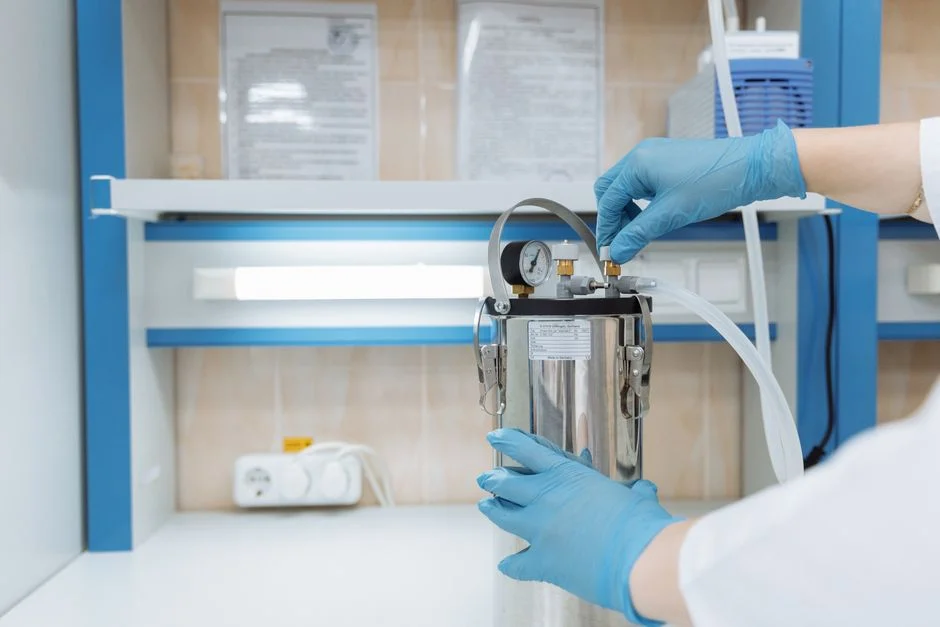
The buyer needs a defensible operating baseline because a current permit does not prove sustained compliance. Following the HydropureWater recommendation, review five years of Discharge Monitoring Reports for BOD, TSS, heavy metals and temperature. Look for recurring excursions, changing operating patterns, missing data, exceedances masked by averages and discrepancies among monitoring reports, laboratory records and permit limits.
Obtain representative influent and effluent data for flow, pH, temperature, BOD, TSS, TDS, conductivity, oil and grease, metals, ammonia and process-specific regulated constituents. A permit is a compliance ceiling, not a substitute for process chemistry. Low average discharge can conceal peak concentrations that impair treatment performance or sewer compliance.
Document sampling methods, chain of custody and operating conditions for every baseline sample. The record should identify whether the sample represented normal production, a peak operating day, startup, shutdown or an upset. Without that context, the buyer cannot distinguish stable performance from a temporary or unrepresentative result.
| Evidence | Review test | Risk if missing |
|---|---|---|
| Five-year Discharge Monitoring Reports | Recurring excursions, missing data, averaging effects and permit-limit mismatches | Unquantified violation and enforcement exposure |
| Laboratory records and chain-of-custody files | Method consistency, representativeness and agreement with reported results | Unreliable baseline and weak proof of post-close performance |
| Influent and effluent datasets | Flow, temperature, solids, dissolved solids, metals, ammonia and process constituents under defined conditions | Treatment capacity cannot be tested against CATL’s operating profile |
| Equipment and operating logs | Production schedule, bypasses, chemical changes, upset events and treatment outages | Historical averages may conceal transient discharges |
Decide Whether Existing Treatment Can Support CATL Operations
Classify the acquired treatment system as either a usable asset or a post-close capital liability by testing it against CATL’s water balance and wastewater chemistry. Review equalization, clarification, biological treatment, filtration, disinfection and dewatering for physical condition, design basis, hydraulic capacity, controls, redundancy and maintenance records. Performance under the former production schedule does not establish capacity under CATL’s proposed load.
Verify hydraulic and treatment performance against anticipated flow, temperature, TDS, chemical use and solids loading. Assess equalization volume against peak flow; MLSS, SVI and dissolved oxygen for biological performance; sludge dewatering; instrument completeness; SCADA historian quality; online-analyzer reliability; and calibration records. HydropureWater identifies operation above 85% of design capacity as a high-risk condition for data-center integration; that benchmark is a screening reference, not a finding for this site.
Select treatment from the contaminant and required effluent quality. Clarification or flotation is relevant where suspended solids, oil and grease, FOG or colloidal material drives the requirement. An integrated MBR wastewater treatment system can combine biological treatment and solids separation where a compact footprint is needed. An industrial reverse osmosis system can reduce dissolved solids, colloids, bacteria or suspended solids before reuse.
HydropureWater reports complete MBR, RO and crystallizer integration costs of $7 million to $12 million. It also reports that RO recycling of cooling-tower blowdown can reduce freshwater make-up by 75%, while adding $1.50 to $2.50 per cubic meter in operating cost. These are planning benchmarks, not quotations for a Texas site. Recovery, pretreatment requirements, energy demand and concentrate disposition must be tested against actual site chemistry.
| Treatment condition | Technical screening | Required proof before commitment |
|---|---|---|
| Equalization or solids removal | Peak flow, suspended solids, oil and grease, FOG and colloidal load | Hydraulic profile, equipment condition and pilot or design calculations |
| Biological treatment | Temperature, biodegradable loading, MLSS, SVI and dissolved oxygen | Performance test under CATL’s anticipated flow and chemistry |
| MBR | Compact biological treatment and solids separation requirements | Feed chemistry, membrane fouling risk, controls and operating plan |
| RO or UF | Dissolved solids, colloids, bacteria, suspended solids and reuse quality | Recovery, pretreatment, energy and concentrate-disposition analysis |
| Concentrate management | Residual salt and contaminant management | Authorized destination and lifecycle cost estimate |
Allocate Permit, Treatment and Contamination Risk in the Deal
Technical findings must be converted into enforceable transaction protections. An administratively curable permit-transfer deficiency may be a closing condition. A treatment-capacity gap may justify a purchase-price adjustment, seller-funded capital obligation, escrow or covenant with measurable start-up and performance milestones. Contamination of uncertain extent should not be reduced to an unsupported lump sum.
Allocate responsibility for permit transfer and modification, corrective action, pre-closing violations, contamination, third-party sewer claims, equipment replacement and post-close performance. The HydropureWater source reports environmental-indemnity caps of 15% to 25% of purchase price and five-to-seven-year survival periods, citing the ABA M&A Study 2023. It also suggests a dedicated remediation escrow or a 1.5-times estimated-remediation reserve. These figures are negotiation context, not legal advice or a site-specific entitlement; Texas counsel must tailor them to the transaction structure, seller credit and contamination uncertainty.
The plant-acquisition wastewater due-diligence framework provides a useful drafting structure, but the governing law and obligations remain site-specific.
| Finding | Preferred allocation mechanism | Objective completion evidence |
|---|---|---|
| Permit transfer or notification outstanding | Closing condition and seller cooperation covenant | Accepted filing, effective permit or written agency confirmation |
| Treatment-capacity shortfall | Price adjustment, seller-funded capex obligation or escrow | Approved design, installed equipment and verified performance |
| Historical violations or corrective action | Pre-closing indemnity or reserved claim | Compliance status, agency acceptance and completion records |
| Contamination with uncertain extent | Remediation escrow and defined access obligations | Scoped investigation, remedy estimate and agreed milestones |
| Post-close performance uncertainty | Operating covenant with corrective-action threshold | Stable monitoring results, treatment records and operator sign-off |
Use a Closing-to-Operations Compliance Checklist
Closing does not establish wastewater operating readiness. Before closing, confirm permit status, appoint a wastewater lead, preserve historical records, establish baseline water and energy balances, and prohibit unauthorized changes to production, cooling, chemicals, treatment operation or discharge routing. Baseline samples should use documented methods, chain of custody and representative operating conditions.
At closing, complete required ownership and operator notifications, reconcile every permit condition with actual operations, confirm laboratory and monitoring contracts, and document the operating baseline. Verify access to agency correspondence, maintenance records, chemical inventories and treatment controls. If permit transfer remains unresolved, establish an interim compliance plan with named responsibility and dates.
During the first 100 days, review discharge samples and DMR trends, verify SCADA and laboratory data, test treatment under CATL’s operating profile, and train operators on chemical controls, sampling, equipment startup and the reporting calendar. Assign an owner, evidence record and corrective-action threshold to each permit condition. The wastewater and cooling-blowdown treatment methodology can support the technical review, but site-specific permits remain controlling.
After stabilization, screen every proposed production, cooling, chemical, reuse or discharge modification against NPDES conditions, POTW limits, groundwater controls and treatment capacity before implementation.
| Stage | Required actions | Control record |
|---|---|---|
| Pre-closing | Confirm permits, preserve records, establish balances, appoint the wastewater lead and restrict operational changes | Diligence memorandum, baseline files and owner assignments |
| Closing | Complete notifications, reconcile permits with operations and confirm monitoring contracts | Accepted filings, permit-condition matrix and baseline report |
| First 100 days | Review monitoring trends, test treatment, train operators and track corrective actions | Samples, DMR review, SCADA verification and training records |
| Post-stabilization | Screen future modifications against permits, sewer restrictions and treatment capacity | Approved change-control records and operating data |
Frequently Asked Questions
Does changing the permit holder automatically change the wastewater limits?
No. A permit transfer does not by itself establish new limits. The buyer must obtain the controlling permit, confirm the transfer requirement and determine whether CATL’s production, flow, pollutants, treatment or discharge routing changes the permitted activity. The agency or POTW—not the acquisition agreement alone—determines whether modification or another approval is required.
When should an existing treatment plant be treated as a purchase-price issue?
It should be treated as a purchase-price or seller-funding issue when the acquired system cannot reliably meet the required discharge or reuse performance under CATL’s water balance. A buyer should request a capacity assessment against flow, temperature, TDS, chemicals and solids, together with equipment condition and performance records. Where the gap is quantified and attributable to the pre-close asset, the purchase agreement should address price, capex, escrow or a seller-funded milestone rather than leaving the full obligation with the buyer.
How can a buyer assess whether a POTW will accept CATL’s proposed wastewater flow and composition?
Submit the proposed water balance and representative wastewater data to the sewer authority and request written confirmation of industrial-user status, applicable local limits, categorical standards, monitoring, surcharges and discharge restrictions. The buyer should ask whether changed cooling or process flows require a new permit, modified limits or revised monitoring. Connection approval alone does not demonstrate that the discharge will be accepted at the proposed flow and composition.
What evidence is needed to determine whether a pretreatment modification or new permit is likely?
Obtain the current pretreatment permit or agreement, local limits, categorical standards, monitoring and surcharge records, discharge monitoring reports, denials, notices of violation and consent orders. Compare those requirements with CATL’s proposed flow, constituents, chemicals, treatment and discharge routing. The buyer should also obtain the sewer authority’s written position on whether the proposed change affects permit scope, monitoring or discharge restrictions.
Should permit transfers be resolved before closing, and how should a modification be handled?
Permit transfer and required ownership or operator notifications should be resolved before closing wherever they can be completed administratively. A permit modification may require agency engagement and an approved operating basis. Until the agency resolves the issue, the buyer should not assume that interim operation or continued discharge is acceptable; the purchase agreement needs a specific covenant, interim operating limit and responsibility for agency cooperation.