Why Semarang’s Sewage Treatment Projects Fail: A GR 82/2001 Compliance Primer
Semarang’s sewage treatment landscape is fraught with potential pitfalls for industrial buyers, procurement managers, and facility directors. Regulatory non-compliance, a leading cause of project failure, can result in substantial financial penalties and even operational shutdowns. For instance, a prominent hotel in Semarang faced fines exceeding IDR 250 million in 2024 after routine testing revealed biochemical oxygen demand (BOD) levels consistently above 50 mg/L, significantly exceeding the mandated limits. Another critical case involved a textile factory in Semarang that was temporarily shut down due to chemical oxygen demand (COD) discharge consistently above 200 mg/L, incurring severe penalties under national environmental laws. a resort in Semarang experienced repeated flooding of its underground sewage treatment plant due to inadequate influent screening, leading to pump damage and costly emergency repairs, underscoring the impact of poor technology matching to local influent characteristics.
Adherence to Indonesia’s Government Regulation (GR) 82/2001 concerning water quality management is paramount. This regulation sets stringent discharge limits for industrial and domestic wastewater. Key parameters include: BOD ≤ 30 mg/L, COD ≤ 100 mg/L, and Total Suspended Solids (TSS) ≤ 50 mg/L. Local permitting requirements from the Semarang Environmental Agency (Dinas Lingkungan Hidup Kota Semarang) may impose even stricter addendums, such as chlorine residual limits for potential water reuse applications (e.g., ≤ 0.5 mg/L). Research indicates that approximately 60% of sewage treatment projects fail due to a combination of factors: inadequate influent characterization, undersized equipment selection, a lack of proactive engagement with local permitting authorities, and the absence of guaranteed effluent compliance from suppliers. Influent variability, common in Semarang due to seasonal rainfall patterns and industrial process fluctuations, poses a significant challenge. For example, high TSS loads during rainy seasons might necessitate a system like Dissolved Air Flotation (DAF), while the need for high-quality effluent for reuse points towards Membrane Bioreactor (MBR) technology.
| Parameter | GR 82/2001 Standard (mg/L) | Semarang Local Permitting Addendum (Example for Reuse) | Impact of Non-Compliance |
|---|---|---|---|
| Biochemical Oxygen Demand (BOD) | ≤ 30 | N/A | Aquatic life damage, oxygen depletion, fines (e.g., IDR 250M for hotels) |
| Chemical Oxygen Demand (COD) | ≤ 100 | N/A | Toxicity to aquatic life, aesthetic pollution, temporary closure (e.g., textile factories) |
| Total Suspended Solids (TSS) | ≤ 50 | N/A | Turbidity, sedimentation, habitat degradation, fines |
| Chlorine Residual | N/A | ≤ 0.5 (for potential reuse) | Disinfection failure, potential health risks if too high, inability to reuse water |
Semarang Sewage Treatment Technologies Compared: MBR vs DAF vs A/O for Hotels, Factories & Municipal Projects
Selecting the right sewage treatment technology is critical for ensuring compliance, cost-effectiveness, and operational reliability in Semarang. The three most prevalent technologies for industrial and municipal wastewater treatment are Membrane Bioreactor (MBR), Dissolved Air Flotation (DAF), and the Anaerobic-Anoxic-Oxic (A/O) process. Each offers distinct advantages and is suited for different applications, influent characteristics, and effluent quality requirements. Understanding these differences, along with their associated capital expenditure (CAPEX) and operational expenditure (OPEX), is vital for informed decision-making.
| Feature | MBR (Membrane Bioreactor) | DAF (Dissolved Air Flotation) | A/O (Anaerobic-Anoxic-Oxic) |
|---|---|---|---|
| Effluent Quality (Typical) | BOD ≤ 10 mg/L, COD ≤ 50 mg/L, TSS ≤ 10 mg/L (<1 μm filtration) | 92–97% TSS removal, moderate BOD/COD reduction | 80–90% BOD removal, moderate COD/TSS reduction |
| Footprint | Compact (up to 60% smaller than conventional) | Moderate | Large (requires secondary clarifier) |
| CAPEX (IDR/m³) | High (IDR 20M–40M per m³/day) | Medium (IDR 12M–25M per m³/day) | Low (IDR 8M–18M per m³/day) |
| OPEX (IDR/m³/year) | Moderate (IDR 500–800/m³) – membrane replacement is a factor | Moderate-High (IDR 700–1,200/m³) – chemical dosing and sludge disposal | Low-Moderate (IDR 400–700/m³) – energy for aeration |
| Maintenance Complexity | Moderate (membrane cleaning/replacement) | Moderate (pump, air compressor, chemical dosing) | Moderate (aeration, sludge removal) |
| Ideal Use Cases | Hotels, hospitals, residential complexes, water reuse projects requiring high effluent quality. HydropureWater's WSZ series MBR systems for hotels and factories in Semarang are ideal. | Food processing, textile, pulp & paper, abattoirs – high solids, oil, and grease content. HydropureWater's DAF systems for high-TSS industrial wastewater in Semarang are suitable. | Municipal wastewater treatment, large-scale industrial applications where high effluent quality for reuse is not a primary concern and budget is a constraint. |
| Decision Flowchart |
Start: What is your primary objective?
|
||
2025 CAPEX Breakdown for Semarang Sewage Treatment Projects: Tech-Specific Costs for Hotels, Factories & Municipal Buyers
Accurate budgeting is crucial for any sewage treatment project in Semarang. Understanding the Capital Expenditure (CAPEX) associated with different technologies and capacities allows buyers to secure the most cost-effective solutions while avoiding unexpected overruns. This breakdown provides estimated cost ranges for equipment, civil works, installation, and commissioning for MBR, DAF, and A/O systems in 2025, tailored for Semarang’s market conditions. These figures are indicative and can vary based on specific site conditions, supplier negotiations, and project complexity.
| Technology | Capacity (m³/h) | Estimated CAPEX Range (IDR) | Estimated CAPEX Range (USD) | ||||||
|---|---|---|---|---|---|---|---|---|---|
| Equipment | Civil Works | Installation & Commissioning | Total (Approx.) | Equipment | Civil Works | Installation & Commissioning | Total (Approx.) | ||
| MBR | 10 | 300M – 500M | 150M – 250M | 100M – 150M | 550M – 900M | 19K – 31K | 9K – 15K | 6K – 9K | 34K – 55K |
| 50 | 1.2B – 1.8B | 500M – 800M | 300M – 500M | 2B – 3.1B | 75K – 110K | 31K – 50K | 19K – 31K | 125K – 191K | |
| 100 | 2.2B – 3.5B | 900M – 1.5B | 600M – 900M | 3.7B – 5.9B | 135K – 215K | 55K – 90K | 37K – 55K | 227K – 360K | |
| DAF | 10 | 200M – 350M | 100M – 200M | 80M – 120M | 380M – 670M | 12K – 22K | 6K – 12K | 5K – 7K | 23K – 41K |
| 50 | 800M – 1.2B | 400M – 700M | 250M – 400M | 1.45B – 2.3B | 50K – 75K | 25K – 43K | 15K – 25K | 90K – 140K | |
| 100 | 1.5B – 2.5B | 700M – 1.2B | 500M – 800M | 2.7B – 4.5B | 90K – 155K | 43K – 75K | 31K – 50K | 165K – 275K | |
| A/O | 10 | 150M – 250M | 200M – 350M | 70M – 100M | 420M – 700M | 9K – 15K | 12K – 22K | 4K – 6K | 26K – 43K |
| 50 | 600M – 1B | 800M – 1.5B | 200M – 350M | 1.6B – 2.85B | 37K – 60K | 50K – 90K | 12K – 22K | 99K – 175K | |
| 100 | 1.1B – 1.9B | 1.5B – 2.5B | 400M – 700M | 3B – 5.1B | 65K – 115K | 90K – 155K | 25K – 43K | 180K – 315K | |
Key cost drivers for MBR systems include the high cost of membranes and their eventual replacement, typically every 5-10 years. For DAF systems, recurring costs are associated with chemical coagulants and flocculants, as well as sludge disposal. A/O systems, while having lower equipment CAPEX, can incur significant civil works costs due to their larger footprint and need for extensive tankage. Operational expenditure (OPEX) benchmarks for MBR systems are typically IDR 500–800/m³, DAF systems IDR 700–1,200/m³, and A/O systems IDR 400–700/m³. Beyond the initial CAPEX, be mindful of hidden costs such as extended permitting delays, the cost of essential spare parts (e.g., membranes, diffusers, pumps), and comprehensive operator training. To mitigate these, demand a contract clause ensuring 5-year spare parts availability in Indonesia and detailed training programs.
Zero-Risk Supplier Selection: 10-Point Checklist for Semarang Buyers
Choosing the right sewage treatment equipment supplier in Semarang is as critical as selecting the right technology. A robust supplier evaluation framework can prevent costly mistakes, regulatory penalties, and operational failures. This 10-point checklist is designed to help procurement managers and plant engineers identify reliable partners who offer not just equipment, but a comprehensive, low-risk solution.
- 1. GR 82/2001 Compliance Guarantee: Demand a written guarantee from the supplier that their equipment will consistently meet GR 82/2001 discharge limits (BOD ≤ 30 mg/L, COD ≤ 100 mg/L, TSS ≤ 50 mg/L) for a minimum of 3 years of operation.
- 2. Local Permitting Support: Ensure the supplier has a proven track record of assisting clients with the Semarang Environmental Agency’s permitting processes, including AMDAL (Environmental Impact Assessment) and UKL-UPL (Environmental Management and Monitoring Efforts).
- 3. Case Studies in Semarang/Indonesia: Request at least three verifiable case studies of successful installations in Semarang or other Indonesian locations, complete with client contact details and documented effluent quality data.
- 4. Spare Parts Availability: Confirm that the supplier maintains a readily accessible inventory of critical spare parts (e.g., membranes, diffusers, pumps, seals) within Indonesia, with a commitment to 5+ years of availability.
- 5. After-Sales Service: The supplier must offer 24/7 local technical support with a guaranteed response time of less than 48 hours for emergency call-outs in Semarang.
- 6. CAPEX/OPEX Transparency: Insist on a fully itemized CAPEX and OPEX breakdown, clearly detailing all equipment, installation, commissioning, chemical, energy, and maintenance costs, with no undisclosed fees.
- 7. Technology Scalability & Robustness: Verify that the proposed equipment can handle at least a 20% variability in influent flow and concentration (e.g., due to seasonal rainfall or industrial spikes) without compromising effluent quality.
- 8. Operator Training & SOPs: The supplier must provide comprehensive on-site operator training and deliver Standard Operating Procedures (SOPs) in Bahasa Indonesia to ensure safe and efficient operation.
- 9. Effluent Monitoring & Remote Access: The system should be equipped with real-time sensors for key parameters (e.g., pH, TSS, COD) and offer remote monitoring capabilities for plant managers.
- 10. Contractual Penalties for Non-Compliance: Include clauses in the contract that stipulate penalties for the supplier if the installed equipment fails to meet guaranteed effluent standards, such as a refund of a percentage of the contract value.
Red flags to watch out for include suppliers with no local office or service presence in Semarang, vague or incomplete CAPEX quotes, a reluctance to provide effluent compliance guarantees, or a lack of demonstrable local project experience. Partnering with a supplier that addresses these points will significantly de-risk your sewage treatment project.
Case Study: How a Semarang Hotel Achieved 95% Water Reuse with MBR Technology
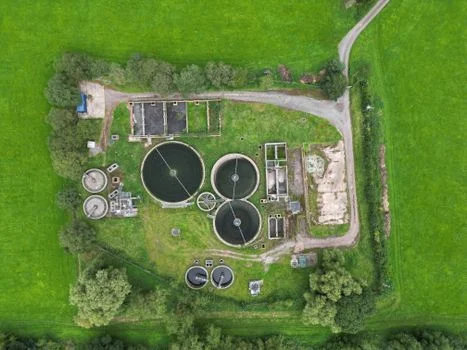
A hypothetical, yet representative, 100-room hotel located in Semarang faced significant challenges with its wastewater management. The hotel generated approximately 50 m³/day of sewage, characterized by high BOD levels (averaging 200 mg/L) and TSS (around 150 mg/L). This resulted in consistent non-compliance with local discharge regulations, leading to annual fines estimated at IDR 200 million. the hotel was experiencing increasing water scarcity and high operational costs associated with purchasing municipal water for non-potable uses such as landscaping and toilet flushing.
To address these issues, the hotel decided to invest in an advanced wastewater treatment solution. They opted for the installation of a HydropureWater WSZ-50 MBR system, a compact, underground integrated sewage treatment unit designed for capacities up to 50 m³/day. The core of the WSZ-50 system features advanced membrane filtration with pore sizes of <1 μm. This technology enabled the hotel to consistently achieve exceptionally high-quality effluent, with measured levels of BOD ≤10 mg/L, COD ≤30 mg/L, and TSS ≤5 mg/L. The treated water was of such high quality that the hotel was able to implement a water reuse program, diverting 95% of the treated effluent for landscaping irrigation and toilet flushing. This initiative not only ensured full compliance with environmental regulations, eliminating the risk of fines, but also resulted in substantial cost savings, estimated at IDR 150 million per year on their water bills. Key lessons learned from this successful implementation include the critical importance of proper influent screening to protect the membranes, the necessity of comprehensive operator training for optimal system performance, and the value of real-time monitoring for proactive management.
Frequently Asked Questions
What are the GR 82/2001 discharge limits for sewage treatment in Semarang?
GR 82/2001 mandates limits of BOD ≤ 30 mg/L, COD ≤ 100 mg/L, and TSS ≤ 50 mg/L. Local Semarang Environmental Agency permits may add further requirements, such as a maximum chlorine residual of 0.5 mg/L for water reuse applications.
How much does a 50 m³/h sewage treatment plant cost in Semarang?
For a 50 m³/h capacity plant in Semarang, CAPEX can range from approximately IDR 1.45 billion to IDR 2.3 billion for a DAF system, IDR 2 billion to IDR 3.1 billion for an MBR system, and IDR 1.6 billion to IDR 2.85 billion for an A/O system, including equipment, civil works, and installation.
Which technology is best for hotel wastewater treatment in Semarang: MBR or DAF?
For hotels in Semarang, MBR technology is generally preferred over DAF. MBR systems produce near-reuse-quality effluent (BOD ≤10 mg/L, TSS ≤10 mg/L) suitable for landscaping or toilet flushing, offering significant water savings. DAF systems are more suited for industrial wastewater with high solids content but do not typically achieve the effluent quality required for reuse.
What are the common reasons sewage treatment projects fail in Semarang?
Common reasons for project failure in Semarang include poor influent characterization leading to undersized or inappropriate technology selection, a lack of proactive engagement with the Semarang Environmental Agency for permitting, and suppliers failing to provide guaranteed effluent compliance, leading to regulatory penalties and operational shutdowns.
How can I verify if a sewage treatment supplier in Semarang is compliant with GR 82/2001?
Verify supplier compliance by demanding a written GR 82/2001 effluent compliance guarantee for 3+ years, requesting local Semarang case studies with documented effluent data, and ensuring they offer robust after-sales service and local spare parts availability. A comprehensive supplier checklist is essential.
Further Reading
Explore these in-depth articles on related wastewater treatment topics: