
Why Wastewater Treatment Costs in Cluj Are Hard to Pin Down
Cluj’s rapid industrial expansion, particularly in sectors like automotive manufacturing and food processing, frequently outpaces the development of its existing wastewater infrastructure, leading to significant compliance pressures and unforeseen budget overruns for facility managers. Many industrial buyers and municipal planners in Cluj face profound frustration when seeking clear, actionable cost estimates for wastewater treatment plants. Generic global estimates, often expressed as '$25 per gallon per day' or similar broad figures, are largely irrelevant to the specific economic and regulatory landscape of Cluj. These estimates consistently fail to account for critical local factors such as the stringent requirements of EU Directive 91/271/EEC, the precise discharge limits for the sensitive Someș River basin, and the fluctuating local labor and material costs unique to Romania. For example, a prominent food processing plant in Cluj recently invested €1.2 million in a 30 m³/h MBR (Membrane Bioreactor) system. Despite initial budget projections, the project ultimately ran 20% over budget, primarily due to the unplanned integration of tertiary treatment for nitrogen removal. This additional stage was mandated by the local environmental protection agency (EPA) after a detailed site assessment confirmed the plant's discharge would impact a nutrient-sensitive zone of the Someș River, a requirement not explicitly covered in their initial generic quotes. Such scenarios are common, underscoring the necessity for Cluj-specific data. Three primary drivers dictate the true cost of a wastewater treatment plant in Cluj:- Technology Choice: The selection between conventional activated sludge, Dissolved Air Flotation (DAF), or advanced MBR systems significantly impacts both initial capital expenditure (CAPEX) and long-term operational costs (OPEX).
- Compliance Level: The degree of treatment required to meet specific discharge parameters, particularly those outlined in EU Directive 91/271/EEC for nutrient removal (nitrogen and phosphorus), can add substantial costs, often necessitating more complex and expensive technologies.
- Site Conditions: Local geological factors like rocky soil, high water tables, or limited available land in urban industrial zones of Cluj can drive up civil engineering costs and influence the feasibility of larger-footprint conventional systems.
Cluj Wastewater Treatment Plant Costs by Capacity: CAPEX and OPEX Benchmarks
Accurate budgeting for wastewater treatment plants in Cluj requires a clear understanding of both Capital Expenditure (CAPEX) and Operational Expenditure (OPEX) benchmarks, which vary significantly with plant capacity and chosen technology. Based on HydropureWater’s field data for 2025, adjusted for local labor, material costs, and regulatory compliance in the Cluj region, the following ranges provide a realistic framework for industrial and small municipal buyers. For smaller facilities, such as individual factories, hotels, or remote commercial sites requiring 1–10 m³/h of treatment capacity, CAPEX typically ranges from €15,000 to €200,000. Solutions in this category often include compact dissolved air flotation (DAF) units for industrial pre-treatment or integrated package plants like the WSZ series underground package plants for Cluj’s small factories and municipalities, which are ideal for decentralized sewage treatment. Medium-sized facilities, including medium factories or small municipalities requiring 10–50 m³/h, face CAPEX ranging from €200,000 to €1.5 million. At this scale, conventional activated sludge systems become feasible, though many opt for more compact and efficient MBR systems for Cluj’s EU-compliant tertiary treatment and space-constrained sites to meet stricter discharge limits. For larger industrial complexes or municipal plants serving 50–500 m³/h, CAPEX can range from €1.5 million to €5 million. These projects often involve advanced MBR technologies or conventional systems augmented with tertiary treatment stages to achieve comprehensive nutrient removal, which is frequently mandatory for discharge into the Someș River basin. Operational expenditures (OPEX) are equally critical for long-term financial planning. These costs, expressed per cubic meter treated, reflect energy consumption, chemical usage, sludge disposal, and labor. In Cluj, DAF systems generally have the lowest energy consumption but higher chemical costs, leading to an OPEX of €0.10–€0.20/m³. Conventional activated sludge systems have moderate energy demands and lower chemical usage, resulting in an OPEX of €0.15–€0.30/m³. MBR systems, while offering a smaller footprint and superior effluent quality, typically incur higher energy costs for membrane aeration and scouring, placing their OPEX between €0.25–€0.50/m³.| Capacity (m³/h) | Technology Type | Typical CAPEX (Cluj, 2025) | Typical OPEX (€/m³ Treated) | Relative Footprint | Compliance Level |
|---|---|---|---|---|---|
| 1–10 | DAF, WSZ Package Plant | €15,000 – €200,000 | €0.10 – €0.25 | Very Small | Primary (DAF), Secondary (WSZ) |
| 10–50 | Conventional Activated Sludge | €200,000 – €750,000 | €0.15 – €0.30 | Medium-Large | Secondary |
| 10–50 | MBR Integrated System | €500,000 – €1,500,000 | €0.25 – €0.45 | Small | Tertiary (EU Directive 91/271/EEC) |
| 50–500 | MBR System (Advanced) | €1,500,000 – €5,000,000 | €0.30 – €0.50 | Medium | Tertiary (High EU Compliance) |
| 50–500 | Conventional + Tertiary | €1,500,000 – €4,000,000 | €0.20 – €0.40 | Largest | Tertiary (High EU Compliance) |
Technology Showdown: MBR vs. DAF vs. Conventional Activated Sludge for Cluj Factories
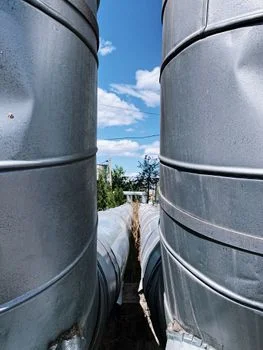
MBR systems represent an advanced biological treatment method that combines activated sludge with membrane filtration. For facilities in Cluj, MBR offers superior effluent quality, making it highly effective for achieving how MBR systems achieve EU Directive 91/271/EEC compliance in Cluj, especially for tertiary treatment standards. CAPEX for MBR systems in Cluj typically ranges from €25,000 to €40,000 per m³/h of capacity. For instance, a 50 m³/h MBR system could cost approximately €1.25 million. OPEX is generally higher, around €0.30–€0.50/m³, primarily due to the energy required for membrane aeration, scouring, and periodic cleaning. A significant advantage for Cluj’s urban industrial zones is the compact footprint of MBR systems, often 60% smaller than conventional activated sludge plants, making them ideal for space-constrained sites. MBR effluent consistently meets strict EU discharge limits for chemical oxygen demand (COD <50 mg/L), total nitrogen (TN <10 mg/L), and total phosphorus (TP <1 mg/L), which are often mandatory for discharge into the Someș River basin.
DAF (Dissolved Air Flotation) Systems:DAF systems are primarily physical-chemical treatment units designed to remove suspended solids, fats, oils, and grease (FOG) from wastewater. Their CAPEX in Cluj is comparatively lower, typically €10,000–€20,000 per m³/h. A 30 m³/h DAF systems for Cluj’s food processing and industrial wastewater pre-treatment, for example, might cost around €300,000. OPEX for DAF systems is generally €0.10–€0.20/m³, characterized by lower energy consumption but higher chemical costs for coagulants and flocculants. DAF systems offer a relatively compact footprint, about 30% smaller than conventional systems. They excel in pre-treatment applications, particularly for Cluj’s food processing plants or other industries with high FOG and total suspended solids (TSS) loads. However, DAF alone typically does not meet full EU Directive 91/271/EEC compliance for biological parameters or nutrient removal and usually requires subsequent biological treatment for final discharge into sensitive areas.
Conventional Activated Sludge Systems:Conventional activated sludge remains a widely used biological treatment method, involving aeration tanks and secondary clarifiers. In Cluj, the CAPEX for these systems ranges from €15,000 to €30,000 per m³/h, with a 50 m³/h plant costing around €750,000. OPEX is moderate, typically €0.15–€0.30/m³, with reasonable energy consumption and minimal chemical usage. The main drawback of conventional systems is their large footprint, requiring substantial land for aeration basins and clarifiers, which can be a significant constraint for urban industrial facilities in Cluj. While effective for secondary treatment (BOD and TSS removal), conventional activated sludge systems often struggle to meet the stringent EU nutrient limits (TN, TP) without the addition of costly and complex tertiary treatment stages, making them less suitable for direct discharge into the sensitive Someș River basin without further upgrades.
| Technology | Typical CAPEX (€/m³/h) | Typical OPEX (€/m³ Treated) | Relative Footprint | Compliance Achieved | Best Use Case in Cluj |
|---|---|---|---|---|---|
| MBR System | €25,000 – €40,000 | €0.30 – €0.50 | Very Small (60% less than conv.) | Tertiary (High EU 91/271/EEC) | Space-constrained sites, high effluent quality needs, direct discharge to sensitive areas (Someș) |
| DAF System | €10,000 – €20,000 | €0.10 – €0.20 | Small (30% less than conv.) | Primary (FOG, TSS removal) | Industrial pre-treatment (food processing, automotive), low biological load, reducing sewer surcharges |
| Conventional Activated Sludge | €15,000 – €30,000 | €0.15 – €0.30 | Largest | Secondary (BOD, TSS removal) | Sites with ample land, lower initial CAPEX, less stringent nutrient removal requirements |
Hidden Costs in Cluj: Compliance, Permits, and EU Directive 91/271/EEC
Compliance with national and European environmental regulations, particularly EU Directive 91/271/EEC, often introduces substantial, yet frequently overlooked, costs that can significantly inflate the total budget for a wastewater treatment plant in Cluj. This directive, concerning urban wastewater treatment, mandates specific levels of treatment depending on the size of the agglomeration and the sensitivity of the receiving water body. For Cluj, the Someș River basin is designated as a 'sensitive area,' meaning facilities discharging into it are subject to stricter requirements, specifically tertiary treatment for nutrient removal (nitrogen and phosphorus). This requirement alone can add 30–50% to the initial CAPEX of a conventional wastewater treatment plant, as it necessitates advanced processes like biological nutrient removal (BNR) or the integration of MBR systems for Cluj’s EU-compliant tertiary treatment and space-constrained sites. Beyond the technology itself, navigating the local permitting landscape in Cluj incurs various fees and administrative costs:- Environmental Permit: Obtaining the initial environmental permit from the local EPA (Agenția Națională pentru Protecția Mediului Cluj) typically costs between €5,000 and €20,000, varying based on the plant's capacity and the complexity of its discharge.
- Discharge Permit: Annual renewal fees for discharge permits into the public sewerage system or directly into the Someș River range from €2,000 to €10,000 per year, subject to regular effluent monitoring.
- Operator Certification: For plants exceeding 50 m³/h, mandatory operator certification and training can add €3,000 to €8,000 per certified operator, ensuring compliance with operational standards.
How to Calculate Your Cluj Wastewater Treatment Plant Budget: A Step-by-Step Framework
| Industry/Sector | Typical Influent Flow (m³/h) | Typical BOD₅ (mg/L) | Typical TSS (mg/L) | Notes for Cluj |
|---|---|---|---|---|
| Food Processing (Small) | 5 – 20 | 500 – 2,000 | 300 – 1,000 | High FOG, requires pre-treatment (DAF) |
| Automotive Manufacturing | 10 – 50 | 100 – 500 | 50 – 200 | Oil & grease, heavy metals often present |
| Textile Dyeing | 5 – 30 | 300 – 800 | 200 – 600 | High color, chemical oxygen demand |
| Small Municipality (1,000 PE) | 4 – 8 | 200 – 350 | 200 – 300 | Requires secondary treatment, often tertiary for Someș |
| Medium Municipality (10,000 PE) | 40 – 80 | 200 – 350 | 200 – 300 | Mandatory EU Directive 91/271/EEC compliance |
| Parameter | Value/Selection | Estimated Cost (CAPEX) | Estimated Cost (OPEX per m³) | Estimated Permits/Other | Total Estimated Cost |
|---|---|---|---|---|---|
| Step 1: Capacity (m³/h) | [Enter your capacity here, e.g., 30] | ||||
| Step 2: Technology Selected | [Select: MBR, DAF, Conventional] | ||||
| Step 3: Estimated CAPEX | [Based on capacity & tech] | €[Calculated CAPEX] | |||
| Step 4: Estimated OPEX (Annual) | [Calculated from OPEX/m³ * annual flow] | €[Calculated OPEX/m³] | |||
| Step 5: Permits & Hidden Costs | Environmental, Discharge, Operator, Contingency | €[Estimated Permits] | |||
| TOTAL ESTIMATE (CAPEX + Annual OPEX + Permits) | €[Total CAPEX] | €[Total Annual OPEX] | €[Total Permits] | €[Overall Budget Estimate] |
Frequently Asked Questions
Q: What is the cheapest wastewater treatment option for a small factory in Cluj? A: For small factories with flows less than 10 m³/h in Cluj, a WSZ series underground package plant is often the most cost-effective solution, with CAPEX ranging from €15,000 to €50,000. However, these basic systems may not consistently meet EU Directive 91/271/EEC requirements for nutrient removal. For wastewater with high fats, oils, and grease (FOG), such as from food processing, a DAF system (€30,000–€100,000 for small units) offers efficient pre-treatment to avoid sewer surcharges but typically requires post-treatment for full compliance. Q: How much does EU compliance add to a Cluj wastewater treatment plant cost? A: Meeting the stringent requirements of EU Directive 91/271/EEC, particularly for tertiary treatment and nutrient removal in sensitive areas like the Someș River basin, can add 30–50% to the CAPEX of a wastewater treatment plant in Cluj. For example, a 50 m³/h conventional activated sludge plant might cost €750,000 without advanced nutrient removal. Upgrading to an MBR system to achieve full EU compliance could increase the CAPEX to €1.2 million or more. Q: Can I use a package plant for a Cluj municipality of 5,000 people? A: Yes, package plants can be implemented for municipalities of 5,000 Population Equivalent (PE) in Cluj, but the approach differs. Decentralized systems, comprising multiple WSZ series underground package plants spread across various communities, could cost €500,000–€1 million in total CAPEX. A centralized, larger-scale MBR plant for 5,000 PE would typically range from €2 million to €3 million. While decentralized systems offer lower upfront costs and modularity, they often present greater challenges in terms of ongoing maintenance and operational oversight compared to a single centralized facility. Q: What are the ongoing costs for a 30 m³/h wastewater treatment plant in Cluj? A: Operational expenditure (OPEX) for a 30 m³/h wastewater treatment plant in Cluj typically ranges from €0.15–€0.50 per cubic meter treated, depending on the technology. For a plant operating at 30 m³/h, treating approximately 720 m³ per day (262,800 m³ annually), the annual OPEX would be between €40,000 and €130,000. This figure typically breaks down as 50% for energy consumption, 30% for chemical consumables, and 20% for labor and routine maintenance.Further Reading
Explore these in-depth articles on related wastewater treatment topics:


