Why Eastern Cape Wastewater Treatment Plant Cost Differs from National Averages
In the Eastern Cape, wastewater treatment plant cost spans about R20.7 million for a Hankey-area package-scale refurbishment up to multi-billion municipal works. Industrial CAPEX averages R8–15 million per 1,000 m³/day. OPEX runs R0.80–R2.50 per m³, with energy near 40% of OPEX. Coastal salinity and DWS Special Limits drive tertiary stages inland sites often skip.
Geographic and regulatory specifics in the Eastern Cape shape a cost profile unlike the inland average. Coastal hubs such as Gqeberha and East London face high ambient chloride levels, which accelerate atmospheric corrosion on submerged components and raise membrane fouling rates. Most specs we see for these sites mandate 316L stainless steel or specialised epoxy coatings on submerged parts, adding 12–18% to CAPEX versus 304 stainless steel used inland (HydropureWater field data, 2025).
The Department of Water and Sanitation (DWS/DWA) applies Special Limits on listed catchments under GN 665 of 2013. Earlier Eastern Cape briefs often treated COD ≤75 mg/L as the Special figure. GN 665 Table 2.1 sets General Limit COD at ≤75 mg/L and Special Limit COD at ≤30 mg/L. Ortho-phosphate Special Limit is ≤1 mg/L (median). Hitting those values usually needs a tertiary stage such as a DAF system for industrial pretreatment in Eastern Cape, equipment that is optional under General Limits. Labour runs about 20% below Gauteng, but the energy tariff of R1.20–R1.80/kWh still drives close to 40% of OPEX. That makes how MBR systems reduce footprint and energy costs in Eastern Cape's coastal areas a real budget lever, not just a technical choice.
| Factor | Eastern Cape Impact | Cost Variance (%) | Technical Requirement |
|---|---|---|---|
| Salinity/Corrosion | High (Coastal) | +12% to +18% CAPEX | 316L Stainless Steel/Epoxy |
| Compliance Limits | DWA Special Limits | +15% to +25% CAPEX | Tertiary Filtration/DAF |
| Energy Tariffs | R1.20–R1.80/kWh | +30% OPEX vs National | Variable Speed Drives (VSDs) |
| Labor Rates | Moderate | -20% OPEX vs Gauteng | Semi-automated controls |
Wastewater Treatment Plant Cost: CAPEX Breakdown by Size and Technology
CAPEX is a tug-of-war between economies of scale and technological intensity. For small loads such as rural clinics or private developments, a compact package plant for rural Eastern Cape municipalities offers the lowest entry cost. Kouga Municipality reports Phase 1 of the Weston Waste Water Treatment Works serving the Hankey community at R20.7 million (2025). The draft sizes that package-scale plant near 350 m³/day; the municipal notice covers plant refurbishment, inlet works, reactor and electrical upgrades. For larger municipal needs, conventional activated sludge remains the default, with a much bigger footprint than modern alternatives.
Membrane Bioreactor (MBR) technology is gaining ground in Eastern Cape industrial zones where land cost is high or land is unavailable. MBR CAPEX runs 30–50% above conventional systems, but the footprint shrinks by more than 60%. A 3,000 m³/day MBR plant in Port Elizabeth (2023) came in near R60 million CAPEX yet saved the client about R15 million on land and civils. In dairies around Humansdorp, industrial pretreatment with Dissolved Air Flotation (DAF) runs R5–10 million per 1,000 m³/day of capacity to strip fats, oils and grease (FOG) before municipal discharge.
| Flow Rate (m³/day) | Package Plant (R) | Conventional (R) | MBR (R) | Industrial Pretreatment (R) |
|---|---|---|---|---|
| 100 - 500 | 15M - 30M | N/A | 25M - 45M | 5M - 12M |
| 1,000 | 45M - 55M | 8M - 12M | 15M - 22M | 8M - 15M |
| 5,000 | N/A | 40M - 60M | 70M - 95M | 35M - 50M |
| 10,000+ | N/A | R10M/1k m³ | R18M/1k m³ | Contact for Quote |
These numbers include civil works, mechanical install and commissioning. Brownfield upgrades usually land at 40–60% of a greenfield build, which matches the Hankey-area refurbishment pattern. For pretreatment trade-offs, engineers should weigh the DAF vs IAF cost difference for Eastern Cape industrial pretreatment before locking the CAPEX line.
OPEX Deep Dive: Energy, Chemicals and Maintenance Costs
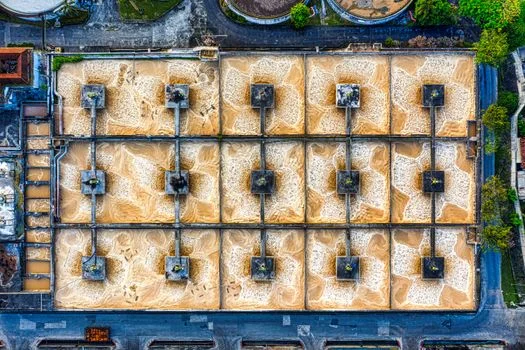
OPEX decides whether an Eastern Cape wastewater project is viable in year five, not just in the commissioning month. Aeration energy is the single biggest line. Conventional activated sludge plants run R0.40–R0.80 per m³ treated on aeration. MBR systems for land-constrained coastal sites in Eastern Cape need higher air-scour rates to keep membranes clean, so energy lands at R0.60–R1.20 per m³. Solar-driven blowers have cut those figures by up to 22% in sunny parts of the province, saving more than R1 million per year on mid-sized plants.
Chemical costs follow the local water chemistry. High alkalinity or salinity pushes coagulant (PAC) and flocculant (PAM) doses upward. An automatic chemical dosing system for high-salinity wastewater in Eastern Cape keeps dosing on target; over-dosing burns the chemical budget and lifts sludge volume, which then lifts disposal fees. Maintenance intervals shorten in coastal air, so bearing replacements and coating touch-ups need a real line item, not a footnote.
| Cost Category | Conventional (R/m³) | MBR (R/m³) | Package Plant (R/m³) | Notes |
|---|---|---|---|---|
| Energy | 0.40 - 0.80 | 0.60 - 1.20 | 0.70 - 1.10 | Includes aeration & pumping |
| Chemicals | 0.15 - 0.35 | 0.20 - 0.40 | 0.25 - 0.45 | PAC, PAM, and Disinfectants |
| Maintenance | 0.10 - 0.20 | 0.25 - 0.45 | 0.15 - 0.30 | Membrane replacement factored |
| Labor | 0.15 - 0.25 | 0.10 - 0.20 | 0.05 - 0.15 | Automation reduces labor need |
| Total OPEX | 0.80 - 1.60 | 1.15 - 2.25 | 1.15 - 2.00 | Excludes sludge disposal |
Compliance-Driven Costs: Meeting Eastern Cape DWS Special Limits
Compliance in the Eastern Cape is a budget line, not a footnote. DWS Special Limits under GN 665 Table 2.1 apply where the receiving environment has low buffering capacity, and standard biological treatment often falls short. Tertiary stages such as sand filtration, carbon dosing or advanced oxidation are usually bolted on. A textile plant in the Eastern Cape can spend an extra R12 million on a DAF plus ultrafiltration train. That train targets Special Limit suspended solids of ≤10 mg/L. General Limit TSS remains ≤25 mg/L.
Disinfection is the other compliance pressure point. Chlorine gas used to be the default, but newer Eastern Cape specs lean toward chlorine dioxide systems for safer disinfection or UV to avoid trihalomethane (THM) formation in sensitive estuaries. These options add R0.05–R0.15/m³ to OPEX. Sludge handling also bites: landfill fees of R800–R1,500/ton run about 30% above the national average because the province has few licensed hazardous-waste sites and long transport legs.
| Parameter | Eastern Cape Limit | National General Limit | Required Tech | CAPEX Impact |
|---|---|---|---|---|
| COD | ≤ 30 mg/L (Special; earlier briefs often cited ≤ 75) | ≤ 75 mg/L (to water resource) | MBR or Tertiary Bio | +20% |
| TSS | ≤ 10 mg/L (Special) | ≤ 25 mg/L (General) | Sand Filter / DAF | +15% |
| Ammonia | ≤ 2 mg/L as N (Special; earlier text used ≤ 10) | ≤ 6 mg/L as N (General) | Nitrification Zones | +10% |
| Phosphorus | ≤ 1 mg/L median (Special; max 2.5) | ≤ 10 mg/L | Chemical Precipitation | +5% (OPEX heavy) |
Looking at how small-scale plants like St. Elizabeth's Hospital (Eastern Cape) meet compliance gives municipal engineers a usable roadmap when upgrading rural infrastructure under strict DWA oversight.
Package Plants vs Custom-Built: Which Fits Your Project?
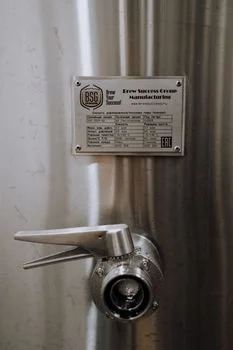
Flow volume and timeline usually decide between a pre-engineered package plant and a custom-built civil system. Package plants are the default below 1,000 m³/day, with plug-and-play lead times as short as 6 months. The Weston/Hankey Phase 1 project used this scale of works to restore service toward 550 household connections. Most plants we size in this bracket ship in containers or modular steel tanks, which keeps on-site civils light.
Large municipal works need custom concrete structures. Earlier drafts cited R5.2 billion for a 500,000 m³/day plant. The City of Cape Town Potsdam upgrade is R5.2 billion to raise capacity from 47,000 to 100,000 m³/day. That Western Cape project targets completion in 2027. That figure remains a useful national large-works CAPEX anchor, though it is not an Eastern Cape project. For Eastern Cape industrial parks, the hybrid path is common: a custom equalisation tank up front, then modular MBR trains that scale as the park fills out.
| Feature | Package Plant | Custom-Built |
|---|---|---|
| Flow Capacity | 100 - 1,000 m³/day | 1,000 - 500,000+ m³/day |
| CAPEX | Lower (Standardized) | Higher (Bespoke) |
| Lead Time | 6 - 12 Months | 18 - 48 Months |
| Service Life | 15 - 20 Years | 30 - 50 Years |
| Best For | Clinics, Resorts, Small Towns | Metros, Large Industrial Zones |
ROI Calculation: Justifying the Wastewater CAPEX
A multi-million rand wastewater investment needs a clean ROI story. In the Eastern Cape, payback comes less from water savings and more from avoided DWS fines plus reuse revenue. With municipal water tariffs climbing, treated effluent can go to irrigation, cooling towers or dust suppression, which trims the fresh-water line on the utility bill.
- Estimate CAPEX: Use the R8M–R15M per 1,000 m³/day benchmark. For a 2,000 m³/day plant, budget about R25 million.
- Calculate Annual OPEX: At R1.20/m³, 2,000 m³/day costs roughly R876,000 per year in electricity and chemicals.
- Quantify Savings: If 50% of the flow is reused and municipal water costs R30/m³, savings reach about R10.95 million per year.
- Factor in Compliance: Avoided non-compliance fines range from R50,000 to R2 million per year depending on severity and frequency.
- Calculate Payback: (CAPEX) / (Annual Savings + Fines Avoided − OPEX). Industrial users often clear payback in under 3 years on this maths.
| Input Variable | Typical Value (Eastern Cape) | Notes |
|---|---|---|
| Municipal Water Cost | R25 - R45 / m³ | Varies by municipality |
| Effluent Reuse Value | R15 - R20 / m³ | Value of replaced potable water |
| DWA Non-compliance Fine | R100k - R2M / annum | Risk-weighted average |
| Energy Saving (Solar) | 18% - 25% of Energy OPEX | Based on 5.5 peak sun hours |
Who This Is For and Next Step
This breakdown fits municipal engineers, EPC contractors and procurement managers sizing plants from 100 m³/day package units up to large municipal works. If your discharge catchment sits outside a listed Special Limits water resource, the DAF and tertiary lines may drop out and General Limit benchmarks apply. For everything from a Hankey-scale upgrade to a Potsdam-class greenfield, send your influent data and discharge permit to our engineering team for a sized CAPEX/OPEX envelope.
Frequently Asked Questions
What is the cheapest wastewater treatment option for a small Eastern Cape town?
For a town needing 500 m³/day, a modular package plant using activated sludge or MBR is usually the most cost-effective route. CAPEX ranges from R25–35 million, with delivery around 8 months. The Weston/Hankey Phase 1 project is a working example of this scale delivered through provincial funding.
How much does it cost to upgrade an existing plant to meet DWA Special Limits?
Upgrading generally means adding a tertiary stage. For a 2,000 m³/day facility, fitting a DAF unit or a multi-media filtration system costs between R8 million and R14 million, depending on which pollutants drive the discharge permit.
What are the hidden costs of wastewater treatment in Eastern Cape?
The two biggest hidden lines are salinity-driven corrosion and sludge transport. Equipment at coastal sites like Gqeberha needs more frequent maintenance and higher-grade materials. Sludge disposal can reach R1,500 per ton because licensed hazardous-waste landfills are scarce in the province.
Can I finance a wastewater treatment plant in Eastern Cape?
Yes. Municipal projects can use the Development Bank of Southern Africa (DBSA). Industrial upgrades often qualify for green loans from banks such as Nedbank or Standard Bank. Public-Private Partnerships (PPPs) let a provider build and operate the plant for a monthly fee.
What is the typical lead time for a new plant?
Package plants commission in 6–12 months. Custom-built civil works plants need 18–24 months for mid-sized projects and up to 5 years for major municipal works such as the Potsdam facility.