Why Andhra Pradesh Needs Advanced Sewage Treatment Equipment in 2025
Andhra Pradesh’s Industrial Policy 2023-27 mandates that all new manufacturing units in the textile, pharmaceutical, and food processing sectors must integrate zero-liquid discharge (ZLD) or high-efficiency sewage treatment plants (STPs) to maintain environmental clearances. A textile factory in Vijayawada recently faced APPCB penalties exceeding ₹15 lakhs for discharging effluent with a Biological Oxygen Demand (BOD) of 45 mg/L, highlighting the shift toward stricter enforcement of the 2025 discharge limits. As industrial clusters in Visakhapatnam and Kakinada expand, the demand for equipment capable of handling high chemical oxygen demand (COD) and specific contaminants like active pharmaceutical ingredients (APIs) has surged.
Water scarcity further drives the adoption of advanced sewage treatment equipment supplier in andhra pradesh india solutions. According to the Central Ground Water Board (CGWB) 2023 report, 14 out of 26 districts in Andhra Pradesh are classified as ‘over-exploited’ regarding groundwater resources. Implementing MBR systems for water reuse and high-efficiency treatment allows industrial units to recycle up to 60% of their process water, significantly reducing reliance on expensive municipal tankers or depleting borewells. For textile units, this recycling is critical for color removal, where ADMI levels must remain below 200 to meet state environmental standards.
The APPCB Notification 2024/12 has established clear benchmarks for treated sewage discharge. Failure to meet these standards results not only in heavy monthly fines but also in the potential revocation of the "Consent to Operate" (CTO). For municipal projects, the focus has shifted toward reducing the footprint of treatment facilities in densely populated areas like Guntur, leading to a rise in the use of underground STPs for space-constrained sites in Andhra Pradesh.
| Parameter | APPCB 2025 Discharge Limit | Industrial Reuse Standard (Internal) | Typical Raw Sewage (AP Industrial) |
|---|---|---|---|
| BOD (mg/L) | ≤ 30 | ≤ 5 | 250 – 450 |
| COD (mg/L) | ≤ 250 | ≤ 50 | 600 – 1,200 |
| TSS (mg/L) | ≤ 50 | ≤ 10 | 300 – 600 |
| pH Value | 6.5 – 8.5 | 7.0 – 8.0 | 5.5 – 9.0 |
| Oil & Grease (mg/L) | ≤ 10 | ≤ 1 | 20 – 50 |
7 Top Sewage Treatment Equipment Suppliers in Andhra Pradesh (2025 Shortlist)
The selection of a sewage treatment equipment supplier in andhra pradesh india depends largely on the specific industrial application, required capacity, and the desired level of automation. In the current market, suppliers are differentiating themselves through specialized technologies such as Membrane Bioreactors (MBR), Sequential Batch Reactors (SBR), and Dissolved Air Flotation (DAF). For instance, DAF systems for food processing and high-TSS wastewater are becoming the standard for edible oil refineries in the Rayalaseema region due to their 95% total suspended solids (TSS) removal efficiency.
Bajrang Enviro Engineers, based in Hyderabad but with extensive operations across AP, is frequently sought for DAF and primary treatment systems. In contrast, the Triveni Group in Vijayawada focuses on high-end MBR systems for the pharmaceutical sector, ensuring effluent COD remains below 50 mg/L to prevent API contamination in local water bodies. For developers concerned with aesthetics and space in urban projects, Trity Enviro Solutions provides specialized underground STPs that offer a 60% smaller footprint than traditional designs.
Large-scale municipal requirements in cities like Visakhapatnam are often handled by VA Tech WABAG, which manages plants with capacities exceeding 50 MLD. For textile clusters requiring ZLD, Ion Exchange (India) Ltd. remains a primary choice due to their 90% water recovery rates. Energy-conscious buyers often look toward Thermax for SBR systems that claim 30% lower operating expenses (OPEX) compared to conventional activated sludge processes. Finally, HydropureWater offers high-performance MBR flat-sheet membranes with a 0.1 μm pore size, designed to provide 10–20 times lower energy consumption than traditional cross-flow systems, making them ideal for export-oriented units in AP.
| Supplier | Primary Technology | Target Sector | Key Performance Metric |
|---|---|---|---|
| Bajrang Enviro Engineers | DAF / Clarifiers | Food & Beverage | 95% TSS Removal |
| Triveni Group | MBR Systems | Pharma / Chemical | Effluent COD ≤ 50 mg/L |
| Trity Enviro Solutions | Underground STP (WSZ) | Real Estate / IT Parks | 60% Space Saving |
| VA Tech WABAG | Large-scale SBR / ASP | Municipal / Govt | 99% Pathogen Removal |
| Ion Exchange (India) Ltd. | ZLD / RO Systems | Textiles / Power | 90% Water Recovery |
| Thermax | Energy-Efficient SBR | General Manufacturing | 30% Lower OPEX |
| HydropureWater | Flat-Sheet MBR | Industrial Reuse | 0.1 μm Filtration |
Engineering Specs: How to Compare Sewage Treatment Technologies
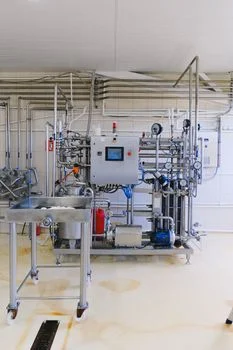
Membrane Bioreactor (MBR) technology achieves a 95–99% removal rate for BOD and COD, significantly outperforming Sequential Batch Reactors (SBR) which typically range between 85–92% efficiency. When evaluating equipment, procurement managers must look beyond initial capacity and analyze the specific engineering parameters that impact long-term compliance and costs. For example, the sludge production in an MBR system is roughly 0.1–0.2 kg TSS per kg of COD removed, whereas a conventional activated sludge process (ASP) can produce up to 0.5 kg, leading to higher disposal costs.
Footprint is a critical spec for industrial plants in Andhra Pradesh's crowded industrial estates. Utilizing learn how underground STPs save space and reduce odors can be a decisive factor for projects where land costs are high. These integrated systems consolidate aeration, sedimentation, and disinfection into a single buried unit. energy consumption varies: while MBRs offer superior water quality, they consume 0.8–1.2 kWh/m³ compared to 0.4–0.6 kWh/m³ for SBR systems. Buyers must weigh this against the cost of freshwater; if the treated water is reused for cooling towers, the higher energy cost of MBR is often offset by the savings in water procurement.
For those interested in the finer technical details of membrane performance, dive deeper into MBR technology and selection criteria to understand how flux rates and transmembrane pressure (TMP) affect the lifespan of the equipment. In coastal areas like Visakhapatnam, engineering specs must also include material durability; SS316L stainless steel or reinforced FRP is necessary to prevent chloride-induced corrosion, which can reduce the lifespan of a standard carbon steel tank by 50% within three years.
| Technical Parameter | MBR (Membrane) | SBR (Batch) | Conventional ASP |
|---|---|---|---|
| BOD Removal Efficiency | 98% + | 90 – 92% | 80 – 85% |
| Effluent Turbidity (NTU) | < 1 | 5 – 10 | 15 – 25 |
| Energy Use (kWh/m³) | 0.8 – 1.2 | 0.4 – 0.6 | 0.3 – 0.5 |
| Footprint Requirement | Very Low | Moderate | High |
| Sludge Production | Low | Moderate | High |
| Automation Level | High (PLC/SCADA) | Medium | Low/Manual |
Cost Breakdown: CAPEX, OPEX, and ROI for Andhra Pradesh STPs
A 500 m³/day MBR plant in Andhra Pradesh typically requires a capital expenditure (CAPEX) of ₹80 to ₹150 lakhs, depending on the level of automation and the specific contaminants in the influent. While this is higher than the ₹50 to ₹90 lakhs required for a similar capacity SBR plant, the return on investment (ROI) is often realized faster through water reuse. In industrial zones where freshwater costs range from ₹60 to ₹100 per kiloliter, a high-efficiency STP can pay for itself within 3 to 5 years by replacing 50% of the freshwater demand.
Operating expenditure (OPEX) is dominated by energy costs, which account for approximately 40% of the annual budget, followed by chemical dosing (20%) and sludge disposal (15%). To accurately budget, buyers should compare cost breakdowns for STPs in other regions to understand global benchmarks for labor and maintenance. In Andhra Pradesh, the state government offers incentives that can further improve ROI, such as a ₹10 lakh subsidy for ZLD systems under the 2023 Industrial Policy and up to 30% capital subsidies for projects specifically designed for water reuse in drought-prone districts.
Hidden costs often arise from site-specific conditions. For example, soil testing for underground installations in the Godavari delta can cost up to ₹1 lakh to ensure structural stability in soft clay. Additionally, plants located within 10km of the coastline require specialized coatings and marine-grade components, which typically add 15–20% to the total CAPEX. Procurement managers should also factor in the cost of annual maintenance contracts (AMC), which usually range from 5% to 8% of the initial equipment cost.
| Cost Component (500 m³/day) | MBR System (₹ Lakhs) | SBR System (₹ Lakhs) |
|---|---|---|
| Initial CAPEX | 120 – 150 | 70 – 90 |
| Annual Energy Cost | 8 – 10 | 4 – 6 |
| Annual Chemical Cost | 3 – 4 | 2 – 3 |
| Annual Sludge Disposal | 1.5 – 2 | 3 – 4 |
| Estimated ROI (Years) | 3.5 – 4.5 | 5.0 – 6.0 |
How to Select the Right Supplier: A 5-Step Decision Framework
The first step in selecting a sewage treatment equipment supplier in andhra pradesh india is to verify their history of APPCB compliance by requesting certified test reports from NABL-accredited labs like NEERI. A supplier may claim high efficiency, but without localized data from existing plants in Andhra Pradesh, the risk of regulatory failure remains high. Ensure the supplier provides a performance guarantee that specifically references the 2025 discharge limits for BOD, COD, and TSS.
Secondly, match the technology to your specific use case rather than choosing the cheapest option. If your goal is irrigation or toilet flushing, an SBR with tertiary sand filtration may suffice. However, if you are a pharmaceutical plant in the Pydibhimavaram cluster, the precision of MBR is non-negotiable for removing complex organic compounds. Third, evaluate the after-sales support infrastructure. Does the supplier have a service center in Vijayawada or Visakhapatnam? 24/7 technical support and ready availability of spare parts like membrane modules or aeration blowers are vital to prevent plant downtime, which can lead to immediate APPCB fines.
Fourth, perform a Total Cost of Ownership (TCO) analysis over a 5-year horizon. A lower CAPEX might be negated by high sludge handling costs or frequent membrane replacements. Finally, for large-scale or critical industrial projects, request a 3-month pilot study. Many top-tier suppliers will install a containerized pilot plant to demonstrate removal efficiencies on your actual raw sewage. Red flags during this process include vague warranty terms, lack of ISO 14001 certification, or an inability to provide references from similar industries within the state.
- Step 1: Audit APPCB compliance documents and lab reports.
- Step 2: Align tech (MBR/SBR/DAF) with water reuse goals.
- Step 3: Confirm local service availability in AP (24-hour response).
- Step 4: Calculate 5-year TCO (CAPEX + OPEX).
- Step 5: Conduct a site visit or pilot test for complex effluents.
Frequently Asked Questions
Q: What are APPCB’s 2025 discharge limits for industrial STPs?
A: According to APPCB Notification 2024/12, the limits are BOD ≤30 mg/L, COD ≤250 mg/L, TSS ≤50 mg/L, and pH between 6.5 and 8.5. Non-compliance can lead to fines ranging from ₹5 to ₹10 lakhs per month.
Q: How much does a 500 m³/day STP cost in Andhra Pradesh?
A: For an MBR system, the CAPEX is typically ₹80–₹150 lakhs. An SBR system is more affordable at ₹50–₹90 lakhs. Annual OPEX for these systems generally ranges from ₹10 to ₹15 lakhs including energy and labor.
Q: Which technology is best for water reuse in the textile industry?
A: MBR (Membrane Bioreactor) is the preferred technology because it provides filtration down to 0.1 μm, removing most dyes and pathogens, making the water suitable for cooling towers and certain washing processes.
Q: Can underground STPs be installed in Visakhapatnam’s coastal areas?
A: Yes, but they must be constructed with chloride-resistant materials like SS316L or high-grade FRP to withstand the saline environment. This usually adds 15–20% to the standard installation cost.
Q: What subsidies are available for STPs in Andhra Pradesh?
A: The AP Industrial Policy 2023 offers a ₹10 lakh subsidy for Zero Liquid Discharge (ZLD) systems and a 30% capital subsidy for projects that implement significant water reuse technologies.