Which treatment should a South Naknek factory choose?
For mining and metals wastewater in South Naknek, choose a gravity clarifier when the stream contains dense tailings fines, mill solids, or metallurgical sludge; choose dissolved air flotation when it contains conditioned colloidal solids, oils, flotation reagents, or low-density precipitates that do not settle reliably. A clarifier-first, DAF-polisher train is the logical starting point when both fractions are present. The final choice depends on measured flow, solids, particle size, chemistry, seasonal discharge conditions, reuse objectives, and permit requirements—not on equipment price alone. The supplied research provides no 2026 unit price for either system, so request a site-specific budgetary quotation tied to those data.
The selection rule is straightforward. A high-rate lamella clarifier for mineral solids is the primary unit for bulk removal of dense, settleable material. An industrial DAF system for mining wastewater is more appropriate where chemical conditioning converts fine, oily, or buoyant material into floc that can be floated and skimmed.
Neither technology resolves every contaminant. Gravity sedimentation does not remove dissolved metals merely because they are present in the water. Dissolved air flotation does not remove dissolved metals by flotation alone; metals must first be converted into a particulate form, usually through pH adjustment and precipitation, so they can be removed with solids. A complete treatment decision therefore combines contaminant-fraction diagnosis with a review of downstream sludge handling.
Use the mining wastewater DAF-versus-clarifier guide as a general technical reference, then replace generic assumptions with South Naknek site data. A defensible 2026 procurement record should distinguish confirmed site measurements, vendor-reported equipment capabilities, pilot results, and unresolved inputs.
Map the South Naknek wastewater streams before choosing equipment
South Naknek facilities should characterize each wastewater stream independently before combining them for treatment, because hydraulic loading and contaminant fractions differ by origin and operating condition.
Prepare separate sampling plans for thickener overflow, mill or flotation-circuit water, process discharge, equipment washdown, contact water, and stormwater. Include batch discharges, production-cycle changes, reagent changes, and rainfall-affected periods. For every stream, request flow duration, average and peak flow, TSS, particle-size distribution, pH, temperature, dissolved metals such as copper, lead, and zinc, oils and greases, and residual flotation-reagent concentrations. Where reuse is possible, also characterize the constituent contaminants relevant to the intended process-water loop.
The important first step is to assign each stream a treatment objective: bulk solids removal, colloidal or metal polishing, oil recovery, process-water recycling, or discharge compliance. A stream dominated by washdown solids may justify clarification but need no flotation. An oily reagent-bearing stream may need chemical conditioning and DAF. Mixed thickener overflow may need clarification followed by flotation.
| South Naknek stream | Characterization required | Likely treatment duty | Decision check |
|---|---|---|---|
| Thickener overflow | Flow profile, TSS, particle size, settling velocity, metals, pH | Bulk solids removal, followed by polishing if required | Does the heavy non-floating fraction make DAF-first unsuitable? |
| Mill or flotation-circuit water | TSS, particle size, residual reagents, oils, dissolved metals | Clarification, chemical precipitation, and possible flotation polishing | Which metals and colloids remain after gravity separation? |
| Process discharge | Batch flow, TSS, pH, temperature, metals, reagent residuals | Stream-specific treatment sized for batch peaks | Would mixed flow conceal variable chemistry? |
| Equipment washdown | Flow, TSS, particle size, oils, pH | Bulk solids removal, with polishing if needed | Can heavy soil and clay be removed by gravity first? |
| Contact water | Metals, pH, TDS, flow variability | Precipitation and solids removal where required | Are dissolved metals being converted into filterable solids? |
| Stormwater | Runoff flow, TSS, particle size, metals, oils | Bulk clarification, contingency treatment, or segregation | Is this stream being sized for a rare runoff event? |
If biological treatment is being considered elsewhere at the plant, compare it separately with biological treatment options for mining wastewater. Do not let a biological design assumption substitute for the stream-by-stream solids and metals characterization needed here.
How clarifiers and DAF separate different contaminants
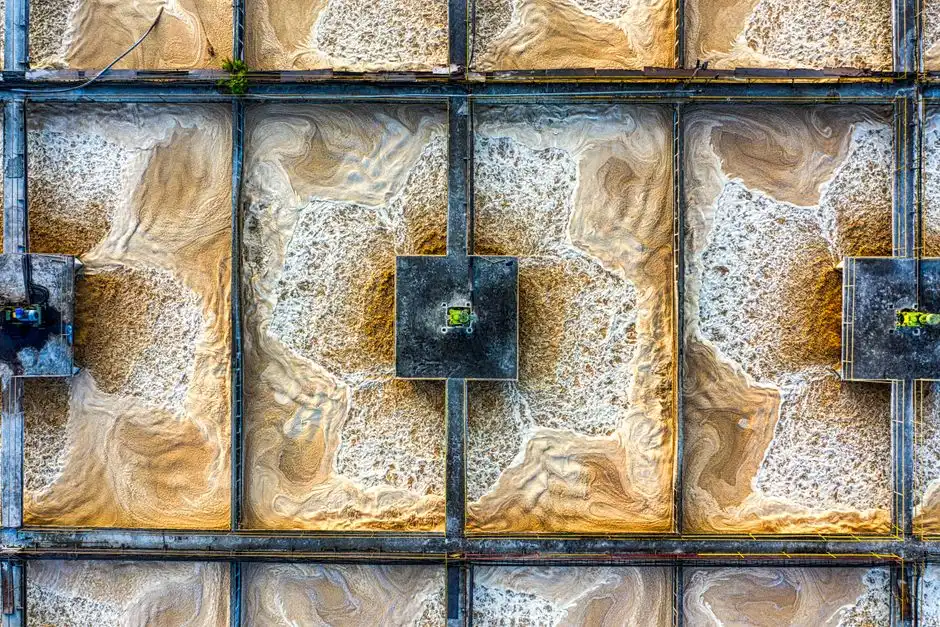
Clarifiers use gravity sedimentation; dissolved air flotation uses microbubbles to lift conditioned floc, so each unit removes a different physical fraction of the wastewater.
In gravity sedimentation, particles with a specific gravity greater than water settle, sludge is withdrawn from the bottom, and clarified water overflows a launder. Performance depends on particle settleability, surface overflow rate, and sludge withdrawal. A lamella clarifier adds inclined settling plates, increasing effective settling area within a smaller tank footprint. The mechanism remains gravity sedimentation: lamella plates do not remove colloidal, oily, or dissolved contaminants that were already passing through the clarifier.
In dissolved air flotation, clarified water is recirculated, pressurized with air, and returned to the treatment tank. On depressurization, microbubbles form and attach to conditioned floc. The floating aggregate is removed by a skimmer, while clarified water is withdrawn below the floating solids. Chemical coagulation and flocculation determine the floc properties that make this separation effective.
Clearwater Industries describes microbubbles measuring 30–50 microns, while DAF Corp describes 20–40 micron bubble generators on its website. These are equipment characteristics, not guarantees that every South Naknek stream will float adequately. Bubble size does not replace site-specific conditioning tests.
DAF is poorly suited to heavy, non-floating silt and clay, as noted in the HydropureWater 2026 technical article. A clarifier alone may discharge emulsified oils, conditioned colloids, or low-specific-gravity precipitates. DAF also does not remove dissolved metals unless they have first been precipitated into particulate solids.
| Selection factor | Clarifier or lamella unit | Dissolved air flotation |
|---|---|---|
| Separation mechanism | Gravity sedimentation | Microbubble flotation of conditioned floc |
| Best-suited fractions | Dense tailings fines, mill solids, metallurgical sludge | Conditioned colloids, oils, flotation reagents, low-density precipitates |
| Principal limitation | Colloidal and buoyant material may pass through | Heavy non-floating silt and clay are difficult to lift |
| Key design inputs | Settling velocity, surface overflow rate, lamella area, sludge withdrawalConditioning results, hydraulic loading, flotation loading, recycle ratio, bubble generation, skimming capacity | |
| Solids route | Underflow to thickening or dewatering | Floated sludge to collection and dewatering |
| Typical position in the train | Primary bulk-solids removal | Primary unit for suitable buoyant or conditioned streams; polisher after clarification |
Choose a clarifier-first, DAF-first, or combined train
A combined treatment train is usually the defensible starting point when a South Naknek stream contains both dense solids and a buoyant or colloidal fraction.
Choose a clarifier-first train for dense tailings overflow, mill discharge, high-solids washdown, or metallurgical sludge where bulk solids removal is the main requirement. Clarification removes the heavy non-floating fraction before any flotation step and limits the solids load presented to downstream equipment.
Choose DAF-first where the stream is dominated by conditioned oils, flotation reagents, colloids, or low-density precipitates, with no heavy non-floating solids load. The automatic chemical dosing system is an important part of that train because coagulation, pH adjustment, and flocculation determine whether the contaminants attach reliably to bubbles.
Use clarifier followed by DAF for combined flows. The clarifier handles the dense fraction; the DAF polisher captures residual conditioned colloidal or buoyant material. Do not use DAF alone to treat raw tailings loads. Do not use a clarifier alone if the required outcome depends on removing emulsified oils, reagent residuals, or precipitated metals that remain suspended.
For dissolved metals, evaluate pH adjustment and precipitation before solids separation. This can convert dissolved species into a removable precipitate, after which clarification or flotation can capture the particulate fraction. Neither mechanism is a substitute for the required chemistry.
For process-water recycling, include any required filtration or membrane treatment in the original scope. Clarified or floated water may still need additional solids removal, and a downstream plate-and-frame filter press may be required for the resulting sludge. A DAF stage does not guarantee reuse quality by itself.
| Observed stream condition | First-choice train | Required verification |
|---|---|---|
| Dense, settleable solids dominate | Clarifier | Settling tests, surface overflow rate, lamella area, underflow handling |
| Conditioned oils, colloids, or buoyant precipitates dominate; heavy solids load is low | DAF with chemical conditioning | Jar tests, pilot flotation results, skimming and sludge capacity |
| Dense solids plus buoyant or colloidal fraction | Clarifier followed by DAF | Clarifier carryover, DAF hydraulic and solids loading, integrated sludge route |
| Dissolved metals must be removed | pH adjustment and precipitation followed by solids separation | Metal species, dose-response, residual solubility, precipitate settleability |
| Water must be reused | Clarifier and/or DAF plus downstream filtration or membrane treatment as demonstrated | End-use quality, scaling, fouling, seasonal performance |
Size the equipment from wastewater data and pilot results
Neither a clarifier nor a DAF unit should be sized from flow and TSS alone; final sizing requires the complete seasonal dataset and pilot results.
Require average flow, peak flow, minimum flow, flow-duration profile, TSS, particle-size distribution, settling velocity, pH, temperature, oils and greases, dissolved metals, and flotation-reagent concentrations. Batch discharges and rainfall-affected periods are not optional edge cases: they define conditions the equipment must handle or isolate.
For a clarifier, evaluate hydraulic loading, solids loading, surface overflow rate, lamella settling area, sludge-blanket depth, and underflow solids concentration. Settleability determines whether the proposed geometry can separate the required fraction. A high-rate lamella clarifier can increase effective settling area within a fixed footprint, but it does not make nonsettling material settleable.
For DAF, evaluate hydraulic loading, flotation loading, recycle ratio, bubble generation, contact-zone design, skimming capacity, sludge collection, and the conditioned floc properties established by testing. The 30 mg/L optimum aluminum-sulfate dose reported by Elder in the 2011 Utah State University study on lagoon effluent demonstrates that dose optimization is stream-specific; it is not a default mining dose or evidence for South Naknek.
Vendor claims must remain clearly labelled. DAF Corp reports 92–98% TSS removal for its FC Maximizer and 85–90% for its RC UniMax on its website. These are vendor-reported ranges, not guarantees for South Naknek wastewater. The same site advertises laboratory feasibility analysis and on-site pilot studies, which are relevant records to request—not substitutes for site testing.
| Sizing input | Clarifier evaluation | DAF evaluation | Evidence status before purchase |
|---|---|---|---|
| Average, peak, and minimum flow | Hydraulic and surface-overflow loading | Hydraulic, flotation, and recycle loading | Site monitoring required |
| TSS and particle-size distribution | Settling velocity, solids loading, sludge blanket | Separable floc versus heavy non-floating solids | Site sampling and settling/jar testing required |
| pH, temperature, metals, oils, reagents | Influence on settleability and residual solids | Influence on conditioning, flotation, sludge chemistry | Seasonal laboratory dataset required |
| Performance claim | Clarifier-specific project data | DAF Corp reports 92–98% TSS removal for FC Maximizer and 85–90% for RC UniMax | Vendor-reported until confirmed by site pilot |
| Chemical dose | Usually less dependent on chemical conditioning | Established by jar and pilot testing | The 2011 Logan, Utah study’s 30 mg/L optimum is not a mining default |
| Solids handling | Underflow concentration and withdrawal capacity | Floated sludge rate, consistency, skimming and collection capacity | Pilot-derived values and vendor guarantees required |
Compare bids without comparing incompatible scope
Comparable bids must use the same influent basis, treatment scope, and performance criteria; a bare tank price is not a comparable capital estimate.
Require every bidder to quote feed characterization support, chemical conditioning, the selected DAF or clarifier, controls, sludge withdrawal, pumping, utilities, installation, commissioning, training, and performance testing. Request comparable metal-bearing wastewater applications, pilot-test methods, materials of construction, control philosophy, local service capability, and spare-parts support.
Ask bidders to propose guarantees tied to defined influent and effluent parameters, including the flow basis and contaminant fractions. Generic TSS-removal claims cannot establish compliance or reuse suitability.
Material selection is a project-specific corrosion and abrasion question. Clearwater Industries lists 304SS, 316SS, polypropylene, and other materials for its DAF systems; DAF Corp states that its standard FC Maximizer uses 304L stainless steel and that other units can be fabricated entirely in stainless steel. These documented options do not establish which grade is correct for a South Naknek stream. Require corrosion review using actual chemistry, temperature, and batch conditions.
Include sludge handling in the comparison. Clearwater Industries states that properly conditioned DAF sludge can require little or no further dewatering. That is a vendor-reported operating characteristic, not a guaranteed site outcome. Clarifier underflow and DAF floated sludge still need a defined thickening, storage, and dewatering route.
| RFQ comparison item | Required bidder response | Buyer acceptance check |
|---|---|---|
| Design basis | Measured flow, TSS, particle size, chemistry, peaks, and reuse or discharge target | All bidders used the same measured basis |
| Equipment scope | Conditioning, treatment unit, pumping, controls, utilities, sludge handling, installation, and commissioning | No excluded scope appears only as a commercial footnote |
| Performance guarantee | Defined feed and effluent parameters with test method | Claim is tied to the proposed configuration and representative site wastewater |
| Pilot evidence | Method, actual wastewater, operating record, and resulting sizing parameters | Pilot data support the selected hydraulic and solids loads |
| Materials | Proposed grade and corrosion/abrasion basis | Selection is supported by actual stream chemistry and conditions |
| Sludge route | Solids concentration, collection, storage, and dewatering proposal | Whole-train solids balance is complete |
| Price | Budgetary quotation linked to the stated design basis | No universal 2026 DAF or clarifier price is assumed |
The cited DAF market-price range and material-premium estimate in the HydropureWater ranking-page excerpt are not supported by the authoritative source set provided for this article. Do not use them as 2026 budget assumptions. Request complete budgetary quotations tied to measured flow, TSS, contaminant fractions, and the selected scope.
Match the treatment train to discharge and reuse obligations
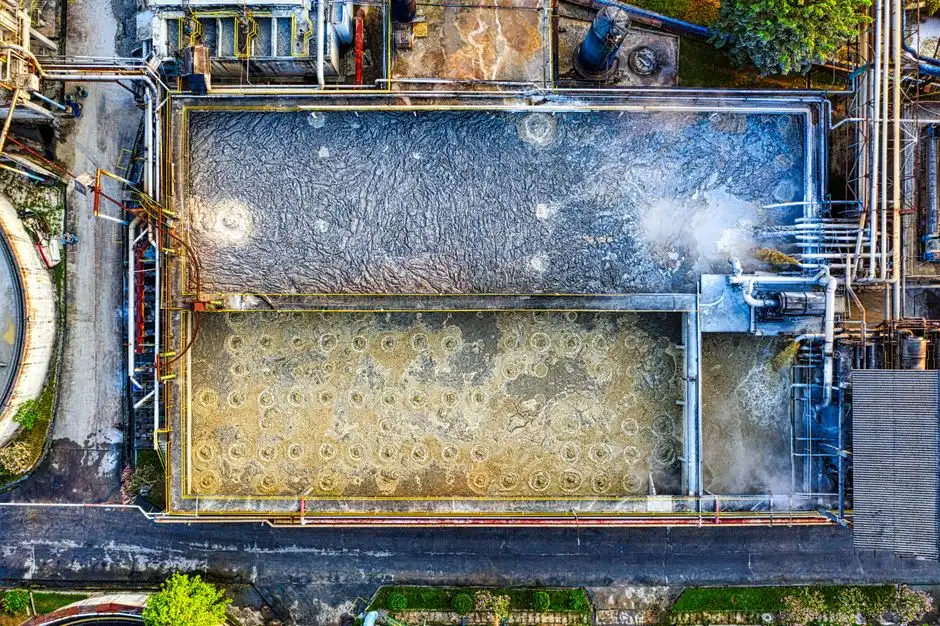
The selected train must be evaluated against the facility’s actual permit and reuse target; no South Naknek-specific discharge limit was supplied in the research.
Require bidders to review the current permit, receiving-water or sewer requirements, applicable metals limits, and any zero-liquid-discharge or process-water-recycling objective. If tightening the solids or metals objective leaves residual conditioned colloids or precipitated material after clarification, a DAF polishing step may be justified. That conclusion still depends on site data and demonstrated performance.
For process-water recycling, compare DAF with the filtration or membrane requirements included in the original scope. A clarifier followed by DAF can provide a clarified intermediate stream, but reuse may still require further treatment. Treating filtration and membrane needs as post-purchase additions risks purchasing a train that cannot meet its intended operating envelope.
Review operational risk alongside equipment performance: startup sequence, upset recovery, chemical inventory, sludge removal, instrumentation, operator workload, utilities, and control interlocks. These items affect whether the treatment train remains available when production cycles or rainfall change the wastewater composition.
Pilot testing with actual South Naknek wastewater and seasonal chemistry is the final evidence step before equipment selection. Use the mining wastewater sewer-limit compliance strategy to structure the permit and operating review, but replace location-specific assumptions with the facility’s current permit and measured performance.
Frequently Asked Questions
Can DAF replace a clarifier for tailings or mill wastewater?
Usually not as a stand-alone unit. DAF is poorly suited to high loads of heavier, non-floating silt and clay; it is more appropriate for removing conditioned colloidal, oily, or buoyant material. If the stream also contains dense tailings fines or mill solids, evaluate a clarifier before DAF.
How should a mining-wastewater DAF system be sized?
Size it from measured average, peak, and minimum flow; TSS; particle-size distribution; pH; temperature; metals; oils; and reagent concentrations. Use jar tests to establish conditioning and pilot testing to verify flotation and sludge-handling capacity. Include batch and seasonal conditions rather than sizing only from average flow.
How should procurement teams compare DAF and clarifier supplier costs?
Request budgetary quotations on the same complete-scope basis: conditioning, treatment equipment, controls, pumping, utilities, sludge handling, materials, installation, commissioning, and performance testing. Tie the quotation to measured flow, TSS, and contaminant profile. Do not adopt the unsupported universal price or material-premium claims found in general ranking pages.
Which technology is safer for permit compliance?
Neither technology is universally compliant. The correct train depends on the permit target, contaminant fractions, seasonal performance, and demonstrated site-specific results. Evaluate the full chain against the facility’s current permit and receiving requirements, then require guarantees tied to defined influent and effluent parameters.