Why Benin City Needs Industrial-Grade Sewage Treatment Equipment in 2025
Benin City’s industrial and municipal sectors face strict effluent compliance under Nigeria’s NESREA regulations, with discharge limits of <30 mg/L BOD, <50 mg/L COD, and <10 mg/L TSS for most industries. Local suppliers offer sewage treatment equipment ranging from ₦5M for small package plants (10 m³/h) to ₦500M+ for large-scale MBR systems (200 m³/h+). This guide compares 5 top suppliers, technical specs (e.g., DAF systems achieve 92–97% TSS removal), and ROI data to help buyers select systems that meet compliance while optimizing capital and operational costs.
The National Environmental Standards and Regulations Enforcement Agency (NESREA) has intensified its oversight in Edo State, specifically targeting the Ikpoba River and surrounding industrial zones. According to the NESREA Guidelines for Industrial Effluent Limitation (2023), factories failing to meet these standards face immediate sanctions. In 2023, a local brewery in Benin City was reported to have paid ₦12M in fines for discharging untreated effluent with organic loads exceeding 400 mg/L BOD, a violation that also led to a temporary 14-day production shutdown. Such enforcement data from the Federal Ministry of Environment (FMEnv) in 2024 indicates that fines now scale up to ₦5M per individual violation, alongside the risk of permanent closure for repeat offenders.
Beyond avoiding legal penalties, high-performance sewage treatment equipment provides a direct financial return through water recovery. Industrial facilities in Benin City, particularly textile and food processing plants, can achieve a 20–40% reduction in municipal water bills by implementing MBR systems for Benin City hospitals and urban factories needing pathogen-free effluent. This treated water is suitable for non-potable applications such as cooling towers, floor washing, and landscape irrigation, effectively turning a compliance burden into a resource recovery operation.
Types of Sewage Treatment Equipment Available in Benin City
Industrial sewage treatment equipment in Benin City is categorized by its primary separation mechanism, ranging from physical-chemical processes like DAF to advanced biological membranes. Selecting the correct technology depends on the influent’s chemical makeup; for instance, slaughterhouses in the Egba area require different configurations than pharmaceutical plants near the city center.
Dissolved Air Flotation (DAF) Systems: These are the gold standard for industries with high Fats, Oils, and Grease (FOG) and suspended solids. The process involves dissolving air in water under pressure and then releasing it at atmospheric pressure in a flotation tank. Micro-bubbles attach to the solids, forming a float layer that is mechanically skimmed off. A high-efficiency DAF system for Benin City’s food processing and textile industries typically achieves 90%+ removal of insoluble COD.
Membrane Bioreactor (MBR) Systems: MBR technology combines conventional activated sludge treatment with membrane filtration. By using membranes with pore sizes as small as 0.1 μm, these systems eliminate the need for secondary clarifiers. They are ideal for urban Benin City sites where space is at a premium, producing effluent with <1 mg/L TSS that is virtually pathogen-free.
Package Plants (WSZ Series): These are integrated units designed for ease of installation. A compact underground sewage treatment system for Benin City’s space-constrained sites utilizes an Anaerobic/Oxic (A/O) biological contact oxidation process. These units are often housed in carbon steel or FRP tanks, making them resistant to the high humidity and corrosive soil conditions typical of the Niger Delta region.
Biodigesters: While popular for residential septic replacements in Oredo and Ikpoba-Okha, biodigesters have significant limitations for industrial use. They are effective for domestic blackwater but cannot handle heavy metals, high-volume dye effluent, or extreme pH fluctuations found in manufacturing. For industrial applications, they should only be considered as a pre-treatment step for sanitary waste, not as a primary industrial effluent solution.
| Equipment Type | Primary Application | Key Benefit | Compliance Target |
|---|---|---|---|
| DAF System | Slaughterhouses, Food Processing | Removes 95% of FOG/TSS | NESREA TSS <10 mg/L |
| MBR System | Hospitals, Urban Factories | Smallest footprint; high purity | Water Reuse Standards |
| WSZ Package Plant | Residential Estates, Hotels | Underground; low noise | Sanitary Discharge Limits |
| Filter Press | Sludge Management | Reduces sludge volume by 70% | Waste Disposal Regulations |
Technical Specs Comparison: DAF vs. MBR vs. Package Plants
Performance benchmarks for sewage treatment in Benin City are dictated by the influent’s organic strength and the required discharge quality. Industrial-grade systems must be sized not just for average flow, but for peak "slug loads" common in batch processing industries.
| Parameter | DAF | MBR System | WSZ Package Plant |
|---|---|---|---|
| Flow Rate (m³/h) | 5 – 300+ | 2 – 200 | 1 – 80 |
| Effluent BOD (mg/L) | 40 – 80 (Pre-treatment) | < 5 | < 20 |
| Effluent TSS (mg/L) | < 10 | < 1 | < 10 |
| Footprint (m²) | Moderate (20-50) | Very Small (10-30) | Small (Underground) |
| Energy Use (kWh/m³) | 0.4 – 0.8 | 1.2 – 2.5 | 0.6 – 1.0 |
| Capital Cost (₦) | 8M – 50M | 15M – 200M | 5M – 25M |
| O&M Cost (₦/m³) | 600 – 900 | 1,100 – 1,800 | 500 – 850 |
Data from HydropureWater internal engineering specs (2025) confirms that while MBR systems have the highest capital and operational costs, they are the only technology capable of consistently meeting the <5 mg/L BOD requirements often requested by environmental consultants for high-density urban projects. Conversely, DAF systems are indispensable for Benin City’s palm oil processors, where influent FOG levels can exceed 1,000 mg/L—levels that would instantly foul an MBR membrane or kill the biological flora in a package plant.
Limitations must be factored into the procurement process. MBR systems require skilled operators to manage membrane cleaning cycles (CIP) and prevent irreversible fouling. DAF systems, while robust, primarily remove suspended pollutants and must be paired with a biological stage if dissolved organic carbon (BOD) is the primary concern. Package plants, while "plug-and-play," require scheduled desludging every 6–12 months to prevent solids carryover into the final discharge point.
Top 5 Sewage Treatment Equipment Suppliers in Benin City: 2025 Shortlist
Evaluating suppliers in the Edo State market requires a focus on local technical support and a proven track record with NESREA and FMEnv certifications. Most "suppliers" found on classified sites like Jiji are often resellers or general contractors without in-house engineering capabilities.
| Company | Specialization | Local Support | Compliance Guarantee |
|---|---|---|---|
| HydropureWater | Industrial DAF, MBR, WSZ | Regional Service Team | Full NESREA/FMEnv |
| Pure Aqua | RO & Filtration | Remote/Lagos-based | Process-specific |
| Abisco Water Engineering | Borehole & Small Sewage | Direct Benin Presence | Municipal only |
| XYZ Water Solutions* | Package Plants/Biodigesters | Direct Benin Presence | Limited Industrial |
| Jiji/Contractor Network | Used/Generic Equipment | Variable | None |
*Note: Represents typical local engineering firms found on Daibau.ng.
A major red flag during supplier evaluation is the absence of local case studies or pilot testing capabilities. HydropureWater differentiates itself by offering turnkey PLC-automated systems that allow for remote monitoring, reducing the need for constant on-site engineering supervision. When comparing quotes, ensure the supplier includes an Environmental Impact Assessment (EIA) support package, as this is often required for new industrial installations in Benin City. Avoid vendors who cannot provide a performance guarantee specifically tied to the Kano’s 2025 wastewater treatment plant cost benchmarks or similar Nigerian industrial standards.
Cost Breakdown: Sewage Treatment Equipment in Benin City (2025)
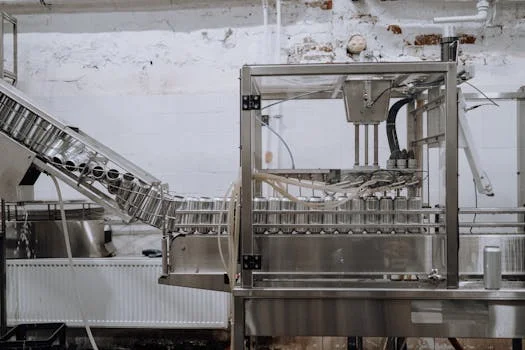
Budgeting for a sewage treatment plant (STP) in Benin City involves three distinct tiers: Capital Expenditure (CapEx), Operational Expenditure (OpEx), and Regulatory/Administrative costs. Based on 2025 market data, a 50 m³/h system for a textile factory can range from ₦40M to ₦120M depending on the technology chosen.
Capital Costs:
- WSZ Package Plants (10–50 m³/h): ₦5M – ₦20M. These are the most cost-effective for residential estates and small hotels.
- DAF Systems (4–300 m³/h): ₦8M – ₦50M. Cost scales with the complexity of the chemical dosing system and the material of construction (SS304 vs. Carbon Steel).
- MBR Systems (10–200 m³/h): ₦15M – ₦200M. The high cost is driven by the membrane modules and high-pressure aeration requirements.
Operational Costs (OpEx): Operational costs in Benin City are heavily influenced by the price of diesel for generators and the cost of specialized chemicals like polyaluminum chloride (PAC) and polymer. Expect to spend between ₦500 and ₦1,500 per cubic meter of treated water. For an MBR system, electricity accounts for nearly 60% of OpEx, whereas for a DAF system, chemical consumables are the primary driver.
Hidden Costs: Procurement managers often overlook the "soft costs" of installation. Environmental permits from the Edo State Ministry of Environment and NESREA can cost between ₦500,000 and ₦2M. Installation and civil works (piping, tank foundations, housing) typically add another 10–20% to the equipment purchase price. annual desludging for non-MBR systems can cost between ₦200,000 and ₦1M depending on the volume of solids produced.
How to Select the Right Supplier: A 5-Step Decision Framework
Selecting a sewage treatment equipment supplier in Benin City without a structured framework often leads to "system undersizing," where the plant fails to meet compliance during peak production hours. Follow these five engineering steps to ensure a viable installation.
Step 1: Define Effluent Goals. Determine exactly where the water is going. If you are discharging into a public drain in Oregbeni, you must meet the NESREA BOD <30 mg/L limit. If you plan to reuse water for cooling, you need the pathogen removal capabilities of an MBR.
Step 2: Match System to Influent. Conduct a 7-day composite sampling of your raw sewage. High FOG levels require a DAF; high organic loads with low solids favor MBR; simple sanitary waste is best handled by a WSZ package plant.
Step 3: Verify Compliance Expertise. Ask the supplier for a list of projects in Edo or Delta State that have passed a NESREA audit in the last 24 months. Request copies of the final effluent lab results from these sites.
Step 4: Request Pilot Testing. For complex industrial effluents, such as those from textile dyeing, do not buy a full-scale system without a pilot. HydropureWater offers 30-day pilot units for approximately ₦1M, which can be credited toward the final purchase. This ensures the chemical dosing and membrane flux are calibrated to your specific waste.
Step 5: Compare Total Cost of Ownership (TCO). A system that is ₦5M cheaper today but costs ₦2M more per year in electricity and chemicals is a poor investment. Calculate the TCO over a 5-year period, including the cost of potential NESREA fines if the cheaper system fails to perform.
ROI Calculator: Sewage Treatment Equipment for Benin City Businesses
The financial justification for an STP in Benin City is built on three pillars: fine avoidance, water utility savings, and sludge byproduct value (in some agricultural cases). For most industrial players, the payback period ranges from 3 to 5 years.
| System Type | Flow (m³/h) | CapEx (₦) | Annual Savings (Fines + Water) | Payback Period |
|---|---|---|---|---|
| Package Plant | 10 | 8M | 3.5M | 2.3 Years |
| DAF System | 30 | 35M | 12M | 2.9 Years |
| MBR System | 50 | 120M | 38M | 3.2 Years |
Consider a textile factory in the Benin City industrial estate. By installing a 50 m³/h MBR system, the factory avoids an estimated ₦20M in annual NESREA fines and saves ₦8M by recycling 60% of its process water for initial fabric rinsing. Even with ₦15M in annual O&M costs, the net benefit is ₦13M per year. For companies looking to manage cash flow, HydropureWater provides equipment leasing options where a ₦20M system can be installed for a monthly fee of approximately ₦1M, allowing the factory to pay for compliance out of its operational budget.
Payback periods are sensitive to local energy costs. Facilities that utilize solar-hybrid power for their aeration blowers can reduce the payback period by up to 15%. To assist in these calculations, we provide an Excel-based ROI calculator template that allows engineers to input their specific BOD loads and local utility rates to generate a custom 10-year financial forecast.
Frequently Asked Questions
How much does it cost to set up a water treatment plant in Benin City?
The cost ranges from ₦5M to ₦500M. A basic package plant for a small hotel (10 m³/h) starts at ₦5M. Industrial-grade DAF systems for food processing typically range from ₦15M to ₦50M, while large-scale municipal or hospital MBR systems can exceed ₦200M. You should budget an additional 10–30% for civil works and environmental permits.
Does Nigeria have water treatment plants that meet NESREA standards?
Yes. While many older municipal plants are underperforming, there are approximately 15–20 modern industrial-grade plants in the Benin City area utilizing MBR and DAF technologies that consistently meet NESREA’s BOD <30 mg/L limit. Success depends on selecting a supplier with a track record of how textile factories in Madurai comply with effluent standards and adapting those engineering principles to the local Nigerian context.
What are the 7 methods of water treatment applicable to sewage in Benin City?
Most local systems use a combination of: 1) Screening to remove large debris, 2) Primary sedimentation, 3) Biological treatment (such as A/O or MBR), 4) Secondary sedimentation (clarification), 5) Tertiary filtration (sand or carbon), 6) Disinfection (UV or Chlorine), and 7) Sludge dewatering using a filter press or drying beds. High-FOG industries add a 0) DAF stage before biological treatment. You can see how these are integrated in Taiwan’s 2025 DAF system requirements for high-FOG wastewater.
Can I use a biodigester for industrial sewage in Benin City?
No, biodigesters are generally unsuitable for industrial effluent. They are designed for consistent, high-strength domestic waste (toilet waste) and cannot handle the chemical fluctuations, high hydraulic flows, or toxic compounds (dyes, heavy metals) found in industrial sewage. Using a biodigester for a factory will likely lead to system failure and NESREA fines.
How do I ensure my sewage treatment system complies with NESREA?
First, ensure your equipment is sized for your peak organic load, not just average flow. Second, install a PLC system for automated chemical dosing to remove human error. Third, conduct quarterly third-party effluent testing and maintain a logbook of these results, as required for your annual Environmental Compliance Certificate (ECC) renewal with NESREA.