Establish the applicable rule and Houston permit
The applicable Houston permit, not a generic federal limit, should define the equipment design basis for a fabricated-metals plant discharging to the sanitary sewer. First determine whether 40 CFR Part 433 applies to the facility’s actual operations; then obtain Houston Public Works’ written local limits and compare them with the applicable PSES or PSNS requirements. New or planned operations should confirm permit requirements before construction, according to Houston Public Works. The research supplied for this article does not provide Houston’s numerical local limits, so those values must be obtained directly rather than assumed.
Under the process description published by HydropureWater in 2026, Part 433 covers metal-finishing operations, including forming, finishing, forging, foundry, metal-spraying, and machining-wash operations co-located with plating or anodizing lines. A stamping operation that ships only dry parts to a separate finisher is generally outside that category, while a facility operating its own zinc, nickel, or chromic-acid tank is inside it. Applicability should be documented with process descriptions, tank inventories, production records, and wastewater routing.
PSES apply to existing sources, PSNS apply to new sources, and POTW local limits developed under 40 CFR 403.5 are at least as stringent as applicable categorical standards. The plant must satisfy the stricter requirement for each parameter, so the treatment envelope should follow the issued permit table. For a working comparison of DAF and chemical treatment for fabricated metals, obtain the permit before sizing equipment.
| Document or decision | What the buyer must establish | Design consequence |
|---|---|---|
| Operations record | Whether plating, anodizing, plating-wash, or separate finishing operations occur on site | Determine whether 40 CFR Part 433 applies |
| EPA PSES or PSNS status | Whether the source is existing or new | Identify the applicable categorical limit set |
| Issued Houston industrial wastewater permit | Authorized discharge point, monitoring requirements, local limits, and construction conditions | Use the permit as the controlling design document |
| Houston written local-limit confirmation | Numerical limits not reproduced in the supplied research | Do not use unverified city-specific values |
Houston Public Works states that new or planned operations should determine whether industrial wastewater permit requirements apply before construction. For that determination, contact Industrial Wastewater Service at 832-395-5800 or [email protected]. The permit should identify who must perform the local-limit demonstration and how the treatment-system guarantee will be reconciled with permit conditions.
Build a representative wastewater design basis
A one-week composite record is the minimum design basis identified in the supplied 2026 research because a short sample can miss a major batch dump. Equalization cannot be sized from an average flow when the controlling event is a sudden, high-concentration discharge. Build the worksheet from mixed floor-drain flow, production schedules, batch records, and proposed collection-system hydraulics, then size the train against both average flow and the maximum credible batch.
Test the mixed floor drain rather than selecting one convenient process stream. The analysis should cover free and emulsified oils, dissolved metals, hexavalent chromium, cyanide, TSS, and pH. For operations using hexavalent chromium or cyanide, include targeted sampling protocols rather than relying on general analysis. For DAF versus lamella process design, the same sampling record should define both the hydraulic and contaminant load.
HydropureWater’s 2026 field ranges provide preliminary context for planning samples: oils of 50–500 mg/L, total dissolved metals of 5–200 mg/L, TSS of 100–1,000 mg/L, and pH swings from 2 to 12 across batch dumps. These values describe the mixed floor-drain context in that source; they are not Houston discharge limits and should not replace site testing. The source also describes a hard-chrome line producing more than 50 mg/L Cr(VI) while lowering pH below 2 during a rinse dump.
| Procurement input | Evidence or record to request | How it affects the train |
|---|---|---|
| Representative flow | One week of composite flow and production-normalized flow | Equalization volume, treatment flow, and chemical feed rate |
| Batch profile | Maximum dump volume, dump duration, frequency, and production schedule | Equalization working volume and upset-control strategy |
| Contaminants | Free and emulsified oils, dissolved metals, Cr(VI), cyanide, TSS, and pH | Unit-operation sequence and dosing demand |
| Collection hydraulics | Flow, invert elevations, available head, and proposed routing | Gravity feasibility and pumping requirements |
| Limit basis | Issued permit, local limits, and applicable PSES or PSNS | Removal targets and final acceptance tests |
The RFQ should request maximum batch volume, dump duration, production schedule, collection-system hydraulics, and the proposed sampling locations. Where a dump exceeds the equalization basin’s available capacity, require either controlled segregation and release or a documented return-to-equalization response. This is the point to identify an undersized basin before a supplier bases the clarification equipment on a deceptively smooth composite average.
Assign each contaminant a dedicated treatment step
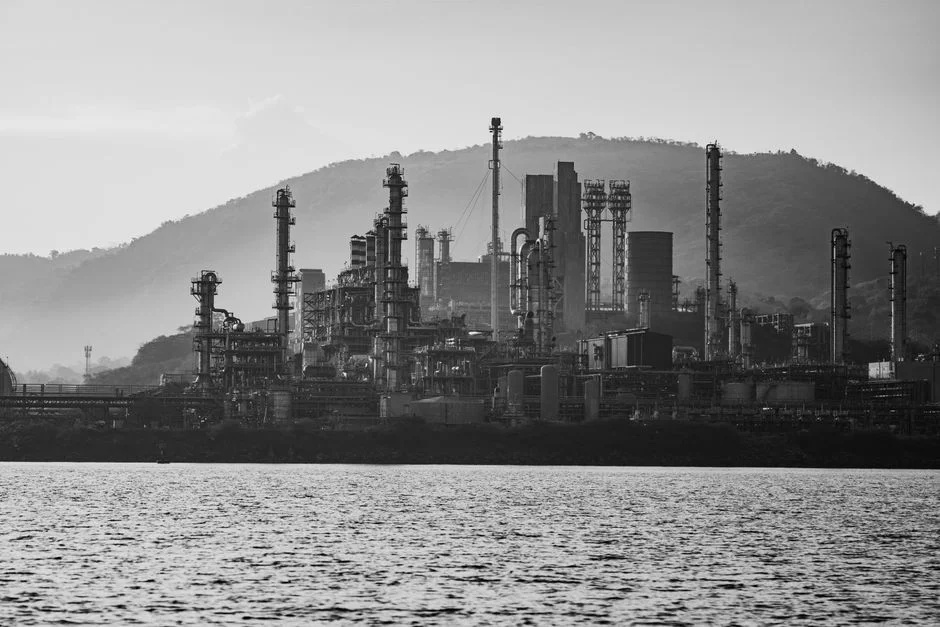
The contaminants in fabricated-metals wastewater require different mechanisms, so equalization and source-specific chemistry must precede solids separation. Free and emulsified oils need physical separation or chemical break; hexavalent chromium requires reduction; cyanide requires oxidation; and dissolved metals require pH-controlled hydroxide precipitation. Combining these reactions in one stage can leave an effluent that fails several parameters at once, according to HydropureWater’s 2026 process guidance.
- Equalize the flow. Use an equalization basin to mix batch dumps and smooth pH and flow variation before dosing. For plating shops with batch discharges, HydropureWater’s 2026 source treats equalization as a core unit operation rather than optional storage.
- Remove oil before metals chemistry. Separate free oil and remove emulsified oil through physical separation or chemical break. Oil carried into hydroxide precipitation can interfere with floc formation and clarifyability.
- Reduce hexavalent chromium. Use sodium metabisulfite or ferrous sulfate at pH 2–3 and approximately 250–300 mV ORP, as specified in HydropureWater’s 2026 source, then raise pH for precipitation.
- Oxidize cyanide before precipitation. Treat cyanide before metal hydroxide precipitation because untreated cyanide can resolubilize downstream precipitates, according to the same 2026 source.
- Precipitate dissolved metals. Adjust to the precipitation condition and form metal-hydroxide floc. For the described sequence, chromium precipitation occurs at pH 8.5–9.5.
- Clarify the floc. Remove the resulting suspended metal-hydroxide solids by DAF or lamella clarification, then provide final pH control where required by the permit.
The automatic chemical dosing skid should preserve separate control loops for chromium reduction, cyanide oxidation, pH adjustment, and flocculation rather than treating those reactions as interchangeable. In the 2026 HydropureWater process description, the principal chemicals are NaOH or sulfuric acid for pH trim, sodium metabisulfite for chrome reduction, sodium hypochlorite for cyanide destruction, and anionic or cationic polymer for floc.
| Contaminant family | Dedicated treatment step | Required monitoring | Procurement or sizing criterion |
|---|---|---|---|
| Batch flow and pH variation | Equalization basin | Level, flow, pH | Maximum credible dump volume and available working storage |
| Free and emulsified oils | Oil separation or chemical break | Free and emulsified oil, flow | Worst-case oil load and selected recovery method |
| Hexavalent chromium | Reduction at pH 2–3 | Cr(VI), pH, ORP | Batch concentration, reduction demand, and validated reaction time |
| Cyanide | Oxidation before precipitation | Cyanide, pH, ORP | Batch load and oxidation chemistry selected for the wastewater |
| Dissolved metals | Hydroxide precipitation | Dissolved and total metals, pH | Target metals, precipitation pH, sludge yield, and residual solubility |
| Metal-hydroxide floc and TSS | DAF or lamella clarification | TSS, flow, solids inventory | Hydraulic loading, removal objective, and validated floc behavior |
Each stage needs an explicit outlet objective, monitoring point, and failure response. A vendor should explain how an upset in one stage prevents discharge of untreated or incompletely treated flow. This is particularly important where the permit compliance point is sensitive to pH, metals, TSS, oil and grease, or cyanide.
Choose and size DAF versus lamella clarification
DAF is the stronger starting candidate when oil, colloids, and fragile hydroxide floc must be removed from variable floor-drain wastewater; lamella clarification is more appropriate when the objective is primarily solids separation. HydropureWater’s 2026 source describes DAF as suitable for suspended solids, FOG, oil and grease, and colloidal matter. Its project-specific DAF design variables are hydraulic surface loading, air-to-solids ratio, and recycle rate, all of which should be stated in the proposal.
For DAF screening, the 2026 source gives a hydraulic surface loading of 4–20 m/h, an A/S of 0.005–0.060 with 0.02 as a typical design point, and recycle of 10–30% of forward flow. These are preliminary design values, not acceptance criteria for a Houston installation; the supplier must validate them against the measured wastewater and selected equipment. Higher A/S may dry the float but increases blower demand and can damage fragile floc, while higher recycle can improve TSS removal while increasing equalization and dilution effects.
For lamella clarification, the separate HydropureWater process source reports surface-loading rates of 20–40 m/h and a compact footprint. That comparison does not establish suitability for oily or fragile floc by itself. The proposal should connect the loading rate to the measured TSS, floc density, settling behavior, and required removal, and should state the resulting number of units and the duty assigned to each unit. The dissolved air flotation system and the high-efficiency lamella sedimentation tank should therefore be compared on the same wastewater basis.
| Selection factor | Favors DAF | Favors lamella | Required vendor response |
|---|---|---|---|
| Primary separation objective | Oil, colloids, and floatable floc | Predominantly settleable suspended solids | State the selected mechanism and expected outlet TSS basis |
| Hydraulic basis | Validate 4–20 m/h surface loading against actual flow and batch profile | Validate reported 20–40 m/h loading against actual solids and floc | Provide surface area, units, flow duty, and peak-flow response |
| Chemistry | State A/S and recycle assumptions | State solids inventory and sludge-scraping assumptions | Provide final values and the basis for selecting them |
| Footprint and operations | Evaluate skids, air system, float removal, and controls | Evaluate compact plate packs, sludge collection, and access | Show installed layout and operating sequence |
| Acceptance | Define TSS and oil-performance tests | Define TSS performance tests | Tie guarantees to the issued permit and representative influent |
Include a rotary mechanical bar screen upstream where rags, wipes, or tramp metal can enter the collection system. HydropureWater’s 2026 source identifies screen fouling as a common cause of premature filter-cloth failure in the sludge train. Automatic controls should cover flow, pH, ORP, and solids inventory, with the instrumentation list tied to the treatment sequence rather than offered as a generic package.
Control the chemistry and manage residuals
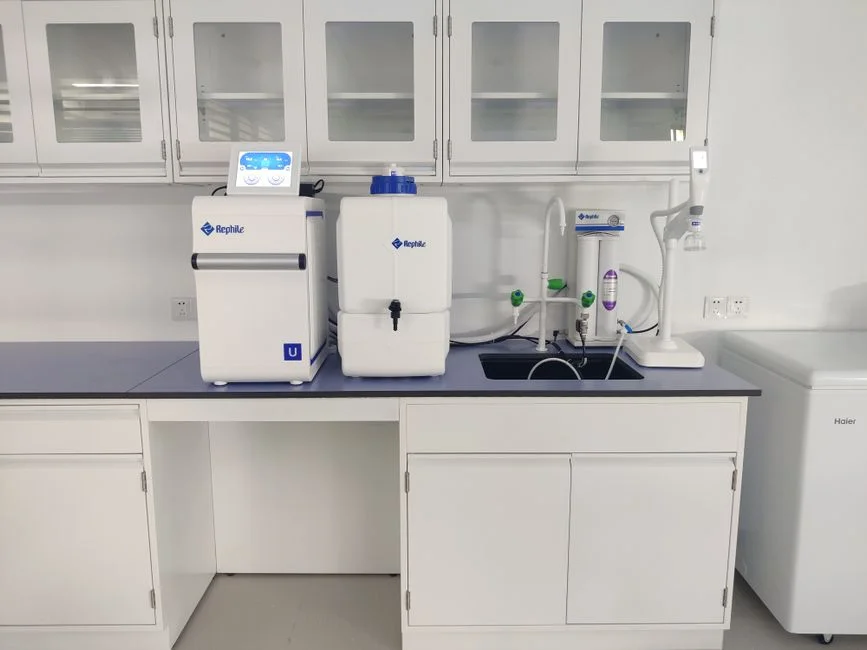
The chemical system must control both dose and reaction endpoint. The 2026 HydropureWater design guidance calls for PLC-controlled, skid-mounted equipment with flow-paced feedforward and pH or ORP feedback. NaOH or sulfuric acid handles pH trim, sodium metabisulfite reduces hexavalent chromium, sodium hypochlorite oxidizes cyanide, and polymer supports floc formation.
Require each dosing pump to have a calibration column and a stroke-count totalizer. Those records let operations verify actual chemical use and detect a failed pump or incorrect calibration. Interlocks should divert flow to the equalization basin header after pH excursion, ORP outside the validated range, or high TSS, as specified in HydropureWater’s 2026 source. The supplier should define sensor ranges, alarm delays, diversion criteria, and the controlled return sequence.
Residuals must be handled as a consequence of the treatment chemistry, not as an afterthought. The same source reports that floated metal-hydroxide sludge typically leaves flotation at 2–5% dry solids and reaches 25–35% dry solids after plate-and-frame dewatering. It reports approximately 22% dry solids as the belt-press ceiling for this sludge. Those values are specific to the cited source and should be checked against site chemistry and selected equipment.
| Procurement package | Minimum information or provision | Acceptance check |
|---|---|---|
| Chemical dosing | Calibration columns, stroke totalizers, feedforward controls, and pH/ORP feedback | Simulate normal and upset conditions during factory testing |
| Upset handling | Automatic diversion to equalization after defined excursions | Confirm sensor setpoints against validated reactions |
| Protection | Upstream rotary mechanical bar screen where solids or rags are present | Review screen capacity and differential-pressure controls |
| Residuals | Sludge-yield estimate and sampling plan | Reconcile expected solids with measured feed and effluent TSS |
| Dewatering | Plate-and-frame arrangement, cloth specification, cake-consistency target, and hauler acceptance | Verify the plate-and-frame filter press against the disposal route |
Before selecting dewatering equipment, obtain written hauler acceptance, the acceptable cake consistency, filter-cloth constraints, and the final disposal route. A theoretical solids balance does not establish that the resulting cake is acceptable for collection and treatment. The proposal should reconcile wastewater flow, contaminant removal, measured sludge yield, polymer consumption, and wet-ton handling costs.
Decide whether advanced polishing is justified
Advanced polishing should be added only when the permit, reuse objective, or a confirmed future requirement makes the base treatment train insufficient. HydropureWater’s 2026 source states that most fabricated-metals plants meet sewer limits with equalization, source-specific chemistry, precipitation, and clarification without polishing. It identifies stricter POTW limits, rinsewater reuse, and a future rule requiring additional treatment as the cases that justify another stage.
For BOD/COD tightening or reuse, the 2026 source identifies a submerged PVDF MBR as an option and describes filtration below 1 μm. For sub-ppm TDS or very low specific-metal targets, it identifies RO; the source gives nickel below 0.1 mg/L as one reuse example and requires upstream multimedia filtration to hold SDI15 below 3. Those performance figures are engineering conditions from the cited source, not Houston permit limits.
PFAS readiness should be handled differently from installed polishing. EPA’s 2026 chrome-finishing rulemaking had no current numerical PFAS limit for chrome finishers, according to HydropureWater’s 2026 regulatory summary. Preserve space, utilities, and hydraulic interfaces for a future anion-exchange or granular activated carbon skid rather than installing it in advance of a defined requirement.
| Decision condition | Potential stage | Evidence required before purchase |
|---|---|---|
| Base train cannot meet a stricter permit limit | Targeted polishing identified by contaminant | Written limit and pilot or validated design data |
| Rinsewater reuse requires BOD/COD reduction and membrane separation | MBR-integrated treatment | Reuse quality specification and membrane-feed characteristics |
| Reuse requires sub-ppm TDS or a very low metal target | Multimedia pretreatment and RO | Target water quality, feed TDS, SDI15, and recovery requirement |
| A future PFAS requirement is credible | Anion exchange or GAC, installed only when required | Applicable limit, analytical method, and confirmed treatment objective |
This decision should be recorded as a design-basis decision: base train, demonstrated limit, future trigger, reserved footprint, and required utility interfaces. That prevents speculative polishing from obscuring the performance guarantee for the permitted discharge.
Frequently Asked Questions
Is DAF or lamella better for variable fabricated-metals floor drains with oil, colloids, and floc?
Prefer DAF when oil and colloid removal is central and the floc must remain intact through flotation. Prefer lamella when the primary duty is settling suspended solids under validated hydraulic and solids-loading conditions. Decide only after the mixed floor-drain characterization and floc behavior have been established; do not compare the units by footprint alone.
What information should a supplier include in the equipment proposal?
Require the flow basis, batch-dump profile, hydraulic loading, DAF A/S and recycle assumptions or lamella solids-loading basis, sludge-yield estimate, included instrumentation, upset controls, and performance guarantees. Require the vendor to state which values are preliminary and which will be fixed after site testing. For broader selection criteria, review the industrial effluent treatment plant selection process before comparing bids.
Who must confirm Part 433 applicability and reconcile the treatment guarantee with the Houston permit?
Assign this responsibility in the procurement scope. The buyer must obtain Houston Public Works’ written permit and local limits, document the site’s process-category basis, and require the supplier to reconcile its guarantee against those issued requirements. The supplied research does not contain Houston’s numerical local limits, so no bid should be accepted with an assumed city limit.
Can the base treatment train accept a future anion-exchange or GAC polishing skid?
Yes, if the original design reserves space, access, power, controls connections, and hydraulic capacity for the intended future polishing application. Record the future contaminant, analytical method, target quality, and trigger in the design basis. This preserves an upgrade path without adding operating complexity before a defined requirement exists.