Define the Peshawar discharge or reuse objective first
An industrial effluent treatment plant in Peshawar should be selected after analyzing the factory’s wastewater and defining its discharge or reuse target, not from flow alone. Research at Hayatabad Industrial Estate evaluated 10 industrial discharge samples for pH, electrical conductivity, total dissolved solids and total suspended solids, showing why local characterization is essential. The practical route begins with suitable pretreatment for suspended solids, oil or colloids, followed by biological treatment where biodegradable pollution requires it. MBR, DAF and clarification equipment serve different roles; membrane or ultrafiltration polishing should be added only when the final quality objective requires it.
Start the decision by selecting one governing outcome: compliant discharge, process-water reuse, irrigation reuse or another explicitly defined use. Each outcome requires a different set of performance limits, sampling points and verification responsibilities. A discharge specification is not interchangeable with an internal reuse specification, and irrigation or potable-use claims require evidence for the relevant end use.
The local evidence comes from the Physicochemical Assessment of Industrial Wastewater Discharges in Hayatabad Industrial Estate, Peshawar, Pakistan, published by the Annual Methodological Archive Research Review. Its assessment covered 10 wastewater samples collected from key industrial discharge points and evaluated pH, electrical conductivity, total dissolved solids and total suspended solids against Pakistan’s National Environmental Quality Standards. These results identify the local need for discharge-point characterization; they do not define limits for a particular factory or every industrial stream in Peshawar.
Use the industrial ETP selection method to separate the final objective from the equipment. Nanofiltration may be considered when a higher-quality reuse outcome is justified. A University of Twente thesis examined direct nanofiltration for polishing wastewater-treatment-plant effluent to EU WFD standards and investigated effluent suitable for agricultural or indirect potable objectives. That research supports nanofiltration as an advanced treatment option, not as an automatic requirement for a Peshawar industrial discharge.
Characterize the effluent and assign missing inputs
Physicochemical characterization must precede equipment selection because a single study of 10 discharge samples cannot represent every industrial stream or production condition. The fillable intake below converts local evidence into named responsibilities and prevents an undefined “typical wastewater” assumption from entering the design.
| Input or decision | Evidence or information required | Responsible party | Entry before quotation |
|---|---|---|---|
| Core physicochemical analysis | Representative results for pH, electrical conductivity, total dissolved solids and total suspended solids, matching the parameters examined in the Hayatabad Industrial Estate study | Qualified or accredited laboratory | Laboratory report and sampling dates: __________ |
| Process-specific contaminants | Oil and grease, FOG, COD, BOD, toxicity, colour and temperature where relevant; the supplied research provides no numerical acceptance limits for these parameters | Factory process team and laboratory | Required parameters and results: __________ |
| Flow basis | Average and peak flow, operating schedule, production changes and variation in reusable flow | Factory and ETP supplier | Average: ______; peak: ______; schedule: __________ |
| Discharge or reuse target | Applicable discharge route and required quality for the intended final use | Buyer, environmental adviser and regulatory authority where required | Target and verification point: __________ |
| Site and utilities | Current discharge route, land availability, available power and access to drains | Buyer | Site constraints: __________ |
| Design basis | Confirmed sampling method, treatment assumptions, hydraulic and contaminant loading basis | ETP supplier | Method and assumptions: __________ |
The buyer must provide process knowledge and flow records; the laboratory must document the analytical method, sampling point and sampling conditions; and the supplier must state how those inputs translate into the treatment basis. The data-centred wastewater sizing method is useful for assigning flow and analysis inputs, but the buyer must close every blank in the sheet.
Ask the laboratory to sample under representative production and discharge conditions rather than relying only on a single grab sample. Where several streams combine, identify each contributor and whether its flow or pollutant concentration changes with the production schedule. No numerical limit should be inserted from general guidance alone: COD, BOD, FOG, toxicity, colour and temperature limits must come from the applicable requirement or the intended reuse specification.
Match each stage to the contaminant and target
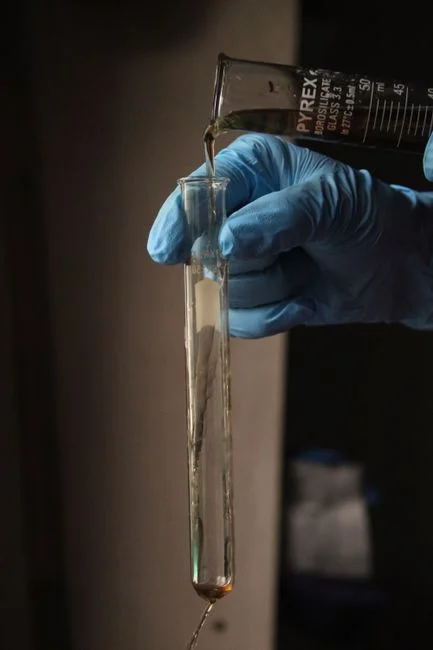
DAF, MBR, package treatment and membrane polishing perform different functions, so their suitability must be decided from contaminant load, hydraulic variation and final-use requirements rather than product labels. The equipment ranges below describe the supplied systems; each requires confirmation against site wastewater and flow data.
| Treatment stage | Use it when | Supplied equipment basis | Procurement acceptance check |
|---|---|---|---|
| DAF pretreatment | The wastewater contains suspended solids, FOG, oil and grease, or colloidal matter requiring removal before later stages | The supplied DAF system covers 4–300 m³/h and is intended to remove suspended solids, FOG, oil and grease and colloidal matter | Confirm hydraulic and contaminant duty, chemical demand, sludge handling and performance against the agreed analysis |
| MBR biological treatment | The wastewater requires biological treatment followed by membrane separation | The supplied MBR covers 10–2,000 m³/day and uses submerged PVDF membranes | Confirm biological loading basis, membrane configuration, cleaning, controls, replacement provisions and final effluent target |
| Package plant | A smaller or land-constrained sewage flow may suit a packaged route, subject to process compatibility | The supplied WSZ package plant covers 1–80 m³/h and uses an A/O contact-oxidation process | Verify that A/O contact oxidation fits the industrial contaminants, loading variation and final-use requirements |
| Lamella clarification | Solids separation is required after treatment and the hydraulic duty can be justified | The supplied clarifier has a 20–40 m/h surface-loading rate and reports chemical-consumption reduction of up to 30% | Confirm feed characteristics, settling performance, solids removal, chemical use and sludge withdrawal |
| Ultrafiltration polishing | Low-turbidity polishing is specifically required by the final objective | The supplied system uses 0.03 μm PVDF membranes, accepts up to 300 ppm turbidity, and includes automatic backwash and air scour | Require evidence that feed turbidity remains within the stated basis and identify membrane-cleaning and replacement responsibility |
| Nanofiltration | An advanced reuse objective justifies polishing beyond the selected biological or clarification route | The nanofiltration evidence concerns polishing WWTP effluent for advanced reuse objectives; it does not establish a Peshawar requirement | Require site-relevant permeate quality, reject management, fouling assessment and acceptance against the buyer-specific target |
For floatable contamination, compare the DAF versus lamella process design against the actual oil, grease, FOG and solids profile. If DAF is selected, the industrial DAF pretreatment system must be checked against the confirmed hydraulic and contaminant duty rather than selected solely because the wastewater contains oil.
Where biodegradable pollution requires biological treatment, use the MBR versus extended aeration comparison to define the technical question before requesting a proposal. An MBR wastewater treatment system combines biological treatment with membrane separation, but its suitability depends on the wastewater analysis, loading basis, membrane maintenance and required effluent quality.
UF and nanofiltration should remain conditional. The supplied UF basis starts with a 0.03 μm membrane and 300 ppm turbidity input; the nanofiltration thesis provides general advanced-treatment evidence. Neither source establishes that either stage is mandatory for a Peshawar discharge. Include polishing only when the buyer-defined discharge or reuse specification requires it and the upstream process can provide a suitable feed.
Build the procurement and acceptance checklist
A supplier scope should run from survey through design, supply, installation, commissioning and maintenance, with no ambiguity about which party owns each deliverable. The commercial sequence reported by Aquenvia—survey, design, supply, install, commission and maintain—provides a practical baseline, but a purchase order must make the project-specific responsibilities enforceable.
- Require a design basis identifying the wastewater analysis, sampling method, average and peak flow, production assumptions, treatment stages, equipment duty and agreed final-use target.
- List the utilities, controls, civil interfaces, drainage connections, sludge or reject handling, access requirements and commissioning tests.
- Define acceptance around the agreed analysis and discharge or reuse target. Reject generic descriptions such as “high-quality effluent” unless the supplier states the measurable parameters, test method, sampling location and acceptance procedure.
- Resolve missing inputs in writing: who obtains wastewater data, performs laboratory testing, provides civil works, supplies power, connects drains, trains operators and records baseline performance?
- Request maintenance, spare parts, membrane or media replacement, controls support, performance monitoring, corrective-action duties and operator-training deliverables before comparing commercial offers.
The 2026 corrosion-prevention guide for wastewater treatment plants should also inform the supplier’s materials, protective coatings and inspection assumptions. Corrosion protection matters where the selected process creates the chemical, moisture or aeration conditions that attack exposed components. The guide supports this procurement check, but it does not replace the wastewater-specific design basis.
For budget comparison, request a scope-aligned price rather than comparing quoted plant prices. Each offer should separate equipment, civil works, installation, utilities, controls, commissioning, training, consumables, maintenance and membrane or media replacement. Any performance or payment milestone should correspond to a written acceptance test. Without a quotation and agreed design basis, the available research does not support a defensible price or savings estimate.
Frequently Asked Questions
Can an ETP supplier select equipment without representative wastewater data?
No responsible supplier can finalize equipment selection from flow alone. Provide representative analysis, flow variation, production information and the final discharge or reuse target. The supplier must then state its sampling method, design assumptions, equipment duty and treatment stages. The Hayatabad study’s 10 discharge samples show the value of local characterization, but they do not represent an individual factory automatically.
How should DAF, MBR, a package plant and polishing equipment be compared?
They are not interchangeable products. DAF is a pretreatment option for suspended solids, oil, grease and colloids; the supplied MBR combines biological treatment with membrane separation; the WSZ package plant uses A/O contact oxidation and needs a process-fit check; and UF or nanofiltration adds polishing only when the final target justifies it. Compare each option against the same wastewater analysis, flow basis and acceptance target.
What should be checked before accepting an ETP as NEQS compliant in Peshawar?
Check the applicable discharge route, permit conditions, sampling point, analytical method and site-specific results. The Hayatabad Industrial Estate research informs local risk by evaluating 10 discharge samples against Pakistan’s NEQS, but the study is not a permit, a universal limit or proof of another facility’s compliance. Require commissioning and operating verification using the buyer’s confirmed requirements.
What documents and cost basis should be requested before ordering an industrial effluent treatment plant in Peshawar?
Request the design basis, process flow diagram, equipment list, utility requirements, controls description, civil interfaces, commissioning criteria, performance guarantees, maintenance scope and training deliverables. For pricing, require each bidder to quote the same scope and separate equipment, civil work, installation, utilities, consumables, replacement items and long-term service. The supplied research contains no plant price, so a defensible budget must come from a quotation against the completed decision sheet.