Decide Whether the Wastewater Is a Good EGSB Candidate
An EGSB reactor can be considered for meat-processing wastewater when FOG, suspended solids and inhibitory constituents are controlled before the anaerobic stage. Its granular bed provides high-rate biomass contact, but high FOG can cause sludge washout, so a complete treatment train is usually more defensible than a stand-alone reactor. For pretreated poultry wastewater, the supplied 2026 guide cites an OLR envelope of 1.66–10.9 kg COD/m³·day, about 0.1 m/h upflow velocity and 5.7–18 h HRT. Slaughterhouse and mixed-protein research also reports 85–90% COD removal in one case, while noting that lipid removal can depend on sorption and protein conversion can be unsatisfactory.
The first procurement gate is wastewater characterization, not reactor selection. Meat-packing and slaughterhouse effluents can contain mixtures of proteins, lipids and carbohydrates, so a single averaged analysis can conceal the load that determines reactor performance. Request flow, COD, BOD, suspended solids, FOG, pH, temperature, protein and salinity data by production shift and include cleaning, blood-loss and rendering contributions where they occur.
Treat FOG and suspended solids as pretreatment design drivers. In the poultry application, high FOG and suspended loading caused granular sludge washout; the 2026 HydropureWater engineering guide therefore warns against sending raw high-FOG poultry wastewater directly to an EGSB. Lipid behavior remains a project-specific uncertainty: OpenAlex’s review of protein-, lipid- and carbohydrate-containing wastewater research identifies sorption as the main lipid-removal mechanism in one EGSB system, while reporting unsatisfactory lipid degradation in a more complex feed. Protein conversion into methane-COD was also described as unsatisfactory in that research.
| Buyer input | Why it affects EGSB selection | Required evidence |
|---|---|---|
| Flow by production shift | Determines hydraulic loading, recycle demand and reactor volume. | Continuous-flow record plus operating and washdown periods |
| COD and BOD | Defines organic loading and the need for downstream polishing. | Representative samples by shift and production condition |
| FOG and suspended solids | High loads can wash out or coat granular sludge. | Concentration, oil speciation and particulate-solids data |
| Protein and salinity | Protein conversion and salinity can affect biological stability. | Site-specific analytical results, not feed categories alone |
| pH, temperature and discharge route | Controls alkalinity, heating, reaction rates and downstream requirements. | Continuous or logged data plus applicable permit or sewer limits |
Specify screening and solids control before comparing reactor types. A mechanical screen protects downstream equipment, while a mechanical bar screen for coarse solids removal addresses the physical fraction that should never reach the reactor. If characterization confirms free or emulsified FOG risk, evaluate a DAF system for FOG and suspended-solids pretreatment. If FOG, suspended solids or the wastewater profile remains outside the supplier’s stated feed envelope, require a different high-rate reactor or a more complete pretreatment design rather than accepting unsupported loading claims.
Set a Pretreatment-Enveloped EGSB Design Basis
The poultry design values are a screening envelope for pretreated wastewater, not transferable performance guarantees. The HydropureWater 2026 guide cites an OLR range of 1.66–10.9 kg COD/m³·day, approximately 0.1 m/h upflow velocity and 5.7–18 h hydraulic retention time for pretreated poultry-processing wastewater. Those values must remain tied to their stated scope because the research does not establish equivalent limits for every slaughterhouse or mixed-protein stream.
Use the envelope to test whether the proposed reactor is internally coherent. Ask the supplier to calculate the selected OLR from design flow, post-pretreatment COD, reactor working volume and temperature. Ask it to state the recycle-to-feed ratio needed to maintain the expanded granular sludge blanket, the expanded-bed condition, reactor geometry and selected OLR at design flow and temperature. A quoted OLR without its hydraulic basis is not a design.
EGSB is a high-rate anaerobic reactor because external solids recirculation lifts wastewater through the reactor and fluidizes the granular bed. That circulation improves biomass–wastewater contact and mass transfer. CWT-Global’s EGSB description likewise identifies high upflow velocity and improved mass transfer as the basis for organic removal in a smaller volume. The advantage over a conventional upflow anaerobic sludge blanket is rate rather than a guarantee of better final effluent quality.
| Screening parameter | Supported starting value | Scope and limitation | Supplier response required |
|---|---|---|---|
| Organic loading rate | 1.66–10.9 kg COD/m³·day | Pretreated poultry wastewater in the HydropureWater 2026 guide; not a plant guarantee | Selected OLR, calculation basis and operating controls |
| Upflow velocity | Approximately 0.1 m/h | Poultry screening target in the same 2026 guide | Design velocity, recycle ratio and expansion criterion |
| Hydraulic retention time | 5.7–18 h | Pretreated poultry application in the same guide | Working volume, selected HRT and peak-load response |
| Temperature | 35–37 °C | Startup and RFQ criterion stated in the 2026 poultry guide | Heating scope, temperature control and worst-case assumptions |
| Feed FOG | Approximately 150–250 mg/L raw after DAF or enzymatic pretreatment | Poultry washout-control ceiling reported in the 2026 guide | Maximum admissible feed concentration and pretreatment responsibility |
Compare the high-rate case with a mesophilic UASB explicitly. The 2026 poultry guide reports that EGSB accepts roughly three to four times the OLR of a mesophilic UASB—1.66–10.9 versus 0.5–3 kg COD/m³·day—after comparable pretreatment. This supports higher-rate EGSB selection where compact loading is the priority, but both reactor types still depend on FOG and suspended-solids control.
Do not average the OLR endpoints and present the result as a design. The selected point must reflect the post-pretreatment COD, temperature, feed variability and biomass retention conditions. Where the supplier uses MBR polishing for EGSB effluent, define that stage from the expected anaerobic effluent, not from raw wastewater.
Compare EGSB With the Alternative Treatment Routes
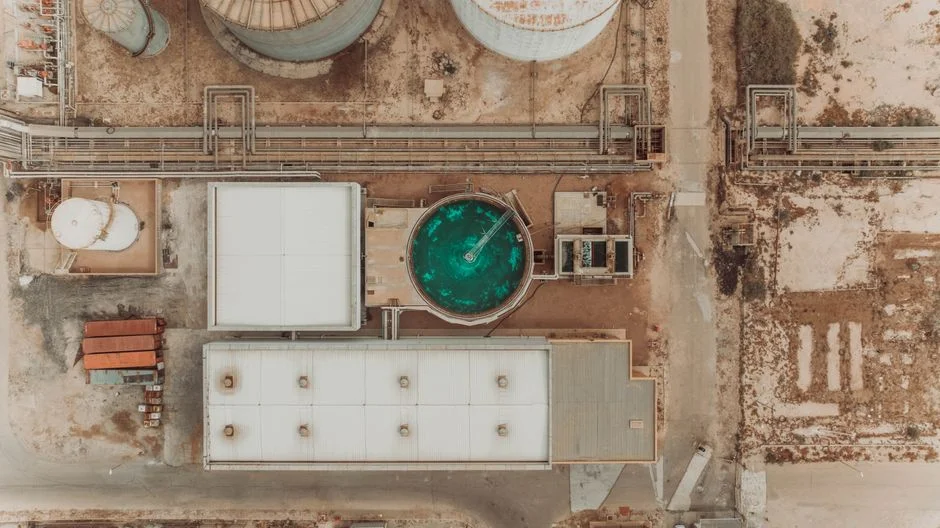
EGSB is the appropriate high-rate anaerobic candidate when pretreatment is controlled, compact reactor loading matters and external recirculation is acceptable. The upflow geometry keeps granular sludge in contact with the liquid while allowing higher organic loading than a conventional UASB. Its limitations are equally important: it does not remove the need for pretreatment, does not establish discharge compliance by itself and may be less suitable than a lipid-focused alternative when the feed remains FOG-rich.
Evaluate DEGBR when lipid tolerance and reactor volume dominate. The supplied 2026 poultry comparison identifies DEGBR as developed for lipid-rich effluents and reports approximately 5.4 h HRT versus about 18 h for EGSB in the cited study. This is a poultry comparison, not a general volume calculation for slaughterhouse wastewater, but it is a clear reason to request a parallel DEGBR offer when the characterized feed remains lipid-rich or EGSB pretreatment becomes disproportionately large.
| Selection issue | EGSB | UASB | DEGBR | Procurement decision |
|---|---|---|---|---|
| Circulation and bed condition | External recycle fluidizes granular bed | Upflow blanket without the EGSB recycle arrangement | Down-flow expanded bed | Compare hydraulic control and biomass retention |
| Organic-loading position | Higher-rate option; poultry guide reports about 3–4 times mesophilic UASB OLR | Lower-rate conventional alternative | Must be offered with site-specific loading justification | Request equivalent design calculations |
| Lipid-rich service | Requires controlled feed; washout is documented in the poultry case | Also requires controlled feed | Identified in the 2026 poultry comparison as developed for lipid-rich effluents | Use characterized FOG and pretreatment performance to choose |
| Reactor volume evidence | About 18 h in the cited poultry comparison | Supplier-specific calculation required | About 5.4 h in the cited poultry comparison | Do not transfer poultry HRT directly to another plant |
| Final effluent duty | Requires downstream treatment for the referenced compliance case | Requires downstream treatment | Requires downstream treatment | Define discharge, sewer or reuse route before selecting |
An anaerobic reactor should not be equated with a complete discharge system. The 2026 HydropureWater guide positions pretreatment–EGSB–MBR as the poultry configuration demonstrated to meet the referenced municipal discharge standard. A broader industrial effluent treatment plant selection method is useful for checking interfaces and duties, but the permit and receiving authority remain project-specific. EGSB should win on the site’s hydraulic, organic and pretreatment requirements—not on a generic claim of superior treatment.
Build the Complete Treatment Train
A defensible EGSB proposal starts upstream of the reactor and continues to the receiving route. The process sequence should be screening and grit control, validated FOG and solids pretreatment, equalization where production variability requires it, EGSB with external solids recirculation, solids/gas separation, downstream polishing and sludge handling. Each unit needs a measurable inlet and outlet duty so the supplier cannot transfer unresolved contaminant loads between equipment scopes.
Specify a DAF system for FOG and suspended-solids pretreatment where the wastewater profile supports it. The 2026 poultry guide reports approximately 150–250 mg/L raw FOG after DAF or enzymatic pretreatment as the working feed condition for EGSB. It also cites enzymatic pretreatment followed by 24 hours of aerated hydrolysis as an alternative treatment route. A DAF pretreatment process design reference can support process checks, but the final choice must be based on the plant’s oil form, solids, footprint and discharge route.
Size polishing around the EGSB effluent. In the poultry train reported in the 2026 guide, mean removals were 97.82% COD, 96.87% TSS and 98.95% FOG. That performance belongs to an integrated train, not to the EGSB reactor alone. If the selected polishing stage is an MBR, require its feed assumptions, membrane configuration, cleaning method, redundancy and final effluent duty from the supplier.
| Train stage | Minimum scope to define | Supplier acceptance evidence |
|---|---|---|
| Screening and grit control | Flow, solids character, extracted-material handling and downstream protection | Design flow, selected equipment and solids-disposal route |
| FOG and solids pretreatment | DAF, enzymatic hydrolysis or another validated method; required duty and residual FOG | Guaranteed feed concentration to EGSB and test method |
| Equalization | Shift variation, mixing, residence and controlled feed to EGSB | Selected volume and operating strategy |
| EGSB | Working volume, OLR, HRT, upflow velocity, recycle, heating, gas and solids separation | Calculated design and operating-control narrative |
| Polishing | MBR or other selected process against the receiving requirement | Final COD, TSS, FOG and other permit parameters |
| Sludge handling | Separated solids, wasting rate and disposal route | Equipment duty and a plate-and-frame filter press selection basis |
Confirm whether the project will discharge to a receiving water, enter a municipal sewer or pursue reuse. Obtain the applicable local permit or sewer pretreatment limits from the authority. The supplied research does not establish universal discharge limits for slaughterhouse or meat-processing wastewater, so an EGSB proposal cannot substitute for the regulator’s written conditions.
Issue an EGSB RFQ With Testable Acceptance Criteria
A comparable RFQ must make the supplier state its design assumptions, calculations and boundaries. Require diurnal flow, COD, BOD, suspended solids, FOG, pH, temperature, nutrient balance, required effluent duty and the waste-sludge disposal route. Include production and cleaning schedules because they determine hydraulic peaks, equalization requirements and the feed concentration that the reactor actually receives.
Request the selected OLR, HRT, upflow velocity, recycle-to-feed ratio, working volume, reactor geometry, temperature-control method, gas handling, solids-separation arrangement, DAF and MBR interfaces, instrumentation and performance guarantees. The supplier should identify which parameters it guarantees, how they will be measured and what operating conditions invalidate the guarantee. The 2026 poultry guide’s acceptance table offers useful tests: sustained loading, an upflow-velocity band with recirculation control, defined temperature control, a feed FOG ceiling, specified instrumentation and a measurable polishing duty.
| RFQ checklist item | Supplier must provide | Buyer acceptance check |
|---|---|---|
| Design basis | Flow and load basis, feed ranges, production shifts, temperature and pretreatment performance | Inputs match site data and remain separately identified as measured or assumed |
| Reactor sizing | Working volume, selected OLR and HRT, upflow velocity, recycle ratio and bed-expansion criterion | Calculations reconcile at design flow and load |
| Controls | Flow, temperature, pH, ORP, recycle control and outlet monitoring | Control logic protects bed expansion and identifies fail-safe responses |
| Interfaces | DAF, MBR, gas, solids separation and sludge-handling requirements | No unresolved contaminant or solids duty is transferred between scopes |
| Commissioning | Inoculation source, startup sequence, sampling and acceptance protocol | The poultry protocol cited in the 2026 guide included 72-hour stagnation and three days of batch feeding at 4 h/day |
| Performance | Measurable effluent duty, test methods, correction factors and remedy for non-compliance | Guarantee states feed conditions, duration and exclusions |
| Commercial scope | Base and alternative pricing, delivery, installation, consumables, spares, warranty, monitoring and maintenance | All responsibilities and exclusions appear in the offer |
Make startup support part of the offer. The 2026 poultry protocol cited by HydropureWater used a specified seed sludge, 72-hour stagnation and three days of batch feeding at 4 h/day before continuous operation. Ask the supplier to adapt that sequence to the actual temperature, inoculum, wastewater chemistry and reactor scale, and to define training, attendance and handover.
Separate base and alternative prices so the buyer can compare EGSB, UASB, DEGBR and treatment-train alternatives on the same boundaries. Require installation, commissioning, training, spares, consumables, monitoring, maintenance, warranty and acceptance-test responsibilities to be itemized. The research contains no equipment prices, so no budget range should be inferred from it; obtain quotations after the design inputs and scope are fixed. Use the wastewater COD removal technology comparison to frame technical questions, but use supplier quotations for commercial evaluation.
Frequently Asked Questions
Can an EGSB reactor treat meat-processing wastewater?
Yes, subject to characterization and control of FOG and suspended solids. IWA Publishing’s slaughterhouse study and the OpenAlex review of protein-, lipid- and carbohydrate-containing wastewaters support EGSB research for these applications, while also showing that lipid and protein behavior requires project-specific testing.
What size EGSB does a meat-processing plant need?
Final sizing requires flow, COD, FOG, suspended solids, temperature, pretreatment performance, OLR and HRT. The 1.66–10.9 kg COD/m³·day OLR and 5.7–18 h HRT values in the HydropureWater 2026 guide are a pretreated-poultry screening envelope, not a general plant size.
Should the project select EGSB or UASB?
Select EGSB where higher-rate loading and a compact high-rate anaerobic stage are priorities; compare UASB where simplicity and lower-rate operation dominate. Include DEGBR in the RFQ when characterized FOG is high or the poultry comparison’s approximately 5.4 h versus 18 h HRT difference warrants investigating.
What should a supplier guarantee in an EGSB proposal?
Require stated feed conditions, pretreatment limits, reactor sizing, OLR, HRT, upflow velocity, recycle ratio, controls, monitoring, startup support, test methods and a measurable effluent duty. Ask for base and alternative pricing after supplying site data, and require installation, commissioning, consumables, spares, warranty and acceptance responsibilities to be itemized.
Can EGSB effluent be discharged without polishing?
Do not assume so. The supplied 2026 poultry evidence supports pretreatment–EGSB–MBR for demonstrated compliance with the referenced municipal standard, while the reactor alone did not provide discharge-quality effluent. The required route and polishing duty must follow the project jurisdiction, permit or sewer agreement and reuse specification.