What Determines Municipal Sewage COD Removal Performance
Municipal sewage wastewater COD removal is a treatment-train decision, not a single-equipment choice. Biological treatment should carry the biodegradable load; anoxic aerobic zoning can address carbon and nutrient removal; membranes, coagulation or advanced oxidation should be selected only for demonstrated separation or polishing duties. A 2026 ASM1-based siphon-DHS study modeled an optimized aerobic:changing:anaerobic volume ratio of 0.55:0.10:0.35 and reported 84% COD removal, 81% nitrification and 91% denitrification. Selection still depends on COD, BOD, flow, nutrients, pH, footprint and reuse requirements.
COD measures the oxygen equivalent required to oxidize the wastewater’s oxidizable load, while BOD captures the biodegradable fraction. According to Hydrochemix’s 2026 COD removal technology comparison, a COD/BOD ratio below 3 suggests readily biodegradable wastewater, while a ratio above 5 indicates a significant refractory fraction. That publication also states that biological treatment is generally suited to high-volume wastewater when BOD/COD exceeds 0.3. These are screening thresholds, not guarantees, and the referenced publication discusses COD/BOD while the municipal-sewage selection framework should use the equivalent BOD/COD convention specified in the project basis.
A favorable ratio does not overcome unfavorable operating conditions. Suspended solids, oil, toxicity, pH variation and shock loads can inhibit biomass activity, increase solids loading or make separation difficult. Request COD, BOD5, suspended solids, ammonia, total nitrogen, pH, average and peak flow, and diurnal flow. Also record temperature, dissolved oxygen, salinity, pH alkalinity and any industrial inputs. Establish the receiving route and objective: sewer discharge, surface-water discharge and reuse require different limits, treatment depth and verification.
| Design input | Selection implication | Evidence required |
|---|---|---|
| COD and BOD5 | Defines oxidizable load and biodegradability | Representative sampling across operating and diurnal cycles |
| Suspended solids and oil | Sets pretreatment and solids-separation requirements | Concentration, settleability and emulsified-oil characterization |
| Ammonia and total nitrogen | Determines whether nitrification and denitrification are required | Influent, effluent and seasonal profiles |
| pH, temperature and toxicity | Controls biological stability and chemical demand | Range, shock frequency and inhibition testing |
| Flow and discharge route | Sets hydraulic capacity and compliance strategy | Average, peak and diurnal flow; current permit limits |
Build a Municipal COD Treatment Train
A defensible treatment train starts with screening and solids removal, followed by equalization where variability requires it, biological treatment, solids separation and optional filtration or membrane treatment, then disinfection. The sequence protects the biological process and avoids paying for advanced oxidation to solve a problem that pretreatment could remove. A rotary mechanical bar screen can remove coarse material before downstream equipment, but the remaining duty must still be characterized.
- Protect the process: remove screenings, grit and excessive suspended material; use equalization for material flow and concentration variation.
- Remove floatables and colloids where needed: a dissolved air flotation system can remove suspended solids, FOG, oil, grease and colloidal matter. That removal does not, by itself, establish removal of dissolved biodegradable COD.
- Remove biodegradable carbon and, if required, nutrients biologically: use an anoxic aerobic process where carbon removal and anoxic/aerobic treatment are both needed.
- Separate biomass and apply only necessary polishing: add filtration, membranes, coagulation or advanced oxidation when the wastewater profile and effluent objective justify them.
- Disinfect and verify: confirm the final effluent against the applicable route-specific requirement.
The integrated A/O package sewage treatment plant is a verified packaged configuration combining anoxic/aerobic contact oxidation, sedimentation and disinfection. Reserve advanced oxidation for refractory, toxic or polishing duties unless influent testing demonstrates a biological limitation.
Do not transfer a 99.5% COD-removal result from petroleum wastewater directly to municipal sewage. In the Wasit University electrochemical study, that result came from a 2 L coagulation cell treating petroleum wastewater at an initial COD of 710 mg/L, with estimated energy consumption of 12 kWh/m³. The wastewater, reactor scale and treatment mechanism were not equivalent to a municipal treatment train.
Compare Biological, MBR and Chemical Treatment Options
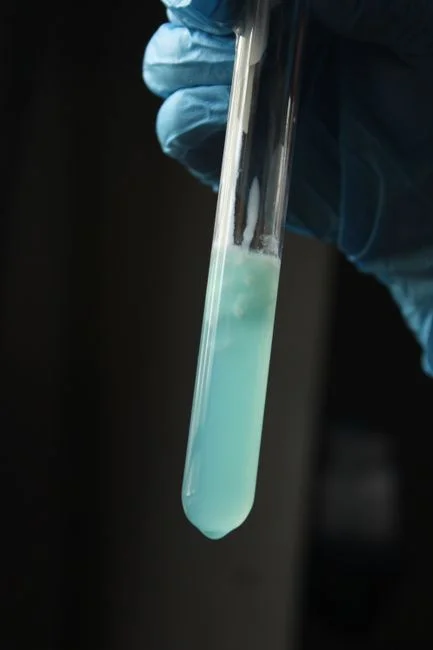
Activated sludge and SBR are conventional biological choices, while an MBR combines biological treatment with membrane separation. Conventional systems are usually the starting point where footprint is available; an MBR becomes more relevant when compact installation or low suspended-solids effluent is a project requirement. Chemical treatment serves different functions: coagulation removes particulate and colloidal material, while advanced oxidation targets oxidizable compounds that resist biological treatment.
The integrated A/O package sewage treatment plant has a verified capacity range of 1–80 m³/h, fully automated operation, and underground or trailer-mounted installation options. These are manufacturer specifications from the HydropureWater verified product catalog, not site-specific effluent guarantees. The MBR membrane bioreactor wastewater system has a verified range of 10–2,000 m³/day, submerged PVDF filtration below 1 micrometre, and a claimed footprint 60% smaller than conventional systems. Require the supplier to identify the comparison basis for that footprint statement.
Hydrochemix’s 2026 COD removal technology comparison reports chemical COD-removal rates of 40–90% depending on wastewater characteristics and advanced oxidation exceeding 95% in optimized configurations. It also notes higher chemical and energy costs. These are broad commercial-guide findings, not a performance matrix for municipal sewage. The applicable results depend on chemistry, reactor design, dosing, energy input and whether soluble COD is actually destroyed or merely removed with solids.
| Option | Primary contribution | Best fit | Evidence to request |
|---|---|---|---|
| Activated sludge or SBR | Biodegradable COD removal | Conventional municipal treatment with adequate footprint and operations capacity | Site-specific loading, settling and effluent data |
| A/O packaged biological system | Carbon removal with anoxic/aerobic treatment | Decentralized sites needing integrated biological treatment and solids separation | Verified flow capacity, biological loading and site guarantees |
| MBR | Biological treatment plus membrane solids separation | Compact installations or low suspended-solids effluent | Peak hydraulic and organic loading; membrane flux; cleaning requirements |
| Coagulation | Removal of suspended and colloidal COD | Solids, oil or colloid-driven load | Jar tests on actual wastewater and residual COD after separation |
| Advanced oxidation | Oxidation of refractory organics | Documented biological limitation or stringent polishing | Full-scale or relevant pilot matrix with oxidant demand and by-products |
Use Recent Municipal Reactor Evidence to Guide Process Design
The 2026 Journal of Environmental Management study used ASM1 modeling to optimize a siphon downflow hanging sponge reactor for municipal nutrient removal. It evaluated four aerobic, changing and anaerobic zone-volume configurations. Reactor D produced the highest tested performance index, 59%, and was selected for model calibration. The modeled optimum under denitrification prioritization was 0.55:0.10:0.35 aerobic:changing:anaerobic, yielding 84% COD removal, 81% nitrification and 91% denitrification.
The study also provides useful design questions. Its aerobic-zone first-order rate constants were 0.624 h⁻¹ for COD removal and 0.571 h⁻¹ for nitrification; the anaerobic-zone denitrification rate constant was 1.288 h⁻¹. Sensitivity analysis found that reducing the changing zone to 10% and maximizing sharp aerobic-anaerobic interfaces improved overall performance. For an anoxic aerobic process, this supports investigating zone distribution and transitions rather than treating reactor volume as a single undifferentiated block.
This evidence is modeled rather than a commercial guarantee. ASM1 and dynamic simulation can identify configuration sensitivities, but they do not replace pilot testing, site-specific characterization or validation of the proposed equipment. A separate Wasit University response-surface study used acclimatized mixed culture and tested support media, agitation at 0 and 100 rpm, and hydraulic retention time of 2 and 5 days. Its factorial structure reinforces that support media, agitation and HRT can interact; a change in one factor cannot be assessed independently of the others.
| Evidence item | Reported result | Engineering use |
|---|---|---|
| Modeled zone allocation | 0.55:0.10:0.35 aerobic:changing:anaerobic | Frame a zone-configuration option for municipal nutrient removal |
| Modeled treatment performance | 84% COD removal, 81% nitrification and 91% denitrification | Use as a design hypothesis, not an equipment guarantee |
| Aerobic-zone rate constants | 0.624 h⁻¹ COD removal; 0.571 h⁻¹ nitrification | Compare hydraulic and reaction functions during sensitivity review |
| Anaerobic-zone rate constant | 1.288 h⁻¹ denitrification | Evaluate whether zone allocation is limiting performance |
| Response-surface factors | Support media; 0 and 100 rpm agitation; 2- and 5-day HRT | Test interacting operating factors rather than assuming independent effects |
Size Equipment From Verified Project Inputs

Equipment sizing should begin with the flow and load that the selected unit can actually treat, not a nominal treatment concept. Establish average and peak hourly flow, then compare them with the manufacturer’s verified capacity. The WSZ range is 1–80 m³/h; the MBR range is 10–2,000 m³/day. Confirm whether capacity refers to design average, peak or instantaneous flow, and whether equalization is included upstream. A capacity statement does not establish that the proposed wastewater can meet the guaranteed effluent COD.
Calculate hydraulic retention and biological loading from influent COD, BOD, suspended solids and ammonia, then check diurnal variation, equalization effectiveness and solids-separation capacity. For an MBR, include membrane flux, solids concentration, cleaning access and recovery from downtime. For a biological package plant, include biomass retention, sludge withdrawal, clarification and disinfection. The process must remain stable at the expected peak load, not merely at the daily average.
Issue the supplier a performance schedule covering guaranteed inlet and outlet COD limits, test methods, sample points, startup criteria, performance-test duration, operating exclusions and warranty remedies. Also verify footprint, utilities, controls, installation method, membrane or sludge maintenance and permit conditions. Ask each bidder to classify its evidence as modeled, synthetic-wastewater, laboratory, pilot or full-scale site data. The 2026 municipal siphon-DHS results are explicitly modeled results, so they should not be presented as operating guarantees.
| Sizing or procurement item | Buyer check | Acceptable basis |
|---|---|---|
| Hydraulic capacity | Average and peak hourly flow against verified range | Manufacturer capacity definition plus project flow data |
| Organic and nutrient loading | COD, BOD, ammonia, TN, suspended solids and diurnal variation | Representative site dataset |
| Effluent guarantee | Guaranteed COD and nutrient limits | Defined test method, sample point and operating conditions |
| Evidence class | Modeled, synthetic, laboratory, pilot or full-scale | Explicit supplier disclosure |
| Operations and compliance | Footprint, utilities, maintenance, controls and permits | Project-specific engineering review |
Control Cost and Compliance Risk Across the Treatment Train
The lowest equipment price rarely represents the lowest treatment cost. Compare aeration, pumping, mixing, chemicals, sludge handling, membrane cleaning, power and labor over the same operating basis. Hydrochemix’s 2026 COD removal technology comparison states that mixing, pumping and aeration energy typically account for 15–25% of operating expenditure and sludge disposal for 20–35% of total operating costs. These are commercial-guide benchmarks, not universal municipal rates, and should not be inserted directly into a project estimate without local energy, labor and disposal pricing.
Compliance risk begins with the permit and receiving route. The same commercial guide notes that COD thresholds vary significantly by region, industry and receiving-water classification, so a supplier’s generic “compliance” statement is insufficient. Request the current applicable discharge or sewer limits, surcharge formula, sampling frequency and any reuse criteria. Where the objective is a stringent effluent COD rather than bulk reduction, include pretreatment and polishing costs in the comparison.
Build a staged control plan around influent COD, mixed-liquor indicators, dissolved oxygen, sludge inventory, effluent COD and nutrients. Define alarm points, sampling frequency, operator response and escalation. A permit limit should be connected to a verified measurement location and agreed test method; otherwise, the plant may not have an auditable compliance record.
| Cost or risk category | Items to compare | Procurement check |
|---|---|---|
| Energy and utilities | Aeration, pumping, mixing, membrane cleaning and controls | Request consumption assumptions and utility prices |
| Chemicals and residuals | Coagulants, oxidants, sludge and membrane cleaning waste | Include dosage, handling and disposal |
| Operations | Labor, maintenance, spares and condition monitoring | Compare staffing and service assumptions |
| Permit risk | Current limits, surcharges, sampling and receiving classification | Obtain written site-specific compliance basis |
| Performance risk | Evidence class, guarantees and remedy terms | Reject generic removal claims without a defined basis |
Frequently Asked Questions
What is the best COD removal process for municipal sewage?
Use a treatment train selected from the actual wastewater profile: solids and oil control where required, biological treatment for biodegradable COD, separation, and only justified polishing for refractory load or a stringent effluent objective. The 2026 siphon-DHS municipal study supports investigating zone configuration, but its modeled 84% COD-removal result is not a drop-in guarantee for commercial equipment.
How much does municipal sewage COD removal cost?
Request a site-specific lifecycle quotation covering capital equipment, installation, aeration, pumping, mixing, chemicals, sludge handling, membrane cleaning, power, labor and disposal. Hydrochemix’s 2026 commercial guide gives broad benchmarks—energy at 15–25% of operating expenditure and sludge disposal at 20–35% of total operating costs—but these are not municipal price quotes. The buyer must provide flow, load, reuse target, local permit limits and utility costs to obtain a defensible budget.
How should an engineer select COD removal equipment?
Select suppliers by asking what evidence supports the proposed duty: modeled results, synthetic wastewater, laboratory work, pilot operation or full-scale municipal data. A generic removal percentage is not enough. Require the wastewater characterization, reactor basis, test method, operating conditions and performance warranty to match the proposed site, and confirm how influent variation, toxicity and solids separation are handled.
Are manufacturer capacity ratings enough to size a COD treatment plant?
No. Capacity limits show only what the equipment is specified to handle; they do not guarantee site-specific effluent quality. Compare average and peak flow with the verified range—1–80 m³/h for WSZ and 10–2,000 m³/day for MBR—then confirm hydraulic retention, biological loading, nutrients, solids separation and peak-load performance. The supplier should guarantee inlet and outlet COD limits with defined sampling points, test methods and remedy provisions. The broader equipment-selection context is covered in the 2026 domestic sewage equipment selection guide.