What the Sugar Mill UASB Evidence Actually Shows
A published study on sugar cane mill wastewater used an 80 L, total-volume, mesophilic upflow anaerobic sludge blanket reactor to assess treatment of wastewater previously pre-treated for solid separation. Each organic-loading stage was evaluated for two months. The reactor achieved COD removal efficiencies above 90% at organic loads up to 16 kg COD m−3 d−1, with stable process performance and high biogas production reported by the authors. This is a useful experimental benchmark, but it is not a commercial design guarantee.
The Water Science & Technology paper, published in 2009, establishes what worked under the reported test conditions; it does not establish the required reactor volume, hydraulic retention time, upflow velocity, feed concentration, granulation time or final effluent quality for a sugar mill. Those values remain project inputs. The paper also reports that COD removal increased substantially as the load rose to 24 kg COD m−3, but the supplied excerpt does not give the corresponding removal efficiency. That condition cannot therefore be presented as equivalent to the demonstrated 16 kg COD m−3 d−1 result.
| Design item | What the sugar-mill study establishes | What it does not establish |
|---|---|---|
| Reactor | 80 L total-volume mesophilic UASB reactor | Full-scale reactor geometry, volume or commercial loading rate |
| Wastewater | Cane sugar mill wastewater previously pre-treated for solid separation | Performance with untreated, highly variable mill effluent |
| Evaluation period | Two months for each organic-loading stage | Long-term commercial operation across seasonal mill campaigns |
| Performance | COD removal above 90% at loads up to 16 kg COD m−3 d−1 | Guaranteed performance for an uncharacterized site stream |
| Higher-load observation | COD removal rate increased substantially when load increased to 24 kg COD m−3 | A corresponding efficiency at the higher load in the supplied excerpt |
For preliminary design, transfer the study result into the document as a test condition, then identify each difference between that condition and the proposed plant. The first question is not whether UASB can work in principle; it is whether the mill stream can be made sufficiently similar to the tested wastewater through reliable pretreatment and stable operation.
Confirm Wastewater Suitability Before Equipment Selection
Site characterization must precede reactor selection because the sugar-mill study did not quantify the full wastewater matrix or establish a universal pretreatment sequence. Request COD, BOD, suspended solids, particle-size distribution, pH, temperature, flow variability and nutrient characteristics for the actual stream. Use BOD and COD measurement for UASB design to establish the organic characterization, then sample across normal production, start-up, shutdown and wash-down conditions rather than relying on one composite sample.
Sugar mill wastewater may contain readily degradable carbohydrate, which supports rapid conversion in the liquid phase, but that characteristic must be verified rather than assumed. General UASB information also describes the process as typically suitable for dilute wastewater at 3% TSS with particle size above 0.75 mm; use this only as a screening reference and confirm the site stream against it. The greater issue is whether the proposed hydraulic condition can retain a granular sludge bed without washing out its biomass.
| Site input to obtain | Decision supported | Required confirmation |
|---|---|---|
| COD and BOD | Organic load and process balance | Representative sampling across operating states |
| Suspended solids and particle size | Solids removal and granule-protection requirements | Site measurements against the general screening reference |
| pH and temperature | Process conditioning and mesophilic operating basis | Continuous range, not only an average |
| Flow and COD variability | Equalization, hydraulic loading and feed control | Production, batch and wash-down scenarios |
| Nutrient characteristics | Whether supplementation or another limitation is required | Measured nutrient concentrations and ratios |
| Oil, grease and process inhibitors | Potential toxicity and pretreatment demand | Compound-specific site data where relevant |
Seasonal production changes, shock loads and recycled process streams must be treated as design risks. The UASB approach depends on maintaining a stable granular sludge blanket, so sudden feed changes can affect hydraulic conditions, sludge structure and gas production. If the wastewater cannot be equalized or the required upflow condition cannot be controlled across normal operating variation, the preliminary design should be reconsidered rather than accepted on the strength of the published removal efficiency alone.
Where characterization shows that suspended solids, colloids, oil and grease must be removed before the anaerobic reactor, DAF pretreatment for sugar mill wastewater is an equipment option to evaluate. The decision should follow the contaminant measurements and downstream solids-handling requirements, not precede them.
Build the Pretreatment and Protection Train
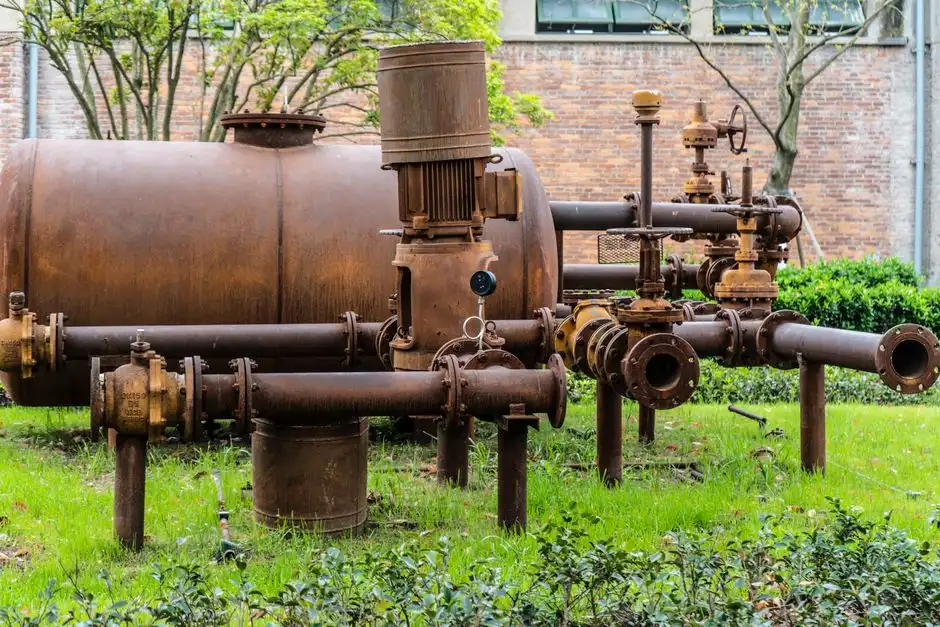
Solid separation is a mandatory design check because the directly relevant sugar-mill study used wastewater that had already been pre-treated for solid separation. The paper does not establish that all sugar mills use the same equipment sequence, so equipment selection should follow a site-specific solids balance and the risk of granule loss, bed flotation or excessive organic solids loading.
DAF can be evaluated where suspended solids, colloids, oil and grease require removal before the UASB reactor. The supplied product range lists 13 DAF models with capacities from 4 to 300 m3/h. Those catalogue capacities describe the equipment range, not the required duty for a sugar mill; the selected model still needs to satisfy the measured flow, contaminant loading and pretreatment objectives established during site characterization.
Chemical treatment should be added only where characterization demonstrates a requirement. Automatic chemical dosing for UASB pretreatment may handle coagulants, flocculants, pH adjusters and specialty chemicals, but the dosing train still needs a defined purpose, control logic and acceptance criteria. An automatic dosing system does not establish that pH correction, coagulation or nutrient addition is necessary.
| Protection step | Trigger for inclusion | Open engineering input |
|---|---|---|
| Screening or solids separation | Material suspended solids or particle size could compromise the sludge blanket | Screen size and solids-removal duty are not established by the supplied research |
| DAF | Site data show suspended solids, colloids, oil and grease require removal | Flow, contaminant loading and required clarified-water quality |
| pH correction | Measured pH leaves the required anaerobic operating range | Control range, alarm limits and chemical demand |
| Coagulation or flocculation | Characterization demonstrates a solids-removal benefit | Jar or pilot-derived dose, residual chemistry and sludge fate |
| Equalization | Flow, COD or batch discharge creates unacceptable variation | Working volume and control strategy from the measured duty |
The procurement package should identify each upstream unit by its measured design duty and required outlet quality. That prevents the common error of selecting a DAF, screen or dosing skid by nominal capacity while leaving the actual UASB protection criteria undefined.
Define the UASB Design Basis and Operating Controls
The defensible preliminary organic-loading reference is 16 kg COD m−3 d−1, qualified by the exact scope of the 2009 Water Science & Technology study: an 80 L mesophilic reactor treating pre-separated sugar mill wastewater, with COD removal above 90% and each loading stage evaluated for two months. The study’s observation at 24 kg COD m−3 warrants further investigation, but the supplied excerpt does not provide the corresponding removal efficiency. It is not a second guaranteed design point.
Reactor sizing then requires site inputs that the study does not supply: flow, influent COD, hydraulic retention time, upflow velocity, reactor configuration, temperature and required solids-retention performance. The granular sludge blanket creates both hydraulic and solids retention: general UASB information notes that solids requiring extensive digestion can remain in the reactor for periods up to 90 days, while dissolved sugars can be converted to gas in the liquid phase in less than a day. Those characteristics must be evaluated together; rapid liquid-phase conversion does not remove the requirement to retain the active biomass.
| Design or operating item | Provisional basis | Verification or missing input |
|---|---|---|
| Organic loading reference | 16 kg COD m−3 d−1 | Experimental benchmark from the 2009 80 L mesophilic study, not a plant guarantee |
| Reactor volume | Not established by the supplied research | Design flow, influent COD, hydraulic retention time and selected loading rate |
| Upflow condition | Must maintain the granular sludge blanket without washout | Site hydraulic profile, flow control and operating range |
| Granulation and startup | Requires a defined commissioning plan | Seed sludge characteristics, acclimation method and acceptance tests |
| Monitoring | Do not rely on COD removal alone | Upflow, granular-bed condition, biogas production and washout indicators |
| Higher-load case | Observed at 24 kg COD m−3 in the cited study | Equivalent efficiency is absent from the supplied excerpt |
Instrumentation should permit verification of hydraulic loading, the condition of the granular bed, gas production and evidence of biomass washout. General UASB information specifically notes the need for constant monitoring to maintain the sludge blanket and prevent washout. These measurements should be tied to operating responses, including feed adjustment and upstream solids control.
A separate paper-mill study involving anaerobic biobeads provides limited supporting context rather than direct sugar-mill design evidence. The Korean Society of Water Science and Technology reported about 85% COD removal after six days and no sludge rising or washout at a maximum upflow velocity of 0.26 m/hr. Because the feedstock, reactor arrangement and carrier material differ, that result cannot validate the sugar-mill loading rate.
Plan Effluent Polishing and Sludge Handling
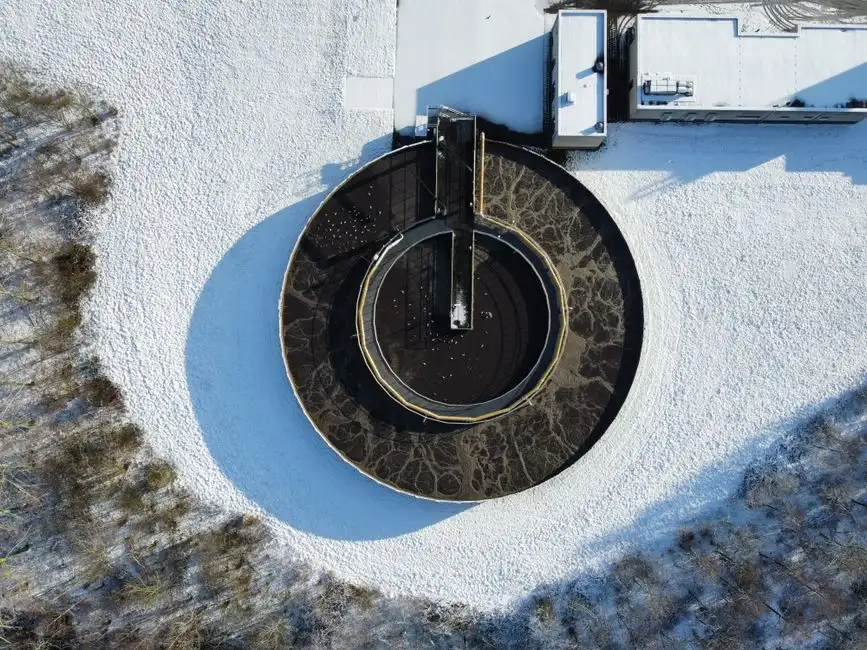
The UASB cannot be treated as the complete effluent-treatment train. General UASB information states that effluent with substantially reduced BOD usually requires further treatment, depending on the required effluent quality. Before selecting polishing equipment, define the applicable discharge or reuse criteria for the mill and identify which contaminants must be reduced; the supplied research does not establish a universal COD, BOD or suspended-solids limit for sugar mills.
Where solids separation is required after biological treatment, evaluate a lamella clarifier against the clarified-effluent objective. The supplied product information reports surface-loading rates of 20–40 m/h and up to 30% lower chemical consumption. Those figures are equipment claims within the supplied source; they do not establish the required settling area for the UASB effluent or guarantee compliance at the site.
Sludge handling should be developed in parallel with the reactor design. A UASB retains biomass and produces a sludge stream whose moisture-removal requirements depend on the solids inventory, wasting strategy and disposal route. A plate and frame filter press for UASB sludge dewatering can be evaluated where further moisture removal is required. The buyer needs representative solids characteristics, expected wasting frequency, filtrate quality and cake-disposal criteria before selecting capacity.
- Define the final discharge or reuse standard before selecting the polishing process.
- Include UASB solids separation in the plant-wide hydraulic and solids balance.
- Route separated solids to treatment, reuse or disposal with a documented fate.
- Assess filtrate from sludge dewatering separately from the main UASB effluent.
Review industrial effluent compliance requirements only in the context of the jurisdiction and route actually applicable to the project. The relevant criteria must come from the permit or reuse specification, not from the reactor’s demonstrated COD-removal performance.
Frequently Asked Questions
Is 16 kg COD m−3 d−1 a guaranteed UASB loading rate for sugar mill wastewater?
No. The 2009 Water Science & Technology study reported COD removal above 90% at organic loads up to 16 kg COD m−3 d−1 in an 80 L mesophilic UASB reactor treating pre-separated sugar mill wastewater, with each load evaluated for two months. A commercial design must verify the actual feed, hydraulic conditions, temperature, granulation and long-term stability before adopting that loading rate.
What should a supplier provide before a UASB reactor is selected?
Require a design basis that identifies the design flow and COD range, hydraulic retention time, reactor configuration, upflow-control provisions, pretreatment performance, seed-sludge assumptions, startup criteria and monitoring points. Also request the evidence behind each performance guarantee and the acceptance test tied to the final effluent specification. Ask how selecting an industrial effluent treatment train accounts for the mill’s seasonal and batch operating profile rather than only its average daily flow.
Why are pretreatment and downstream polishing still needed after strong UASB COD removal?
The study tested wastewater already pre-treated for solid separation, and general UASB information states that reduced-BOD effluent usually requires additional treatment under many effluent-quality requirements. Pretreatment protects the granular sludge blanket, while polishing addresses residual organic load, solids and any discharge or reuse criteria that remain after anaerobic treatment.
Can the supplied research establish cost, reactor volume, delivery time or compliance for a sugar mill project?
No. It does not provide project-specific prices, reactor-volume calculations, commercial lead times or universal sugar-mill effluent limits. Request a supplier quotation and delivery schedule using the measured wastewater flow and COD, required pretreatment duty, reactor design basis, destination for UASB effluent and sludge, and applicable permit or reuse criteria. Any compliance statement should be tied to those site-specific requirements rather than the published removal efficiency.
Related Equipment
- DAF pretreatment for sugar mill wastewater — specifications, capacity range, and technical data