What BOD and COD Actually Measure
BOD (biochemical oxygen demand) quantifies the dissolved oxygen that microorganisms consume while breaking down biodegradable organics in a wastewater sample. The standard reported form is BOD5, measured over five days at 20 °C in the dark, and APHA Standard Methods 5210 B is the only EPA-approved BOD method (UGA Circular 992, Kiepper). COD (chemical oxygen demand) quantifies the oxygen equivalent consumed when all organics in the sample—biodegradable and non-biodegradable—are chemically oxidized, typically with potassium dichromate in 50% sulfuric acid under either the Closed Reflux Titrimetric or Closed Reflux Colorimetric method, both of which are EPA-approved (UGA C992).
Because COD captures the non-biodegradable fraction that BOD ignores, COD is always greater than or equal to BOD on the same sample, and the arithmetic difference between the two equals the non-biodegradable organic load (Novair Industries). For municipal and industrial permits, the result is reported in mg/L, which is interchangeable with ppm for aqueous samples; this is the format most permits and lab certificates use, and units should be confirmed before any number is entered into a mass balance (UGA C992).
This relationship serves as a primary tool for wastewater characterization. Once a plant understands its COD–BOD relationship, the fast COD result becomes a surrogate for the slow BOD5 result, and the difference between them becomes a direct readout of the inert organic load that a biological stage cannot treat.
How Each Test Is Run — And Where It Can Fool You
The BOD5 test relies on serial dilution because microbes consume a finite amount of oxygen before the dissolved oxygen (DO) drops below usable levels. A 1.0 mL sample added to 9.0 mL of deionized water is a 0.1 dilution, and the measured DO depletion is multiplied by the dilution factor to report the final BOD (UGA C992). Operators must seed samples with low microbial activity (such as effluents that have been chlorinated or come from high-temperature processes) and must suppress nitrification when the goal is to measure carbonaceous BOD only; APHA 5210 B includes a nitrification inhibitor for that reason (UGA C992).
The COD test is faster because it skips biology. Pre-prepared vials contain potassium dichromate as the oxidant, silver sulfate as a catalyst, and mercuric sulfate to suppress chloride interference, which is the most common cause of falsely high COD readings on saline or brine-bearing waste streams. Spent vials are hazardous waste; most vendors offer a return-and-disposal program, and the contents must never be poured down the drain (UGA C992).
Timing distinguishes the utility of these tests, as BOD5 takes five days plus setup and cannot guide real-time process control. COD results are available in hours, making it a reliable proxy once a site-specific COD-to-BOD ratio is established (UGA C992). Neither test alone is sufficient for a complete mass balance: BOD misses inert organics, COD overcounts them, and a parallel Total Organic Carbon (TOC) test is sometimes added when the operator needs to close the carbon balance around a biological reactor (UGA C992).
| Parameter | BOD5 | COD | TOC |
|---|---|---|---|
| APHA Standard Method | 5210 B (only EPA-approved BOD method) | Closed Reflux, Titrimetric; Closed Reflux, Colorimetric (both EPA-approved) | High-Temperature Combustion; Persulfate-UV or Heated-Persulfate Oxidation |
| What it measures | Oxygen consumed by microbes degrading biodegradable organics | Oxygen equivalent consumed by chemical oxidation of all organics | Total organic carbon, independent of biodegradability |
| What it does NOT measure | Inert or non-biodegradable organics | Aromatic hydrocarbons and some volatile organics oxidized poorly by dichromate | Distinguishes biodegradable from non-biodegradable fractions |
| Typical test duration | 5 days + setup | 2–4 hours | Minutes (instrument-dependent) |
| Key interferences | Toxic compounds, residual chlorine, nitrification | Chloride (suppressed with mercuric sulfate) | Inorganic carbon (must be removed or accounted for) |
| Reported units | mg/L (≡ ppm) | mg/L (≡ ppm) | mg/L (≡ ppm) |
The COD-to-BOD Ratio: A Treatability Compass
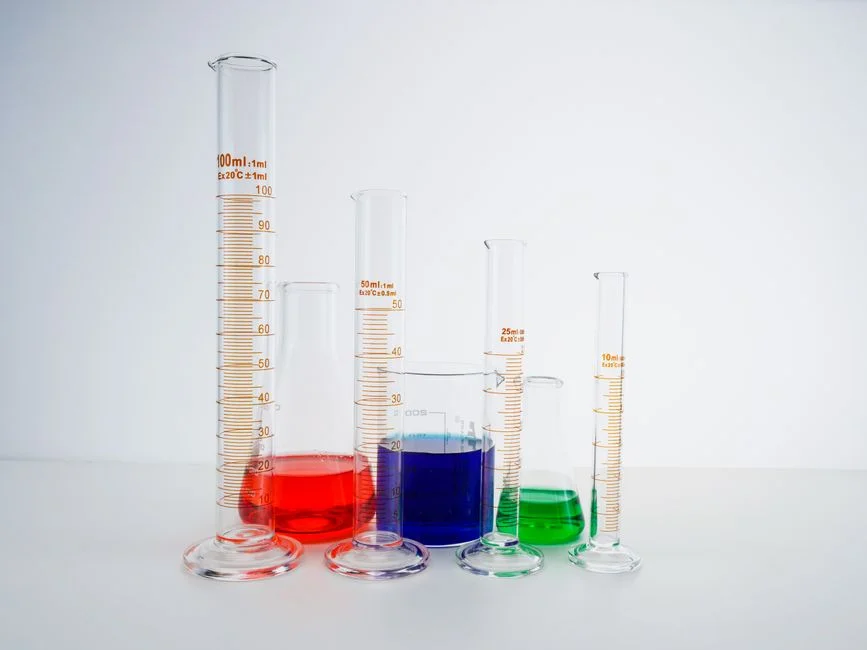
The ratio of COD to BOD5 on the same sample indicates how much of the organic load is biologically treatable. Domestic wastewater typically shows a ratio of 1.5–2, signaling readily biodegradable organics; a ratio above 2.5–3 signals refractory substances that resist biological breakdown (Novair Industries). Food processing wastewater clusters around 2:1 because sugars, starches, and proteins dominate the load (UGA C992). Textile wastewater can reach 5:1 because dyes and process auxiliaries are poorly biodegradable (UGA C992). The same ratio logic governs pulp and paper effluent, which is why the Japan Technical Association of the Pulp and Paper Industry treats COD/BOD control as a standard design parameter for papermaking wastewater (JSTAGE, jtappij 69/12).
The ratio also provides operational utility. A UGA worked example calculated 1.9:1 from three food-processing samples, though the source recommends at least 10 samples to establish an initial ratio and periodic re-checks as production changes (UGA C992). Because the ratio of a given stream stays constant over time, it allows operators to use the fast COD test to predict BOD with reasonable reliability (UGA C992).
| Wastewater type | Typical COD:BOD5 ratio | What the ratio signals |
|---|---|---|
| Domestic / sanitary | 1.5–2 | Readily biodegradable; biological stage usually sufficient |
| Food processing | ~2:1 | Mostly biodegradable; biology handles most of the load |
| Pulp and paper | Ratio is a standard design parameter (jtappij 69/12) | Variable; depends on furnish and chemicals |
| Textile (with dyes/auxiliaries) | ~5:1 | Refractory fraction; biology alone will not close the gap |
| Refractory / industrial mixed | ≥ 2.5–3 | Non-biodegradable organics present; chemistry or membrane polish required |
Concentration vs Loading: Same Number, Different Meaning
Concentration, reported in mg/L or ppm, identifies how much of a substance is in a known volume of wastewater. Loading, reported in lb/day, identifies how much mass leaves the site per day and is the figure regulators use to size surcharges and pretreatment limits (UGA C992). The conversion is: lb/day = Flow (MGD) × Concentration (mg/L) × 8.34, where 8.34 is the weight in pounds of one US gallon of water (UGA C992).
This distinction is critical when comparing two plants. Plant A at 1.0 MGD with 250 mg/L BOD produces 2,085 lb/day; Plant B at 0.05 MGD with 1,000 mg/L BOD produces 417 lb/day. Plant B's effluent is more concentrated, but Plant A loads the sewer five times harder by mass, which is the figure the municipal pretreatment program bills against (UGA C992). For any compliance or cost argument, a BOD or COD concentration alone is insufficient; the discharge flow must be included.
Picking the Right Treatment Train From the Numbers
The ratio dictates the selection of unit operations. At a low COD-to-BOD ratio (≤ 2), a biological stage—activated sludge, sequencing batch reactor, or an MBR membrane bioreactor system—typically removes most of the biodegradable load, with a dissolved air flotation (DAF) system or lamella clarifier handling suspended solids upstream (Novair Industries). The MBR variant is favored when space is constrained or when the discharge limit on suspended solids is tight, as the membrane replaces the secondary clarifier.
Adapting the treatment train ensures that the non-biodegradable fraction does not bypass the system. At a high COD-to-BOD ratio (≥ 3), a chemical oxidation step (ozone, hydrogen peroxide, or Fenton) or an MBR membrane polish is added after the biological reactor (Novair Industries). Pure-oxygen aeration raises the dissolved-oxygen driving force in the biological basin, improving BOD5 removal efficiency and responsiveness to organic or hydraulic peaks compared with air-based aeration (Novair Industries). For broader context on closing the gap, see the engineering guide on how to eliminate COD and SS in wastewater, and for the textile case specifically, the guide on MBR design for textile wastewater.
Pre-treatment protects the biology and keeps the BOD/COD numbers meaningful. DAF, bar screens, and flow equalization handle oil, grease, and suspended solids that would otherwise mask the biodegradable fraction; without this step, the measured BOD/COD reflects carryover TSS as much as dissolved organics, and the ratio loses its reliability as a treatability signal (Novair Industries).
Frequently Asked Questions
Which test should we commission from the contract lab, BOD or COD?
Run both on at least 10 samples spaced across normal production variation, then average the COD-to-BOD ratio per the UGA method; after that, use the fast COD test for routine process control and re-check BOD5 quarterly or whenever the influent character changes (UGA C992).
How do we use the ratio to decide whether biology alone is enough?
A COD-to-BOD5 of ≤ 2 points to a biological stage as the primary treatment; a ratio of 2.5–3 or higher indicates a refractory fraction that will pass through biology and requires a downstream chemical oxidation or membrane polish (Novair Industries).
What inputs do we need to size an MBR or DAF unit for our stream?
Provide the supplier with the design flow in m³/day, peak hourly flow, influent BOD5 and COD, the COD-to-BOD ratio, target effluent BOD/COD, temperature range, and any oil-and-grease or TSS load—the ratio alone is not enough to select equipment.
How should we budget for the equipment that closes the gap?
Request a written scope tied to your measured influent BOD/COD, target effluent limits, and flow profile; without those numbers, any budgetary figure should be treated as indicative, and final pricing must be confirmed against vendor selection after pilot or jar testing on your actual effluent.