Why Textile Effluent Is a Special Case for MBR Design
Textile dyeing and finishing effluent is not a generic industrial wastewater, and a membrane bioreactor sized from a municipal curve will not survive contact with it. The stream is defined by four stress factors that drive every subsequent MBR design choice. First, COD is high and variable because dye auxiliaries — sizing agents, wetting agents, urea, salts — leave the dye-house in batch swings rather than a steady load. Second, persistent colour from reactive, disperse and azo dyes resists biological oxidation; many chromophores survive aerobic treatment and must be dealt with downstream. Third, temperature is elevated: dye-house discharges often run between 30 and 60 °C, which shifts biological kinetics, lowers oxygen solubility, and stresses polymeric membranes. Fourth, salinity and surfactant load are high, driven by scouring, soaping and salt-heavy reactive dye baths — conditions that disrupt biomass floc structure and accelerate membrane fouling.
Because none of the scraped textile-specific sources quote a single canonical influent range, the practical move is to treat these four stress factors as the inputs a buyer must request from the mill: composite and grab COD by shift, true colour units across the dye-bath cycle, temperature envelope, conductivity/TDS, and surfactant loading (often as MBAS). Without those numbers, MBR sizing is guesswork. The pilot-scale flat-sheet MBR study titled "Pilot-Scale Evaluation of Flat-Sheet Membrane Bioreactor for In Situ Retrofitting Textile Dyeing Wastewater Treatment Plant" (S5, Membranes/EuropePMC) is a direct textile precedent: its title alone confirms that flat-sheet submerged MBR is the published retrofit configuration for an existing dyeing plant, which is the most relevant real-world configuration a textile buyer can cite. Compared with municipal sewage, the textile case forces the MBR into higher MLSS, higher SRT, and more aggressive chemically enhanced backwash — making textile a fouling-control problem first and a biology problem second, consistent with the membrane-fouling framing in the MDPI Membranes 2023 review (S2) and the 2024 ScienceDirect MBR industrial review (S3). For a broader view of how these streams fit into a mill's full wastewater train, the textile wastewater treatment process guide for 2026 covers the upstream and downstream unit operations that bracket an MBR.
How an MBR Treats Textile Wastewater — Mechanism and Configurations
An MBR couples a biological reactor — aerobic for most textile duty, or anaerobic where colour and refractory COD dominate — with microfiltration or ultrafiltration. The biological step degrades most of the biodegradable COD and a fraction of the dye molecules through azoreductase and similar pathways, while the membrane retains biomass and rejects suspended solids, colloids, and a fraction of high-MW dye molecules. The result is a clarified, low-SS effluent suitable for RO reuse, AOP polishing, or compliant discharge (S2, MDPI Membranes, 2023).
Two configurations dominate textile duty. Submerged (immersed) MBR mounts the membrane directly in the aeration tank. The integrated aeration box continuously scours the membrane surface, which is exactly the action needed to keep dye-bound fouling layers from compressing into irreversible cake. The trade-off is lower flux per square metre, but energy use is a fraction of the alternative. Side-stream MBR circulates mixed liquor through an external loop with a cross-flow pump; it delivers higher flux and easier cleaning access, but the energy penalty — typically cited at 10–20× the submerged configuration — makes it unattractive for textile chemistry, where membranes foul fast and the OPEX dominates (S2).
HydropureWater's DF-series flat-sheet PVDF MBR module is a textbook submerged textile configuration: 0.1 μm pore size PVDF flat sheet, integrated aeration box, stainless frame, individually replaceable elements, and available module areas of 80–225 m² producing 32–135 m³/day per module string (S6 product catalog). Paired with the integrated submerged MBR system, the package delivers a 60% smaller footprint than conventional activated sludge with clarifier, across a 10–2,000 m³/day envelope (S6 product catalog) — a structural advantage on textile sites where plot space is constrained and a brownfield retrofit is the only option.
| Configuration | Energy Profile | Flux Profile | Textile Suitability | Typical Use |
|---|---|---|---|---|
| Submerged flat-sheet PVDF | Low (integrated aeration) | Lower flux per m² | Preferred for dye-laden streams | Most textile retrofit and greenfield duties |
| Submerged hollow-fibre PVDF | Low (integrated aeration) | Lower flux per m² | Acceptable; backwash regime critical | Municipal and lighter industrial streams |
| Side-stream (external loop) | High (cross-flow pump) | Higher flux per m² | Rarely chosen for textile | High-strength, non-fouling industrial duty |
Operating Parameters That Make or Break a Textile MBR
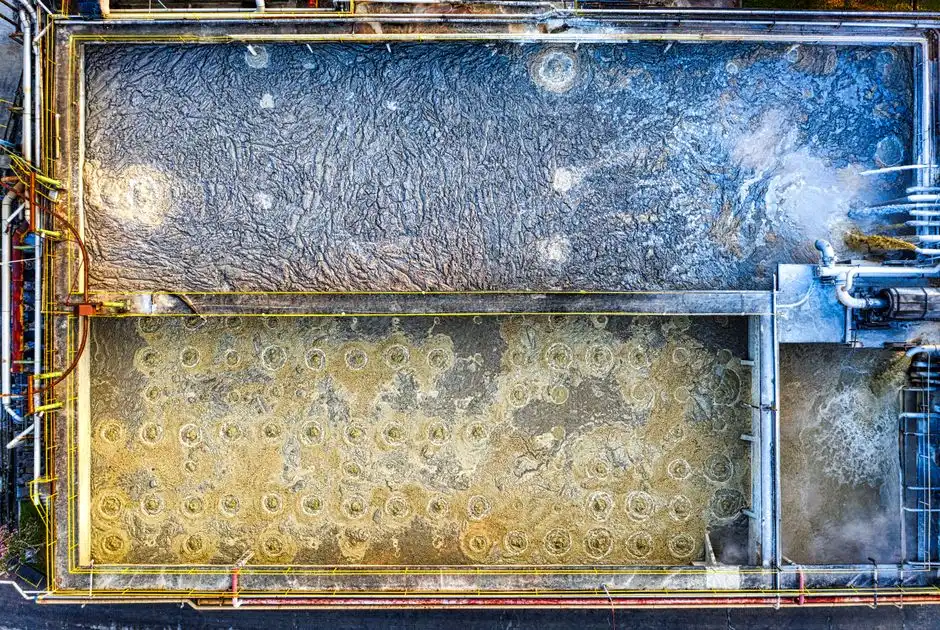
Three parameter families govern textile MBR performance: SRT/HRT/MLSS for biology, flux/aeration/cleaning for hydraulics, and pretreatment/pH/temperature for membrane survival. The MDPI Membranes 2023 review (S2) makes the core trade-off explicit: MBR runs at higher SRT and lower HRT than CAS, but high MLSS increases fouling risk, so textile plants typically operate in a controlled MLSS band rather than pushing it. That is the central design discipline: stay high enough on SRT to handle the inhibitory salt and dye loads, but stay low enough on MLSS to keep the membrane breathing.
Flux, aeration and cleaning are the levers the operator actually turns. S2 notes that submerged MBR runs at lower permeate flux and lower power than side-stream, which fits textile chemistry because dye-bound fouling layers form faster at high flux. The standard textile response is intermittent aeration (a few minutes off per cycle) to relax the cake layer, plus a regular chemically enhanced backwash (CEB) using sodium hypochlorite for organic fouling and citric or oxalic acid for metallic scale. Generic municipal flux curves are not a substitute for supplier-supplied CEB protocols designed for dye-fouled PVDF.
Pretreatment is non-negotiable. S3 (ScienceDirect, 2024) is explicit that successful MBR deployment depends on appropriate pretreatment to avoid clogging, and lists MLSS concentration and aeration rates as the operational levers that determine whether the plant runs or stalls. For a textile mill, the pretreatment train is bar screening, fibre and lint capture, equalisation, and oil/grease removal — usually a DAF pretreatment unit ahead of the bioreactor — followed by a rotary mechanical bar screen to protect downstream pumps and membranes. pH, alkalinity and temperature must be controlled because dye-bath chemistry swings batch-to-batch; S2 lists pH, alkalinity, temperature, permeate flux, retention time and cleaning frequency among the design parameters that most influence MBR efficiency. For mills where DAF performance is the limiting step, the DAF troubleshooting guide for 2026 addresses the surfactant and oil-emulsion failure modes that pass straight into the MBR if left unfixed.
| Parameter | Textile-Relevant Range or Note | Source |
|---|---|---|
| SRT | Higher than CAS; controlled, not maximised | S2 (MDPI Membranes, 2023) |
| HRT | Lower than CAS at the same load | S2 |
| MLSS | Operate in a controlled band; high MLSS raises fouling risk | S2, S3 |
| Membrane pore size | 0.1 μm (flat-sheet PVDF) to <1 μm (typical submerged modules) | S6 product catalog |
| Cleaning | Intermittent aeration + CEB with NaOCl and acid wash for dye-fouled PVDF | S2 |
| Pretreatment | Bar screen, lint capture, equalisation, DAF | S3 |
MBR vs CAS vs MBR + AOP for Textile Effluent
Three realistic process trains compete for a textile plant in 2026: CAS, MBR alone, and MBR followed by an advanced oxidation step. S2 and S3 both confirm that MBR delivers better effluent on BOD, suspended solids and turbidity, a smaller footprint, simpler operation, and easier water reuse — at the cost of higher energy and membrane replacement. CAS still wins on simplicity and lower membrane OPEX, but it rarely meets tight colour or reuse targets without a tertiary polish. For a plant whose only regulated parameters are BOD, COD and SS, CAS may still be the cheapest answer; for a plant facing a colour limit or in-plant reuse, MBR is the floor, not the ceiling.
MBR + AOP is the configuration that closes the colour gap. AOP families — ozone, UV/H₂O₂, Fenton, peroxone — are the standard add-on for residual colour and refractory organics. The AOP design guide for 2026 covers those four families in detail; for textile, AOP is almost always placed after MBR to oxidise dye chromophores that the membrane cannot reject, not as a substitute for biological treatment. MBR + AOP is also the configuration that supports a meaningful water-reuse loop, which the manufacturing water-reduction guide for 2026 treats as the default efficiency target for wet-process industries.
Pilot-scale evidence supports the flat-sheet submerged MBR choice for brownfield dyeing plants. The S5 paper title — "Pilot-Scale Evaluation of Flat-Sheet Membrane Bioreactor for In Situ Retrofitting Textile Dyeing Wastewater Treatment Plant" — confirms that flat-sheet submerged MBR is the published configuration for retrofitting an existing dyeing plant, which is useful precedent for any mill that cannot afford a shutdown. The article itself is paywalled and CAPTCHA-blocked, so cite only the title and configuration, not specific removal numbers.
| Process Train | Effluent Quality | Colour Removal | Reuse Potential | CAPEX / OPEX Profile | Best Fit |
|---|---|---|---|---|---|
| CAS (conventional activated sludge) | Moderate BOD/SS removal | Poor to moderate | Low | Lowest CAPEX and OPEX | Plants with BOD/COD/SS-only limits and no reuse target |
| MBR alone | High BOD/SS/turbidity removal | Partial; dye chromophores persist | Moderate (RO polish usually needed) | Higher OPEX, lower footprint | Plants with tight SS/turbidity or moderate reuse targets |
| MBR + AOP | High BOD/SS plus low colour | Strong, via ozone/Fenton/UV | High (with downstream RO if needed) | Highest CAPEX, justified by reuse and compliance | Plants with colour limits, in-plant reuse, or zero-liquid-discharge pathways |
Buyer's Decision Framework for a 2026 Textile MBR Project
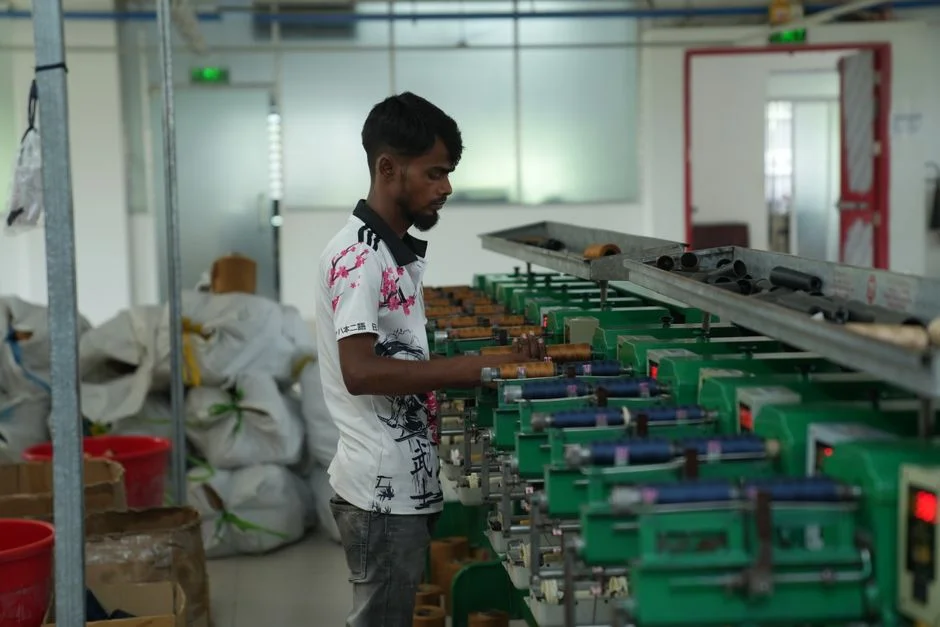
Four steps convert the engineering above into a defensible RFQ. Step 1 — define the discharge or reuse target first, because it dictates the process train. If the mill must meet in-plant reuse targets (for dyeing wash water, for example), plan MBR + RO or MBR + AOP. If the target is compliant discharge to a sewer with a colour limit, MBR + AOP is usually sufficient. If only BOD/COD/SS are regulated, MBR alone may be enough, and CAPEX is the deciding factor. Step 2 — lock in the pretreatment train. Always specify bar screening, lint and fibre removal, equalisation, and DAF for oil and surfactant knockdown upstream of the MBR (S3); skip this and the membrane life will pay for it.
Step 3 — select submerged over side-stream for textile. Submerged flat-sheet or hollow-fibre PVDF is the energy-efficient textile default; use CEN/TR 15897 as the terminology baseline if the plant exceeds 10,000 m³/d (S4). For broader CAPEX and ROI context, the MBR cost and ROI guide for 2026 walks through the budget lines a procurement manager will be asked to defend. Step 4 — stress-test the supplier. Ask for textile-specific references, pilot data, CIP protocols for dye-fouled membranes, and a guaranteed flux at the design MLSS — not generic municipal flux curves. Confirm the membrane replacement interval, the chemical cleaning regime, and the lead time for spare elements; a textile plant cannot wait 12 weeks for a replacement cassette.
Frequently Asked Questions
What influent data must a textile mill collect before sizing an MBR?
A textile plant engineer should collect composite and grab COD across the dye-bath cycle, true colour units, conductivity/TDS, pH and alkalinity, temperature envelope, and surfactant load (MBAS) before talking to any MBR supplier. The four stress factors discussed above — COD variability, persistent colour, elevated temperature, and salinity plus surfactant load — are the qualitative drivers, and the buyer should request the matching numeric data from the mill's own effluent monitoring rather than rely on a generic influent range. Without that dataset, MBR sizing is guesswork.
How much does a textile-duty MBR cost in 2026, and what drives the budget?
No single list price applies, and the research data does not quote a textile-specific MBR CAPEX figure. The two real cost drivers are the daily flow envelope (m³/day) and the chosen process train — MBR alone is materially cheaper than MBR + AOP, and MBR + RO for reuse is the most expensive. A buyer should request an itemised quote that separates the membrane module cost, the tankage and blower cost, the pretreatment train, the AOP or RO polish, and the annual membrane replacement plus chemical OPEX; reject any quote that bundles those lines into a single number.
Submerged flat-sheet or submerged hollow-fibre MBR for a textile plant?
For dye-laden textile streams, submerged flat-sheet PVDF is the published retrofit configuration per the S5 pilot-scale study title, and it pairs naturally with intermittent aeration and chemically enhanced backwash. Hollow-fibre submerged modules are also used on textile duty, but they require tighter backwash regimes because fibre slack and fouling distribution differ from flat-sheet geometry. The supplier should provide textile-specific CIP protocols and a guaranteed flux at the design MLSS for the chosen geometry.
What supplier questions should a textile buyer ask before issuing an RFQ?
Ask for textile-specific reference plants, pilot data on dye-laden streams, guaranteed flux at design MLSS, CIP protocols for dye-fouled PVDF, membrane replacement interval and lead time for spare elements, and a clear statement of compliance risk under the mill's discharge consent. A supplier that answers with municipal flux curves, generic warranty language, and no textile references is not yet qualified for a textile RFQ.