Separate the two treatment trains
A San Salvador data center needs two treatment decisions: one for sanitary wastewater and one for cooling-tower blowdown. Sanitary flow normally needs biological treatment, while MBR is appropriate where near-reuse quality is required. Blowdown requires removal of suspended solids, hardness, residuals, and scale-forming salts; softening plus side-stream RO can produce cooling makeup and reduce discharge, but high recovery requires brine management. Full ZLD is a higher-cost option justified when discharge is effectively prohibited or water allocation is binding. Because the supplied Salvador guide concerns Salvador, Bahia, Brazil, all El Salvador discharge limits, sewer rules, and receiving-water conditions must be confirmed locally.
The two streams should not share an equipment train simply because they eventually reach one discharge point. Sanitary wastewater is governed primarily by its organic and solids load, while cooling blowdown is controlled by the cooling water balance, concentration cycles, and the chemical inventory used in the tower.
The Brazil reference case separates approximately 50–80 m³/day of sanitary wastewater from 60–240 m³/day of cooling blowdown for a 40 MW campus. These are reference assumptions from the HydropureWater Salvador guide, published in 2026, not San Salvador design flows. For sanitary reuse, that guide specifies MBR with submerged PVDF membranes below 1 micrometre, reporting effluent BOD below 5 mg/L and TSS below 1 mg/L.
For blowdown, request measurements of suspended solids, hardness, scale-forming species, biocide residuals, and chemical-inhibitor carryover. Also obtain the actual campus wastewater flow, blowdown flow, cooling configuration, chemical inventory, and intended reuse destinations before selecting equipment.
| Design input | Sanitary wastewater | Cooling-tower blowdown | Procurement consequence |
|---|---|---|---|
| Measured flow | Daily and peak flow | Blowdown and seasonal peak flow | Size treatment and storage around measured duty, not the Brazil reference case |
| Critical quality | BOD, TSS, ammonia and solids variability | TDS, hardness, silica, TSS, disinfectant and inhibitor residuals | Define analytical tests and sampling points |
| Treatment objective | Discharge or designated reuse | Discharge, cooling makeup, or concentrated brine | Separate treatment and residual-management scopes |
| Destination | Sanitary sewer or identified reuse point | Sanitary sewer, cooling loop, or approved brine destination | Local approval and hydraulic integration remain mandatory gates |
Where sanitary treatment is intended for reuse, request a submerged PVDF MBR wastewater treatment system. For a smaller discharge-only application, the WSZ underground integrated sewage treatment package is a distinct sanitary option. Neither should be used to infer blowdown pretreatment requirements.
Build the site-specific design basis
The tender cannot be sized reliably until the campus water balance and El Salvador acceptance criteria are documented. Create one fillable input sheet covering sanitary flow, blowdown flow, cooling cycles of concentration, makeup demand, chemical use, water temperature, and reuse targets. Then attach the analytical dataset, sampling method, and measurement date.
The Brazil guide offers a screening range for blowdown of 1,500–2,500 mg/L TDS, 400–800 mg/L total hardness as CaCO₃, 5–50 mg/L free chlorine or bromine, and 5–30 mg/L TSS at 4–6 cycles of concentration. The HydropureWater Salvador guide, published in 2026, reports those values as assumptions that vary with scale-inhibitor chemistry and ambient dust load. Require site analysis before adopting any of them as the San Salvador design basis.
| Fillable field | Project value required | Why it changes the route |
|---|---|---|
| Sanitary wastewater flow | Average, peak and minimum | Determines biological treatment and equalization duty |
| Cooling makeup and blowdown | Flow by operating mode and season | Determines pretreatment, RO, storage and concentrate handling |
| Cycles of concentration | Current and proposed operating range | Controls salt concentration and freshwater reduction |
| Water chemistry | TDS, hardness, silica, TSS, residual disinfectant, inhibitors and other site chemicals | Sets membrane fouling, scaling, dechlorination and solids requirements |
| Chemical inventory | Product, dose, frequency and disposal controls | May determine discharge constraints and pretreatment demand |
| Water temperature | Normal and maximum | Influences biological reaction rates and membrane operation |
| Reuse target | Cooling makeup, toilet flush, irrigation or other destination | Defines product-water quality and distribution requirements |
| Local approvals | Discharge criteria, sewer rules, toxicity controls, sampling and receiving-water restrictions | Creates the mandatory gate before equipment specification |
Ask the relevant El Salvador environmental authority and sewer operator for current discharge criteria, toxicity controls, sewer-acceptance rules, sampling requirements, and receiving-water restrictions. Record the issuing body, document reference, date, and responsible project contact.
CONAMA 430/2011, INEMA, and EMBASA appear in the supplied source because it addresses Salvador in Bahia, Brazil. They are not evidence of the rules applicable in San Salvador, El Salvador. Transfer the decision method—not the Brazilian limits. Before front-end design is frozen, obtain written confirmation of the applicable discharge route, permitted parameters, monitoring obligations, and whether separate streams may enter the sewer.
Equipment selection should also address treatment valves and filter media, but media selection follows the confirmed chemistry and control strategy rather than preceding it.
Compare discharge, partial reuse, and cooling reuse
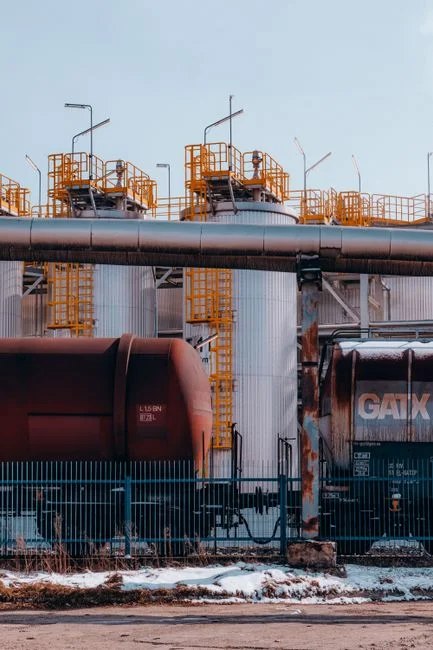
The preferred route depends on measured chemistry, confirmed permit limits, freshwater allocation, and the amount of blowdown that can be returned to the cooling system. A side-stream RO and softening package is the normal candidate for partial cooling reuse when sewer discharge is permitted but freshwater reduction has value; full ZLD is reserved for a verified case where residual discharge is effectively prohibited.
For discharge-only scope, define filtration, clarification or flotation, chemical control, and disinfection around locally confirmed sewer and receiving-water limits. The Brazil source used a 24–48-hour hold-and-decay tank plus sodium bisulfite to reach a stated discharge residual of no more than 0.5 mg/L. That is a Brazil reference approach, not an El Salvador limit, and it cannot be transferred without local confirmation.
For partial reuse, the HydropureWater Salvador guide reports recovery above 75% of blowdown at 7–10 cycles of concentration using side-stream RO and softening. It also reports RO capital cost of $250,000–500,000 and operating cost of $1.50–3.00 per thousand gallons for a 50,000 GPD scope (HydropureWater Salvador guide, 2026; Genesis Water Technologies, 2026). Request a site-specific quotation rather than adopting those figures as a San Salvador budget.
For high recovery, IDE Tech reports an industrial example operating at around 95% recovery with permeate silica at about 1 mg/L. Its controlled salt-precipitation and dynamic RO architecture is a technology example, not evidence that such a configuration will meet a San Salvador discharge requirement (IDE Tech, 2026).
For full ZLD, the same Salvador source reports $3–8 million capital cost, $5–15 per thousand gallons operating cost, and 95–99% overall recovery (HydropureWater Salvador guide, 2026; Genesis Water Technologies, 2026). Use full ZLD only where verified permit and allocation conditions make residual discharge effectively unacceptable and the recovered water has a defined internal use.
| Decision criterion | Discharge only | Partial reuse | High-recovery cooling reuse | Full ZLD |
|---|---|---|---|---|
| Freshwater reduction | Lowest treatment complexity; no avoided freshwater demand | Returns treated blowdown and reduces freshwater intake | Maximizes internal reuse and raises achievable cooling concentration | Maximizes water recovery where discharge is constrained |
| Residual discharge | Remains the principal compliance exposure | Concentrated residual remains | Smaller residual volume, subject to concentrate acceptance | Designed for no or tightly constrained liquid discharge |
| Main equipment burden | Filtration, solids removal, residual control and disinfection | Softening, side-stream RO, disinfection and concentrate management | Advanced pretreatment, controlled salt removal and dynamic membrane operation | Thermal concentration, salt precipitation and solid-residue handling |
| Permit dependency | Direct dependence on locally confirmed sewer and receiving-water criteria | Both product-water quality and concentrate destination require confirmation | Highest engineering scrutiny of concentrate handling | Still requires local acceptance of residual solids and operational controls |
| Commercial trigger | Lower treatment complexity where discharge is fully accepted | Strongest initial option when allocation reduction justifies RO | Requires verified high-recovery chemistry and a destination for concentrate | Use only when residual discharge is effectively prohibited or allocation is binding |
Discharge and reuse are not mutually exclusive. A practical design can recover most blowdown while sending a smaller, concentrated residual to an approved sewer or disposal route. The discharge, partial-reuse and cooling-reuse comparison should be used as a route-screening method, not as a substitute for San Salvador measurements and approvals.
Match the equipment package to the route
The equipment package follows the contaminants and chosen route, with each supplier package required to state its operating limits and residual handling. The HydropureWater catalogue provides candidate blocks, but their suitability depends on confirmed flow, chemistry, product-water specification, and site utilities.
Use the JY integrated water purification system where a compact block combining coagulation, flocculation, sedimentation, filtration, and automatic backwash is required. Confirm the selected unit against the measured solids, chemistry, hydraulic recovery, and backwash-waste destination.
For partial cooling reuse, soften before the industrial side-stream RO system to limit calcium carbonate and calcium sulfate scaling. The industrial water softener must be sized for actual makeup demand, residual hardness, regeneration frequency, and brine disposal. Where broader clarification is needed, evaluate the high-efficiency sedimentation tank as a pretreatment block.
For residual control and on-site disinfection of industrial cooling loops or process wastewater, the chlorine dioxide generator is an option. Verify generator capacity, feed chemistry, safety requirements, residual measurement, and the locally permitted residual before selection.
| Selected route | Core treatment blocks | Specialist or unresolved scope |
|---|---|---|
| Sanitary discharge only | Bioreactor, sedimentation, disinfection and solids removal; the WSZ package combines anoxic/aerobic treatment, sedimentation and disinfection for 1–80 m³/h | Confirm local sewer acceptance, sludge handling and standby strategy |
| Sanitary reuse | Submerged PVDF MBR, disinfection, storage and reuse distribution | Define reuse-water quality, membrane cleaning and residual solids handling |
| Blowdown discharge | Filtration or flotation, clarification where required, residual control and disinfection | Establish discharge limits and chemical-removal basis locally |
| Partial cooling reuse | DAF where needed, industrial softening, side-stream RO and disinfection | Define brine and concentrate management, membrane cleaning and redundancy |
| High-recovery reuse | Advanced pretreatment, controlled salt precipitation and dynamic membrane separation | Solid-residue handling, dynamic RO controls and verified concentrate destination |
Where solids must be dewatered before disposal, add a plate-frame filter press and define cake moisture, polymer use, filtrate destination, and disposal arrangements. For sanitary reuse, the catalogue identifies an MBR range of 10–2,000 m³/day; require the selected design to satisfy the project’s measured flow and water matrix.
Define procurement and acceptance criteria

A tender package should make the selected route testable against the San Salvador design basis. Require every supplier to state the design flow, influent basis, recovery definition, product-water quality, concentrate destination, chemical consumption, energy use, availability, and warranty scope. Recovery must identify whether it means flow recovery, freshwater displacement, or overall site water reduction.
Require evidence from a referenced project with a comparable water matrix. For the MBR, request documented submerged PVDF performance below 1 micrometre, supported by effluent BOD below 5 mg/L and TSS below 1 mg/L, as specified in the HydropureWater Salvador guide published in 2026. Do not accept a generic reference project without checking its flow, loading, temperature, and operating regime.
- Freeze the measured sanitary and blowdown design flows before detailed sizing.
- Obtain written El Salvador discharge, sewer-acceptance, sampling, toxicity, and receiving-water requirements.
- Define product-water quality for each reuse destination.
- Issue the route-specific equipment list with concentrate and solids-handling scopes closed or identified as provisional.
- Tie factory and site acceptance tests to confirmed site flows and locally verified limits, not Brazil reference values.
- Complete operating and maintenance reviews before contract award.
The factory acceptance test should verify controls, interlocks, chemical dosing, metering, alarms, and equipment readiness. The site acceptance test should verify stable flow and product-water quality, concentrate handling, solids removal, laboratory instruments, backup operation, and operator competence.
Require the operating narrative to cover membrane cleaning, chemical dosing, backwash, solids removal, laboratory verification, alarms, redundancy, and operator training. Include a data center discharge-and-reuse comparison as a tender-review aid, while keeping the final acceptance basis tied to San Salvador project data.
Frequently Asked Questions
Which wastewater and cooling blowdown treatment is normally recommended for a data center in San Salvador, El Salvador?
Partial reuse is normally the first route to evaluate when sewer discharge is permitted but freshwater reduction has value. Use separate sanitary treatment and blowdown-recovery trains. Select discharge-only treatment if local acceptance is straightforward, and consider high recovery or ZLD only after confirming that residual discharge is effectively prohibited or water allocation is binding. This is a conditional recommendation, not a statement of current El Salvador permit requirements.
What information is needed to size the treatment equipment?
Provide measured sanitary and blowdown flows, current and proposed cycles of concentration, makeup demand, water temperature, complete chemical inventory, reuse destinations, and a water-quality dataset covering BOD, TSS, ammonia, TDS, hardness, silica, suspended solids, disinfectant residual, and inhibitor carryover. Also obtain the applicable sewer and environmental requirements before selecting equipment capacity.
How should side-stream RO be compared with full ZLD for cost and compliance risk?
Request two site-specific bids using the same measured blowdown flow, product-water quality, recovery definition, energy price, concentrate destination, and solids-disposal basis. The Brazil reference reports $1.50–3.00 per thousand gallons for a 50,000 GPD RO scope and $5–15 per thousand gallons for ZLD at 95–99% overall recovery; these are 2026 reference values from the HydropureWater Salvador guide and Genesis Water Technologies, not quotations for San Salvador.
What should a buyer check when selecting a treatment supplier?
Check a comparable reference project, full influent and product-water data, recovery definition, membrane or media warranty, chemical and energy consumption, concentrate route, solids handling, redundancy, control philosophy, and factory and site acceptance criteria. For sanitary MBR bids, specifically verify the submerged PVDF evidence and stated effluent performance rather than accepting a generic “MBR” configuration.
Which El Salvador permit and sewer inputs must be confirmed before tendering?
Obtain current discharge criteria, toxicity controls, sewer-acceptance rules, sampling and monitoring obligations, and any receiving-water or allocation restrictions from the competent El Salvador authority and sewer operator. Record the applicable legal instrument and issue date. Do not use CONAMA 430/2011, INEMA, or EMBASA requirements from the Brazil reference case as El Salvador rules.