Separate blowdown from sanitary wastewater before selecting equipment
A data center in Ananindeua should design two treatment routes: one for cooling-tower blowdown and another for sanitary wastewater. Blowdown requires control of dissolved solids, hardness, treatment chemicals and residual disinfectant; sanitary wastewater requires biological treatment before sewer discharge or further polishing for reuse. Package A/O treatment can serve sanitary discharge where flow and local acceptance permit, while MBR is the stronger option when treated sewage must become cooling makeup. Reuse requires polishing, disinfection and local authorization, so final equipment selection must follow site water analysis, utility rules and permit confirmation.
Cooling-tower evaporation leaves dissolved solids and treatment chemicals in the circulating water. Blowdown therefore carries elevated TDS, hardness, biocide and corrosion-inhibitor chemistry; HOBI identifies it as the common routine wastewater stream and notes that salinity and treatment chemicals can approach a receiving plant’s limits (HOBI, Data Centers, Water, and Communities, 2026). Sanitary wastewater from restrooms, kitchens and staff areas has a different objective: remove biodegradable organics and solids before discharge, or produce a stable effluent suitable for reuse. The supplied 2026 treatment reference describes an MBR route with effluent BOD below 5 mg/L and TSS below 1 mg/L (HydropureWater, Data Center Wastewater & Cooling Blowdown Treatment in São Paulo, Brazil, 2026).
The first design split is therefore not simply “wastewater versus non-wastewater.” It is stream by stream and destination by destination: sewer, permitted surface-water discharge or on-site reuse. A combined civil train can create unnecessary treatment and permit complexity, especially where sanitary effluent and chemically conditioned blowdown have different acceptance criteria. Use this matrix to define the preliminary scope before requesting equipment quotations.
| Stream | Primary contaminants and controls | Discharge objective | Reuse objective | First design split |
|---|---|---|---|---|
| Cooling-tower blowdown | TDS, hardness, corrosion risk, suspended material, biocide and residual oxidant | Meet the receiving sewer or surface-water permit | Produce cooling makeup or another approved reclaimed-water use | Confirm cooling chemistry and final destination separately |
| Sanitary wastewater | Biodegradable organics, solids, nutrients and pathogens | Meet sewer acceptance criteria and applicable discharge limits | Provide cooling makeup, toilet flushing, irrigation or another authorized use | Confirm whether reuse changes the required biological and polishing performance |
Choose the discharge route before choosing the treatment train
The receiving authority’s written acceptance criteria determine whether discharge is technically and legally available; they cannot be inferred from treatment capability alone. CONAMA Resolution 430/2011 supplies reference sewer limits of pH 5–9, BOD no higher than 120 mg/L, and oil and grease no higher than 50 mg/L, according to the supplied 2026 São Paulo treatment reference (HydropureWater, 2026). Those values are national reference points, not confirmation that a specific Ananindeua sewer will accept the proposed streams or loads.
For sanitary wastewater, the utility may impose pretreatment requirements, flow restrictions or additional monitoring. For blowdown, ask the sewer authority to accept the complete chemistry—not only flow and BOD—including conductivity or TDS, chloride, sulfate, hardness, biocide, residual oxidant, corrosion inhibitor and any cooling program chemicals. HOBI identifies sewer capacity as a material risk because salinity and treatment chemicals can approach a receiving plant’s limits (HOBI, 2026).
The supplied research does not state Ananindeua’s discharge permit, receiving sewer limits, surface-water permit conditions or authorization for reuse. The responsible environmental authority, sewer utility and water provider must confirm those points. São Paulo basin, tariff and permit conditions should not be transplanted to Ananindeua.
Reuse remains a valid design option, but it changes the acceptance test. Blowdown treatment and recovery can reduce intake and discharge volumes (HOBI, 2026), while the life-cycle study by Open Engineering found that reuse decisions must assess treatment energy, chemical use and freshwater displacement together (Open Engineering, Reclaiming Cooling: Wastewater Reuse as a Strategic Resource for Data Center Water Management, 2026). Use the route comparison below to decide what information must be closed before process selection.
| Destination | Treatment objective | Information required | Procurement consequence |
|---|---|---|---|
| Authorized sewer discharge | Protect the receiving plant and satisfy its pretreatment limits | Utility acceptance criteria, peak flow, full chemistry, local discharge authorization | Package treatment may be adequate for sanitary flow; blowdown pretreatment must be chemistry-specific |
| Permitted surface-water discharge | Meet the conditions of the applicable authorization | Permit, receiving-water conditions, discharge point, monitoring requirements | Do not release the route for tender until the responsible authority confirms it |
| On-site reuse | Meet the water-quality specification of the intended use | Reuse target, make-up demand, health and environmental approval, residual-control requirements | Include polishing, disinfection, storage and concentrate handling where required |
Match each stream to a preliminary equipment scope
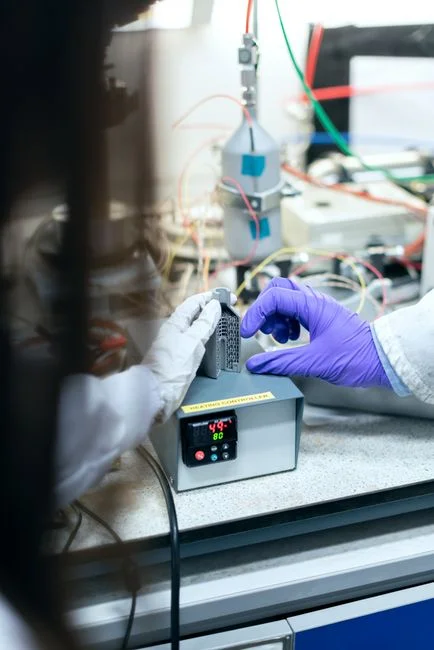
Sanitary discharge and sanitary reuse lead to different treatment scopes. For sanitary discharge without reuse intent, the supplied 2026 reference describes a WSZ package plant combining anoxic/aerobic contact oxidation, sedimentation and disinfection in a buried unit. Its stated range is 1–80 m³/h, it requires no routine plant operator, and sludge is removed to a holding tank for periodic pumping (HydropureWater, 2026). This is a preliminary option, not confirmation that the package suits the Ananindeua flow, footprint or permit.
For sanitary reuse, an MBR wastewater treatment system combines biological treatment with submerged membrane filtration. The supplied reference gives a range of 10–2,000 m³/day and describes effluent BOD below 5 mg/L and TSS below 1 mg/L (HydropureWater, 2026). The MBR process and equipment selection guide explains the process basis, but the final train still depends on flow, loading and the receiving cooling or reuse system.
For blowdown, a DAF blowdown pretreatment system is relevant where suspended solids, oil and grease or colloidal material must be removed; the supplied reference gives a DAF range of 4–300 m³/h (HydropureWater, 2026). DAF alone does not remove dissolved salts, so it does not establish compliance with a TDS limit or make blowdown suitable for reuse.
Reverse osmosis is a polishing option where dissolved solids must be reduced for reuse. The supplied industrial RO reference states recovery rates up to 95%, while UF can protect downstream membranes from colloids, bacteria and suspended solids (HydropureWater, 2026). That same reference places softening before RO to control calcium, magnesium and silica. Therefore, RO should follow a site-specific pretreatment assessment rather than appear in the tender as an unqualified add-on.
| Stream and intent | Preliminary train | Selection condition | Still required before purchase |
|---|---|---|---|
| Sanitary to sewer; no reuse | Package A/O, sedimentation and disinfection | Package flow envelope, local acceptance and sludge route are suitable | Sanitary flow, load, utility criteria, footprint and operating responsibility |
| Sanitary to cooling or other reuse | MBR, followed by polishing if the reuse specification requires it | MBR performance and hydraulic loading meet the designated reuse | Reuse target, cooling makeup specification, disinfection and storage requirements |
| Blowdown with solids, oil or colloids | DAF as preliminary clarification | DAF envelope covers peak flow and removal duty | Seasonal chemistry, residual oxidant, oil and grease, solids and coagulant testing |
| Blowdown to reuse or salt-sensitive discharge | DAF where needed, pretreatment and softening as required, then RO; UF may protect RO | Dissolved-solids target and scaling risk justify polishing | Full ion analysis, recovery calculation, pretreatment criteria and concentrate route |
Test the treatment choice against reuse, energy and operating constraints
Maximum reuse is not automatically the lowest-impact or lowest-cost route. In Open Engineering’s wastewater scenario, GWP was about twice that of the freshwater case, and treatment energy accounted for roughly 80% of the difference (Open Engineering, 2026). The same study found that the UF-plus-RO scenario used more than five times the energy of the freshwater scenario, although improved cycles of concentration reduced blowdown and chemical consumption. These results describe the study scenarios; they do not establish an Ananindeua energy factor.
Cooling-system optimization should precede wastewater equipment escalation. HOBI reports that increasing cycles of concentration from three to six can cut makeup water by about 20% and blowdown by about 50% (HOBI, 2026), citing Department of Energy cooling-tower guidance. Open Engineering likewise found that higher cycles of concentration reduce blowdown and chemical consumption (Open Engineering, 2026). The mechanical designer must therefore provide the design cycles of concentration, blowdown calculation and expected peak operation rather than asking the treatment supplier to infer them from IT load.
Open Engineering estimated an indirect water penalty of approximately 0.93 L/m³ for its reuse train, less than 0.1% of the direct displacement benefit in that analysis (Open Engineering, 2026). Because the result is scenario-specific, it should not be transferred as an Ananindeua factor. The local comparison must use site electricity prices, chemical demand, freshwater cost, concentrate disposal, permit conditions and operating responsibility.
| Comparison | What must be quantified | Decision use |
|---|---|---|
| Freshwater cooling | Makeup demand, chemical use, electricity and water cost | Establishes the baseline and the value of avoided potable demand |
| Reclaimed-water cooling | Treatment energy, chemical demand, recovery, storage, disinfection and residual-control requirements | Tests whether water savings outweigh additional operating impacts |
| Discharge without reuse | Pretreatment, sewer acceptance, monitoring and any discharge fee or volume condition | Tests whether discharge is permitted and sustainable for the receiving system |
| Alternative cooling configuration | Water demand, blowdown volume and electricity trade-off across operating conditions | May reduce wastewater volume before treatment capacity is increased |
Build the site data request before pricing the equipment
Final sizing cannot be converted into a defensible price until the two streams, their destinations and their governing chemistry are documented. Issue the information request before tender clarification closes, then require each bidder to map its offer to the same inputs and acceptance criteria.
Obtain the cooling configuration, cooling capacity, makeup flow, design cycles of concentration, blowdown calculation and expected peak loads from the mechanical designer. Obtain sanitary flow and load data from the facilities team, and receiving-utility acceptance criteria from the sewer authority. Request seasonal source-water and blowdown analyses covering TDS, hardness, conductivity, chloride, sulfate, silica, suspended solids, oil and grease, biocide and residual oxidant. Identify sludge and RO concentrate disposal routes before comparing alternatives.
For quotations, require the supplier to state design flow, operating redundancy, pretreatment criteria, controls, chemical consumption, sludge production and performance guarantees. These are scope items, not optional commercial notes. A comparison can use the data center wastewater reuse or discharge decision and the data center blowdown treatment train comparison as structured references, but Ananindeua acceptance criteria must come from the responsible local parties.
| Information package | Required content | Responsible provider | Acceptance criterion |
|---|---|---|---|
| Cooling design | Configuration, capacity, makeup, design COC, blowdown calculation, peaks and operating modes | Mechanical designer | Mass balance reconciles design flow with the selected cycles of concentration |
| Water chemistry | Seasonal source and blowdown analyses for specified dissolved and suspended parameters | Site laboratory or qualified sampling contractor | Representative samples cover operating and source-water conditions |
| Sanitary load | Flow, organics, solids, staffing and facility-use assumptions | Facilities team and wastewater designer | Design flow and load are stated separately from peak and average values |
| Permit and disposal | Sewer acceptance, discharge authorization, reuse permission, sludge route and concentrate route | Environmental team with authorities and utilities | Written route and applicable limits are identified |
| Supplier offer | Design basis, redundancy, pretreatment, controls, chemicals, residuals, sludge and guarantees | Equipment supplier | Offer can be compared against the same site inputs and destination test |
Frequently Asked Questions
Can the wastewater and cooling blowdown treatment for an Ananindeua data center be sized from the equipment range alone?
No. Final sizing requires sanitary average and peak flows, cooling makeup flow, design cycles of concentration, peak blowdown, seasonal source-water and blowdown chemistry, the selected destination, reuse specifications, utility acceptance criteria and authorization for discharge or reuse. The equipment range is a screening tool; it does not replace the site mass balance and water analysis.
How should a package sewage plant be compared with MBR and reverse osmosis?
Compare them against the same destination. A package plant is the preliminary candidate for sanitary discharge without reuse, provided its flow envelope, local acceptance criteria, footprint and operating model fit. MBR is the stronger starting point when sanitary effluent must meet a reuse target. Reverse osmosis is a polishing step where dissolved solids, not merely biological solids or colloids, prevent the intended reuse; it should not be compared directly with a complete biological sewage plant as an equivalent alternative.
What should an equipment quotation include before prices can be compared?
Require each quotation to define design flow, operating redundancy, pretreatment criteria, control scope, chemical consumption, sludge generation, residual handling and performance guarantees. It should also state exclusions, commissioning support and the conditions under which each guarantee applies. Then request a priced alternative for each permitted discharge route and confirmed reuse route so that differences reflect site requirements rather than inconsistent scope.
Which requirements are confirmed, and which must still be checked locally in Ananindeua?
The supplied 2026 reference confirms CONAMA Resolution 430/2011 sewer reference limits of pH 5–9, BOD no higher than 120 mg/L and oil and grease no higher than 50 mg/L (HydropureWater, 2026). It does not provide Ananindeua’s discharge permit, sewer pretreatment limits, surface-water authorization or reuse approval. Those requirements must be confirmed in writing with the responsible authorities and utilities before the tender establishes the discharge basis.