
Separate the Wastewater Streams Before Choosing Equipment
A data center in Sungai Petani should separate cooling tower blowdown from sanitary wastewater, floor and process drainage, and maintenance discharges before selecting treatment equipment. Each stream has different contaminants, flow patterns, reuse options and receiving-water constraints, so combining them by default can invalidate both the chemistry assessment and the treatment design. Cooling tower water leaves the system through evaporation, blowdown or bleed-off, drift, and leaks or overflows; only the controlled blowdown stream requires the mineral-concentration treatment strategy described by Environmental Remedies in Evaporative Cooling Wastewater in Data Centers. Build the water balance around continuous, batch and event-driven flows, including cleanouts, seasonal load changes and unplanned draining, then obtain the source-water analysis, cooling programme, tower configuration and future compute-expansion plan before requesting a quotation.
For cooling, record the circulating flow, makeup-water source, chemical dosing regime, planned cycles of concentration, expected blowdown and the point at which each flow can be isolated. For sanitary wastewater, establish whether it is handled by a dedicated treatment package or an approved sewer connection. For drainage, identify whether each line contains process chemicals, metals, oil and grease, cleaning residues or other contaminants that could enter the cooling circuit if streams were blended. These are design inputs, not assumptions to be resolved after equipment selection.
The separation exercise also identifies where temporary storage belongs. Environmental Remedies notes that intermittent cleanouts, maintenance windows and unplanned draining can create peaks that an average-day flow estimate misses; those peaks affect storage, sampling and treatment readiness. If the data center follows a cooling-water approach, use the related data center wastewater treatment guide and Malaysian data center wastewater guidance as supporting references, not as substitutes for a site-specific water balance.
| Engineering stream | Data to establish before treatment selection | Provisional route to evaluate | Decision owner or evidence needed |
|---|---|---|---|
| Cooling tower blowdown | Average and peak flow; conductivity or TDS; silica; hardness; alkalinity; pH; suspended solids; residual treatment chemicals; cooling programme | Reuse after treatment, controlled discharge after pretreatment, or a hybrid route | Cooling engineer, water-treatment supplier and receiving authority |
| Sanitary wastewater | Flow, fixture discharge profile, local sewer route and any site-specific pretreatment requirement | Approved sewer discharge or separately defined treatment | Facility operator and sewer operator |
| Floor and process drainage | Contaminant inventory, batch or event flow, sampling results and possible discharge points | Targeted pretreatment or off-site handling | Environmental lead and maintenance team |
| Maintenance drain-down and cleanout water | Maximum event volume, chemistry, isolation method and emergency storage duration | Storage followed by treatment or controlled off-site disposal | Operations team and waste contractor |
Compare Reuse, Pretreatment and Controlled Discharge
Malaysia’s national direction supports reuse, but it does not determine the final route for a Sungai Petani site. SPAN guidance issued in September 2025 prioritises reclaimed water for cooling or air-cooled systems with zero discharge, while a reported parliamentary statement said water-recycling technology is now required for data centres (TechWireAsia, 4 November 2026, Malaysia data center water infrastructure). Neither statement supplies a Sungai Petani effluent limit, sewer acceptance condition or water-reserve margin.
The following sequence facilitates the selection of a viable discharge or reuse path. First, establish whether the discharge point and receiving system have been confirmed in writing. If reuse is technically viable, characterize dissolved solids, silica, hardness, treatment chemicals and microbiological or operational risks before defining the polishing train; the supplied evidence does not prescribe a local reuse-water specification. If discharge is the route, determine the applicable pretreatment from the receiving authority, sewer operator and permit rather than selecting a technology from a generic treatment catalogue. A hybrid route remains possible when a reliable reuse demand does not match the entire blowdown flow.
The Google Malaysian assessment reported in TechWireAsia on 4 November 2026 found that selected campuses in Selangor and Negeri Sembilan were not considered at high risk of scarcity or depletion, but those assessments were not published. They cannot be transferred to Sungai Petani. The same report states that projects in areas with low water-reserve margins would not be considered, which makes confirmation of local water availability a prerequisite rather than an optional refinement.
| Route | Use it when | Do not proceed until | Evidence required from the buyer or authority |
|---|---|---|---|
| On-site reuse | Treated blowdown can meet the defined cooling make-up or other approved use, and the residual stream has a lawful destination | Water chemistry, reuse application, recovery objective, concentrate route and local requirements are defined | Representative analysis, water balance, reuse criteria, corrosion and scaling assessment, and written authority confirmation |
| Pretreatment followed by discharge | A receiving sewer or surface-water route is confirmed and requires treatment before acceptance | Exact discharge limits, sewer acceptance criteria, sampling requirements and infrastructure capacity are known | Written permit or acceptance conditions, receiving-system capacity confirmation and monitoring plan |
| Hybrid reuse and discharge | Reuse demand covers part of the stream or varies with operations | Both destinations are available and off-spec or surplus water has a compliant contingency route | Hourly or event flow profile, storage calculation, automatic routing logic and authorization for each destination |
Match the Treatment Barrier to the Water Chemistry
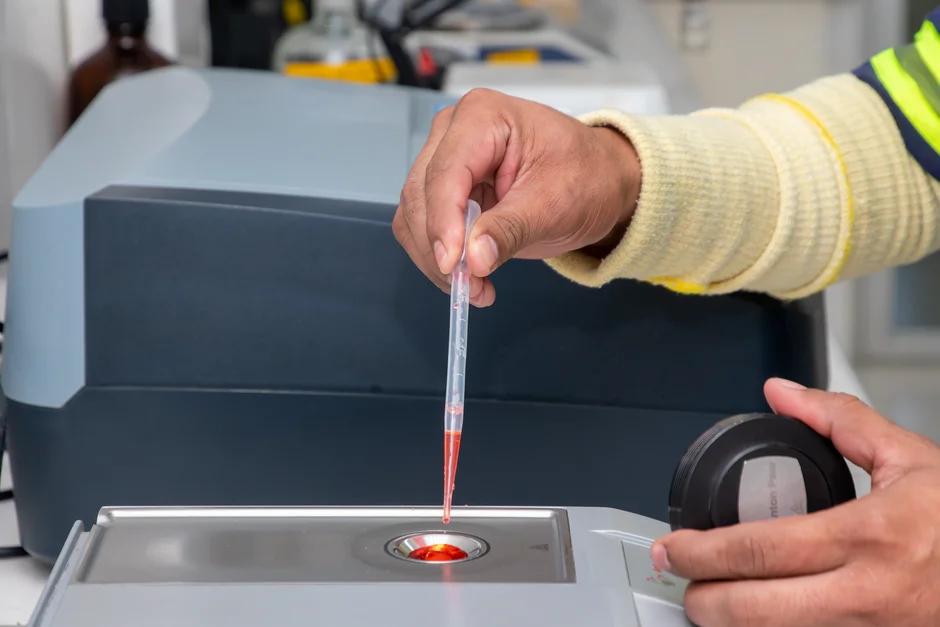
Silica, calcium carbonate and calcium sulfate determine whether cooling tower blowdown can pass through conventional reverse osmosis without unacceptable scaling risk. IDE Tech reports that conventional brackish-water reverse osmosis typically plateaus at 75–80% recovery before scaling becomes unmanageable (IDE Tech, Data Centers' Water Reuse: Cooling Tower Blowdown, 2026). Those values describe the cited technology limitation, not a guaranteed operating range for a Sungai Petani installation. The actual recovery must be established from the complete water analysis, temperature, concentrate chemistry and the selected system configuration.
Particulate management requires specific barrier selection. If blowdown carries corrosion products, biological growth or other particulates, the design should remove them before membrane or polishing equipment. Ultrafiltration pretreatment for cooling blowdown is one candidate barrier, but the supplier must demonstrate that its pore-size rating, pretreatment chemistry, cleaning method and feed-water envelope address the measured contaminants rather than rely on the equipment name.
For high-silica streams, compare a controlled salt-precipitation process with staged or advanced membrane operation. IDE Tech describes removing sparingly soluble salts as dense solids, then applying advanced membrane operation to address residual osmotic and salt-loading limits. In one reported industrial desalter application operating at around 95% recovery, permeate silica was reduced to about 1 mg/L (IDE Tech, 2026). This was an application result from a blended industrial stream, not a design guarantee and not evidence of suitability for Sungai Petani.
Industrial RO for blowdown reuse should be evaluated as a treatment step within a complete train, not as a stand-alone answer. Membrane selection, antiscalant dosing, recovery control, concentrate management and cleaning frequency must follow the feed chemistry. Disinfection is also a separate design decision from mineral removal: match the barrier to the intended reuse application and verify the applicable water-quality and safety requirements.
| Water condition or treatment objective | Barrier to evaluate | Supplier evidence required | Key limitation to resolve |
|---|---|---|---|
| Suspended solids, corrosion products or biological growth | Filtration or ultrafiltration before membranes | Feed-water envelope, particle-removal basis, cleaning frequency and measured operating data | Confirm that pretreatment prevents downstream fouling or damage |
| Dissolved salts with conventional brackish-water RO | RO with controlled antiscalant dosing | Projected recovery from supplied chemistry, concentrate quality, energy demand and cleaning plan | IDE Tech reports a conventional 75–80% recovery plateau before scaling becomes unmanageable in 2026 |
| High silica, calcium carbonate or calcium sulfate loading | Controlled salt precipitation combined with membrane treatment, or an alternative validated train | Solubility calculation, pilot or application basis, solids-handling route and recovery model | Do not transfer the reported 1 mg/L permeate result from an industrial desalter to a data-center design |
| Microbial control for the specified reuse application | Disinfection selected separately from mineral removal | Application-specific performance, monitoring method and validation plan | Confirm the relevant water-quality and safety requirements |
Size the System from Verified Operating Inputs
A supplier cannot size treatment equipment reliably from an average blowdown estimate and a generic water analysis. The equipment request should identify average and peak flow for each engineering stream, including maintenance drain-down, cleanout and emergency-storage events. No site flow values were supplied for Sungai Petani, so the quotation should remain budgetary until measured and calculated flow data are attached. Environmental Remedies identifies intermittent cleanouts, seasonal load changes, treatment adjustments and unplanned draining as events capable of exceeding the average-day profile.
The chemical data package should cover conductivity or TDS, silica, calcium, hardness, alkalinity, pH, suspended solids, residual treatment chemicals and any relevant metals identified through a process review. Sampling should cover the operating range rather than one convenient day. For example, confirm whether a high-silica condition occurs after chemical adjustment, at maximum heat load or during a particular tower operating mode.
Define the intended reuse application, required availability, recovery objective, concentrate destination, footprint, power supply, access route and operator-skill constraints. Confirm planned cooling capacity and future tower cycles of concentration because expansion can change wastewater flow and chemistry; Environmental Remedies states that higher compute density and changing cooling demand can alter wastewater assumptions. Request that each bidder state its treatment objectives, pretreatment needs, membrane or media selection, control philosophy, redundancy, maintenance access, test and commissioning responsibilities, and treatment of off-spec water.
The automatic chemical dosing approach should be specified around verified water chemistry and control objectives. Ask the supplier to identify the measured parameter, sensor, control signal, dose limits, duty arrangement and operator intervention required; an automatic dosing system is not a treatment guarantee if the underlying feed-water data are incomplete.
| Supplier-ready input | Required information | Acceptance response |
|---|---|---|
| Flow and storage | Average and peak flow for every stream; cleanout and emergency volumes; operating pattern | Design flow, storage calculation, hydraulic losses and peak-handling sequence |
| Water chemistry | Representative analysis with sampling dates, locations and operating conditions | Stated design envelope, calculated scaling and fouling risks, and chemical consumption assumptions |
| Reuse and recovery | End use, availability target, recovery objective and concentrate destination | Treatment train, recovery calculation, quality prediction and contingency route |
| Site integration | Footprint, power, access, controls, operator competency and maintenance constraints | Layout, utilities demand, control narrative, redundancy and maintenance plan |
| Commissioning | Baseline samples, proposed acceptance tests and site handover requirements | Factory and site tests, training, spares, cleaning procedures and documented handover |
Confirm Local Permits and Commissioning Evidence
National water policy does not establish permission to discharge or reuse at a Sungai Petani data center. The responsible Kedah authority, water provider, sewer operator and environmental regulator must be identified for the proposed route. The supplied research does not name a Sungai Petani approval pathway, so the owner should obtain written confirmation of discharge limits, sewer acceptance criteria, water-reuse requirements, sampling frequency and monitoring obligations before finalizing the treatment train.
The SPAN September 2025 guidance and the reported data-centre water-recycling requirement serve as planning context only (TechWireAsia, 4 November 2026). A design should also define what happens when reuse water is off specification, a pretreatment barrier fails, the receiving system cannot accept a discharge or maintenance creates an unexpected volume.
Commissioning should include baseline sampling, defined acceptance testing, operator training, critical spares, cleaning procedures and a contingency route for off-spec water and maintenance discharges. If disinfection forms part of the selected train, a UV disinfection design review should identify the validated flow range, dose-control requirements, fouling monitoring and confirmation that the selected technology matches the intended reuse application.
Frequently Asked Questions
What should a Sungai Petani data center measure before choosing wastewater treatment equipment?
Measure separate average and peak flows for cooling blowdown, sanitary wastewater, drainage and maintenance events. Obtain a dated water analysis covering conductivity or
Frequently Asked Questions
What should a Sungai Petani data center measure before choosing wastewater treatment equipment?
Operators must conduct a comprehensive water quality characterization, specifically testing for conductivity, total dissolved solids (TDS), silica (SiO2), total hardness (CaCO3), and alkalinity. Given the local water chemistry in Sungai Petani, it is critical to measure the concentration of cycles of concentration (CoC) in the cooling tower to understand the baseline impurity loading before treatment.
Additionally, flow rate variability must be analyzed to determine peak versus average hydraulic loading. Data centers should also monitor specific local discharge parameters, such as pH levels and heavy metal concentrations, to ensure the selected treatment equipment meets the specific effluent standards required for the local drainage basin.
Can cooling tower blowdown be reused instead of discharged?
Yes, cooling tower blowdown can be effectively reused as makeup water for cooling towers or for non-potable applications like landscape irrigation or toilet flushing. By treating the blowdown to remove dissolved solids and silica, facilities can achieve water recovery rates typically ranging from 75% to 90%, significantly reducing raw water intake requirements.
Implementing a Zero Liquid Discharge (ZLD) or Minimum Liquid Discharge (MLD) strategy allows data centers to maximize water efficiency. However, the feasibility of reuse depends on the accumulation of contaminants; if the blowdown contains high levels of corrosion inhibitors or biocides, specific treatment steps are required to ensure the water remains safe for secondary reuse purposes.
Which treatment system is suitable for cooling blowdown with high silica and hardness?
For blowdown with high silica and hardness, a multi-stage treatment process is required to prevent membrane scaling and fouling. This typically involves a lime softening or ion-exchange pretreatment phase to reduce hardness, followed by advanced membrane filtration, such as Ultrafiltration (UF) combined with high-rejection Reverse Osmosis (RO).
In cases where silica levels exceed 150 mg/L, chemical precipitation or specific silica-selective anti-scalants are mandatory to protect downstream equipment. If the water remains highly concentrated, further treatment via Electrodialysis Reversal (EDR) or mechanical vapor recompression (MVR) evaporators may be necessary to manage the reject stream effectively.
How should a buyer compare an integrated UF-RO package with modular wastewater equipment?
When comparing systems, buyers should evaluate the Total Cost of Ownership (TCO) over a 10-year period, including energy consumption (kWh/m3), chemical usage, membrane replacement cycles, and footprint requirements. An integrated UF-RO package often offers a smaller physical footprint and simplified automation, making it ideal for facilities with limited space in the Sungai Petani industrial zones.
Conversely, modular equipment provides greater scalability and redundancy, allowing for phased installation as the data center increases its server capacity. Buyers should prioritize systems that offer remote monitoring capabilities and standardized parts, as modular units often allow for easier troubleshooting and faster maintenance turnaround compared to monolithic, integrated designs.
What compliance risk comes from assuming that cooling blowdown can enter the local sewer?
Assuming cooling blowdown is safe for municipal sewer discharge poses significant legal and financial risks under the Environmental Quality Act 1974 and local Department of Environment (DOE) regulations. Cooling water often contains concentrated biocides, scale inhibitors, and high TDS levels that exceed the strict limits set for industrial effluent discharge into public sewerage systems.
Non-compliance can lead to heavy fines, immediate facility shutdown orders, or the revocation of the site's operating license. Furthermore, discharging untreated high-conductivity water into the local Sungai Petani drainage network can lead to environmental degradation, resulting in mandatory remediation costs and severe reputational damage to the data center operator.