Confirm the wastewater streams and Poznan discharge route
A Poznan data center must separate sanitary wastewater from cooling-tower blowdown before selecting either compliant discharge, partial reuse or cooling-loop reuse. The confirmed Poznan project information concerns waste-heat recovery and campus expansion: Capacity Media, in its report on the Beyond.pl and Veolia partnership, states that Data Center 2 is being expanded from 86MW to 150MW for AI workloads. Cooling-blowdown chemistry, Poznan sewer acceptance, and the applicable discharge or reuse permit require local confirmation before equipment sizing.
Cooling-tower blowdown is industrial process wastewater. It contains concentrated minerals, suspended solids and treatment chemicals, while sanitary sewage follows a domestic collection and treatment route. Equipment-cleaning wastewater, softener or RO backwash, and air-handling condensate should also be identified separately because their flow rates and compositions determine whether equalization and pretreatment cover more than the main blowdown stream. RSP Engineers’ process wastewater pretreatment and compliance guide emphasizes this separation.
Characterization should cover TDS, chlorides, sulfates, phosphates, metals, pH, temperature, suspended solids and every chemical used in the cooling program. The source-water analysis matters because evaporation leaves nonvolatile constituents behind. Confirm with the relevant Poznan sewer or environmental authority whether the intended route is indirect sewer discharge requiring industrial pretreatment or another permitted discharge route.
The supplied evidence does not identify Poznan’s applicable sewer limits, connection procedure or permit class. The expansion announcement does not establish cooling-water chemistry or discharge requirements. Those items must not be inferred from the 86MW-to-150MW campus target or from Warsaw examples.
Compare discharge, partial reuse and cooling-loop reuse
Discharge-only treatment is appropriate when the sewer authority accepts the flow and on-site pretreatment satisfies every applicable pH, temperature, solids, chemical and trace-parameter limit. Partial reuse becomes attractive when freshwater reduction is valuable but the reclaimed water does not meet the intended non-cooling use. Cooling-loop reuse requires a higher-quality product and validation against the cooling chemistry, concentration cycles and biological-control requirements.
| Route | Select it when | Core treatment | Evidence boundary |
|---|---|---|---|
| Compliant discharge | The relevant authority confirms sewer acceptance and defines enforceable discharge limits. | Equalization, filtration and targeted pretreatment such as pH correction or solids removal; add polishing only if required. | RSP Engineers gives 150°F as an example maximum temperature, not a Polish limit. |
| Partial reuse | The project seeks lower freshwater use, but the recovered water has a lower-grade destination than cooling makeup. | Side-stream filtration followed by the membrane and disinfection steps needed for the specified reuse. | The €180,000–€450,000 CAPEX benchmark applies to a 5MW Warsaw partial-reuse retrofit, not Poznan. |
| Cooling-loop reuse | The reuse class, chemistry compatibility, concentration cycles and microbial-control requirements are validated. | Side-stream filtration, UF, RO and treatment matched to the required reuse class. | The €600,000–€1,200,000 benchmark applies to a 15MW Warsaw full-reuse plus sewer-compliance configuration. |
These are planning distinctions, not a bid comparison. The Warsaw benchmark reports a €180,000–€450,000 CAPEX range for a 5MW partial-reuse retrofit and €600,000–€1,200,000 for a 15MW full-reuse plus sewer-compliance configuration; it does not establish Poznan pricing. It also states that full ZLD is rarely economic below 30MW because the thermal stage cannot be amortized by avoided water and sewer costs. That finding is Warsaw-specific, but it supplies a useful screening question for Poznan: do not specify ZLD unless the confirmed flow and avoided-cost model supports it.
The regional cooling-blowdown treatment guide provides another comparison point, but its climate, source-water and regulatory assumptions must not be transferred to Poznan. The correct decision is conditional: discharge if sewer acceptance is documented; partial reuse if a lower-grade demand is confirmed; cooling-loop reuse only if the product specification and reuse class support it.
Build the treatment train around the cooling-water chemistry
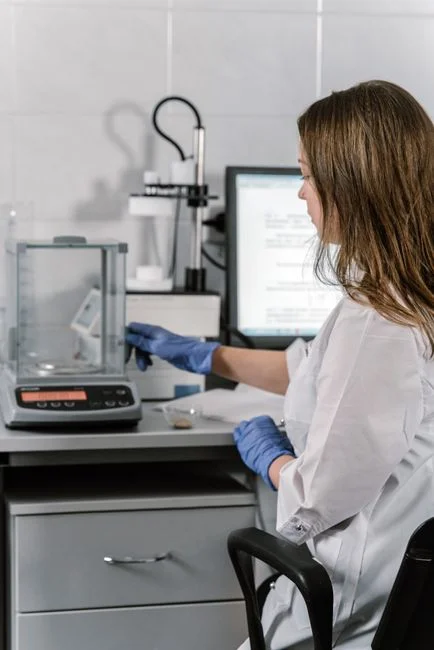
The treatment train should be built as a sequence of decision-controlled unit operations, not assembled from generic equipment capacities. First establish the source-water profile, cooling-chemical inventory, blowdown flow and required destination. Then select the unit that removes the identified contaminant.
- Equalization and screening: Route the selected industrial wastewater streams through equalization before the membranes so that chemical dosing and shock loads do not directly determine recovery. The Warsaw guidance suggests 4–8 hours of nominal blowdown, but this is not a verified Poznan requirement.
- Side-stream filtration: Use a self-cleaning filter to remove suspended solids and biofouling precursors. The Warsaw benchmark uses 1–5% of circulation flow and a 10–25 µm cut.
- Reverse osmosis: Use RO for bulk dissolved-solids removal where the reuse target or discharge limit requires it. The cited performance is 95–99% TDS rejection, 10–50 mg/L permeate TDS and 50–85% system recovery; silica and calcium-sulfate scaling constrain recovery.
- Chemical control: Apply antiscalant and pH correction through an automatic chemical-dosing system, with containment and interlocks matched to the cooling program.
- Disinfection: Where the reuse endpoint requires microbial control, cross-check UV, chlorine dioxide or ozone against the applicable EU reclaimed-water class and validation requirements. The supplied Warsaw source describes cooling-tower reuse as typically requiring Class C or D.
Each stage needs a measurable gate: suspended solids before UF, recovery and normalized permeate conductivity before RO, and the required microbiological and chemical criteria after final treatment. An industrial RO blowdown reuse system should be guaranteed against actual feed chemistry rather than a generic Vistula or municipal-water basis.
Calculate water, energy and lifecycle costs before procurement
The budget must follow the selected route and use verified Poznan flows, tariffs and permit conditions. The hydraulic calculation starts with the supplied identity: blowdown percentage equals 1 divided by cycles of concentration minus 1. The Warsaw examples are 25% of makeup at 4 CoC and 20% at 6 CoC. Apply the confirmed Poznan evaporation rate and operating concentration to establish the actual discharge and recovery volumes.
| Budget item | Calculation input | Source scope |
|---|---|---|
| Water and sewer charges | Current supply tariff, sewer tariff and metered discharge volume | €2.5–€4.0/m³ is a Warsaw 2025–2026 planning benchmark, not a Poznan tariff. |
| RO energy | Permeate volume multiplied by 1.5–2.5 kWh/m³ | Warsaw benchmark cited by the 2026 Warsaw source. |
| Chemicals and cleaning | Antiscalant, biocide, pH-control chemicals, cleaning frequency and chemical prices | Must be calculated from the verified cooling program and supplier quotations. |
| Lifecycle maintenance | Membrane replacement, pump and membrane maintenance, sludge or solids disposal, sampling and operator time | RO membrane life is cited as typically 3–5 years in the Warsaw source; local duty remains unconfirmed. |
| Capital cost | Flow-specific quotation for the selected treatment scope | The cited €180,000–€450,000 and €600,000–€1,200,000 ranges are Warsaw retrofit benchmarks. |
The Warsaw source reports a 3–5-year simple payback for a 60% blowdown-recovery retrofit at 15MW on a €350,000 CAPEX baseline. That result cannot be transferred to Poznan without local makeup flow, evaporation, CoC, water and sewer tariffs, permit conditions and treatment scope. Request a route-specific quotation that separates pretreatment, membranes, equalization, polishing, chemical storage, controls, installation and commissioning.
Prepare the permit and procurement package
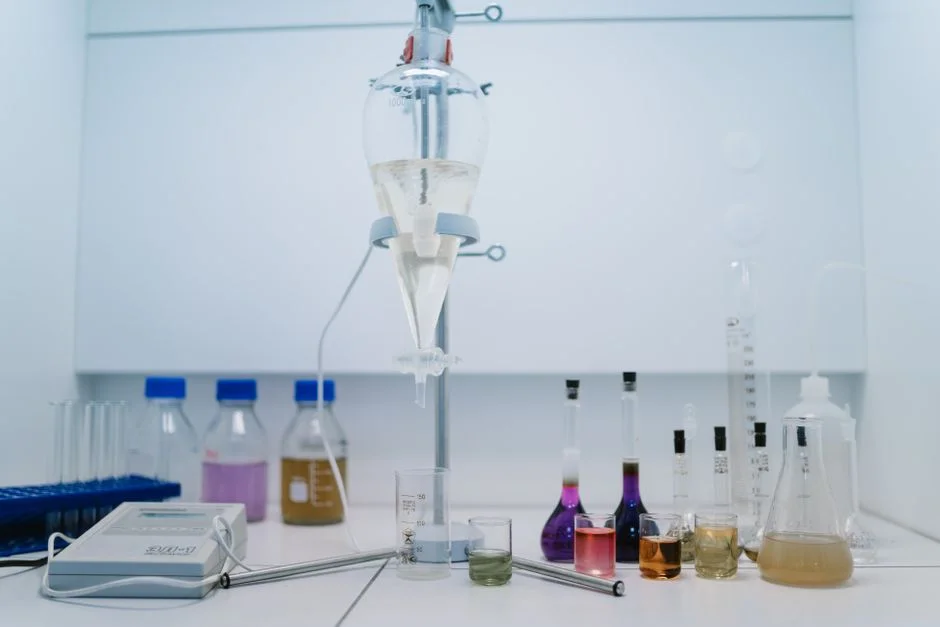
A complete permit package starts with measured wastewater characterization, not an assumed generic blowdown profile. It should include flow monitoring, the cooling-chemical inventory, source-water analysis, CoC and evaporation calculations, the proposed reuse endpoint, pilot data where required, a monitoring plan and a documented mapping to the applicable EU reclaimed-water class.
The supplied Warsaw source reports a Polish pre-application-to-permit range of 6–18 months and states that incomplete characterization or missing pilot data drives the longer end. That is a planning benchmark rather than a confirmed Poznan schedule. The package should also establish the legal discharge route, authority contact, sewer pretreatment requirements, discharge point, monitoring frequency and reporting format.
Supplier specifications should require PLC automation, remote monitoring, automatic backwash, chemical containment, representative sampling points, protected bypasses, operator access and maintenance clearances. These requirements align with the source-water treatment, pretreatment and monitoring provisions described in the data center blowdown treatment train comparison. The data center wastewater reuse-versus-discharge analysis also supports separating destination quality from the collection system, although its site-specific facts are not Poznan evidence.
Keep sanitary sewage outside the industrial UF-RO scope. It requires its own domestic wastewater treatment and permitting assessment. Engineering acceptance should also require guaranteed flow, permeate quality, recovery, chemical consumption, automatic controls, commissioning evidence and local maintenance support, all tied to the confirmed duty and feed chemistry.
Frequently Asked Questions
What will the treatment system cost for a Poznan data center?
Do not convert the cited €180,000–€450,000 partial-reuse benchmark for 5MW in Warsaw, or the €600,000–€1,200,000 full-reuse benchmark for 15MW in Warsaw, into a Poznan price. Request a route-specific quotation based on makeup flow, evaporation, CoC, source-water analysis, recovery duty, treatment scope, monitoring and local installation conditions. Obtain current Poznan supply and sewer tariffs for the operating-cost model.
What inputs are required to size UF and RO equipment?
Provide makeup flow, evaporation, operating CoC, required recovery rate, intended reuse endpoint, applicable reuse class and source-water analysis. Confirm how system recovery and permeate recovery will be defined. If the feed chemistry or destination specification is missing, retain equipment sizing as a budgetary allowance rather than issue firm capacity.
How should a treatment supplier be selected?
Require a duty-based proposal with guarantees tied to actual feed chemistry, stated recovery basis, monitoring scope, PLC and remote-access functions, commissioning evidence, chemical-management arrangements and local service support. A fixed-price comparison without feed data is not technically comparable.
What evidence is needed before discharge or reuse is approved?
Obtain written confirmation of the applicable Poznan authority, discharge route, permit class and sewer acceptance conditions. Submit measured wastewater characterization, chemical inventory, flow and CoC model, proposed reuse endpoint, pilot evidence where required, and a monitoring plan with defined methods. Use the UV disinfection reference for wastewater applications to inform technical evaluation, but confirm all microbial criteria against the applicable Polish and EU requirements.