Confirm the discharge route and controlling requirements
Mining and metals plants near Montpelier meet pretreatment obligations by treating wastewater before it enters the municipal sewer and demonstrating compliance with the controlling POTW permit, sewer-use ordinance, and applicable categorical standards. Vermont DEC states that facilities discharging to a wastewater treatment facility are governed by the national pretreatment program rather than an NPDES permit for that indirect discharge. EPA applies the most stringent applicable requirements, which may include categorical limits, local limits, monitoring, reporting, and narrative prohibitions. Build a pollutant-by-pollutant worksheet covering each verified limit, source stream, treatment step, sampling point, operating control, and corrective-action record.
Vermont DEC identifies direct discharges from a point source to a receiving water as NPDES matters, while facilities discharging to a WWTF are controlled through the national pretreatment program (Vermont DEC, Discharge Permits, undated). If the proposed route enters a municipal sewer, identify the receiving POTW and its control authority. EPA identifies the POTW as the control authority when it has an approved pretreatment program; otherwise, the approval authority performs that role (US EPA, Pretreatment Standards and Requirements—Applicability, undated).
Before issuing an equipment specification, assemble the current pretreatment permit, sewer-use ordinance, applicable categorical-standard determination, local limits, monitoring schedule, reporting due dates, and prior-compliance correspondence. For a metals operation, determine whether the activity fits ore mining and dressing under 40 CFR Part 437. Plating, pickling, or anodizing may also require analysis under 40 CFR Part 433 (HydropureWater, How Mining & Metals Plants Meet Pretreatment Limits Before Sewer Discharge, 2026).
Do not treat a landfill-leachate permit as a mining or metals limit table. The Agency of Natural Resources draft fact sheet for a landfill-leachate discharge to the City of Montpelier WWTF documents monitoring for TSS, TKN, chloride, metals, and PFAS, but it does not establish verified limits for a mine or metal-finishing facility (ANR, draft pretreatment permit fact sheet, undated). The engineering task is to connect the facility’s own permit to the receiving sewer authority’s current requirements.
Build a pollutant-by-pollutant compliance worksheet
Each worksheet row must connect a verified permit condition to an accountable treatment and monitoring response. EPA states that pretreatment requirements may take the form of numeric limits, narrative prohibitions, or best management practices, and that the control authority applies the most stringent applicable requirements (US EPA, Pretreatment Standards and Requirements—Applicability, undated). Federal categorical standards alone are not a complete design basis.
Mine and ore-dressing operations may fall under 40 CFR Part 437, while plating, pickling, or anodizing may also engage 40 CFR Part 433 (HydropureWater, How Mining & Metals Plants Meet Pretreatment Limits Before Sewer Discharge, 2026). The supplied comparison values for Part 433 are copper at 3.38 mg/L daily maximum and 2.07 mg/L monthly average, and total chromium at 2.77 mg/L daily maximum and 1.71 mg/L monthly average. Apply these values only if the actual activity, subcategory, and issued permit support that classification.
| Worksheet field | Entry required | Evidence to retain |
|---|---|---|
| Pollutant and source stream | Identify pH, TSS, each regulated metal, and any permit-listed organic or nutrient parameter associated with the originating process stream. | Process map, source-stream samples, analytical laboratory reports, and chain-of-custody records. |
| Verified limit | Enter the daily maximum, monthly average, instantaneous range, loading limit, or narrative prohibition; cite the permit and ordinance provision. | Current issued permit, sewer-use ordinance, categorical-standard applicability determination, and control-authority correspondence. |
| Treatment and control | Assign equalization, pH adjustment, precipitation, coagulation, dissolved air flotation, lamella clarification, filtration, or disinfection as supported by the chemistry. | Design basis, jar-test record, equipment submittal, operating set points, and chemical delivery records. |
| Monitoring point | Define the representative sampling location and whether monitoring occurs after treatment, before storage, or at the sewer connection. | Site diagram, sampling procedure, laboratory certification, sample timestamp, and flow record. |
| Frequency and reporting | Record the permit frequency, sample type, method, reporting deadline, responsible operator, and responsible reviewer. | Monitoring report, submitted report, accepted receipt, deviation, and corrective-action record. |
| Excursion trigger | State the operating action for an alarm, permit exceedance, missed sample, invalid result, or control-system failure. | Alarm log, work order, chemical adjustment, notification, resample, and signed closure. |
A commercial article cites zinc at 1.0 mg/L daily maximum and 0.5 mg/L monthly average for representative Part 437 subcategories (HydropureWater, 2026). Use that as a comparison input only. A more detailed metal-plant pretreatment train selection guide can support equipment decisions, but it does not replace the site’s permit or the Montpelier-area sewer-use requirements.
Match the treatment train to the binding contaminants
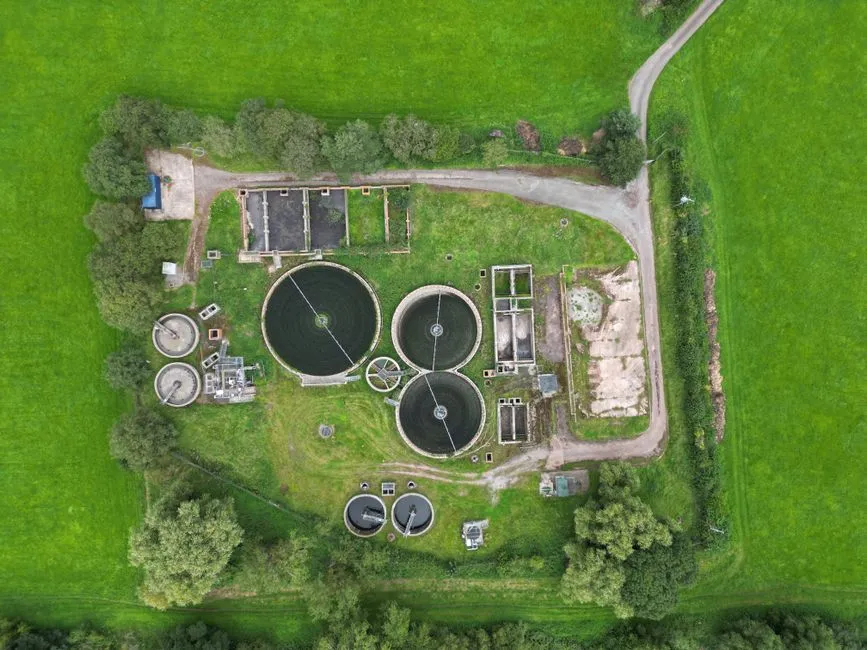
The binding contaminant profile—not a generic mine or metals label—determines the treatment train. Mine drainage and process streams can combine variable pH, suspended solids, dissolved metals, oil, and colloidal material. The equipment sequence should begin with verified sampling and chemistry, then address equalization and pH control before separating the precipitated or floated solids.
Use automatic dosing where pH, coagulant, or specialty-reagent control must remain stable across variable flow. A PLC-controlled chemical dosing system is appropriate only after the required chemical, dose-control strategy, and operating range are established from process chemistry and jar testing.
| Decision condition | Preferred unit or step | Design basis and limitation |
|---|---|---|
| Predominantly metal-bearing sludge at higher flow or a constrained separation footprint | Lamella clarification | The supplied catalogue states surface loading rates of 20–40 m/h (HydropureWater, 2026). Size from the verified flow, feed characteristics, and required solids capture—not the catalogue range alone. |
| Residual TSS remains a compliance risk | Filtration | Add as polishing or a safeguard where the verified TSS requirement warrants it. Define backwash, filtrate return, and waste handling before award. |
| The permit or sewer-use requirements require disinfection | Approved disinfection | Add only after the requirement is confirmed. The supplied commercial source discusses chlorine dioxide, but it does not establish a Montpelier requirement. |
For heavy metals, hydroxide precipitation is a common first-stage approach because the precipitate can be removed by clarification or flotation. Whether a chemical feed train is justified depends on the verified metal concentrations, permit limits, wastewater volume, and treatment objectives. Jar testing should establish the pH window, chemical dose, settling behavior, and expected residual; supplier literature cannot close that gap.
Compare equipment selection using the DAF versus lamella for mining pretreatment guide, while treating its equipment data as commercial design guidance rather than a verified local requirement. An industrial DAF system for metalworking pretreatment should be justified by oil, grease, or colloidal-solids evidence, not simply by the mining sector label.
Demonstrate compliance through monitoring and control
Installed equipment does not demonstrate compliance by itself; the permit requires traceable monitoring, reporting, and corrective action. Vermont DEC states that permittees must submit monthly reports, report non-compliance, and not exceed permit limits for pollutants such as nutrients, heavy metals, and biochemical oxygen demand (Vermont DEC, 2024 Wastewater Pretreatment Permitee Non-Compliance Data, 2025-12-12).
Connect each PLC or operator set point to a named permit parameter. For example, the pH-control set point should reference the verified instantaneous requirement; chemical feed should reference the treatment step responsible for the regulated pollutant; and the final monitoring point should correspond to the permit sampling location. Define alarms before startup, including the action, operator authority, notification path, and decision to stop or divert an off-specification discharge.
Retain the operating record needed to reconstruct compliance: flow and rainfall data; pH and turbidity trends; chemical inventory and dosage; clarifier or DAF operating condition; filter head loss and backwash; sample collection; laboratory results; chain of custody; report submission; excursion notices; corrective work; and signed approvals. Where an instrument fails, the written response should specify immediate notification, confirmation sampling, repair or shutdown criteria, and the authority contact sequence.
The state’s 2024 compliance snapshot found six permittees that exceeded permit limits or did not meet monitoring requirements, 11 that missed reports or required documents, and two that failed operation, maintenance, or notification requirements. The release expressly cautions that this historical snapshot may not represent current permittee status (Vermont DEC, 2025-12-12). These findings reinforce the need for assigned record ownership; they do not establish any mining or metals facility’s compliance status.
Size and procure the system against verified inputs

A compliant purchase specification must begin with verified flow and batch-discharge data, not average flow alone. Give suppliers the verified average flow, peak-flow duration, batch profile, wastewater chemistry, treatment objectives, permit sampling points, and the most stringent applicable pollutant limits. This avoids treating a catalogue flow range or a federal comparison value as a final Montpelier design basis.
Require each bidder to submit a guaranteed treatment objective, hydraulic basis, materials of construction, controls scope, utility requirements, startup protocol, performance-test method, and O&M support. The acceptance test should use a defined influent dataset, analytical methods, sampling locations, and pass/fail criteria traceable to the permit. If the supplier cannot link performance to a verified limit, the offer is incomplete.
Include equalization, chemical storage, sludge handling, filtrate return, and monitoring in the compliance system rather than pricing them as optional accessories. Their required scope follows from the selected treatment sequence, drainage and hazardous-waste evaluations, and permit recordkeeping duties. The mining wastewater treatment for sewer compliance workflow offers a parallel framework, but the receiving POTW’s current documents must supply the local requirements for a Montpelier-area project.
Frequently Asked Questions
What should a Montpelier-area pretreatment budget include?
Request a cost breakdown that separates treatment equipment from equalization, chemical storage and delivery, sludge handling, filtrate return, monitoring, controls, permitting, startup, performance testing, and O&M. The research contains no site-specific or Montpelier-area quotation, so do not estimate a total price until the wastewater profile, verified limits, flow basis, and required records are known.
How should a supplier be selected for compliance?
Require a traceable proposal that links each proposed treatment step to a verified permit parameter, sampling point, and performance criterion. Reject generic claims that cannot be tested against the current permit and sewer-use requirements. EPA’s applicability guidance requires identification of the applicable standards and application of the most stringent requirements (US EPA, Pretreatment Standards and Requirements—Applicability, undated).
What inputs should determine treatment capacity?
Use verified average flow, peak-flow duration, batch-discharge profile, wastewater chemistry, treatment objectives, and the most stringent applicable pollutant limits. Do not size from the supplied DAF range or the Part 437 comparison values alone; those are preliminary inputs, not confirmed local limits or final capacity criteria.
When should a mining or metals facility use DAF instead of lamella clarification?
Use DAF where the wastewater contains oil, grease, or fine colloidal solids, and consider lamella where the stream is predominantly metal-bearing sludge and separation footprint is important. A broader equipment comparison is available in the guide to DAF versus clarifier selection for mining and metals wastewater. Final selection still depends on site chemistry and verified permit conditions.