Choose the discharge and reuse pathway first
Wastewater from an Intel fab expansion in Texas should be segregated at the source, treated to match each stream’s chemistry, and routed to a permitted POTW, an authorized industrial reuse system, or both. Bulk rinse and UPW reject can use UF, RO, and ion-exchange or DI polishing; metals, fluoride, ammonium, and solvents require targeted treatment. The expansion’s final flow and treatment selection still depend on process inventory, design-day wastewater flows, receiving-POTW capacity, and the intended reuse destinations.
Start with the legal endpoint, not the equipment. Intel’s operating approach demonstrates why source segregation matters: a single blended stream can combine high dissolved salts, metals, fluoride, organics, and suspended solids, making each constituent harder to remove. A segregated design lets the project preserve recoverable products and avoid applying a costly combined treatment scheme to dilute bulk rinse water.
For a Texas project, verify which frameworks apply. A direct surface-water discharge may require authorization under 30 TAC Chapter 305. Discharge through a POTW requires review under 40 CFR Part 403 and any applicable state or local limits. Industrial reuse requires site-specific authorization under 30 TAC Chapter 210 and Texas Water Code §11. More than one route may be lawful and may be necessary: for example, high-quality reuse onsite with residual wastewater sent to the POTW.
| Decision path | Primary authorization or agreement | Engineering decision | Required inputs |
|---|---|---|---|
| Direct discharge to surface water | TPDES authorization under 30 TAC Chapter 305 | Does the expansion require a new permit or modification? | Final outfall, design flow, effluent chemistry, receiving-water assessment |
| Discharge to a POTW | Industrial-user requirements under 40 CFR Part 403; applicable local limits | Can the receiving POTW accept the stream composition and flow? | Segment wastewater flows, categorical and local limits, POTW capacity analysis |
| Onsite industrial reuse | Site-specific authorization under 30 TAC Chapter 210 and Texas Water Code §11 | Which water quality is needed by each destination? | Reuse destinations, quality specifications, treatment objectives, concentrate disposition |
| Combined reuse and discharge | Potentially TPDES, POTW pretreatment, and reuse authorization | How should treated and untreated fractions be routed? | Mass balance, headers, storage, offsite disposal, monitoring plan |
Do not derive treatment capacity from the expansion announcement alone. Obtain design-day and average wastewater flows by source, the installed and proposed process inventory, expected chemistry, receiving-POTW capacity, reuse destinations, and future expansion envelopes. Use the Texas industrial wastewater due-diligence checklist to identify those gaps before committing to a treatment concept.
Match each wastewater stream to targeted treatment
Semiconductor wastewater requires separate treatment legs because the removal mechanisms for dissolved metals, fluoride, ammonium, organics, and high-purity rinse water are not interchangeable. Intel’s public operating material identifies source segregation followed by targeted unit processes, with bulk rinse and UPW reject polished for reuse or discharge (HydropureWater, “How Intel Treats Wastewater at Its Fab Plants,” 2026).
For bulk rinse and UPW reject, the established treatment path is UF followed by RO and then IX or DI polishing. The UF stage protects downstream membranes from suspended material; RO removes dissolved salts; the final polishing stage meets the quality required by the selected reuse or discharge destination. The ultrafiltration pretreatment should therefore be selected around feed chemistry, silica behavior, and required recovery rather than treated as a fixed pretreatment package.
Copper-bearing and CMP waste requires a different train. Intel’s FAB28 disclosures describe segregation and dedicated copper pretreatment with industrial-effluent pH balancing before the stream proceeds to a facility handling the organic load (HydropureWater, 2026). The outline for this leg is pH adjustment followed by ion exchange or precipitation and media filtration. CMP slurry also requires deliberate solids management because colloidal silica and other suspended solids can interfere with collection, pumping, and membrane systems.
Ammonium-bearing wastewater may be treated by stripping or biological nitrification, with sulfate recovery considered where product quality and market acceptance support it. Fluoride-bearing streams require calcium precipitation. Distillation, activated carbon, or oxidation can address organics, but the chosen process depends on solvent identity, flammability, recovery objectives, and the presence of other contaminants. These unit operations also create downstream obligations: precipitated solids, spent media, depleted carbon, and solvent residues require defined handling and disposal routes.
| Wastewater stream | Primary treatment sequence | Design focus | Residual or recovery stream |
|---|---|---|---|
| Bulk rinse and UPW reject | UF → RO → IX or DI polishing | Silica, dissolved salts, membrane fouling, reuse quality | RO concentrate; regeneration waste from IX or DI |
| Copper and CMP waste | pH balancing → IX or precipitation → media filtration | Metal removal, solids capture, controlled chemical dosing | Metal-bearing solids and spent media |
| Ammonium-bearing wastewater | Stripping or biological nitrification → sulfate recovery | Nitrogen loading, process stability, byproduct purity | Ammonium sulfate product or concentrated residual |
| Fluoride-bearing wastewater | Calcium precipitation → solids separation | Fluoride solubility, dewatering, residue handling | Calcium fluoride precipitate |
| Organics and lithography solvents | Distillation, activated carbon, or oxidation as appropriate | Solvent identity, flammability, purity, downstream membrane protection | Recovered solvent, spent carbon, oxidation products |
Specify chemical dosing and solids handling in the same design package as the liquid process. Otherwise, pH instability can invalidate metal removal, precipitation can shift the treatment bottleneck to dewatering, and solvent recovery can create a hazardous-material management issue. The industrial wastewater reuse and compliance planning provides a useful operating context, but final equipment selection must use site-specific analyses rather than another fab’s process mix.
Decide whether municipal capacity is enough
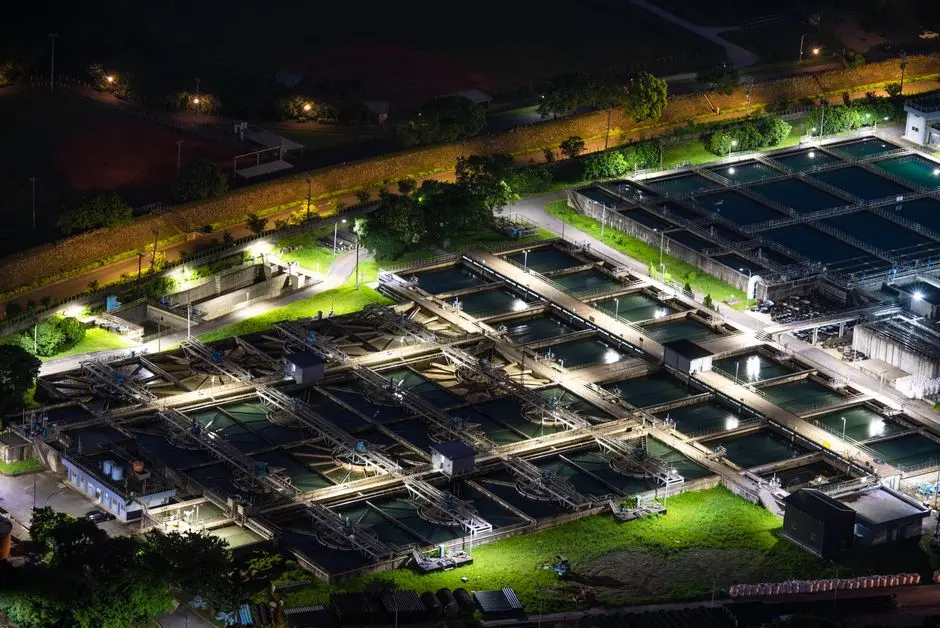
Municipal capacity is sufficient only when the receiving POTW can accept both the hydraulic load and the regulated contaminant profile without degrading its treatment process or violating its permit. Large Texas industrial projects support two distinct infrastructure models, and the receiving municipality’s financial and physical limits should be evaluated early rather than after treatment equipment is selected.
Sherman combines municipal pipeline and wastewater investment with customer contribution and projected industrial demand through 2048 (UltrafacilityPortal, “Water utility investments behind US mega-fab projects,” 2026). Taylor follows a different model: Samsung committed at least $17 million to water-infrastructure upgrades, while EPCOR owns and operates dedicated industrial supply and reclamation facilities under long-term agreements tied to the fab’s demand (UltrafacilityPortal, 2026). These examples show that “POTW discharge” does not necessarily mean the fab sends every gallon to the municipal system; it can coexist with dedicated onsite supply and reclamation.
For the proposed expansion, request the receiving POTW’s current and projected flow, hydraulic and organic loading, industrial-user inventory, sampling history, local limits, and planned capital work. The POTW must evaluate semiconductor categorical pretreatment standards under 40 CFR Part 469 alongside local discharge limits. Do not assume conventional biological treatment can accept a mixed fab effluent containing metals, fluoride, soluble organics, or inhibitory process chemicals.
Use a three-part capacity test:
- Can the sewer system hydraulically accept each segregated stream and the expansion’s peak discharge condition?
- Can the POTW meet 40 CFR Part 469 categorical requirements and stricter local limits with the proposed pretreatment?
- Does the receiving system have a funded expansion path for residual flow, monitoring, and non-potable reuse?
If the answer to any step is no, retain dedicated onsite treatment for the affected stream or obtain public infrastructure committed before design freeze. For biological-process comparison, use the MBR effluent-quality engineering guide to test whether the proposed organic load is appropriate for an MBR rather than assuming an MBR is required or sufficient.
Build a reuse train around the required water quality
Texas industrial reuse requires a site-specific quality basis, not a single generic “reclaimed water” specification. Obtain authorization under 30 TAC §210.52(8) and Texas Water Code §11 for the proposed industrial reuse. The identified fab reuse categories—cooling-tower makeup, boiler feed, rinse makeup, and irrigation—serve different functions and therefore require different analytical limits, treatment objectives, and monitoring plans (HydropureWater, “Wastewater Requirements When Intel Acquires a Texas Plant,” 2026).
The supplied reuse-train example uses MBR → UF → RO → mixed-bed polishing, while Intel’s bulk rinse and UPW-reject treatment path is UF → RO → IX or DI (HydropureWater, 2026). The apparent difference is a design decision, not a contradiction. MBR may be needed where the combined biological load or solids removal objective warrants it; bulk rinse and UPW reject can use membrane pretreatment and RO when its chemistry supports that route.
Intel’s Ocotillo program provides an operating benchmark, not a Texas sizing rule. The US EPA Region 9 case study, as reported in HydropureWater’s 2026 engineering guide, documents approximately 5.2 MGD conserved, up to 75% reuse, and more than 3.5 billion gallons of RO-polished aquifer recharge. Transferring that percentage to a Texas expansion would require a site water balance, local water constraints, product-quality requirements, and an authorized recharge or reuse route.
| Reuse destination | Treatment objective | Verification required |
|---|---|---|
| Cooling-tower makeup | Control solids, turbidity, and biological growth | Site-specific authorization and cooling-system water-quality criteria |
| Boiler feed | Remove hardness, dissolved solids, and treatment-sensitive contaminants | Boiler vendor limits and feedwater chemistry |
| Process rinse makeup | Meet the receiving process’s ionic, particulate, and organic specifications | Process-owner limits and reuse-header validation |
| Irrigation | Meet authorized land-application requirements | Site authorization, soil and crop constraints, monitoring plan |
Determine recovery and concentrate disposal from the actual feed chemistry and destination quality. A published industrial reverse osmosis system recovery claim is a supplier parameter, not a guaranteed site recovery. The design must test scaling, silica carryover, membrane compatibility, concentrate volume, disposal route, and variability across production conditions.
Verify the Texas compliance path
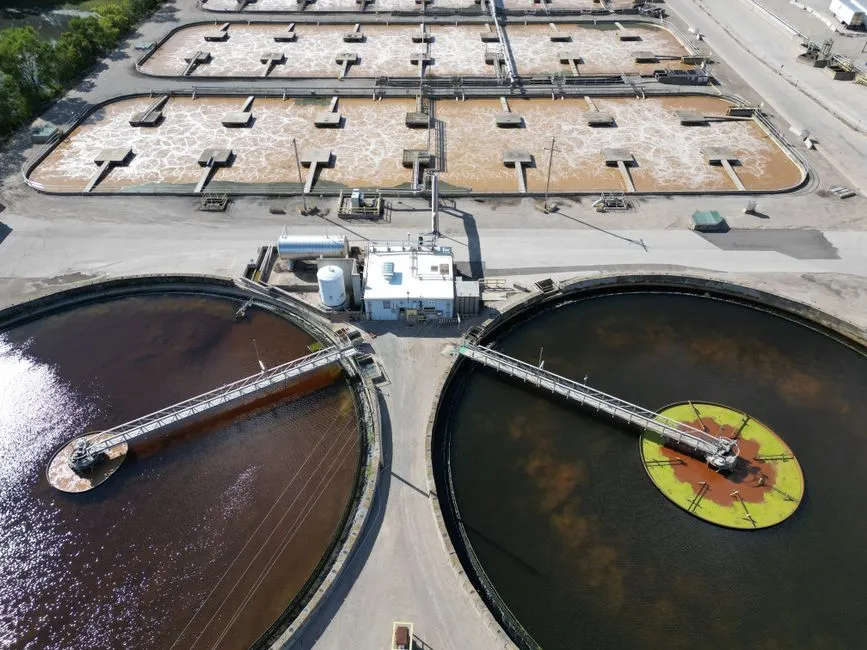
An expansion can require several authorizations at once, so permit verification belongs in the early design basis. A TPDES permit may govern direct discharge; a POTW industrial-user permit may govern sewer discharge; MSGP TXR05B000 may cover industrial stormwater; and an industrial reclaimed-water authorization may govern onsite reuse. The proposed discharge and reuse routes should be confirmed before design freeze, not added after the process train has been fixed.
Do not confuse permit transfer with expansion approval. Under 30 TAC §305.64, an ownership change requires Form TCEQ-20717 and a signed transfer application within 30 days. The 2026 Texas compliance review reports that TCEQ’s ownership-only review commonly takes 30 to 90 days and that the seller remains permittee of record until approval. Those are transfer requirements; they do not replace the review needed for a new chemical, flow path, or rated-flow increase.
Under 30 TAC §305.62, a process change, new chemical, new flow path, or rated-flow increase may require permit modification and a new antidegradation review. Coordinate the process inventory and design flow with the permit strategy so the expansion application and operating changes are not treated as separate administrative tracks. Review the detailed Texas fab wastewater compliance requirements alongside counsel’s interpretation of the site’s existing permits.
| Verification item | Owner or engineering action | Evidence to request |
|---|---|---|
| Existing TPDES permit | Confirm permit status, limits, monitoring points, and whether expansion changes require modification | Permit, permit map, discharge monitoring reports, permit modification history |
| POTW pretreatment | Confirm industrial-user status, categorical standards, and local limits | Industrial-user permit, sewer rules, POTW loading study, sampling results |
| Stormwater | Confirm MSGP coverage and chemical-storage controls | Notice of Intent, stormwater pollution prevention plan, outfall map |
| Industrial reuse | Confirm site-specific authorization, destination quality, and monitoring | Authorization application, approved quality limits, reuse monitoring data |
| Waste-management interfaces | Confirm treatment residues and solvent streams have defensible handling routes | Waste profiles, manifests, downstream laboratory or disposal acceptance criteria |
During due diligence, request the existing permit, sampling map, local sewer limits, stormwater plan, reuse authorizations, discharge-monitoring data, process inventory, and proposed expansion flow. Also verify the receiving POTW’s position in writing. A favorable verbal statement about capacity is not a design commitment.
Frequently Asked Questions
How should a treatment train be sized for a semiconductor fab expansion?
Size each segregated train from its own design-day flow and water balance. Request average and peak flows by process source, chemical analyses across representative production conditions, expansion phasing, fouling allowances, and recovery and concentrate-disposal assumptions. Equipment capacity should follow those inputs; it should not be copied from an Arizona operating benchmark.
When should MBR be compared with conventional activated sludge?
Compare them when the selected stream has significant biodegradable organics and the reuse or discharge objectives require reliable solids separation. Evaluate hydraulic loading, biological treatability, ammonia removal, membrane fouling, bypass conditions, residuals, and life-cycle cost. The RO and UF cost-comparison guide provides a framework for equipment evaluation, but a supplier quote requires site chemistry and flow data.
What should be checked before selecting an industrial RO supplier?
Issue a performance specification based on feed chemistry, required permeate quality, validated recovery, concentrate volume, membrane compatibility, cleaning strategy, redundancy, utility demand, and monitoring requirements. Ask bidders to state assumptions and guarantees. A catalog recovery rate cannot be treated as guaranteed performance without site-specific feed data and a defined concentrate route.
How do direct discharge, POTW discharge, and onsite reuse differ for compliance?
Direct discharge requires TPDES review, POTW discharge requires industrial-user and local-limit review under 40 CFR Part 403, and onsite industrial reuse requires site-specific authorization under 30 TAC Chapter 210 and Texas Water Code §11. A combined route can require all three. Confirm the legal endpoint, permit authority, and monitoring obligations before selecting equipment.
What information is needed before cost or capacity can be guaranteed?
Request the process inventory, design-day and average wastewater flows, stream-by-stream chemistry, local discharge limits, reuse destinations and quality specifications, receiving-POTW capacity, future phases, and disposal destinations for treatment residues. Until those inputs are available, request budgetary ranges with stated exclusions rather than a fixed equipment price or guaranteed recovery rate.