In 2025, industrial facilities in Phoenix must comply with the City’s federally mandated Industrial Pretreatment Program (IPP), which regulates discharges to the sanitary sewer system to prevent pollutants from interfering with municipal treatment plants. The program requires Significant Industrial Users (SIUs) to obtain Class A discharge permits, complete a Wastewater Survey, and meet effluent limits—with non-compliance risking enforcement actions and fines up to $25,000 per day (per EPA 2024 guidelines). This guide provides engineering specs, cost benchmarks ($80K–$3M CAPEX), and equipment selection criteria for zero-risk compliance in Phoenix.
Why Phoenix Factories Face Wastewater Compliance Risks in 2025
Non-compliance with the City of Phoenix Industrial Pretreatment Program (IPP) can result in civil penalties of up to $25,000 per violation per day under the 2024 EPA enforcement framework. For a typical Phoenix-based metal finishing plant, a single process excursion—such as a failure in a secondary containment dike or a chemical metering pump malfunction—can lead to copper concentrations exceeding the local limit of 2.7 mg/L. Once an exceedance is detected during a city-mandated 24-hour composite sampling event, the facility enters a formal enforcement track that begins with a Notice of Violation (NOV) and can escalate to mandatory Settlement Agreements (PSAs) involving five-figure fines and required capital improvements.
Common IPP violations in Phoenix are often linked to fluctuations in influent pH and solids loading. The City’s Class A permit strictly mandates a pH range between 6.0 and 9.0 standard units. The Phoenix Water Services Department monitors Total Suspended Solids (TSS) and Oil & Grease (O&G), with typical local limits set at 350 mg/L and 100 mg/L respectively. Facilities that fail to implement robust removing copper from Phoenix’s industrial wastewater often find themselves flagged during the initial Wastewater Survey process.
The IPP enforcement process in Phoenix is structured to ensure rapid remediation. It typically follows this trajectory:
- Wastewater Survey: A multi-page PDF form requiring detailed chemical inventories and flow diagrams. Common mistakes include underreporting "slug" discharge potential or failing to list all EPA-regulated priority pollutants.
- Permit Application: Required for SIUs to legally discharge process water.
- Compliance Monitoring: Regular sampling by City inspectors and self-monitoring by the facility.
- Enforcement Actions: If limits are breached, the City issues NOVs, which may lead to Administrative Orders or PSAs requiring the installation of specific pretreatment technologies.
Phoenix IPP Compliance: Permits, Surveys, and Enforcement Explained
The City of Phoenix classifies Significant Industrial Users (SIUs) as any facility discharging an average of 25,000 gallons per day (GPD) or more of process wastewater, or those subject to federal categorical pretreatment standards under 40 CFR 403. This includes industries such as metal finishing, centralized waste treatment, and pharmaceutical manufacturing. Navigating the Class A permit application process requires an engineering report that details the internal plumbing, the nature of the industrial processes, and the proposed pretreatment system's performance capabilities. The review timeline typically spans 90 days, and permits must be renewed annually to maintain legal discharge status.
For new environmental officers or facility managers, the Phoenix IPP Compliance Academy provides essential training on sampling protocols, recordkeeping, and reporting requirements. Enrollment in the academy is often a prerequisite or a recommended corrective action following a minor violation. This program helps facilities understand how Phoenix’s IPP compares to Seattle’s industrial wastewater regulations, particularly regarding the stringency of local limits versus federal categorical standards.
When a facility fails to meet its permit limits, the City may initiate a Post-Settlement Agreement (PSA). These agreements are legally binding and often involve penalties ranging from $5,000 to $50,000, depending on the severity and duration of the violation. A PSA typically mandates a strict timeline for the engineering, procurement, and commissioning of new treatment equipment.
| Parameter | Phoenix Class A Limit (Typical) | Monitoring Frequency | Common Violation Cause |
|---|---|---|---|
| pH | 6.0 – 9.0 | Continuous/Daily | Inadequate acid/base dosing |
| TSS | < 350 mg/L | Monthly | Poor clarifier retention time |
| Oil & Grease | < 100 mg/L | Monthly | Inefficient DAF separation |
| Copper (Cu) | < 2.7 mg/L | Quarterly/Monthly | Treating nickel in Phoenix’s metal finishing wastewater and copper co-precipitation issues |
Industrial Wastewater Treatment Technologies for Phoenix Facilities
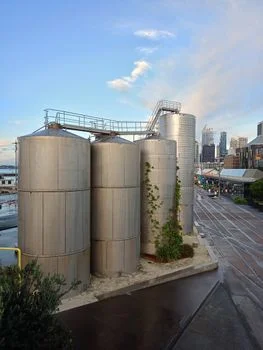
Industrial wastewater treatment in Phoenix requires specialized equipment configurations to handle the city's naturally alkaline groundwater, which typically ranges between pH 7.5 and 8.5. For facilities dealing with high levels of suspended solids and emulsified oils, such as food processing or heavy manufacturing, Dissolved Air Flotation (DAF) is the industry standard. These Phoenix-optimized DAF systems for FOG and TSS removal utilize micro-bubble technology (20–50 microns) to float contaminants to the surface for mechanical skimming. HydropureWater DAF units, for example, offer flow rates from 4 to 300 m³/h and achieve 92–97% TSS removal efficiency, ensuring compliance with the 350 mg/L limit.
For facilities requiring high-purity effluent or those facing limited floor space, Membrane Bioreactor (MBR) systems provide a compact and highly efficient alternative. These MBR systems for near-reuse-quality effluent in Phoenix utilize submerged PVDF membranes with a pore size of less than 0.1 μm. This level of filtration eliminates the need for secondary clarifiers, reducing the system footprint by up to 60% compared to conventional activated sludge. MBRs are particularly effective for organic-heavy wastewater, often reducing Chemical Oxygen Demand (COD) to below 50 mg/L.
Chemical dosing is the backbone of almost all Phoenix pretreatment systems, particularly for pH neutralization and heavy metal precipitation. Given Phoenix's alkaline water profile, PLC-controlled chemical dosing for Phoenix’s alkaline wastewater is necessary to precisely meter coagulants like Polyaluminum Chloride (PAC) or ferric chloride. These systems ensure that metals like copper and nickel are successfully precipitated as hydroxides before being removed via filtration or sedimentation.
| Technology | Primary Pollutants Removed | Removal Efficiency | Footprint Requirement |
|---|---|---|---|
| DAF | FOG, TSS, Insoluble Metals | 90% - 97% | Moderate |
| MBR System | BOD, COD, Bacteria, TSS | > 99% | Low (Compact) |
| Chemical Dosing | Soluble Metals, pH, Phosphorus | Varies by reagent | Minimal |
Cost Breakdown: Industrial Wastewater Treatment Equipment in Phoenix (2025)
Capital expenditure (CAPEX) for industrial wastewater treatment systems in the Phoenix metropolitan area ranges from $80,000 for basic pH adjustment to over $3 million for high-capacity membrane bioreactors. A mid-sized chemical dosing and neutralization system typically costs between $80,000 and $150,000, while a robust DAF system for a food processing plant discharging 50,000 GPD averages $200,000 to $800,000 depending on automation levels. High-end MBR systems designed for water reuse or stringent categorical limits start at $500,000 and can scale significantly based on flow volume (HydropureWater field data, 2025).
Operating expenditure (OPEX) is influenced by Phoenix’s unique environmental factors. High summer temperatures (frequently exceeding 110°F) can impact the efficiency of biological treatment processes in MBRs, requiring additional cooling or specialized aeration. OPEX breakdowns typically include:
- Energy: $0.10–$0.50 per m³ of treated water.
- Chemicals: $0.05–$0.30 per m³, with higher costs for facilities neutralizing Phoenix’s alkaline influent.
- Maintenance: Membrane replacement costs for MBRs average $0.08–$0.20 per m³.
- Labor: 1–2 full-time equivalents (FTEs) for system operation and compliance reporting.
Phoenix sewer surcharges for non-compliant discharges range from $0.50 to $2.00 per 1,000 gallons. For a facility discharging 50 m³/h, installing a $450,000 DAF system can offset $120,000 per year in surcharges and potential fines, resulting in a 3.75-year payback period (ROI).
| System Type | Estimated CAPEX (2025) | Estimated OPEX (per m³) | Typical ROI |
|---|---|---|---|
| Chemical Neutralization | $80K – $150K | $0.15 – $0.25 | 1 – 2 Years |
| DAF System | $200K – $800K | $0.20 – $0.45 | 3 – 4 Years |
| MBR System | $500K – $3M+ | $0.40 – $0.85 | 5+ Years |
How to Select the Right Wastewater Treatment System for Your Phoenix Facility
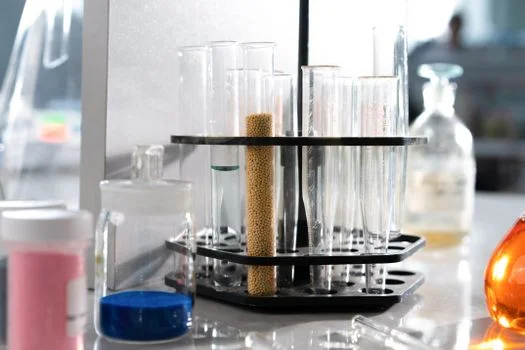
Selecting a wastewater treatment system in Phoenix requires a quantitative assessment of influent chemistry, specifically focusing on Total Suspended Solids (TSS), Fats, Oils, and Grease (FOG), and heavy metal concentrations. The decision framework begins with comprehensive wastewater characterization. Per Phoenix IPP requirements, SIUs must conduct monthly sampling; using this historical data is the first step in sizing equipment. If your TSS consistently exceeds 500 mg/L or FOG is above 150 mg/L, a DAF system is the most cost-effective primary treatment phase.
The second step involves matching technology to the specific pollutants identified. For organic-rich wastewater from food or beverage production, MBR technology is superior due to its ability to handle high BOD (Biochemical Oxygen Demand) loads while producing effluent that meets or exceeds City standards. For metal finishing, chemical precipitation followed by a filter press or ion exchange is necessary to meet the stringent 2.7 mg/L copper limit.
Space and lifecycle costs are the final deciding factors. In urban Phoenix industrial parks, where real estate is at a premium, the 60% smaller footprint of an MBR system often justifies its higher initial CAPEX. Conversely, if space is available and the primary goal is removing simple solids and oils, the lower OPEX of