Start With the Spring Green Operating Case
For a Spring Green fabricated-metals plant, choose conventional activated sludge (CAS) when lower capital cost and discharge-only operation dominate; choose an industrial membrane bioreactor (MBR) when footprint, solids separation or water reuse justify added membrane and pretreatment costs. Neither biological process removes dissolved metals, so equalization, oil removal, pH adjustment and chemical precipitation remain necessary. MBR generally provides cleaner solids-free effluent and a smaller footprint, but oil, metal precipitates and suspended solids can foul the membrane. A practical decision requires verified flow, oil and grease, total suspended solids (TSS), pH, metal and reuse data, plus the applicable Spring Green permit or sewer requirements.
Start with the operating case rather than the equipment catalog. Request a 12-month flow record that identifies average flow, peak flow, batch-rinse dumps and the duration of each discharge event. The supplied research does not establish a Spring Green flow threshold at which MBR becomes preferable. Use the source’s scenario signals instead: constrained space, chronic clarifier upset, tightening permit requirements, planned expansion or a defined reuse demand can justify MBR. If the plant has neither a reuse objective nor a solids-separation constraint, CAS deserves the first economic case.
Characterize the wastewater before selecting a biological train. The fabricated-metals profile may include tramp oil from wash or press operations, emulsified cutting fluid, zinc-phosphate rinsewater, chromium from plating or touch-up, pH swings, and dissolved copper, nickel, zinc, lead and cadmium. Identify whether these streams are segregated, continuously discharged, or released in batches. That information affects equalization, oil-water separation, dissolved air flotation (DAF), chemical dosing and the biological loading basis.
Next, establish the final route: sanitary sewer, National Pollutant Discharge Elimination System (NPDES) discharge, zero liquid discharge, or internal reuse. The supplied research does not establish which route applies in Spring Green, which sewer authority controls the discharge, or which local water constraints apply. Obtain those written requirements before treating any comparison value as a compliance target.
| Selection input | Evidence available from supplied research | Spring Green information to obtain | Decision consequence |
|---|---|---|---|
| Flow | No verified Spring Green flow threshold | 12-month average, peak and batch-rinse flow record | Sets biological, DAF, equalization and solids-handling sizing |
| Wastewater composition | Oil, cutting fluid, phosphate rinsewater, chromium and dissolved metals are identified risks | Oil and grease, TSS, pH, metals and chromium-speciation data | Defines pretreatment and membrane-fouling risk |
| Destination | No verified local route or permit | Permit, sewer authority or reuse specification | Sets the required effluent quality |
| Site constraints | Footprint and chronic clarifier upset are MBR selection triggers in the commercial source | Available area, expansion plan and current clarifier performance | Determines whether CAS space is available and MBR’s footprint advantage matters |
Use the integrated MBR wastewater treatment system as a sizing reference only after the peak-flow and wastewater profile are verified; its catalog application range does not establish the correct Spring Green capacity.
Compare MBR and Conventional Activated Sludge
The commercial comparison reports approximately 40% of the conventional activated sludge plot for an integrated MBR system and a 60% smaller operating footprint; the HydropureWater product catalog separately states a 60% footprint reduction. It also reports MBR effluent below 5 mg/L TSS and below 1 nephelometric turbidity unit (NTU), compared with 10–30 mg/L TSS from the described well-tuned CAS clarifier. These are comparative source claims, not guarantees for a Spring Green equipment package.
Conventional activated sludge replaces a secondary clarifier with a membrane module, so it can separate biomass and most colloidal solids without the solids-liquid separation area used by CAS. The trade is added capital cost, membrane cleaning, replacement exposure and membrane-scouring energy. The commercial source places additional MBR scouring energy at 0.2–0.5 kWh/m³ above CAS and reports direct emissions of 0.91 versus 0.85 kgCO₂eq/m³ for MBR and CAS, respectively, citing Mannina et al. (2020).
| Criterion | Conventional activated sludge | MBR | Selection rule |
|---|---|---|---|
| Effluent solids | 10–30 mg/L TSS from the commercial source’s well-tuned clarifier | Below 5 mg/L TSS and below 1 NTU in the commercial source | Choose MBR when low solids or downstream polishing reliability is required |
| Footprint | Baseline | Approximately 40% of the CAS plot in the commercial source; the product catalog states 60% smaller footprint | Use MBR when expansion space is constrained |
| Scouring energy | Baseline | 0.2–0.5 kWh/m³ above CAS in the commercial source | Price membrane air and controls separately |
| Direct emissions | 0.85 kgCO₂eq/m³, attributed by the commercial source to Mannina et al. (2020) | 0.91 kgCO₂eq/m³, attributed by the commercial source to Mannina et al. (2020) | Include in lifecycle comparison |
| Capital and operating risk | Lower-CAPEX discharge-only case when adequate space exists | Added membrane, cleaning and replacement exposure | Choose CAS unless footprint, reuse or separation performance pays for MBR |
| Fouling exposure | Clarifier upset, oil-related biological problems and metal-hydroxide sludge | Additional membrane-fouling exposure | Select only after controlling oil, TSS and metal precipitates upstream |
Use CAS for a discharge-only installation with available space, a functioning equalization system and lower capital expenditure as the binding objective. Use MBR where low-solids effluent, footprint, expansion, chronic clarifier instability or reuse creates enough value to offset membrane lifecycle costs. An integrated MBR wastewater treatment system can be evaluated for those conditions, but the supplier must guarantee performance against the actual Spring Green effluent and pretreatment envelope.
Build the Pretreatment Both Technologies Require
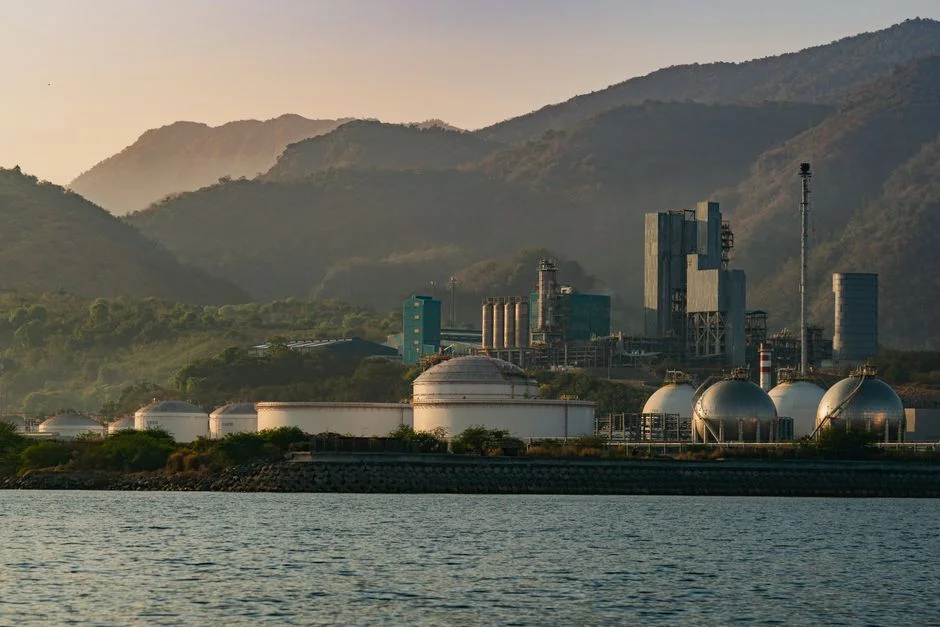
The commercial source identifies a specific pretreatment sequence: oil-water separation, DAF, pH adjustment and hydroxide precipitation, with oxidation-reduction potential (ORP)-controlled reduction where hexavalent chromium is present. This train is not optional for MBR. For CAS, it protects the biological process and limits metal loading; for MBR, it also controls the foulants most likely to blind or scale the membrane.
- Equalize and segregate: blend batch discharges in a properly sized equalization tank and keep incompatible plating or cleaning dumps controlled.
- Remove free oil: use an oil-water separator or coalescer before the combined flow enters DAF. Emulsified cutting fluid requires a full wastewater characterization rather than an assumed gravity-separation result.
- Float remaining oil and solids: use DAF pretreatment for metalworking wastewater to protect the downstream process.
- Adjust pH and precipitate metals: dose chemicals through a controlled system and remove metal hydroxide solids before biological treatment or membrane separation.
- Reduce hexavalent chromium where present: verify the chromium source and provide ORP-controlled reduction before re-neutralization and downstream treatment.
The commercial source sets MBR-feed targets below 50 mg/L oil and grease and below 100 mg/L TSS. It also states that skipping DAF can allow PVDF modules to foul in days. The automatic chemical dosing system should therefore be specified around measured pH, metal load and chemical demand, not a fixed dose rate.
For hydroxide precipitation, the commercial source specifies pH 8.5–9.5. This pH range is source-specific and must be confirmed through jar testing against the actual metals and co-precipitate behavior. MBR membranes retain solids and biomass, but they do not remove dissolved metal ions. Precipitation remains part of the train even when the biological section uses membrane separation.
HydropureWater’s DAF product range covers 4–300 m³/h and includes industrial metalworking applications, according to the verified product catalog. That range does not establish Spring Green suitability. Size DAF against the verified peak combined flow, anticipated batch dumps, oil characteristics, required removal performance and downstream solids handling.
Separate Discharge Compliance from Water Reuse
Low-turbidity MBR effluent does not by itself establish compliance or reuse suitability. The commercial source lists daily maximum limits under 40 CFR Part 433 of 2.68 mg/L copper, 0.69 mg/L lead, 3.98 mg/L nickel, 4.33 mg/L zinc, 2.77 mg/L total chromium and 0.69 mg/L cadmium. Applicability to the Spring Green operation and current implementation must be verified with the applicable authority; the supplied research does not establish a local permit condition.
Both biological technologies depend on chemistry to control dissolved metals. MBR improves separation of residual suspended solids and biomass, but precipitation or another dedicated metal-removal process remains necessary. Discharge compliance and industrial water reuse should therefore be treated as separate acceptance packages.
| Water-quality issue | What MBR provides | What remains required | Procurement evidence to request |
|---|---|---|---|
| Dissolved metals | No dissolved-ion removal by membrane separation | Hydroxide precipitation or another dedicated metal-removal step | Guaranteed metal concentrations for the actual wastewater |
| Suspended solids and turbidity | Commercial source reports below 5 mg/L TSS and below 1 NTU | Confirm suitability for the destination stream | Guaranteed effluent TSS, turbidity and test method |
| Reuse feed quality | Commercial source characterizes MBR effluent as approximately 3–5 Silt Density Index (SDI) | Reverse osmosis (RO) or another polishing step may be needed | SDI, scaling ions, conductivity and destination-specific limits |
| Local compliance | No verified Spring Green permit or sewer route | Current written limits and monitoring requirements | Applicable permit, sewer approval and compliance schedule |
For industrial water reuse, obtain a separate specification for each destination stream. Cooling-water makeup, rinsewater and process washing have different chemistry and fouling tolerances. The commercial source describes MBR effluent as approximately 3–5 SDI and marginal for some reuse applications; that condition supports evaluating RO or other polishing rather than treating MBR permeate as automatically reusable. The available reverse-osmosis water purification system and ultrafiltration water treatment system are possible downstream technologies, but their selection must follow the destination-water specification.
Calculate the Project With a Fillable Selection Matrix
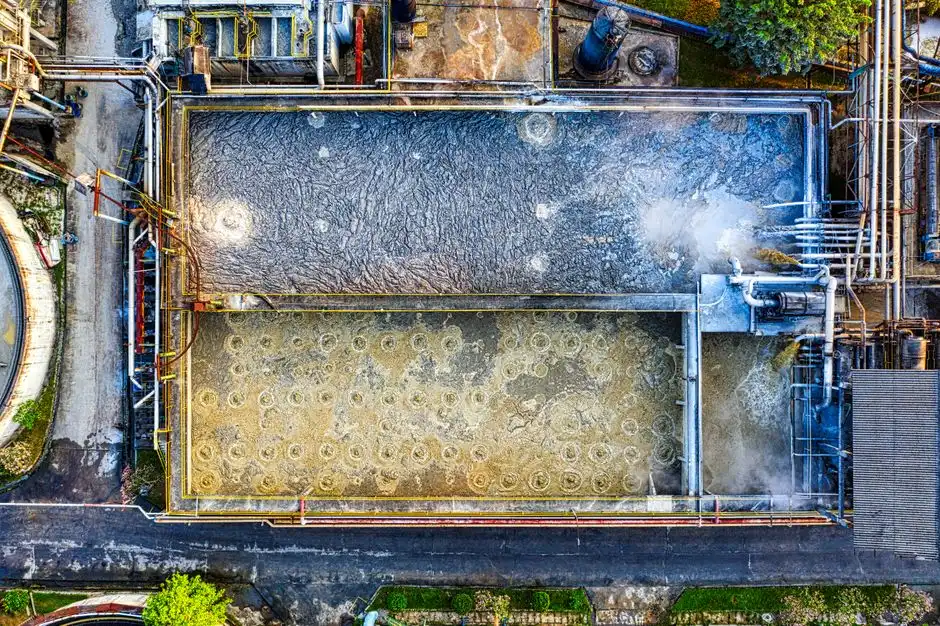
A meaningful comparison must price the complete treatment train, not the biological tanks alone. Enter verified average and peak flow, current treatment costs, available footprint, reuse value, permit constraints, required effluent quality, disposal costs and expansion plans. Leave unverified fields blank and assign responsibility for closing them before requesting final bids.
| Fillable field | CAS entry | MBR entry | Supplier response required |
|---|---|---|---|
| Verified average and peak flow | Insert site data | Insert site data | State design flow and batch-dump assumptions |
| Reuse destination and value | Insert specification and avoided cost | Insert specification and avoided cost | State required pretreatment and polishing performance |
| Footprint | Insert available area | Insert available area | Provide plan and area dimensions |
| Effluent and permit limits | Insert written limits | Insert written limits | Guarantee applicable parameters |
| Membrane details | Not applicable | Material, pore size, module arrangement | Identify membrane material and pore size |
| Operations | Aeration, sludge handling, controls | Scouring, cleaning, controls | State cleaning strategy, replacement assumptions and power demand |
| Delivered scope | EQ, oil removal, DAF, dosing, precipitation, biology, solids handling, optional polishing | Same full train | List exclusions, foundations, utilities and commissioning |
| Lifecycle cost | CAPEX and OPEX | CAPEX, OPEX and membrane replacement | Provide assumptions and pricing basis |
Ask each bidder to define membrane material and pore size, guaranteed flow, pretreatment limits, cleaning strategy, replacement assumptions, controls, power demand and delivered scope. Compare bids on the same flow profile, effluent guarantees and pretreatment conditions. The MBR cost and selection guide provides a scenario framework, but it does not establish a Spring Green project price.
The commercial source reports a 4–8 year payback band for a 300 m³/day MBR-versus-CAS comparison when reuse credits are included. Use that only as a scenario, not a forecast for Spring Green. The supplied research provides no local capital cost, utility tariff, reuse credit or verified Spring Green flow, so a project payback cannot responsibly be calculated yet.
Frequently Asked Questions
What is the main MBR versus conventional activated sludge difference for Spring Green fabricated-metals wastewater?
MBR replaces the secondary clarifier with membrane separation, while retaining activated-sludge biology. The commercial source reports MBR effluent below 5 mg/L TSS and below 1 NTU, versus 10–30 mg/L TSS from a well-tuned CAS clarifier. MBR can also reduce footprint, but it adds membrane cleaning, replacement and fouling risk. Both routes still require upstream oil removal, pH control and metal precipitation.
Should a budget-constrained plant choose MBR or conventional activated sludge?
For discharge-only service with adequate space and a functioning equalization tank, CAS is generally the lower-capital route in the commercial comparison. MBR becomes more defensible when avoided footprint cost, clarified reuse, expanded capacity or improved solids separation can be quantified. Request a full-train bid and a separate lifecycle calculation rather than accepting a biological-tank price comparison.
How should a supplier size the MBR and pretreatment equipment?
Provide the 12-month flow record, verified peak and batch-rinse flows, wastewater characterization and reuse specification. Ask the supplier to state design flow, membrane material and pore size, guaranteed flow, pretreatment limits, power demand, cleaning strategy and replacement assumptions. The 4–300 m³/h DAF catalog range does not replace peak-flow sizing.
Can MBR effluent be reused without reverse osmosis?
Not automatically. The commercial source characterizes MBR effluent as approximately 3–5 SDI and marginal for some reuse applications, while also noting that membranes do not remove dissolved metal ions. Obtain a destination-specific water-quality specification first. It may justify a metal-plant pretreatment selection guide for structuring that test and ensure the final reuse and pretreatment train satisfies the actual use.