Start with the Tioga treatment obligation
For mining and metals wastewater in Tioga, MBR is most compelling when compact equipment, strong solids separation, or industrial wastewater reuse drives the project; conventional activated sludge is often simpler when land is available and operator familiarity matters. Neither process automatically removes dissolved metals, so pH adjustment, precipitation, adsorption, or another dedicated process may be required first. The decision should also account for membrane fouling, energy, maintenance, sludge handling, replacement costs, and the applicable permit or reuse specification. No Tioga-specific limits or validated wastewater data were supplied, so the final choice requires site characterization and pilot testing.
The controlling document depends on the receiving route. For a discharge to surface waters, identify the applicable NPDES or state permit conditions. For a municipal sewer, obtain the sewer authority’s industrial pretreatment requirements and local discharge ordinance. For process reuse, document the receiving process specification, including constituent limits and operating consequences. The mining and metals solids-removal comparison is useful for pretreatment screening, but neither that guide nor a generic equipment selection establishes Tioga requirements.
Pennsylvania DEP’s September 2020 Pennsylvania Bulletin notice describes industrial permit activity within the Clean Streams Law and federal Clean Water Act frameworks, including NPDES and WQM applications. That establishes the regulatory context, not a site-specific limit or approval. No supplied source identifies the receiving water, sewer authority, applicable permit limits, or reuse specification for a Tioga mining site. Those documents must be obtained before comparing performance claims.
Build the project characterization package around design flow, peak flow, batch-discharge behavior, pH range, metals, hardness, salinity, toxicity, suspended solids, and residual process reagents. Include analytical methods, sampling points, operating periods, and whether each result represents an average or isolated event. The mining pretreatment selection guide can help organize the distinction between sewer compliance and upstream metals treatment, but supplier sizing still requires representative Tioga wastewater data.
Map the treatment train before choosing the bioreactor
Dissolved metals and other non-biodegradable contaminants require a dedicated treatment step when the permit or reuse objective requires their removal; biological treatment should not be credited with metals removal unless site data and pilot results establish that function. Evaluate pH adjustment, precipitation, adsorption, or another suitable process according to the wastewater and receiving route. The HydropureWater 2026 mining-wastewater guide states that these operations must be assessed alongside biological process selection rather than after equipment selection.
Upstream solids control protects both candidate processes. Conventional activated sludge requires a dependable downstream solids-separation step, while MBR transfers solids-retention risk to membrane condition, cleaning systems, and sludge handling. A DAF machine and a high-efficiency sedimentation tank should therefore be evaluated against the actual wastewater, target duty, and downstream process—not selected because one is called pretreatment.
Request bench or pilot evidence when unusual metals, salinity, toxicity, or rapidly changing solids may affect biological treatment or membrane performance. The 2026 guide specifically states that municipal sewage references cannot substitute for mining-water characterization. The mining wastewater treatment case may provide context, but its site conditions must not be transferred to Tioga without supporting data.
| Treatment function | Required screening question | Evidence to request |
|---|---|---|
| Metals removal | Which dissolved or total metals must be reduced, and to what level? | Representative metal analysis, pH range, speciation inputs, and a defined receiving or reuse limit |
| Solids control | What solids, oils, or precipitates could overload or foul the biological process? | TSS characterization, settling or flotation trial data, and upstream removal performance |
| Biological treatment | What fraction of the load is biodegradable and non-toxic to the selected biomass? | BOD or COD data, toxicity evidence, and a bench or pilot response under project conditions |
| Final separation | Which solids carryover must the clarifier or membranes prevent? | Separation target linked to the controlling permit or reuse specification |
| Residuals | Where do sludge, precipitate, and spent chemical or cleaning streams go? | Residue characterization, handling route, storage basis, and disposal assumptions |
Compare MBR and conventional activated sludge against site needs

The process decision should follow from the controlling obligation, available land, wastewater character, and operating capability. The 2026 HydropureWater guide identifies compact treatment area, strong solids separation, high-quality effluent, and reuse potential as conditions favoring MBR. It presents conventional activated sludge as more attractive where operational simplicity, lower equipment complexity, and available land matter more. These are screening conditions, not a conclusion that MBR is universally preferable for mining wastewater.
The integrated MBR wastewater treatment system is listed for flows from 10 to 2,000 m³/day, with filtration below 1 μm and a catalog claim of a 60% smaller footprint than conventional systems. The DF flat-sheet MBR modules are listed in 80–225 m² configurations producing 32–135 m³/day, according to the HydropureWater verified product catalog. These are catalog configurations, not guarantees of treatment performance, footprint, or suitability for a Tioga site. Require a scaled layout and duty calculation using the project flow and wastewater data.
The MBR design basis needs particular scrutiny. The 2026 guide states that mining-wastewater design flux is commonly 10–25 LMH, depending on feed chemistry and membrane type, and calls for a 15%–25% membrane-area allowance for flux decline and fouling. Those values must be confirmed against representative wastewater, selected membrane geometry, operating temperature, cleaning cycles, and the supplier’s design method. The MBR cost per m3 guide provides additional planning context.
| Decision factor | Favors MBR when | Favors conventional activated sludge when | Evidence required |
|---|---|---|---|
| Receiving or reuse objective | Strong solids separation or reuse is central to the specification | The objective can be met reliably through conventional solids control | Controlling permit, sewer limits, or reuse specification |
| Available area | Land is constrained and the verified layout fits | Land and clarifier area are available | Dimensioned site plan and scaled equipment layout |
| Wastewater variability | Pilot data demonstrates stable membrane operation with pretreatment | Feed variability can be managed by conventional process controls | Time-series characterization and pilot response |
| Solids separation | MBR configuration demonstrates required separation without relying on a clarifier | Clarifier performance is demonstrated with representative solids | Solids-separation acceptance criteria and test data |
| Operating capability | The site can maintain membrane cleaning, controls, and specialist response | Operators are more familiar with aeration, RAS/WAS, and clarifier control | Staffing plan, training scope, and maintenance schedule |
| Residuals | Sludge and membrane-retired solids have a defined route | Clarifier sludge and wasting have a defined route | Residual volume, quality, storage, and disposal plan |
| Procurement risk | Supplier demonstrates project-specific evidence and lifecycle terms | Supplier demonstrates robust clarification and operating control | Equal-scope pilot, quotation, guarantees, and acceptance tests |
Fill the final column before selecting a process. If a supplier cannot connect a design parameter to site data, treat that item as unresolved. A municipal reference may demonstrate general process operation, but it cannot establish treatability, flux, cleaning frequency, or compliance for Tioga mining wastewater.
Build a whole-life cost comparison with the same boundaries
Compare options using identical treatment duties and commercial boundaries. The HydropureWater 2026 guide states average MBR energy use of 0.8–1.5 kWh/m³, compared with 0.3–0.6 kWh/m³ for standard conventional activated sludge; it attributes the MBR difference partly to membrane-scouring air. Require a site-specific calculation that states the treatment flow, operating hours, aeration assumptions, membrane scouring, clean-in-place loads, and power tariff used.
The same guide states that total MBR cost is typically 20%–40% higher than conventional activated sludge when capital and operating costs are considered. That comparison remains conditional on the stated boundaries and operating assumptions; it cannot serve as a Tioga estimate without local power, labor, chemical, residual-disposal, and replacement inputs. The wastewater maintenance cost planning guide can support development of the operating-cost schedule.
Require each quotation to identify the scope and basis for pretreatment, biological equipment, solids separation, chemical dosing, membrane cleaning, spare membranes or modules, membrane replacement, sludge handling, electrical service, labor, controls, commissioning, and contingency. A low MBR package price is incomplete if cleaning, spares, replacement, and sludge handling are excluded. A low conventional activated sludge price is incomplete if it excludes upstream solids control and clarifier performance.
| Cost boundary | Information required from each bidder | Basis for comparison |
|---|---|---|
| Pretreatment and biological equipment | Included equipment, tanks, membranes or modules, duty, materials, controls, and installation | Same project flow, required effluent or reuse quality, and site utilities |
| Solids separation | Clarifier, DAF, settling, filtration, or membrane separation scope | Same solids load and separation criterion |
| Chemicals and residuals | Reagent consumption, sludge or precipitate handling, storage, and disposal | Same influent characterization and operating schedule |
| Energy | Aeration, scouring, mixing, pumping, controls, and clean-in-place calculation | Same flow basis and site power price |
| Maintenance and replacement | Cleaning frequency, spares, membrane life assumption, labor, and replacement timing | Documented assumptions and optional sensitivity cases |
| Commercial conditions | Warranty, acceptance tests, exclusions, escalation basis, and contingency | Same quotation validity, taxes, freight, installation, and commissioning scope |
Issue a pilot and supplier-selection request
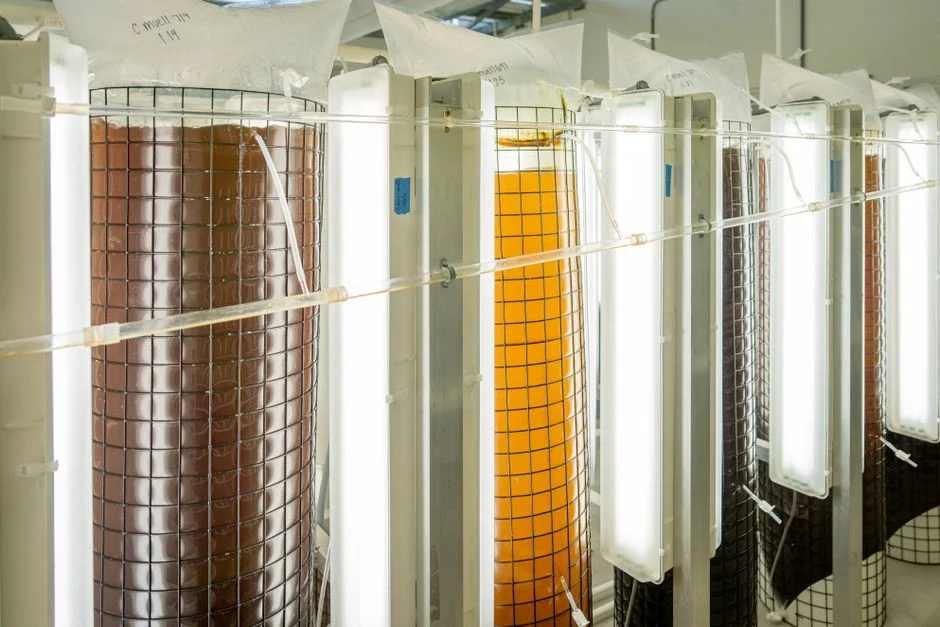
A defensible pilot must answer project-specific questions that an equipment catalogue cannot. Provide representative wastewater characterization and define the pilot objective: biological treatability, solids separation, flux behavior, fouling tendency, and response to metals or residual reagents. The HydropureWater 2026 guide recommends bench or pilot data for unusual metals, salinity, toxicity, and rapidly changing solids.
Ask each supplier to identify the proposed membrane or reactor configuration, pretreatment assumptions, design flux, cleaning strategy, spare strategy, replacement basis, controls, and sludge-handling boundary. The MBR and activated-sludge comparison for another industrial site can inform the structure of that request, but its wastewater and acceptance criteria should not be reused as proof for Tioga.
Set pass/fail criteria against the applicable permit or reuse specification and any sewer pretreatment limits. For a membrane pilot, also define the test duration, sampling frequency, analytical methods, operating-representative feed, cleaning triggers, recovery criteria, and treatment of excursions. Include a documented decision on whether the pilot results justify MBR, conventional activated sludge, or a revised treatment train.
| Procurement item | Required response | Acceptance basis |
|---|---|---|
| Representative wastewater | Flow record, pH range, metals, hardness, salinity, toxicity, suspended solids, and residual reagents | Approved analytical dataset and sampling plan |
| Pilot objective | Specific questions to resolve before final selection | Written hypothesis and decision rule for each question |
| Technology basis | Configuration, pretreatment, design flux, cleaning, controls, spares, and replacement assumptions | Traceable to project data and pilot results |
| Performance criteria | Effluent, reuse, solids-separation, fouling, and recovery criteria | Controlling permit, sewer limit, or reuse specification |
| Cost basis | Equal-scope capital, energy, chemicals, labor, residuals, maintenance, and replacement costs | Common assumptions, exclusions, and quotation validity |
| Delivery and support | Manufacturing, delivery schedule, commissioning, training, warranty, and technical support | Written schedule, responsibilities, and acceptance tests |
Supplier selection should test the quality of the design basis, not just the maturity of the equipment. The mining pretreatment selection guide is relevant to the metals and solids-control portion of the request. Require all bidders to use the same wastewater data, treatment target, cost boundaries, and pilot acceptance criteria so the final evaluation remains defensible.
Frequently Asked Questions
Does the supplied evidence establish a Tioga-specific MBR or permit choice?
No. The evidence supports a screening workflow, not a Tioga permit conclusion or final equipment selection. Obtain the receiving route, controlling permit or sewer requirements, reuse specification, and representative wastewater characterization before approving either process.
How much will MBR cost compared with conventional activated sludge?
The HydropureWater 2026 guide states that total MBR cost is typically 20%–40% higher when capital and operating costs are included, but no site-specific quotation was supplied. Request equal-scope prices and operating-cost estimates using the project flow, power price, chemical use, labor, cleaning, spares, replacement, sludge handling, installation, and contingency.
What should be included in a wastewater pilot request?
Require representative wastewater data, a written test plan, operating conditions, sampling and analytical methods, cleaning triggers, recovery criteria, and pass/fail limits tied to the permit or reuse specification. Ask the supplier to identify the membrane or reactor configuration and how each design assumption was derived.
How should a buyer select and size a supplier?
Check whether the bidder has relevant mining or metals evidence, a transparent sizing calculation, an identified pretreatment boundary, and a written replacement and support plan. Compare bids against the same flow, wastewater, performance criteria, and cost scope; use the integrated MBR wastewater treatment system page for equipment screening and the MBR cost per m3 guide for quotation planning.