
Start with the endpoint Bartow must meet
For a Bartow food-and-beverage plant, choose MBR when predictable solids separation, a constrained footprint, or defined water reuse justifies membrane operation; choose conventional activated sludge when wastewater is stable, space is available, and existing assets remain serviceable. A hybrid can retain useful tanks while adding membrane separation. The decision should begin with Bartow permit or reuse requirements and representative production and cleaning samples—not average flow alone. Neither MBR nor CAS automatically removes dissolved salts, nutrients, surfactants, or other dissolved contaminants.
The governing document defines the required result. For direct discharge, obtain the discharge permit and identify pollutant limits, monitoring, and reporting conditions. For discharge through a sewer or receiving authority, obtain the sewer-use or pretreatment agreement. For reuse, obtain written criteria identifying the receiving application. Irrigation, cooling, process rinsing, and near-potable reuse are not interchangeable: each carries different chemistry, microbiological, and monitoring requirements.
An MBR supplies a solids-retention barrier; it does not independently remove dissolved salts, surfactants, nutrients, or every dissolved constituent. If the endpoint requires those constituents removed, evaluate downstream polishing rather than treating MBR permeate as complete reuse treatment. The MBR cost-per-m3 guide helps frame that comparison, but it does not replace Bartow’s controlling documents.
Before evaluating bids, establish which requirement controls: compliance, reuse, footprint, resilience, or lifecycle cost. Record the required effluent quality, monitoring frequency, operating availability, utilities, sludge route, footprint, and reuse destination. Also identify whether the endpoint is a firm discharge limit, a receiving authority’s pretreatment condition, or an internal reuse specification. That evidence hierarchy prevents manufacturer claims from being treated as permit obligations.
Characterize production and cleaning wastewater
Average daily flow is not a defensible sizing basis because it conceals the concentration, duration, and coincidence of batch discharges. The measured wastewater envelope must cover production, flushing, clean-in-place, product changeover, and shutdown periods before biological capacity, equalization volume, or pretreatment equipment is assigned.
Build the sampling program around the operating calendar. Record production losses, ingredient residues, cleaning chemicals, sanitizers, batch dumps, discharge points, durations, and the shutdown sequence. Analyze representative samples for COD, BOD, TSS, FOG, pH, temperature, and relevant surfactant or toxicity indicators. The food-processing wastewater maintenance guide provides the broader maintenance context, but site samples must establish the design inputs.
Identify the stream that controls each design duty. A modest-volume stream containing concentrated product loss may control biological loading. A high-volume cleaning stream may control equalization or pH. An off-spec batch may determine whether segregation, routing, or additional storage is necessary. Equalization tank sizing should follow the measured batch schedule, concentrations, discharge durations, and operating response—not a generic retention assumption.
The supplied 2026 research summarizes EPA guidance that peak design flow should generally be no more than 1.5 to 2 times average design flow, with additional membrane capacity or equalization required above that range. Bidders must reconcile that guidance with the Bartow production and cleaning schedule rather than applying it without measured batch conditions.
| Design-basis item | Evidence required from Bartow | Decision affected |
|---|---|---|
| Average and peak flow | Production and cleaning schedule; batch durations and coincidence | Equalization, biological capacity, membrane area or clarifier loading |
| Organic loading | COD and BOD results by representative stream | Biological reactor sizing and shock-load response |
| Solids and FOG | TSS and FOG measurements, including affected batches | Screening, DAF need, membrane protection, sludge handling |
| Chemical conditions | pH, temperature, surfactant, and toxicity indicators | Equalization, biological inhibition, pretreatment |
| Off-spec events | Batch frequency, concentration, duration, and routing | Segregation, storage, standby, and upset management |
| Required endpoint | Permit, sewer agreement, or written reuse criteria | MBR, CAS, hybrid, and any polishing process |
Compare MBR, activated sludge, and hybrid options
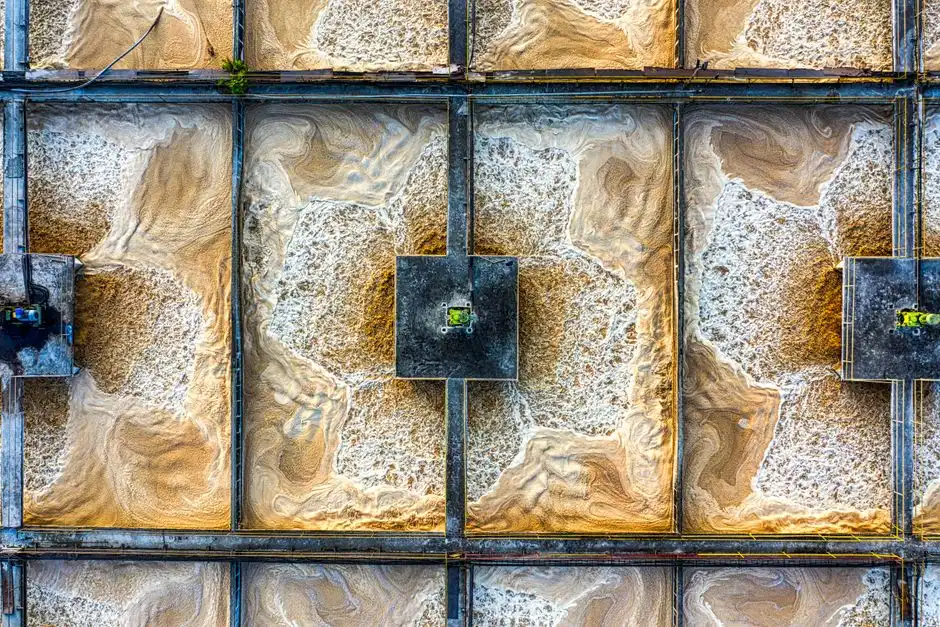
MBR is usually the stronger candidate when suspended-solids consistency, limited footprint, peak carryover control, or defined reuse justifies membrane complexity; CAS remains practical where wastewater is stable, land is available, existing assets are serviceable, and the endpoint is moderate. A hybrid should be considered only when specific conventional equipment remains usable and can be verified.
MBR combines activated-sludge biology with submerged membrane separation, replacing gravity clarification with a membrane barrier. CAS uses an aerated suspended-growth reactor and a secondary clarifier, so performance depends on settling, clarifier hydraulics, peak carryover, and sludge capacity. An integrated submerged-PVDF MBR system can also introduce fouling control, cleaning, instrumentation, module isolation, and replacement obligations that CAS does not create in the same form.
A hybrid may use existing conventional tanks for bulk COD removal while adding MBR modules for final clarification. Before crediting that arrangement, verify the tanks’ hydraulic capacity, structural condition, aeration performance, piping, controls, and remaining service life. A physical survey and mass balance are necessary; installed equipment is not free treatment capacity.
The cited Malaysian food-and-beverage pilot reported about 9,000 mg/L MLSS in an integrated MBR versus roughly 3,000 mg/L in conventional activated sludge, according to HydropureWater’s 2026 comparison. That pilot used equalization, coagulation and flocculation, DAF, and activated sludge with an integrated MBR. It demonstrates one tested configuration, not expected performance at an untested Bartow plant.
| Selection condition | Preferred path | Evidence the bidder must provide |
|---|---|---|
| Stable wastewater, adequate land, moderate endpoint, serviceable assets | CAS | Clarifier hydraulic and solids-loading review, carryover review, fitted filters, sludge capacity, remaining asset life |
| Constrained footprint, consistent solids separation, defined reuse, peak carryover risk | MBR | Flux and MLSS basis, equalization response, membrane cleaning plan, redundancy, complete dimensioned layout |
| One process deficiency while conventional equipment remains usable | Hybrid | Written mass balance, tank assessment, compatibility review, and performance against the same endpoint |
| Batch variability, fouling behavior, or reuse performance remains unresolved | Pilot or campaign-based review | Representative sampling plan, test conditions, results, and pre-agreed acceptance criteria |
Control FOG, solids, and colloids before the MBR
Pretreatment should remove measured constituents that threaten biology, membrane performance, or downstream handling; it should not be added by default. The supplied 2026 research identifies 1–2 mm screening for hollow-fiber membranes and 2–3 mm for plate membranes, subject to the manufacturer-selected cutoff. Specify the screen location, aperture basis, headloss allowance, maintenance access, and capacity for cleaning without losing required treatment capacity.
Screening protects the membrane, but it does not remove dissolved fats, fine colloids, oil, or surfactants. Add DAF pretreatment for measured FOG and solids only where sample results show that oil, FOG, suspended solids, or colloidal material creates a biological, membrane-protection, or sludge-handling problem. A DAF line without a removal objective becomes an unjustified capital and operating cost.
For every pretreatment unit, require a traceable chain: measured constituent, protected asset, removal objective, and performance-verification method. This chain should identify the sampling frequency, acceptance condition, test method, and response if the objective is missed.
MBR fouling controls should connect directly to the measured wastewater envelope. Request the membrane material, pore size, module configuration, design flux, MLSS range, transmembrane-pressure criteria, normalized-flux criteria, cleaning methods and triggers, expected cleaning frequency, replacement provisions, and module-isolation arrangement. Include the treatment capacity available during maintenance and the strategy for off-spec batches.
Compare installed cost, resilience, and lifecycle cost
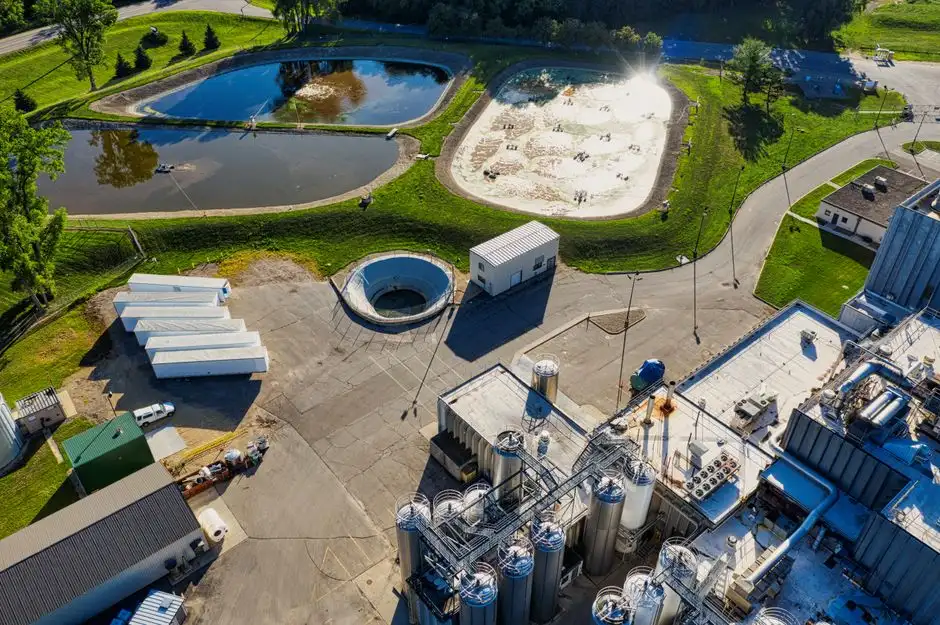
One common RFQ should give MBR, CAS, and hybrid bidders the same average flow, peak flow, wastewater characterization, endpoint, footprint, utilities, sludge route, redundancy basis, guarantees, and assessment period. Differences between bids should reflect technical solutions, not different assumptions.
Each price must cover the complete installed scope: equalization, pretreatment, biological treatment, aeration, controls, civil work, piping, electrical service, commissioning, disinfection, sludge handling, polishing, and redundancy. For MBR bids, separately identify membrane modules, cleaning systems, N plus 1 capacity, isolation, scour air, replacement, and warranty exclusions. For CAS bids, identify the clarifier, fitted filters, controls, sludge capacity, and remaining asset life. For hybrids, identify precisely which existing assets are credited and who owns the risk if their condition differs from the bid assumptions.
HydropureWater’s 2026 comparison reports MBR capital expenditure at 20%–50% above CAS and energy use at 30%–50% higher per cubic metre; it also identifies membrane replacement as a 7–12-year lifecycle event. These are comparative planning data, not Bartow prices or guaranteed project outcomes. The site-specific assessment should use actual utility rates, chemical costs, labor, maintenance, replacement, and sludge-disposal prices over a stated period.
Keep potable-water savings and retained-asset value separate from base cost until the receiving authority accepts the reuse basis and the condition assessment supports the asset credit. Rank alternatives in this order: endpoint compliance, complete scope, operating resilience, enforceable guarantees, and lifecycle cost. A low capital bid does not outrank a technically incomplete or noncompliant bid.
| RFQ item | Common requirement for every bidder | Basis for evaluation |
|---|---|---|
| Endpoint | Permit, sewer agreement, or written reuse criteria; compliance map, monitoring plan, enforceable guarantees | Pass/fail before cost comparison |
| Design basis | Same measured flow, loading, production schedule, wastewater characterization, utilities, footprint, and sludge route | Confirms comparable bids |
| Installed scope | Complete treatment train, civil interfaces, controls, commissioning, disinfection, sludge handling, polishing, and redundancy | Identify exclusions and omissions |
| MBR-specific evidence | Membrane specification, flux, MLSS, TMP and normalized-flux criteria, cleaning, isolation, N plus 1, and replacement terms | Resilience and lifecycle exposure |
| CAS-specific evidence | Clarifier loading, carryover review, fitted filters, sludge capacity, controls, and remaining asset life | Performance and retained-asset risk |
| Hybrid-specific evidence | Hydraulic, structural, process, and compatibility verification of retained equipment | Credited capacity and condition risk |
| Lifecycle cost | Electricity, air scour, chemicals, labor, maintenance, replacement, and sludge disposal over the same assessment period | Comparable present-value comparison |
| Commercial assurance | Performance bond or guarantee mechanism, spares, operator training, commissioning tests, and local maintenance support | Enforceability and delivery risk |
Frequently Asked Questions
What will an MBR, CAS, or hybrid treatment system cost for a Bartow food plant?
The supplied evidence supports comparative planning ranges, not a universal Bartow price. Request a complete installed price from each bidder using the same measured wastewater envelope, endpoint, footprint, utilities, pretreatment, equalization, redundancy, guarantees, sludge route, and lifecycle assessment period. Separate capital cost, membrane replacement, clarifier or module maintenance, electricity, chemicals, labor, and sludge disposal.
What data is needed to size MBR or CAS capacity?
Require representative samples from production, flushing, clean-in-place, changeover, and shutdown periods, together with the operating schedule. The buyer must provide COD, BOD, TSS, FOG, pH, temperature, relevant surfactant or toxicity results, average flow, batch peaks, discharge durations, and the governing endpoint. Capacity cannot be selected reliably from average daily flow alone.
How should suppliers be selected and evaluated?
Issue one common RFQ and require dimensioned layouts, complete scope, enforceable effluent guarantees, commissioning evidence, operator training, critical spares, maintenance support, and clearly defined replacement and warranty exclusions. Confirm that each supplier has calculated the same treatment train and that its capacity claims include peak, upset, and maintenance conditions. Rank bids by endpoint compliance, scope completeness, resilience, guarantees, and lifecycle cost.
Can MBR permeate be reused without further treatment?
Not automatically. MBR provides a solids-retention barrier, but the intended reuse endpoint may require additional disinfection or dissolved-contaminant polishing. The supplied 2026 research notes