Establish the airport's regulatory and collection scope
Airport deicing wastewater treatment should begin with the airport’s regulatory status, the source of runoff, and the required collection rate. EPA identifies a primary airport as a commercial service airport with more than 10,000 passenger boardings each year. Existing and new primary airports with at least 1,000 annual jet departures that discharge airfield-pavement deicing wastewater must use non-urea-containing deicers or meet a numeric ammonia effluent limitation. New airports with 10,000 annual departures in designated cold-climate zones must collect 60 percent of aircraft deicing fluid after deicing. Treatment requirements must then match the applicable NPDES permit and discharge route.
EPA’s Airport Deicing Effluent Guidelines separates two regulatory pathways that should not be combined during equipment selection. The airfield-pavement pathway applies to existing and new primary airports with at least 1,000 annual jet departures. The aircraft-deicing collection requirement applies to a qualifying new-airport category: airports with 10,000 annual departures in certain cold-climate zones. EPA further states that the guidelines do not establish national requirements for aircraft deicing discharges at existing airports; those requirements continue through general permits or site-specific individual permits.
The first procurement decision is therefore regulatory scope, not equipment capacity. Confirm the airport’s primary status, annual jet departures, cold-climate designation where relevant, whether each discharge contains aircraft deicing fluid, airfield-pavement deicing wastewater, or both, and which NPDES permit governs the proposed route. EPA’s current Airport Deicing Effluent Guidelines also states that airports must obtain stormwater discharge permits under the NPDES program and properly collect and treat deicing wastes. For planning questions involving [wastewater pretreatment and compliance planning](/blog/15674-mining-wastewater-treatment-for-demopolis-sewer-compliance.html) or industrial source controls, the same discipline applies: define the regulated discharge before selecting a unit.
| Decision condition | Regulatory scope confirmed by EPA | Equipment-selection consequence |
|---|---|---|
| Existing or new primary airport with at least 1,000 annual jet departures, including airfield-pavement deicing wastewater | Use non-urea-containing deicers or meet a numeric ammonia effluent limitation. | Confirm deicer chemistry and the applicable permit route before specifying ammonia controls or biological capacity. |
| New airport with 10,000 annual departures in a qualifying cold-climate zone | Collect 60 percent of aircraft deicing fluid after deicing. | Design collection, containment, conveyance, and storage around the required collection duty. |
| Collected aircraft deicing fluid discharged directly to waters of the U.S. | EPA identifies numeric chemical oxygen demand discharge requirements. | Verify current permit limits and select biological and solids-removal functions against them. |
| Aircraft deicing discharge at an existing airport | The federal guidelines do not establish requirements for this discharge; general or individual permits apply. | Do not treat the new-airport collection rule as a blanket existing-airport requirement. |
Characterize the wastewater and collection system
The treatment design basis must come from site data, not generic deicing assumptions. Record the products used and their chemical composition, including glycol base and whether urea-containing deicers are present. That information matters because EPA’s airfield-pavement pathway links the non-urea deicer alternative to a numeric ammonia limitation. Product dilution ratios, application practices, and mixing with pavement runoff should also be documented because the resulting wastewater is not a fixed-strength stream.
Next, map the physical collection system: pavement drains, contained aircraft-wash or deicing areas, berms and dikes, transfer points, tanks, pumps, and the available treatment footprint. EPA’s 2000 Preliminary Data Summary: Airport Deicing Operations treats collection, containment, recovery, and treatment as connected management activities. A treatment unit cannot compensate for missing capture points, uncontrolled bypasses, inadequate storage, or a conveyance route that combines highly diluted runoff with concentrated deicing fluid.
No universal flow, storage, or sizing value is established in the supplied research. The engineer must therefore obtain seasonal runoff, peak collection flow, rainfall dilution, operating duration, and storage demand from airport records and site-specific monitoring. The 60 percent aircraft-deicing collection requirement for qualifying new airports is a collection-system constraint, not permission to discharge the uncollected portion untreated.
Use a sampling program that separates concentrated deicing events from diluted runoff and records biological oxygen demand (BOD), chemical oxygen demand (COD), suspended solids, ammonia, dissolved oxygen, pH, and conductivity. For solids-bearing flows, screening requirements may need to be addressed before pumps or biological equipment; the available rotary mechanical bar screen should be evaluated against the actual screenability, capacity, and solids-handling basis rather than added by default.
| Design input | What the buyer must obtain | Why it changes the selection |
|---|---|---|
| Deicer inventory and chemistry | Product names, safety data, glycol base, urea content, and field dilution records | Determines source-control obligations and the wastewater constituents to monitor. |
| Hydrology and operations | Seasonal runoff, peak collected flow, event duration, rainfall dilution, and storage inventory | Sets collection, equalization, conveyance, and treatment duty without inventing a generic capacity. |
| Wastewater characterization | BOD, COD, suspended solids, ammonia, dissolved oxygen, pH, conductivity, and oil and grease where relevant | Links biological demand, solids removal, chemical control, and polishing to measured conditions. |
| Site infrastructure | Drain map, containment layout, transfer points, utilities, soil, climate, and available footprint | Tests whether the proposed treatment train can be installed and operated at the airport. |
Build the treatment train around the discharge route
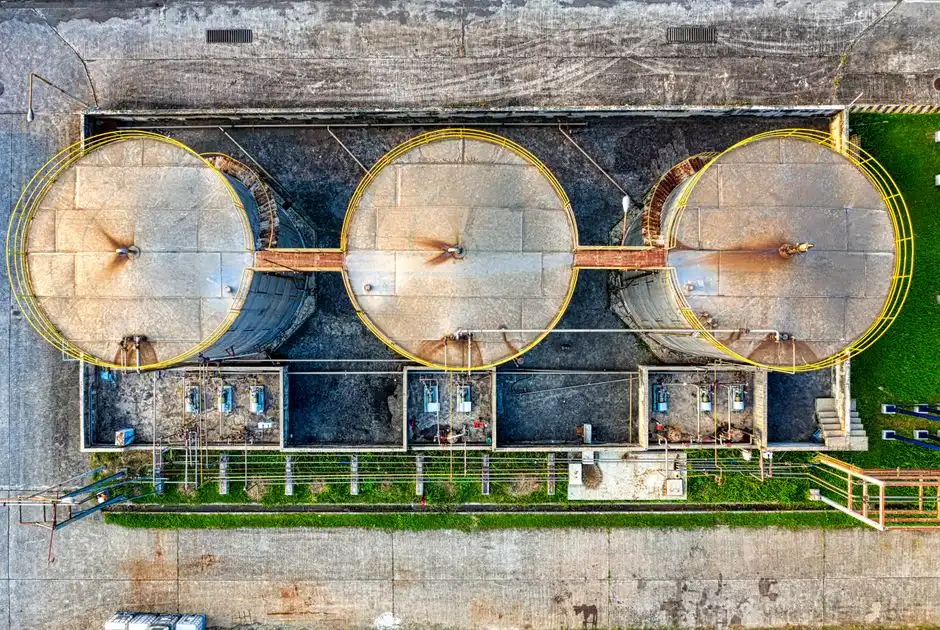
The process train should begin with equalization and controlled conveyance, then add treatment functions according to the permit, reuse objective, and measured wastewater. SAE’s 2011 paper identifies collection, storage, conveyance, and treatment as interdependent components of airport deicing-wastewater management. Equalization reduces the mismatch between concentrated deicing events and variable runoff, while controlled conveyance prevents untreated or partially treated flow from bypassing the selected route.
For biodegradable glycol, biological treatment is a candidate function when the wastewater and permit basis support it. EPA’s 2000 preliminary data summary warns that biodegradation of propylene or ethylene glycol can greatly reduce dissolved oxygen in receiving waters. That risk supports biological treatment or controlled discharge management; it does not establish that a particular bioreactor will meet an airport’s permit. Oxygen demand, mixing, residence time, sludge handling, and standby operation must therefore be developed from the site design basis.
Use solids-removal equipment when analysis shows material suspended solids or when the selected biological process requires solids capture and handling. An DAF system for deicing-runoff solids removal should be selected for the contaminants it can remove under the characterized condition, not treated as a stand-alone biological glycol solution. Chemical dosing should answer an identified objective, such as pH control or a permit-defined ammonia requirement; the permitted chemical oxygen demand and ammonia limits must come from the current NPDES authorization.
When direct discharge of collected aircraft deicing fluid to waters of the U.S. applies, EPA identifies numeric chemical oxygen demand requirements. Confirm the applicable values in the permit before finalizing biological capacity or solids-removal performance. The associated integrated MBR wastewater treatment system may be evaluated where membrane separation is justified by the reuse objective or permit, but its near-reuse-quality claim does not replace site verification.
| Process stage | Primary function | Selection condition | Required procurement evidence |
|---|---|---|---|
| Source control and collection | Reduce uncontrolled release and recover concentrated deicing fluid | Applicable deicer rule and site drainage layout | Collection percentage, capture points, bypass controls, and operating records |
| Equalization and conveyance | Manage variable flow and concentrate; transfer wastewater reliably | Measured event flow and storage inventory | Hydraulic basis, controls, redundancy, and contained drainage response |
| Biological treatment | Reduce biodegradable glycol-related oxygen demand | BOD, COD, glycol chemistry, and permit or reuse objectives | Process loading basis, oxygen and mixing requirements, sludge production, and guarantees |
| Solids separation | Remove suspended solids and process-derived biomass | Measured solids and downstream handling needs | Removal basis, residuals handling, cleaning, and performance test method |
| Polishing or chemical control | Address a defined permit or reuse parameter | Applicable permit limits and final route | Target parameter, dose range, interference control, and discharge monitoring plan |
Compare candidate equipment by treatment function
Compare equipment by the function it performs under the airport’s design condition. An MBR combines activated-sludge treatment with membrane separation and is a candidate where biological treatment, solids retention, and membrane polishing are all required. To compare MBR and activated sludge treatment, use the site’s organic loading, solids handling, footprint, operator capability, reuse objective, and permit criteria—not an assumed effluent quality.
A DAF system removes suspended solids, oil and grease, FOG, and colloidal material. It therefore fits ahead of, or within, a treatment train when characterization supports those separation needs. It does not, by function alone, establish adequate glycol biodegradation or COD removal. The buyer should require the supplier to identify which condition creates the risk, what removal performance is proposed, how residuals will be handled, and how the result advances compliance.
Screening, chemical dosing, and sludge dewatering are supporting functions. Their necessity depends on the selected process, wastewater characteristics, and residual-handling route. They should not be included merely because they appear in an equipment catalogue. Similarly, the supplied product catalogue contains no airport-specific treatment package, so each component remains a candidate requiring project-specific validation.
Shortlisted suppliers should state the design basis, treatment objectives, guaranteed parameters, test methods, hydraulic and contaminant loading, installation constraints, electrical demand, controls, maintenance intervals, consumables, and commissioning criteria. An automatic chemical dosing system needs a defined target and feed basis. A plate-frame filter press needs a defined solids inventory and dewatering objective. These details convert a catalogue selection into a verifiable process proposal.
| Equipment decision | Choose when | Do not assume | Supplier evidence required |
|---|---|---|---|
| Integrated MBR | Biological treatment, membrane solids separation, and polishing are justified by the permit or reuse objective | That a near-reuse claim guarantees airport permit compliance | Project-specific loading, membrane design, guarantees, controls, cleaning, and maintenance |
| DAF | Characterization shows solids, FOG, oil and grease, or colloidal removal needs | That DAF alone performs biological glycol treatment | Removal target, feed condition, residuals handling, and test method |
| Automatic dosing | The permit or process objective identifies a chemical-control duty | That a dosing system establishes an effluent limit | Target parameter, chemical, dose range, controls, safety, and monitoring |
| Plate-frame dewatering | The selected process produces a dewaterable solids stream | That all collected solids or biological sludge can be land-applied | Feed characteristics, cake handling, cycle basis, cleaning, and residual destination |
Prepare the procurement and acceptance package
A bid-ready package should resolve missing site data before equipment is selected. Issue a request for wastewater characterization, seasonal flow, required collection percentage, storage inventory, current permit limits, discharge or reuse route, soil and climate conditions, available utilities, and footprint constraints. This checklist should identify who supplies each input, who performs sampling and laboratory analysis, who monitors flow, and who interprets the permit. The broader industrial effluent treatment buyer decision guide provides a useful structure for separating evidence, design responsibility, and commercial commitments.
Require every bidder to disclose its design basis, treatment objectives, guaranteed parameters, test method, electrical demand, controls, maintenance intervals, consumables, and commissioning criteria. Where “compliance” is claimed, identify the exact permit parameter, test protocol, sampling point, and operating condition covered by the guarantee.
Use EPA’s April 2012 Effluent Guidelines for Airport Deicing Discharges fact sheet for regulatory background only. Its estimated annual compliance cost is not a current airport project budget and should not be used as one. Obtain current project pricing only through a scoped request that includes the selected treatment duty, civil works, controls, utilities, residual disposal, commissioning, operation, monitoring, and permit-related services.
| Package item | Required response | Responsible party | Acceptance evidence |
|---|---|---|---|
| Site data request | Flow, chemistry, collection, storage, permit, route, climate, utilities, and footprint information | Airport owner or engineer | Supporting records, monitoring data, and signed design basis |
| Supplier technical proposal | Process function, loading, guarantees, test methods, controls, utilities, maintenance, and commissioning | Equipment supplier | Compliance matrix tied to permit parameters |
| Performance and compliance | Defined sampling point, test method, operating condition, and remedy for nonconformance | Supplier and airport | Acceptance test protocol and signed results |
| Operations and residuals | Monitoring, laboratory support, waste handling, spare parts, consumables, and training | Supplier and airport | Operating plan, maintenance schedule, and residual-management records |
Frequently Asked Questions
Does the federal airport deicing rule apply to every airport?
No. EPA’s 2012 fact sheet says the requirements generally apply to wastewater associated with airfield-pavement deicing at primary airports. The 60 percent aircraft-deicing collection requirement applies to new airports with 10,000 annual departures in designated cold-climate zones, while existing-airport aircraft-deicing requirements continue through general or individual permits.
What information is needed to size an airport deicing wastewater treatment system?
Request seasonal runoff, peak collected flow, rainfall dilution, collection percentage, storage inventory, and wastewater results for BOD, COD, suspended solids, ammonia, dissolved oxygen, pH, and conductivity. Also provide pavement-drain maps and the available footprint. The supplied research provides no universal flow or equipment-sizing range.
How should suppliers be selected for this project?
Compare bids by verified treatment function, project-specific design basis, guaranteed parameters, test methods, controls, maintenance, utilities, and commissioning criteria. Ask each supplier to identify the permit or reuse parameter it is guaranteeing and the operating condition supporting that guarantee.
What should the project budget include?
Request a current scoped quotation covering treatment equipment, equalization and storage, civil works, controls, utilities, commissioning, monitoring, operation, maintenance, and residual disposal. Do not use EPA’s 2012 estimated annual compliance cost as a current project price; request supplier quotations against the completed design basis.
Related Equipment
- integrated MBR wastewater treatment system — specifications, capacity range, and technical data