Define the discharge or reuse objective
Selecting an effluent treatment plant in Lahore starts with the discharge route and the wastewater profile, not a brand or capacity number. For industrial flows containing oil, grease or suspended solids, a DAF unit can provide front-end separation; A/O package plants suit lower-complexity sewage duties; and MBR is appropriate where compact footprint and fine solids separation are priorities. The Lahore municipal reference plant used staged capacities of 900,000 m3/day and 1,200,000 m3/day, but that scale is not a design template for private facilities. Buyers should obtain flow, pH, COD, BOD, TDS, TSS and reuse or discharge criteria before finalizing equipment.
The first procurement decision is whether the plant must provide direct discharge, sewer pretreatment, irrigation reuse, controlled reuse or higher-quality reclamation. These objectives impose different process and documentation requirements. A sewer-pretreatment package may be judged mainly against acceptance criteria for the receiving authority, while a reuse project must identify the intended use and the parameters that protect that use.
The supplied research does not establish current Lahore-specific discharge limits, reuse permissions or sewer-acceptance criteria. Obtain the applicable permit, sewer conditions, sampling requirements and monitoring obligations from the relevant authority. Ask each bidder to state whether its proposed effluent is intended for discharge or reuse, which parameters will be tested, and what acceptance evidence demonstrates compliance. For advanced reclamation objectives, the University of Twente thesis on direct nanofiltration of wastewater treatment plant effluent describes nanofiltration as a polishing technology for agricultural or potable-use objectives; it should be defined as a specific polishing stage, not assumed to be required in every Lahore installation.
| Project input | What the buyer should record | Procurement consequence |
|---|---|---|
| Discharge or reuse route | Municipal sewer, permitted surface-water discharge, drain, irrigation use or controlled reuse | Defines the applicable receiving-agency requirements and required treatment train |
| Current regulatory document | Permit conditions, sewer-acceptance criteria, sampling requirements and monitoring frequency | Must be obtained from the relevant authority; current site-specific limits are not established by the supplied evidence |
| Reuse objective | Intended use, required water quality and responsible receiving party | Determines whether polishing, disinfection or additional treatment is required |
| Supplier statement | Proposed discharge route, reuse purpose, tested parameters and acceptance method | Prevents an ambiguous proposal from being compared with a compliant alternative |
Build the wastewater characterization and flow dataset
A Lahore wastewater ETP proposal should be based on representative wastewater characterization and hydraulic data, because one sample or nominal daily flow cannot establish the required equipment size. The Hayatabad industrial assessment collected ten wastewater samples from key discharge points and examined pH, electrical conductivity, total dissolved solids and total suspended solids, demonstrating the value of sampling across operating conditions rather than relying on one spot result (Annual Methodological Archive Research Review, source supplied as S2).
Request average flow and peak hourly flow, the wastewater-generation schedule, operating days, retention strategy and planned future expansion. For industrial facilities, identify batch dumps, cleaning chemicals, production changes and pretreatment requirements. Hydraulic peaks and pollutant spikes can change equalization requirements, pump selection and the treatment process. A separate automatic chemical dosing system should be specified only after the chemical demand and dosing basis are established from the wastewater data.
The current analysis should cover pH, electrical conductivity, total dissolved solids, total suspended solids, COD, BOD, oil and grease, and temperature, together with sector-specific contaminants where relevant. The supplier must receive the raw laboratory results, sampling locations, dates, flow conditions and detected contaminants, rather than only a summary table. The supplier may support laboratory work, but the buyer should state clearly who owns sampling, who delivers the raw data and who confirms the final design basis.
| Required information | Minimum project detail | Why it affects selection |
|---|---|---|
| Hydraulic profile | Average flow, peak hourly flow, generation schedule, operating days and future expansion | Sets hydraulic capacity, equalization and pumping requirements |
| Water-quality analysis | pH, EC, TDS, TSS, COD, BOD, oil and grease, temperature and relevant contaminants | Determines pretreatment, biological loading and polishing needs |
| Sampling plan | Representative samples from relevant discharge points, with dates and operating conditions | Connects equipment selection to actual wastewater conditions |
| Variability | Batch discharges, cleaning chemicals, production changes and pretreatment requirements | Tests whether equalization and control systems are adequate |
| Responsibility | Facility team, accredited laboratory, authority or supplier | Prevents gaps in sampling, raw-data delivery and design approval |
Match the treatment train to the wastewater
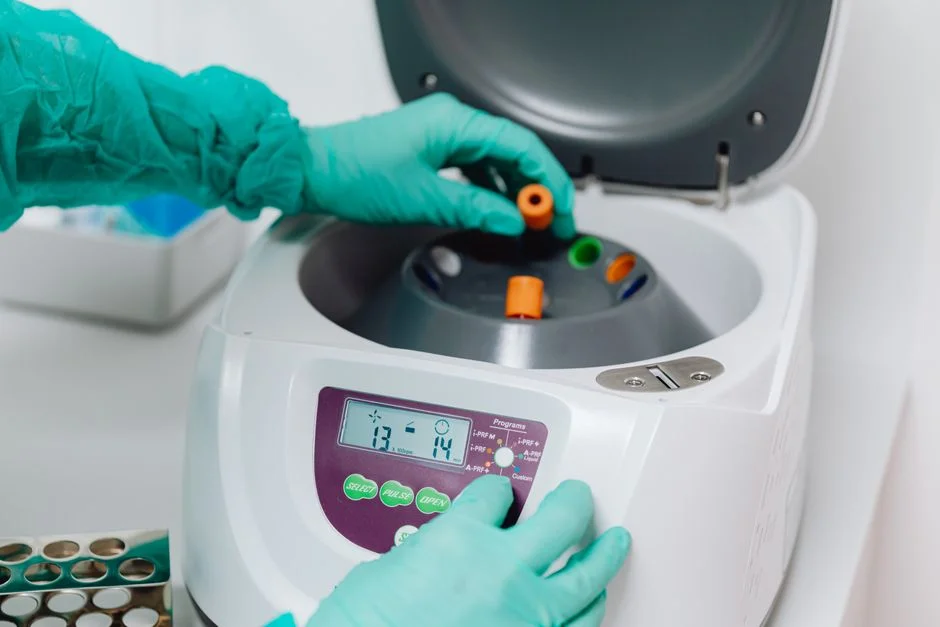
The treatment train should follow the contaminants and reuse objective: DAF for floatable material, A/O for contained biological sewage treatment, and MBR where membrane solids separation and footprint justify the additional process complexity. These are screening choices, not conclusions. A supplier must confirm the proposed train against the site’s wastewater analysis, duty cycle, available utilities, installation constraints and required effluent quality.
Choose DAF when the wastewater contains floatable oil, grease, solids or colloidal material that should be removed before biological or downstream treatment. HydropureWater lists DAF capacity from 4–300 m3/h and applications including food processing, textile, metalworking and petrochemical wastewater; these are catalog screening ranges, not final design values. The DAF system for industrial effluent pretreatment should be assessed against the oil-and-grease load, solids characteristics, required removal performance and downstream biological loading. For a broader process comparison, see the industrial ETP process and equipment selection guide.
Choose the underground A/O package plant when the duty is a contained, automatic biological sewage treatment installation. The WSZ Series combines anoxic and aerobic contact oxidation, sedimentation and disinfection and handles 1–80 m3/h. Confirm whether that train is appropriate for the actual wastewater rather than assuming that package classification establishes suitability. A buried installation also requires access, lifting and maintenance arrangements to be defined in the supplier scope.
Choose MBR when compact footprint and membrane solids separation justify the added process complexity. The HydropureWater MBR range covers 10–2,000 m3/day and provides sub-1-micron filtration. The MBR wastewater treatment system should be compared using required effluent quality, hydraulic loading, membrane cleaning, redundancy and operating controls, not headline capacity alone. The MBR versus activated sludge comparison provides a separate process comparison, while the DAF versus lamella clarifier for pretreatment comparison is useful when solids separation remains the main pretreatment question.
The municipal Lahore reference illustrates stage logic only: its listed train combined coarse and fine screens, grit removal, phosphorus removal, A2O nitrification and denitrification, final sedimentation, sludge pumping and dewatering (ErgeProje, August 2016). It does not establish the correct train for a private facility.
| Technology | Indicative screening basis | Key verification questions |
|---|---|---|
| DAF | Floatable oil, grease, solids or colloidal material; catalog range 4–300 m3/h | Does the feed require solids or oil removal before biological treatment? What are the saturation, skimming and compressor requirements? |
| Underground A/O package | Contained, automatic biological sewage treatment; catalog range 1–80 m3/h | Does the wastewater suit anoxic and aerobic contact oxidation? Are access, lifting and buried-system maintenance included? |
| MBR | Compact footprint and fine solids separation; catalog range 10–2,000 m3/day with sub-1-micron filtration | Does the required effluent quality justify membrane separation? What are the cleaning, replacement, redundancy and lifecycle operating requirements? |
Compare commercial and compliance assumptions
Supplier proposals should be compared by defined performance, complete scope and remedy for non-compliance—not by headline capacity or an unqualified statement that the plant “meets requirements.” Ask bidders to identify whether inlet works, equalization, treatment, pumping, electrical controls, chemical storage, sludge handling, odor control, installation, commissioning, training and maintenance are included. Scope boundaries should appear in the technical offer and the commercial offer.
The Pakistan wastewater report notes that many wastewater facilities were not functioning and that industrial effluent treatment had historically received limited incentives, so operating reliability and maintenance support deserve explicit verification (Wastewater Production, Treatment and Use in Pakistan, source supplied as S5). Request evidence such as operating references, maintenance records, operator competency, spare-parts support and a defined response process.
The same report gives historical Lahore figures of 287 × 10^6 m3/year produced and 12.5% treated. Do not use those figures as current performance, available capacity or a basis for sizing a private facility; request current information from the responsible authority. For every performance value, identify whether it is measured, the test method, sampling point, test duration, guaranteed limit and remedy for non-compliance. A slurry or solids-handling claim should also identify its test basis and whether the plate-frame filter press is included in the proposed operating scope.
Set acceptance tests and handover requirements
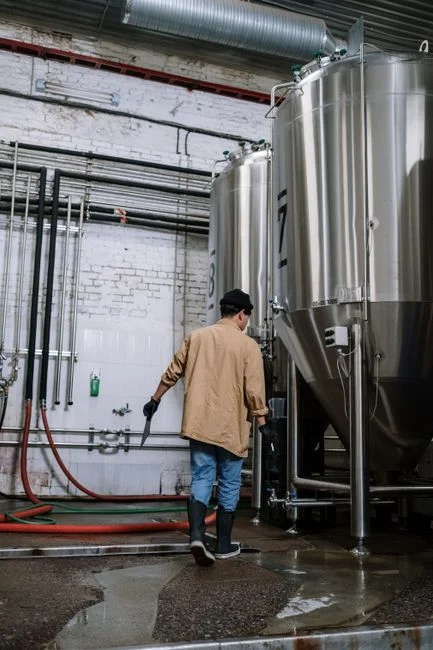
Acceptance should be tied to demonstrated operation at the agreed influent condition, not only a factory test. Define measurable criteria for treated flow, automation, alarm response, solids removal where applicable, energy use and the agreed effluent parameters. For every criterion, specify the sampling point, frequency, test method, acceptance limit, test duration and party responsible for verification. Unresolved results should have a defined retesting and remedy process rather than being left to interpretation.
Require the handover package to include electrical and process drawings, operating manuals, spare-parts lists, PLC programs, training records and a preventive-maintenance schedule. For MBR scope, request membrane-cleaning procedures and replacement information. For DAF scope, request compressor, saturation, skimming and control-system maintenance records. For package sewage scope, request access and lifting arrangements for buried maintenance. These documents should be linked to the final equipment configuration rather than supplied as generic manuals.
| Acceptance item | Minimum requirement | Evidence at handover |
|---|---|---|
| Process performance | Agreed flow and effluent parameters under the defined influent condition | Sampling record, laboratory results, test method and signed acceptance result |
| Controls and alarms | Demonstrated automatic operation and alarm response | Functional test record and operator demonstration |
| Equipment-specific maintenance | MBR cleaning and replacement; DAF compressor, saturation, skimming and controls; buried package access and lifting | Maintenance procedures, records, access arrangements and spare-parts list |
| Documentation and training | Electrical drawings, process drawings, manuals, PLC programs, training and preventive maintenance | Indexed handover dossier and training records |
| Failure handling | Retesting responsibility and remedy for non-compliance | Written acceptance protocol with responsible parties and cost allocation |
Frequently Asked Questions
How much does an effluent treatment plant in Lahore cost?
Equipment cost cannot be calculated responsibly without flow, wastewater analysis, treatment objectives and installation scope. Ask each bidder for a priced bill of quantities that separates equipment, civil works, piping, electrical controls, chemicals, sludge handling, installation, commissioning, training and maintenance. Also request the basis for guarantees and any exclusions, so a cheaper equipment offer is not compared with a broader compliant scope.
How should a supplier be shortlisted for an industrial wastewater treatment plant?
Shortlist suppliers using relevant process experience, verified operating references, factory-testing capability, handover documentation and local service support. For the proposed technology, check whether the supplier can provide comparable wastewater duties and measurable acceptance evidence. A reference should be checked directly for the equipment, operating conditions, documentation quality and service response rather than accepted as a marketing claim.
Is MBR the right choice for a Lahore facility?
MBR should be selected for process performance rather than headline capacity. Compare it using the required effluent quality, footprint, wastewater characteristics, membrane-cleaning obligations, redundancy and lifecycle operating requirements. The supplied catalog range of 10–2,000 m3/day and sub-1-micron filtration are screening information, not a substitute for site-specific sizing.
Can the supplier confirm the discharge or reuse permission?
The current Lahore discharge and reuse permissions must be confirmed with the relevant authority because the supplied research does not establish current site-specific limits. The supplier should help translate the confirmed requirements into process and acceptance criteria, but the buyer should obtain the permit, sewer conditions