
Define the wastewater and discharge route first
For fabricated-metals wastewater in the Parsons area, MBR is generally the stronger option when low suspended solids, compact equipment, or water reuse justify membrane lifecycle costs. Conventional activated sludge may cost less to install but requires a clarifier and more space, while both can fail if oil, metals, inhibitors, or high solids overload the biology. MBR also brings fouling, cleaning, and replacement risk. The final choice should follow a waste-characterization test, receiving-permit review, and lifecycle comparison—not the membrane label alone.
Start with the actual stream, not the equipment catalogue. Fabricated-metals operations can combine cutting oils, coolants, degreasers, pickling residues, metal-bearing particles, wash water, and variable production discharge. Segregate those sources before selecting biological treatment: oil and grease removal, equalization, solids removal, chemical conditioning, and toxicity control may determine whether either biological route is viable.
Obtain a characterization covering flow variability, COD/BOD, suspended solids, pH, oil and grease, metals, toxicity, and inhibitory compounds. The characterization should distinguish routine production periods from start-up, shutdown, and cleaning events. It should also establish whether the waste is batch-discharged, continuously metered, or diluted by non-contact cooling water. A preliminary rotary mechanical bar screen can address gross solids at the inlet, while an automatic chemical dosing system may be relevant where pH adjustment or coagulation is required; neither replaces source segregation or biological pretreatment design.
Next, map the receiving route. Will the treated flow be discharged, reused on site, or sent to a publicly owned treatment works? Identify the applicable local discharge, pretreatment, and reuse requirements from the authority responsible for that route before treating a published capacity or removal claim as a project guarantee. For a Parsons-area project, obtain the current requirements in writing and confirm whether an industrial pretreatment agreement applies.
| Design-basis item | What the buyer must establish | Decision effect |
|---|---|---|
| Wastewater sources | Cutting oils, coolants, degreasers, pickling residues, metal-bearing particles, wash water, and production variability | Determines segregation and industrial wastewater pretreatment requirements |
| Hydraulic and load range | Average flow, peak flow, batch discharges, COD/BOD, suspended solids, pH, oil and grease, metals, toxicity, and inhibitory compounds | Sets equalization, biological loading, pretreatment, and membrane sizing |
| Receiving route | Direct discharge, on-site reuse, or POTW acceptance | Defines applicable permit, pretreatment, and reuse criteria |
| Treatment objective | Discharge compliance, process-water reuse, or a combination | Controls the required solids separation and reuse value |
Compare the treatment mechanisms
MBR and conventional activated sludge use the same core biological principle, but their solids-separation mechanisms differ. In both processes, microorganisms oxidize biodegradable organics; aerobic, anoxic, and anaerobic zones can also be arranged to support nitrogen and phosphorus control (Parsons, MBR systems and solutions). The decision turns on how solids are separated, how reliably that separation performs under the actual metalworking stream, and what the receiving route requires from the finished water.
An MBR retains biomass and suspended solids through membrane separation. A conventional activated sludge system depends on gravity settling in a final clarifier, so its performance is sensitive to sludge settleability (Academic Journals, Comparison of Membrane Bioreactor Technology and Conventional Activated Sludge). The same review reports MBR investigations at 20 g/L and as high as 30 g/L biomass, compared with approximately 2–3 kg/L for conventional activated sludge. That difference is evidence from the cited review, not a universal design value for every wastewater.
A comparative case in that review reported 99.0% COD and 96.9% dissolved organic carbon removal for MBR, versus 94.5% and 92.7% for conventional activated sludge. Treat these as case-specific results, not guaranteed performance for a fabricated-metals facility. The effluent still depends on influent chemistry, biological loading, hydraulic variation, pretreatment, membrane condition, and the limits imposed by the receiving authority.
For the metal fabricator, the practical distinction is the consequence of solids separation. Membrane separation provides a physical barrier that captures suspended solids and many colloids, producing low-turbidity effluent and supporting reuse or sensitive receiving waters (Parsons, Membrane Bioreactor Systems and Solutions). A clarifier can also produce satisfactory reuse water, but its performance depends on floc formation and settling behavior; poor sludge properties or intermittent hydraulic loading can undermine that advantage. The DF series flat-sheet MBR modules represent the membrane component, not the whole biological and pretreatment design.
| Criterion | MBR | Conventional activated sludge |
|---|---|---|
| Biological treatment | Microbial oxidation with aerobic, anoxic, and anaerobic zones where required | Microbial oxidation with aerobic, anoxic, and anaerobic zones where required |
| Solids separation | Membrane retains biomass and suspended solids | Final clarifier separates solids by gravity settling |
| Separation sensitivity | Fouling, scaling, membrane condition, and flux management | Sludge settleability and clarifier hydraulics |
| Reported comparative case | 99.0% COD and 96.9% DOC removal | 94.5% COD and 92.7% DOC removal |
| Evidence boundary | Case results, not a guarantee for a metalworking stream | Case results, not a guarantee for a metalworking stream |
Select treatment by operating priority
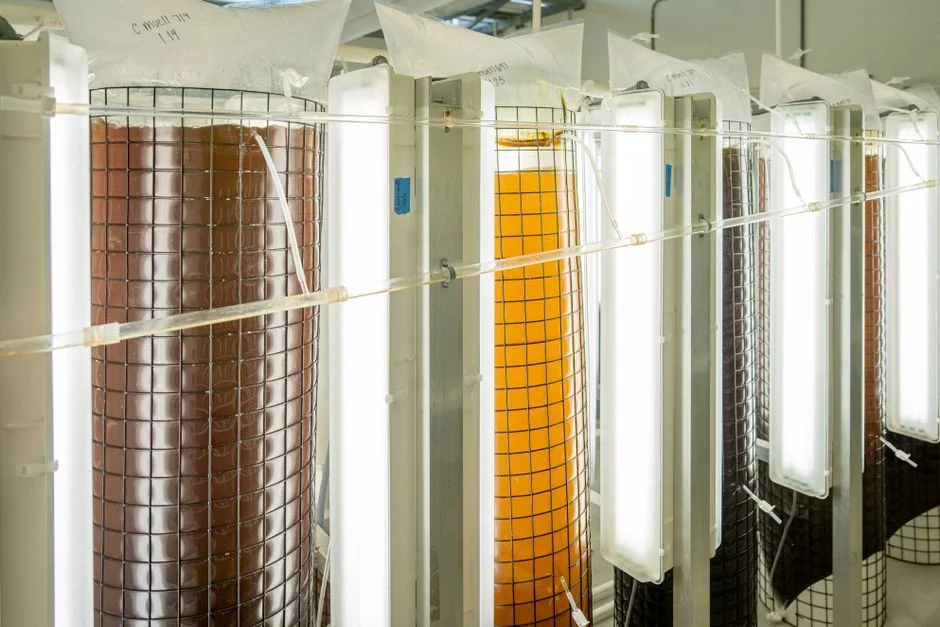
Choose MBR when compact equipment, low suspended solids, process-water reuse, or consistent separation outweigh membrane maintenance and replacement costs. Parsons states that membrane-based separation can improve stability under variable loads and shrink the footprint, while also noting fouling, scaling, aeration, and pumping requirements (Parsons, Membrane Bioreactor Systems and Solutions). These benefits address a specific operating priority; they do not remove the need for equalization and appropriate industrial wastewater pretreatment.
Consider conventional activated sludge when there is adequate land, gravity-settled solids perform reliably, lower initial equipment complexity is important, and the reuse specification does not justify membrane separation. It can be technically sound where sludge settleability is demonstrated and the receiving route permits the resulting effluent. The equipment package may be less complex than an MBR, but it still requires basins, aeration, clarifier performance, solids handling, and operator attention.
Use a hybrid when biological treatment is needed, but the priority is better pretreatment or solids removal rather than membrane-based final separation. For example, high-solids metalworking wastewater may justify separate solids removal before activated sludge. A dissolved air flotation machine can be evaluated for oil and solids separation, while a high-efficiency sedimentation tank may be considered where gravity clarification is appropriate. Either route requires a project-specific design basis; the equipment selection alone does not establish performance.
HydropureWater’s verified product catalog specifies a 60% smaller footprint for its MBR system than conventional systems (HydropureWater verified product catalog, 2026). Treat this as a product-specific claim requiring verification against the proposed tankage, equalization, pretreatment, aeration, sludge handling, maintenance access, and site constraints. It is not evidence that every MBR installation occupies less space than every conventional system.
| Operating priority | Preferred route | Required verification |
|---|---|---|
| Compact installation | MBR | Plot area, access, equalization, pretreatment, aeration, and residuals handling |
| Consistent low suspended solids or advanced reuse | MBR | Membrane flux, fouling-control method, cleaning strategy, and reuse specification |
| Lower initial equipment complexity and adequate land | Conventional activated sludge | Sludge settleability, clarifier hydraulics, and receiving-route limits |
| High-solids pretreatment is the dominant issue | Hybrid evaluation | Whether separate solids or oil removal allows reliable biological treatment |
Compare footprint, reuse and lifecycle exposure
Compare the full operating envelope, not the membrane purchase price. The supplied MBR review reports conventional aeration at approximately 8 m³ of air per m³ of wastewater treated (Academic Journals, Comparison of Membrane Bioreactor Technology and Conventional Activated Sludge). That figure is specific to the reviewed conventional aeration discussion and is not a design value for the Parsons project. It does show why aeration belongs in the lifecycle calculation for both routes.
Parsons notes that MBR energy consumption can exceed conventional systems because of aeration and pumping, and that capital cost can also be higher (Parsons, Membrane Bioreactor Systems and Solutions). The same source identifies membrane replacement intervals, chemical usage, maintenance, staffing, residuals handling, and compliance value as lifecycle factors. Conventional activated sludge avoids membrane replacement, but it still carries aeration, clarifier, sludge-handling, and land costs.
The review estimates membrane replacement at around 10–15% of MBR operation and maintenance costs (Academic Journals, Comparison of Membrane Bioreactor Technology and Conventional Activated Sludge). This is a historical estimate and must be replaced or supported by current project pricing, membrane assumptions, and a supplier guarantee. The MBR cost per m³ guide can help structure the comparison, but a buyer still needs current quotations tied to the Parsons design basis.
Evaluate the alternatives in this order:
- Confirm that the selected biological route can handle the characterized waste after pretreatment.
- Calculate available footprint, including equalization, aeration, membranes or clarifiers, sludge handling, and maintenance access.
- Match the effluent target to the discharge or reuse route rather than to a generic “reuse-quality” claim.
- Price energy, chemicals, cleaning, membrane replacement, staffing, residuals handling, and compliance exposure over the planned operating period.
- Test whether the reuse benefit has enough operational value to offset the additional MBR exposure.
| Lifecycle item | MBR exposure | Conventional activated sludge exposure | Buyer’s check |
|---|---|---|---|
| Capital and footprint | Higher capital may be offset by reduced footprint | Clarifier and basin arrangement may require more land | Obtain a site-specific plot plan and installed-cost comparison |
| Energy and aeration | Aeration and membrane pumping | Biological aeration | Compare connected loads and operating assumptions |
| Solids separation | Cleaning and eventual membrane replacement | Clarifier maintenance and sludge settleability | Use the characterized peak loads and cleaning assumptions |
| Reuse and compliance | Low-turbidity separation may support demanding reuse | Performance depends on settling and subsequent treatment | Compare against the written receiving or reuse requirement |
Build the Parsons procurement and verification checklist

A Parsons procurement should begin with one controlled design basis sent to every bidder. Include peak flow, the operating load range, oil and grease, suspended solids, metals, toxicity, pH, batch-discharge information, receiving route, permit limits, and reuse targets. Do not let one supplier quote average daily flow while another prices the actual peak and load case. The industrial MBR versus activated sludge comparison provides a useful comparison format, but it must be populated with the metal fabricator’s own data.
Require each proposal to identify pretreatment, biological zoning, membrane configuration or clarifier design, aeration, controls, cleaning chemicals, redundancy, spare parts, operator training, and warranty scope. For an MBR, ask for membrane material, pore size, expected operating flux, fouling-control strategy, cleaning intervals, replacement assumptions, and the method used to calculate lifecycle cost. HydropureWater’s DF series uses 0.1 μm PVDF flat-sheet modules with integrated aeration (HydropureWater verified product catalog, 2026); verify that configuration against the proposed wastewater and project requirements.
For the receiving route, obtain current requirements from the authority having jurisdiction and identify whether the flow will be discharged, reused on site, or accepted by a POTW. If disinfection is required, define its relationship to the biological system and final reuse or discharge criteria; a UV sterilizer should be evaluated as part of the complete treatment train rather than as a substitute for solids separation.
| Verification item | Required bidder response | Acceptance basis |
|---|---|---|
| Wastewater basis | Peak flow, load range, COD/BOD, suspended solids, pH, oil and grease, metals, toxicity, and batch events | Bidder sizes and prices from the same issued data |
| Receiving route | Discharge, reuse, or POTW route and applicable requirements | Current written confirmation from the responsible authority |
| MBR specifics | Membrane material, pore size, operating flux, cleaning, redundancy, spare parts, and replacement assumptions | Proposed guarantees and project-specific operating narrative |
| CAS specifics | Basin zoning, aeration, clarifier hydraulics, sludge handling, and settleability assumptions | Design calculations tied to the characterized waste |
| Scope and risk | Controls, training, warranty, residuals handling, utilities, and exclusions | Complete scope matrix and priced exclusions |
Frequently Asked Questions
How should MBR and conventional activated sludge be sized for a fabricated-metals plant?
Ask bidders to size from peak hydraulic flow, contaminant loading, and required solids-removal performance—not average daily flow alone. Include batch discharges, cleaning events, equalization requirements, oil and grease, suspended solids, metals, toxicity, and pH in the issued design basis. Require each bidder to state its peak case, operating range, pretreatment assumptions, and whether the quoted capacity refers to influent, biological reactor, membrane, or treated-water production.
What should a buyer request when comparing MBR and activated-sludge cost?
Request separate quotations for equipment, industrial wastewater pretreatment, installation, aeration, chemicals, membrane cleaning and replacement, energy, controls, operator training, and residuals handling. For MBR, require the membrane replacement interval and price assumption; for conventional activated sludge, include clarifier, sludge handling, and land-related costs. Without these inputs, the higher equipment price cannot be converted into a defensible lifecycle comparison.
How should a buyer select and verify an MBR or activated-sludge supplier?
Require wastewater-specific references, a control narrative, membrane guarantees where MBR is proposed, operator training, spare-parts availability, and a complete site-verification package. For MBR, also request membrane material, pore size, operating flux, cleaning intervals, fouling controls, and replacement assumptions. For conventional activated sludge, request clarifier hydraulics and the basis for sludge-settling performance.
What Parsons-area compliance must be confirmed before ordering treatment equipment?
Confirm the receiving route and current requirements with the authority having jurisdiction before ordering. The supplied evidence does not establish a specific permit limit for a fabricated-metals facility, so do not infer one from general MBR or activated-sludge performance claims. Obtain current discharge, pretreatment, and reuse conditions; if the flow will enter a POTW, confirm whether an industrial pretreatment agreement applies. Use the MBR cost per m³ guide as a lifecycle-comparison reference, then require the selected supplier to demonstrate compliance through the approved project basis.