What Auto Parts Wastewater Is — and Why It Needs Dedicated Treatment
Auto parts wastewater is the combined effluent from machining, stamping, surface treatment, painting, and assembly operations at Tier 2/3 component suppliers, and it behaves nothing like municipal sewage. Typical streams include machining coolant (often a stable oil-in-water emulsion at 2–8% concentration), stamping lubricants, quenching water, phosphating and electroplating rinse water, painting booth overspray wash water, and assembly plant runoff carrying trace oils and hydraulic fluid. Each sub-stream carries its own contaminant signature, and most plants blend them at the plant drain — which is where most biological treatment trains fail.
Influent parameters run far outside municipal ranges: COD 2,000–15,000 mg/L, TSS 500–5,000 mg/L, oil and grease 200–3,000 mg/L, pH swinging from 4 to 11 batch-to-batch, and heavy metals (Zn, Ni, Cr, Cu) reaching 50–200 mg/L on surface treatment lines (HydropureWater field data, 2025–2026). Emulsified oils coat biomass and collapse activated-sludge systems within hours; pH swings of more than 3 units strip nitrifiers; and mixed-metal loads create competitive precipitation that leaves zinc in solution if pH isn't tightly controlled between 8.5 and 9.5.
Regulatory pressure has tightened materially in 2025–2026. China's GB 8978-1996 amendments have moved most auto-parts facilities into Class I limits for surface treatment lines, the EU Industrial Emissions Directive 2010/75/EU sets Best Available Technique Associated Emission Levels (BAT-AELs) for metal finishing at COD <50 mg/L for indirect discharge and heavy metals below 0.05–0.5 mg/L, and US EPA 40 CFR 433 caps daily maximum metals at 4.32 mg/L Zn, 3.98 mg/L Ni, and 2.77 mg/L Cr. None of these are reachable with a municipal-style primary/secondary train.
| Sub-stream | COD (mg/L) | TSS (mg/L) | Oil & Grease (mg/L) | pH | Key Metals / Notes |
|---|---|---|---|---|---|
| Machining coolant | 5,000–15,000 | 500–2,000 | 1,000–3,000 | 7–10 | Stable emulsion; high emulsifier load |
| Stamping / drawing | 2,000–6,000 | 500–1,500 | 500–2,000 | 6–9 | Free oils dominate; tramp metal |
| Phosphating rinse | 500–2,000 | 200–800 | <50 | 3–6 | Zn 20–100 mg/L, PO₄ 50–300 mg/L |
| Electroplating rinse | 200–1,500 | <200 | <30 | 2–5 (acid) / 10–12 (cyanide-bearing) | Ni, Cr, Cu, Zn; cyanide 10–100 mg/L on some lines |
| Painting overspray | 1,000–4,000 | 500–2,000 | 50–200 | 7–9 | Paint solids, isocyanates, solvent traces |
| Assembly runoff | 200–800 | 100–500 | 50–300 | 6–9 | Low load, intermittent discharge |
The Seven-Stage Process Flow Used in 2026
The standard 2026 treatment train for auto-parts effluent runs seven sequential stages, with side-stream chemical precipitation added when plating rinse water is present. Stage 1 pre-screening uses rotary bar screens at 3–10 mm aperture to strip rags, plastics, and tramp metal; under-sized screens are the single most common cause of downstream pump failures in stamping plants. Stage 2 routes the screened stream through a corrugated plate interceptor (CPI) or API separator, which knocks free oils down to 50–100 mg/L through gravity separation with 30–60 minute residence time. Skipping CPI and going straight to DAF is a common cost mistake — it pushes hydraulic load and chemistry demand onto flotation.
Stage 3 is dissolved air flotation (DAF) with chemical demulsification: saturator recycle at 20–40% of forward flow, 0.3–0.6 MPa operating pressure, 20–40 minute hydraulic residence time, and 85–95% removal of emulsified oils and suspended solids (HydropureWater field data, 2026). A properly sized dissolved air flotation (DAF) system in the 4–300 m³/h range handles roughly 95% of Tier 2/3 plant capacities without parallel trains. Stage 4 normalizes pH to 7–8.5 in a flash mix tank and doses coagulant (PAC 50–200 mg/L or ferric chloride 30–100 mg/L) followed by anionic PAM at 1–5 mg/L for colloidal destabilization; an automatic chemical dosing system tied to inline pH and streaming current meters keeps reagent consumption within ±10% of target.
Stage 5 splits by stream character: high-COD machining/stamping effluent goes to biological treatment (SBR, A/O, or an MBR membrane bioreactor system at 10–2,000 m³/day); plating rinse water bypasses biology and goes to chemical precipitation at pH 8.5–9.5 for Zn/Ni, pH 10–11 for Cr, with NaHS dosing for Cr(VI) reduction first. Stage 6 — tertiary polishing — uses multi-media filtration (sand + anthracite + garnet) followed by UF for sub-1 μm effluent, with RO added when the discharge target is reuse-quality. Stage 7 closes the loop: chlorine dioxide (0.5–2 mg/L residual, 30 min contact) or UV (≥40 mJ/cm²) for bacteria, and mechanical vapor recompression (MVR) or vacuum evaporation for zero liquid discharge on plating concentrates where local disposal is constrained.
| Stage | Equipment | Key Parameter | Effluent Target |
|---|---|---|---|
| 1. Pre-screening | Rotary bar screen | 3–10 mm aperture | Tramp metal, rags removed |
| 2. Oil-water separation | CPI / API separator | HRT 30–60 min | Oil & grease <100 mg/L |
| 3. DAF | DAF saturator + flotation cell | HRT 20–40 min, 0.3–0.6 MPa | Oil <20 mg/L, TSS <80 mg/L |
| 4. pH + coag/floc | Flash mix + floc tank | pH 7–8.5; PAC 50–200 mg/L | Colloidal destabilization |
| 5. Bio or chem-physical | SBR / A/O / MBR / precipitation | HRT 6–24 hr (bio); pH 8.5–11 (chem) | COD 60–80% removal; metals <1 mg/L |
| 6. Tertiary / membrane | Multi-media + UF / RO | RO recovery 70–95% | TSS <5 mg/L; reuse quality on RO |
| 7. Disinfection / evaporation | ClO₂, UV, MVR | ClO₂ residual 0.5–2 mg/L | Discharge or ZLD |
DAF vs. Chemical-Physical vs. Membrane: Choosing the Right Core Process
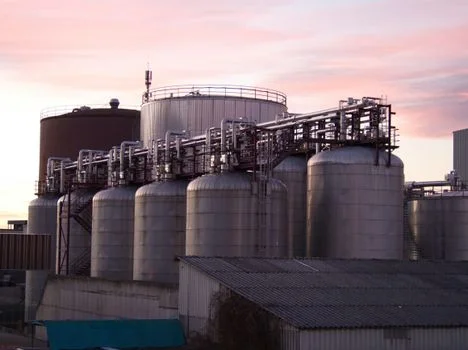
The three dominant core technologies for auto-parts wastewater serve different jobs, and the right call depends on the influent profile and the discharge objective. DAF is the workhorse for high oil and grease and TSS — 85–95% removal of both at CAPEX of roughly $40,000–$150,000 for a 50 m³/h unit and OPEX of $0.30–$0.60 per m³ dominated by polymer and saturator power. It cannot remove dissolved metals and it cannot make reuse-quality water, so it sits upstream of biological or membrane polishing rather than standing alone. For a plant that streams 60% of its load through machining and stamping, DAF is non-negotiable — the rest of the train depends on it.
Chemical-physical treatment (coagulation + sedimentation + sand filtration, sometimes with activated carbon polishing) is the right core for plating and phosphating lines where heavy-metal precipitation is the binding constraint. It hits TSS below 30 mg/L and metals below 1 mg/L at moderate cost — CAPEX $25,000–$80,000 per 50 m³/day line, OPEX $0.50–$1.20 per m³ from NaOH, lime, and sludge disposal. It does not destroy COD, so it pairs with DAF for combined plants rather than replacing it. For metal-finishing-heavy operations looking at best zinc removal technology for industrial wastewater, selective precipitation at pH 8.5–9.5 followed by sand filtration remains the cost baseline.
Membrane processes — UF, MBR, RO — deliver near-reuse effluent and are the only path to water-scarce or zero-discharge operation. UF/MBR stack onto a DAF + bio train and deliver sub-1 μm effluent with TSS below 5 mg/L; RO pushes recovery to 70–95% for closed-loop rinse water. CAPEX is 2–4× chemical-physical at $80,000–$300,000 per 50 m³/day, and OPEX runs $0.80–$1.80 per m³ from membrane replacement (typically 3–5 year life under proper pretreatment) and CIP chemicals. The trade-off is fouling management: a 2026 membrane retrofit without proper DAF pre-treatment is the single most common reason plants overshoot their OPEX forecast.
| Criterion | DAF | Chemical-Physical | Membrane (UF/MBR/RO) |
|---|---|---|---|
| Oil & grease removal | 85–95% | 50–70% | >99% |
| TSS removal | 85–95% | 90–95% | >99% |
| Dissolved metals | None | 95%+ (with precipitation) | 95–99% (RO) |
| CAPEX (50 m³/day) | $40K–$150K | $25K–$80K | $80K–$300K |
| OPEX ($/m³) | $0.30–$0.60 | $0.50–$1.20 | $0.80–$1.80 |
| Footprint | Small | Medium | Medium–large |
| Best fit | Machining, stamping, paint overspray | Plating, phosphating rinse | Reuse, ZLD, water-scarce sites |
Key Design Parameters and Effluent Targets
Sizing starts with the sub-process loads in the first table of this article, then applies the discharge limits set by the local regulator. The 2026 compliance targets most auto-parts plants are designing to are COD ≤500 mg/L, TSS ≤400 mg/L, oil and grease ≤10–20 mg/L, pH 6–9, and heavy metals (Zn, Ni, Cr, Cu) at 0.5–2.0 mg/L depending on whether discharge is to surface water (tighter) or municipal sewer (looser). For plants pursuing water reuse, the working targets are COD ≤50 mg/L, TSS ≤5 mg/L, and conductivity ≤500 µS/cm — those numbers dictate RO or MBR polish.
Hydraulic retention time is the second design lever. DAF cells need 20–40 minutes; conventional activated sludge 8–24 hours; SBR cycles 4–8 hours per batch with fill-react-settle-decant; MBR 4–8 hours at MLSS 8,000–12,000 mg/L; RO recovery 70–95% with concentrate routed to evaporation or treatment. Sludge yield is the third lever that most engineers under-size: biological systems generate 0.3–0.8 kg dry solids per kg COD removed, and a chemical-physical train generates 4–8 kg DS per kg precipitated metal. Dewatering to 25–35% DS on a plate-and-frame filter press is the 2026 baseline for plants below 500 m³/day; above that, a belt press or centrifuge is usually more economic. For a deeper look at managing the disposal side, the sludge disposal cost optimization strategies guide covers seven levers that cut OPEX 30–60%.
| Parameter | Influent Range | DAF Effluent | Bio/Chem-Phys Effluent | Tertiary/RO Effluent |
|---|---|---|---|---|
| COD (mg/L) | 2,000–15,000 | 800–4,000 | 60–500 | <50 |
| TSS (mg/L) | 500–5,000 | 30–100 | 10–50 | <5 |
| Oil & grease (mg/L) | 200–3,000 | 10–30 | <10 | <2 |
| Heavy metals (mg/L) | Up to 200 | Unchanged | <1 (with precipitation) | <0.1 (RO) |
| pH | 4–11 | 7–8.5 (adjusted) | 7–8.5 | 6.5–8.5 |
2026 CAPEX and OPEX Benchmarks by Plant Size
Budget figures below are 2026 turnkey installed prices, including civil work, instrumentation, and commissioning, for a complete seven-stage train with no reuse and ZLD adders factored separately. Small plants at 50 m³/day — typical for a single machining line or Tier 3 stamping shop — run $80,000–$250,000 CAPEX and $1.50–$3.00 per m³ OPEX. OPEX is dominated by chemical reagents and sludge disposal in this band; energy is secondary. Medium plants at 50–500 m³/day — multi-line Tier 2 facilities with combined machining and surface treatment — run $300,000–$1.2M CAPEX and $0.80–$2.00 per m³ OPEX; scale brings the per-cubic-meter cost down roughly 40% versus the small-plant band.
Large plants above 500 m³/day — multi-line operations with water reuse targets or stringent discharge permits — run $1.5M–$5M+ CAPEX and $0.50–$1.20 per m³ OPEX when evaporation is included. The cost drivers that move a project between the low and high end of each band are influent load variability (peaks above 1.5× average add 15–25% to equalization and biological capacity), discharge-versus-reuse objective (reuse adds RO and increases CAPEX 30–60%), automation level (full SCADA adds 10–20% to CAPEX but typically cuts OPEX 15–25%), and sludge handling (a plate-and-frame filter press sized for 25–30% DS cake avoids 30–40% of the disposal OPEX of belt-press output). Plants planning a 2026–2027 capex cycle should also review the broader decentralized wastewater treatment market forecast to 2030 for context on technology and pricing trajectories.
| Plant Size | Flow (m³/day) | CAPEX (USD) | OPEX (USD/m³) | Typical Configuration |
|---|---|---|---|---|
| Small | ≤50 | $80K–$250K | $1.50–$3.00 | DAF + chem-physical + sludge dewatering |
| Medium | 50–500 | $300K–$1.2M | $0.80–$2.00 | DAF + bio (SBR/MBR) + tertiary + sludge |
| Large | ≥500 | $1.5M–$5M+ | $0.50–$1.20 | Full train + RO reuse + evaporation/ZLD |
Common Pitfalls and Engineering Best Practices
The four mistakes below account for the majority of under-performing auto-parts wastewater installations seen in 2025–2026 commissioning reviews. First, mixing incompatible streams: cyanide-bearing plating rinse water combined with acidic streams generates HCN gas and kills biological treatment. The fix is source segregation — dedicated piping for cyanide, hexavalent chromium, and acid/alkali lines, with a dedicated reduction/precipitation step before the common train. Second, skipping equalization: batch processes at stamping and painting lines produce 3–5× peak-to-average shock loads, and a 4–8 hour equalization tank with mechanical mixing and aeration is the cheapest piece of equipment on the P&ID and the most cost-effective insurance against biomass crashes.
Third, underestimating emulsified oil load on biological systems. Machining coolant that bypasses DAF arrives at the aeration basin with 500–2,000 mg/L emulsified oil, coats the flocs, and reduces oxygen transfer efficiency by 40–60% within 48 hours. Always pre-treat with CPI followed by DAF, and target <50 mg/L oil to the bio stage. Fourth, neglecting sludge handling: a biological system sized for 100 m³/day at 4,000 mg/L COD generates 80–120 kg DS/day, and an undersized filter press becomes the operational bottleneck within three months. Design dewatering capacity at 1.2× calculated peak — and budget for it from day one, not as a Phase 2 add-on. The deeper economics of these levers, including polymer selection and cake dryness targets, are covered in the sludge disposal cost optimization strategies referenced above.
Frequently Asked Questions
What is the typical COD removal efficiency for an auto parts wastewater treatment process using DAF followed by biological treatment? DAF removes 50–70% of COD as a side effect of oil and TSS removal, and the downstream biological stage removes a further 80–95% of the remaining soluble COD, giving combined COD removal of 92–98% from raw influent to discharge (HydropureWater field data, 2026).
Which treatment stage handles emulsified oil removal in metalworking wastewater? Emulsified oil removal is handled in the DAF stage with chemical demulsification (PAC or ferric chloride plus anionic PAM), achieving 85–95% removal of emulsified oils and reducing oil and grease to 10–30 mg/L before downstream biological or membrane treatment.
What discharge limits apply to heavy metals in electroplating rinse water under EPA 40 CFR 433 and EU IED? US EPA 40 CFR 433 caps daily maximum metals at 4.32 mg/L zinc, 3.98 mg/L nickel, 2.77 mg/L chromium, and 3.38 mg/L copper for metal finishing, while EU IED BAT-AELs for surface treatment target 0.05–0.5 mg/L depending on metal and receiving water classification.
How much does a complete auto parts wastewater treatment system cost in 2026? Turnkey CAPEX in 2026 runs $80,000–$250,000 for plants below 50 m³/day, $300,000–$1.2M for 50–500 m³/day, and $1.5M–$5M+ for facilities above 500 m³/day with reuse or zero liquid discharge objectives.
Is zero liquid discharge (ZLD) economically viable for auto parts manufacturers? ZLD becomes viable above 200–300 m³/day when water-scarcity penalties, sewer discharge fees, and regulatory caps on heavy-metal discharge make evaporation concentrate handling more economic than continued disposal; typical 2026 MVR/evaporation CAPEX adds $800–$2,000 per m³/day of capacity and reduces net water OPEX by 40–60%.