Separate the wastewater streams before selecting equipment
Cooling-tower blowdown is a concentrated industrial stream containing dissolved minerals and cooling-water treatment chemicals, whereas sanitary sewage is a biodegradable domestic stream requiring a different treatment and permit route. RSP Engineers identifies cooling-tower blowdown as the main process-wastewater stream in most large data centers, while also requiring separate assessment of softener or RO backwash, equipment-cleaning water and air-handling condensate. The Fes regional precedent used in the research treats humidification bleed-off, chiller flushes and periodic fire-test water as a smaller sanitary-side stream, but that routing is a precedent rather than an Oujda fact; Oujda routing must follow its own hydraulic and contaminant assessment (HydropureWater, 2026).
Design the cooling-blowdown train for filtration, RO and optional concentrate treatment. Design the sanitary train around biological treatment rather than combining both flows in one oversized unit. This separation follows the data-center blowdown treatment-train comparison and prevents sanitary organics from receiving unnecessary membrane treatment while preserving the industrial train’s recovery capacity.
| Oujda stream to inventory | Treatment objective | Equipment package | Site input still required |
|---|---|---|---|
| Cooling-tower blowdown | Recover water or prepare it for an authorized discharge route | Equalization and filtration; pH and antiscalant control; RO; optional concentrate treatment | Current blowdown analysis, flow, temperature, cycles of concentration and cooling chemical program |
| Domestic sewage | Biological treatment and disinfection | Flow-based MBR or A/O package, subject to the selected effluent route | Staff and visitor population, peak and average flows, kitchen wastewater, reuse or discharge destination |
| RO backwash and filter washwater | Return to an appropriate train or manage as a separate waste stream | Equalization, solids removal and controlled recycle or discharge | Backwash flow, chemistry, cleaning chemicals and permissible reuse connection |
| Equipment-cleaning water | Manage episodic chemical-bearing waste | Segregated collection, equalization and treatment selected by contaminants | Cleaning agents, episodic volume, floor drainage arrangement and discharge authorization |
| Air-handling condensate | Reuse, controlled discharge or sanitary-train routing | Quality verification and destination-specific treatment | Composition, contamination controls, flow profile and receiving-system requirements |
Set the Oujda treatment objective from the water balance
Design objectives must derive from Oujda’s water balance rather than a generic RO package. IDE Tech reports that a 100 MW facility can consume up to approximately 2 million litres of water per day, making blowdown recovery an operating decision with direct freshwater and discharge consequences (IDE Tech, 2026). The first control measure is the cooling system itself: the U.S. DOE FEMP cooling-water guide, cited by HydropureWater, reports that increasing cycles of concentration from 3 to 6 reduces makeup water by 20% and blowdown by 50% without capital expenditure (HydropureWater, 2026). Model filtration and cycles-of-concentration changes before fixing membrane capacity.
The route decision compares four objectives: returning treated permeate to the cooling tower, treating blowdown for an authorized controlled discharge, reserving space for higher recovery, or installing zero-liquid-discharge equipment. A reuse case requires permeate quality and cooling-system compatibility. A discharge case requires the receiving route and locally applicable limits. A high-recovery reserve is justified by a verified water constraint or capacity requirement. Full ZLD should remain an exceptional route where discharge is prohibited or freshwater is unavailable, as the research describes it as capital-intensive and permit-driven (HydropureWater, 2026).
| Route | Select it when | Do not assume | Decision evidence required |
|---|---|---|---|
| Cooling-water reuse | The water balance shows material blowdown and treated permeate can safely return to the cooling system | That permeate is suitable without checking scaling, corrosion, biocides or cooling chemical compatibility | Current feed and blowdown analyses; cooling design data; permeate compatibility review |
| Pretreatment for controlled discharge | A specific sewer or surface-water receiving route is available and the pre-treatment package can meet its conditions | That a generic RO quotation establishes discharge compliance | Written authority or utility confirmation; permit parameters; flow, pH, TDS, metals, biocide and temperature monitoring scope |
| High-recovery reserve | Permit tightening, growth, freshwater constraints or future reuse targets justify staged recovery | That the highest catalogue recovery applies to Oujda feed chemistry | Scaling projection; concentrate route; footprint, energy, controls and disposal evidence |
| ZLD | Discharge is prohibited or freshwater is genuinely unavailable, and the site can manage the resulting solids | That it is the default Day-1 solution | Verified constraint; lifecycle cost; brine and salt management route; utility and service capacity |
Match treatment to blowdown chemistry
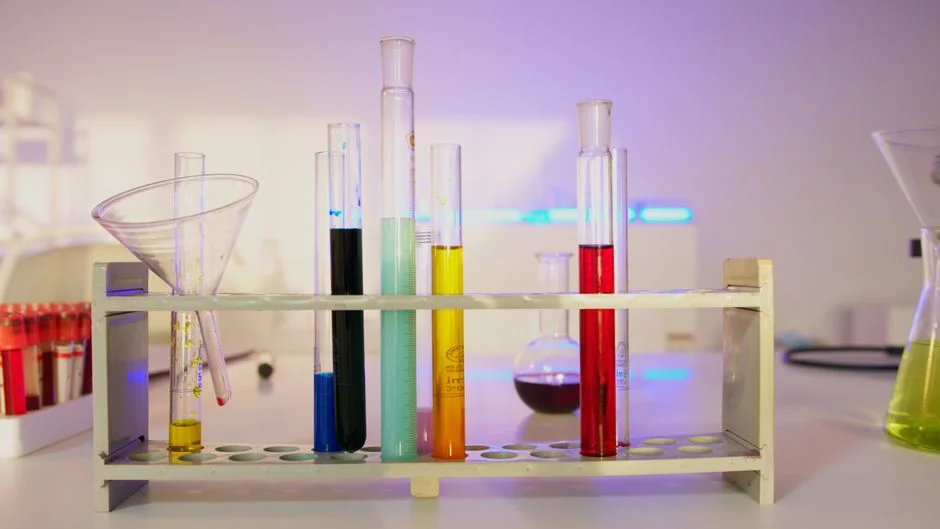
Measure the Oujda blowdown before fixing recovery or pretreatment equipment. Request current analysis of TDS, hardness as CaCO3, alkalinity, silica, chloride, free chlorine, iron and manganese, together with suspended solids, turbidity, temperature, pH and the complete cooling chemical program. These parameters determine membrane recovery, antiscalant selection and whether softening or another pretreatment step is justified (HydropureWater, 2026). The supplier should also assess the concentration ratio imposed by the proposed cooling cycles.
The Fes reference reports cooling-blowdown TDS of 1,200–6,000 mg/L and suspended solids of 10–50 mg/L, but these are Fes-scoped values and not Oujda measurements (HydropureWater, 2026). Use them only to define the requested analytical scope, not as design inputs. Oujda requires its own sampling record.
Filtration protects the membrane train from suspended solids and colloids. Select multi-media filtration or UF against measured SDI, turbidity and loading rather than equipment names alone. The multi-media filtration and ultrapure-water pretreatment options illustrate possible pretreatment families, but their final configuration requires Oujda data. Automatic pH adjustment and antiscalant dosing should be coordinated with the cooling-tower chemical program; the automatic chemical-dosing system should be checked for metering, containment, interlocks and membrane compatibility.
Conventional brackish-water RO commonly reaches 75–80% recovery before silica, calcium carbonate and calcium sulfate scaling dominate (IDE Tech, 2026; HydropureWater, 2026). Any proposal claiming a higher rate needs a feed-specific scaling calculation and a defined concentrate-management method.
| Design input | Why it matters | Procurement consequence |
|---|---|---|
| Current feed and blowdown analyses | Defines scaling, fouling, chemical compatibility and recovery limits | No fixed recovery or final price before technical review |
| Turbidity, suspended solids and SDI | Determines solids-removal duty before RO | Select filtration or UF from measured loading |
| Hardness, alkalinity and silica | Controls calcium carbonate, calcium sulfate and silica risk | Define antiscalant, pH control and any polishing step |
| Free chlorine, iron and manganese | Can damage membranes or promote fouling | Specify removal or controlled pretreatment where required |
| Cooling biocides, inhibitors and dispersants | Determine reuse compatibility and discharge constituents | Obtain the complete chemical inventory and SDS records |
| Flow and cycles of concentration | Sets hydraulic loading and concentrate volume | Size equalization, pretreatment, RO and concentrate treatment |
Compare RO reuse, controlled discharge and high-recovery treatment
RO reuse is the core recovery option when permeate chemistry and concentration limits permit return to the cooling tower. The industrial RO catalogue states recovery rates up to 95%, but this is not an Oujda performance guarantee; final recovery remains feed-specific (HydropureWater, 2026). The industrial RO treatment system should be quoted against the current water analysis, cooling cycles and permeate-return criteria.
Controlled precipitation combined with dynamic RO is the high-recovery architecture referenced in industry studies. IDE Tech reports an industrial installation operating at about 95% recovery with approximately 1 mg/L permeate silica (IDE Tech, 2026). That result came from a specific blended industrial stream and does not establish Oujda performance. Its transferable engineering point is that high recovery requires explicit control of scale-forming salts, not simply more pressure or another membrane stage.
For controlled discharge, evaluate pH, TDS, residual biocides, metals, temperature and flow against the receiving route. RSP Engineers identifies these as characteristics that can require neutralization, precipitation, filtration, dechlorination or cooling, while warning that discharge limits and permit pathways vary by jurisdiction (RSP Engineers, n.d.). The Oujda permit pre-check must therefore be completed with the competent Moroccan authorities; the supplied research does not establish an Oujda-specific limit or receiving route.
| Option | Technical basis | Principal risk | Evidence gate |
|---|---|---|---|
| Standard RO with permeate reuse | Conventional brackish-water RO commonly reaches 75–80% recovery before scaling dominates | Permeate or concentrate chemistry incompatible with the intended route | Current feed analysis, cooling compatibility and scaling projection |
| Pretreatment for controlled discharge | pH adjustment, solids removal and monitoring can address defined discharge requirements | Generic equipment package does not match the receiving authority’s conditions | Written discharge route, applicable limits and monitoring plan |
| Controlled precipitation and dynamic RO | A cited industrial example achieved about 95% overall recovery and approximately 1 mg/L permeate silica | More process complexity and site-specific solid handling | Feed-specific precipitation study, concentrate route and operational validation |
| MVC or full ZLD reserve | Identified as an option for permit tightening, growth, unavailable freshwater or prohibited discharge | Capital, energy and solid-waste burden if installed without a confirmed constraint | Verified trigger, lifecycle analysis and available utility or service capacity |
Issue a site-specific procurement and acceptance brief
Issue the procurement brief only after the supplier reviews current source-water and blowdown analyses. Recovery is scaling-limited and depends on silica, hardness and alkalinity, so a fixed recovery or price before that review is not a reliable offer (HydropureWater, 2026). Require the selected treatment train to state its design feed, maximum operating recovery, concentrate volume and method, permeate quality limits and recovery basis.
Specify PLC controls, remote telemetry, flow and conductivity monitoring, sample points, chemical containment, maintenance access and the area needed for tanks, skids and chemical storage. The UF pretreatment system is described as using 0.03 micron PVDF membranes, automatic backwash and air scour, while the industrial RO system is stated to support recovery up to 95% with automated PLC control (HydropureWater, 2026). These catalogue attributes remain subject to site-specific sizing and acceptance testing.
| Brief item | Supplier submission required | Acceptance evidence |
|---|---|---|
| Design basis | Current analyses, flow model, cooling cycles and chemical inventory | Signed design-basis review identifying assumptions and exclusions |
| Industrial treatment train | Filtration, pH control, antiscalant, RO and concentrate route | Recovery calculation and measured permeate and concentrate results during agreed testing |
| Sanitary treatment train | Flow-based MBR or A/O process with disinfection and effluent route | Process performance against the locally confirmed effluent specification |
| Controls and monitoring | PLC, telemetry, alarms, flow, conductivity, pH and sampling provisions | Factory and site functional tests, alarm records and operating documentation |
| Site and safety | Equipment layout, access, drainage, containment and chemical storage | Approved general-arrangement and civil-interface drawings |
| Commercial schedule | Bundled spares, manufacturing, shipping, installation and commissioning dates | Documented lead times and a supply schedule tied to site milestones |
| Permit evidence | Discharge pre-check, receiving-route correspondence and monitoring plan | Authority or utility confirmation applicable to the Oujda project |
Frequently Asked Questions
How much should a supplier budget for wastewater treatment in Oujda?
Suppliers should not quote a final recovery or fixed budget before reviewing the current feed and blowdown analyses and the site flow model. The buyer should request a capital quote, installation and commissioning cost, annual energy and chemicals, membrane replacement, maintenance, concentrate handling and a documented spares and lead-time package. The research gives Fes- and U.S.-scoped cost examples, not an Oujda quotation, so those figures should not be transferred to the
Frequently Asked Questions
What wastewater treatment does an Oujda data center need for cooling tower blowdown?
Cooling tower blowdown in Oujda typically requires treatment to manage high concentrations of Total Dissolved Solids (TDS), silica, and hardness caused by evaporation cycles. Standard treatment trains include side-stream filtration for suspended solids, chemical softening or ion exchange for scale prevention, and potentially Reverse Osmosis (RO) or electrodialysis reversal to reduce mineral content before reuse or discharge.
Adherence to local Moroccan environmental standards, such as NM 03.7.001 regarding industrial discharge into public sewers or surface water, is mandatory. Treatment systems must be sized to handle the specific blowdown rate, which is typically calculated based on the data center's cooling load and the cycles of concentration (CoC) maintained in the cooling towers.
How much does cooling blowdown treatment cost for a data center?
Capital expenditure (CAPEX) for blowdown treatment systems typically ranges from $50,000 to $500,000 depending on the flow rate and the required water quality. Operating expenditure (OPEX) generally falls between $0.50 and $2.50 per cubic meter of treated water, accounting for electricity, chemical dosing (antiscalants and biocides), membrane replacement, and periodic maintenance.
These costs are highly variable based on Oujda's specific water quality profile, as higher influent TDS levels require more robust, energy-intensive membrane configurations. Facilities aiming for higher water reuse percentages often face higher initial investment costs but may realize long-term savings through reduced municipal water procurement fees.
Should an Oujda data center choose RO reuse or discharge instead?
The choice depends on the local cost of freshwater versus the regulatory and environmental costs of wastewater disposal. Given that Oujda faces water scarcity challenges, RO reuse is often the preferred strategy to reduce the facility's water footprint and avoid the increasingly stringent discharge fees imposed by local water authorities.
If discharge is selected, the effluent must comply with local limits for temperature, pH (typically 6.5–8.5), and specific chemical concentrations. If the local sewage network cannot accept the high-salinity blowdown, or if the environmental impact of discharge is deemed too high, RO reuse becomes the more viable technical and corporate social responsibility (CSR) pathway.
What water analysis should I provide before asking for an RO treatment quote?
To receive an accurate quote, you must provide a comprehensive laboratory analysis report of the cooling tower blowdown, including pH, conductivity, and TDS levels. Essential parameters also include concentrations of calcium, magnesium, alkalinity (as CaCO3), silica (SiO2), sulfate, chloride, and iron, as these determine the Scaling Index (LSI or S&CSI) and dictate the required membrane pretreatment.
Additionally, include data on total suspended solids (TSS), turbidity, and total organic carbon (TOC), as these values determine the necessary filtration stage prior to the RO units. Providing a 12-month historical range of these values is recommended to account for seasonal variations in the quality of the municipal water supply in Oujda.
When is MVC or zero-liquid-discharge equipment necessary for data-center blowdown?
Mechanical Vapor Compression (MVC) or other Zero Liquid Discharge (ZLD) technologies become necessary when local regulations strictly prohibit the discharge of liquid waste, or when the cost of disposing of hazardous brine exceeds the operational costs of evaporation and crystallization. These systems are typically deployed in water-stressed regions where the facility must achieve a high "Water Usage Effectiveness" (WUE) rating.
ZLD is generally considered only after RO and other recovery methods have reached their technical limits, as MVC systems are energy-intensive, often requiring 15–30 kWh per cubic meter of treated water. This equipment is usually reserved for large-scale data centers where the volume of blowdown is significant enough to justify the high CAPEX and energy consumption of an evaporation-based system.