Define the Treatment Objective Before Selecting Equipment
Textile wastewater treatment in Pakistan should be selected by matching each production stream and its pollutants to the required treatment barriers, rather than choosing one generic ETP. Pakistani research identifies COD, BOD, colour-related contamination, and metals including copper, zinc, and iron, while a 2026 review notes that conventional biological treatment alone may not completely remove complex or toxic chemical effluents. A practical system evaluates equalisation and segregation, DAF or clarification, biological treatment where suitable, and further treatment for reuse or stringent discharge requirements. Final selection requires site-specific flow, pH, COD, BOD, colour, toxicity, metals, and reuse targets.
The receiving route determines the design basis. A discharge project must establish the applicable consent conditions and receiving-water constraints; a partial-reuse project must define the water quality required by the next process; and a water-recovery project must address additional treatment, storage, and distribution risks. The 2025 Sustainability study identifies Pakistan’s National Environmental Quality Standards as the applicable compliance reference, but each mill must confirm its current consent conditions with the relevant environmental authority rather than treating NEQS as a complete site specification.
Do not issue one generic textile-effluent specification to all bidders. Divide the facility into dyeing, printing, washing, finishing, cooling-water, and sanitary streams, then obtain representative laboratory results for each. A process designed around the combined mill average may conceal a small, concentrated stream that determines chemical demand, membrane fouling, or biological inhibition. Use the industrial ETP process and equipment selection guide as a framework for documenting the route and final-use assumptions.
| Project decision | Information to fix before equipment selection | Evidence required |
|---|---|---|
| Discharge | Current consent conditions, receiving route, applicable NEQS parameters | Regulatory confirmation and compliance schedule |
| Partial reuse | Reuse application and required process-water quality | User specification, sampling plan, proposed verification method |
| Water recovery | Recovery quality, storage, distribution, residual-stream route | Mass balance, pilot evidence, operating envelope |
Build the Wastewater Characterization Sheet
A procurement decision requires a detailed pollutant list because textile wastewater varies with production, dyes, chemicals, and operating conditions. The characterization sheet should request flow, pH, COD, BOD, colour, suspended solids, salinity, toxicity, and metals for each production stream. The 2013 Sapphire Textile Industry study is a Pakistani screening reference for COD, BOD, heavy metals, copper, zinc, and iron; its results should not be substituted for current site measurements.
Record the sampling point, production condition, sampling date and time, relevant chemical use, and observed variability. “Average flow” is not a sufficient hydraulic basis for a system exposed to campaign dyeing or intermittent washing. Flow monitoring should distinguish continuous discharge, batch discharge, cooling and wash-water returns, and any clean-water leakage into the collection system. COD and BOD results should identify the analytical method and dilution so that bidders can compare them consistently.
Separate streams when their characteristics differ materially or when they could impair biological treatment or membranes. Concentrated dye-house liquor, high-salt wash water, printing wastewater, and metal-bearing rinses should not be averaged into the main effluent before their respective barriers are defined. Use the industrial wastewater pretreatment decision path to structure requests for source control, segregation, equalisation, and downstream protection.
| Field | Entry required | Why it affects selection |
|---|---|---|
| Source and sampling point | Dyeing, printing, washing, finishing, cooling, sanitary | Defines stream segregation and treatment boundary |
| Hydraulics | Continuous and batch flow; peak and low-flow observations | Establishes equalisation and equipment loading |
| Organics and solids | COD, BOD, suspended solids | Sets biological, chemical, and solids-handling barriers |
| Appearance and chemistry | Colour, pH, salinity | Indicates separation, biological compatibility, and membrane constraints |
| Toxicity and metals | Toxicity test and relevant metal results | Identifies inhibition, pretreatment, or polishing requirements |
| Operating context | Production schedule, chemical dosing, sampling dates | Documents variability and the operating envelope |
Match Each Pollutant to a Treatment Barrier
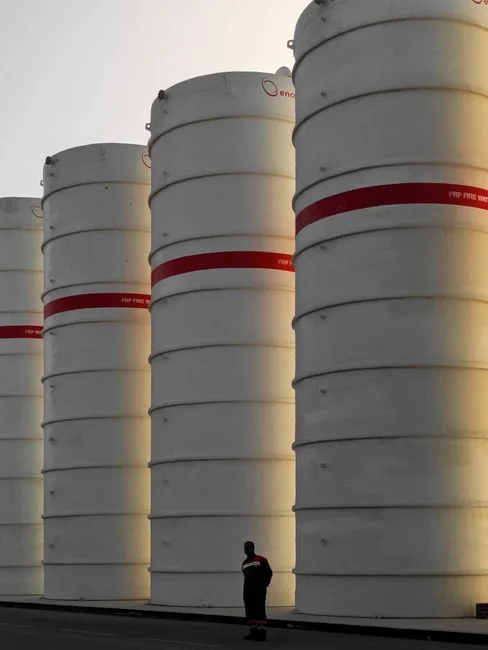
Suspended solids, colloids, oil and grease, and floatable material require a physical-separation barrier; COD and BOD generally require an organic-removal barrier; colour and refractory compounds require treatment selected through representative testing. DAF is appropriate when floatable or coagulated material must be separated, while lamella clarification addresses settlingable solids and can serve as a solids-handling solution where the clarified sludge creates downstream requirements. HydropureWater lists textile among the applicable industrial sectors for its textile wastewater DAF system.
Biological treatment should be considered only after biodegradability, toxicity, colour load, salinity, and treatment compatibility have been evaluated. The 2026 review by Sustainability reports that conventional biological treatment used in Pakistan has been inadequate for complete removal of some complex and toxic chemical effluents. Where the treatment objective demands more, the review supports additional advanced treatment; oxidation, adsorption, membrane separation, or polishing should be assessed as explicit barriers rather than assumed accessories.
MBR is justified where the required outcome includes membrane-retentive solids separation and where the biological and solids-retention functions justify the additional process controls. HydropureWater specifies submerged PVDF membranes, sub-1 μm filtration, and an equipment range of 10–2,000 m³/day for its integrated MBR wastewater treatment system. These are equipment claims, not evidence that every textile stream will meet the same performance.
| Treatment barrier | Select when | Verification question |
|---|---|---|
| Equalisation and segregation | Batch flows, variable composition, or incompatible streams are present | Does the arrangement control peaks and protect downstream units? |
| DAF | Floatables, colloids, oils, or coagulated solids must be removed | What removal is demonstrated on representative wastewater? |
| Lamella clarification | Settlingable solids must be separated or sludge handling is required | Can the clarified stream and sludge meet the downstream requirements? |
| Biological treatment | Biodegradable organics and compatible operating conditions are demonstrated | What COD and BOD removal occurs across the full variability envelope? |
| Advanced or membrane treatment | Complex, toxic, colour-bearing, or high-quality reuse targets remain | Does pilot performance include fouling, cleaning, and interruption cases? |
Size the Treatment Train from Operating Variability
Preliminary sizing should use maximum simultaneous flow, required hydraulic retention, and operating variability rather than one annual or daily average. Document peak, sustained, low-flow, batch-discharge, and chemical-dosing cases. Proper design ensures the treatment train remains controllable when the mill changes from dyeing to washing or finishing, as the same equipment may face different organic, colour, solids, and salinity loads.
Use HydropureWater’s catalog DAF range of 4–300 m³/h and MBR range of 10–2,000 m³/day only as preliminary selection envelopes. Neither range demonstrates textile-process suitability by itself. HydropureWater also states a lamella clarifier surface-loading rate of 20–40 m/h and chemical-consumption reduction of up to 30%; both remain vendor-defined inputs requiring validation against project wastewater and the selected coagulant or dosing strategy. The high-efficiency sedimentation tank should therefore be evaluated against measured settling behaviour and required solids quality.
For membrane stages, sizing must include pretreatment, fouling control, cleaning access, and consequences of interrupted production or chemical dosing. A nominal membrane capacity does not describe the recovered productive capacity after cleaning, nor does it establish performance for colour, salt, or toxic compounds not represented in the test wastewater.
| Sizing input | Procurement value | Open data gap to resolve |
|---|---|---|
| Maximum simultaneous flow | Sets hydraulic screening cases | Continuous and batch flow records |
| Flow variability | Defines equalisation and operating envelope | Production-linked discharge pattern |
| Pollutant concentrations | Sets chemical, biological, and membrane loading | Representative laboratory dataset |
| Recovery and cleaning cases | Prevents nominal-capacity substitution for usable capacity | Supplier test protocol and cleaning schedule |
| Sludge route | Connects clarification to dewatering and disposal | Solid content, volume, and handling constraints |
Validate Performance with Pilot and Acceptance Tests
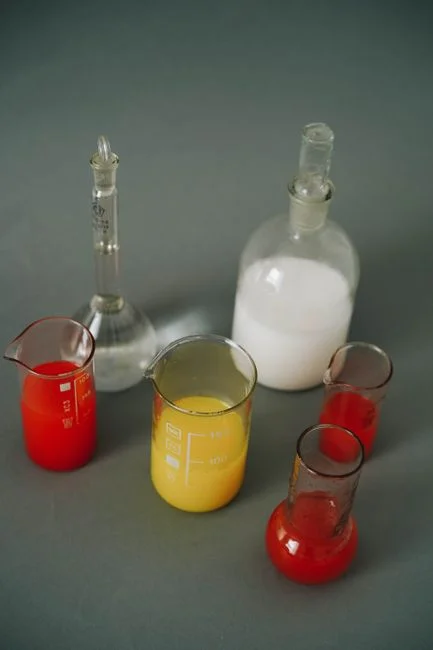
Representative pilot or side-stream testing is required before full-scale deployment when wastewater varies in colour, COD, salinity, toxicity, or metals. The 2025 Sustainability study reports a pilot-scale nature-based bioreactor in Faisalabad’s Khurrianwala industrial zone, demonstrating that local pilot evaluation is feasible. That result does not establish full-scale performance for another mill, another treatment process, or a different operating envelope.
The test protocol should define influent sampling points, analytical methods, test duration, performance parameters, pass-or-fail criteria, and remediation responsibilities. Include startup, stable operation, representative variability, sludge handling, cleaning or regeneration where relevant, and recovery after an operational interruption. Permit and consent checks remain separate from performance acceptance: confirm current requirements with the relevant regulator and environmental authority rather than relying only on equipment documentation.
Equipment selection should close only when three records agree: the characterization sheet defines the wastewater, the pilot or equivalent trial demonstrates the claimed barriers, and the acceptance protocol assigns measurable obligations to the supplier. The industrial ETP process and equipment selection guide can be used to structure those procurement documents, but site testing and regulatory confirmation remain necessary.
Frequently Asked Questions
How much does a textile wastewater treatment system cost in Pakistan?
There is no defensible universal price because the supplied research does not provide comparable quotations for Pakistani textile wastewater systems. Request itemized quotations for each unit, installation, ancillary piping and controls, chemical systems, sludge handling, commissioning, training, performance testing, and identified exclusions. Compare offers against the same characterization dataset and acceptance criteria rather than using headline package prices.
Which treatment equipment should a textile mill select for dyeing wastewater?
Select treatment in sequence: segregation and equalisation, then the barriers demonstrated for the actual stream. DAF is relevant where floatables, colloids, oil, or coagulated solids dominate; biological treatment requires verified biodegradability and compatibility; advanced or membrane treatment is needed where biological treatment cannot meet colour, toxicity, discharge, or reuse targets. A generic dyeing-wastewater package should not be accepted without representative testing.
How do I size a DAF or MBR system for textile wastewater?
Start with maximum simultaneous flow and the operating variability, then apply verified removal, hydraulic-retention, fouling, and recovery requirements. Treat the catalog DAF and MBR ranges only as preliminary envelopes. Ask each supplier to show the calculation basis, test results on representative wastewater, expected cleaning frequency, and productive capacity after cleaning and interruptions.
What should a supplier demonstrate before awarding an ETP contract?
Require reference tests on representative wastewater, the proposed process calculation, guaranteed outlet parameters, sampling and analytical methods, and a pass-or-fail acceptance protocol. Also verify permits and current consent conditions with the relevant environmental authority, and assign responsibility for failed performance, corrective action, retesting, and handover.
Can biological treatment alone meet textile wastewater discharge requirements in Pakistan?
It cannot be assumed to do so. The 2026 Sustainability review states that conventional biological treatment in Pakistan has been inadequate for complete removal of some complex and toxic chemical effluents. The required treatment train must follow the facility’s current consent conditions and demonstrate performance on the site’s wastewater, with additional barriers included where biological treatment leaves colour, toxicity, COD, or other regulated parameters unresolved.