Start with the discharge and reuse decision
The best industrial effluent treatment plant in Sylhet is a treatment train selected from measured wastewater conditions. A textile or denim operation may need suspended-solids and color removal, while tighter discharge or water-reuse objectives require biological treatment followed by membrane polishing. In Habiganj, Sylhet, an October 31, 2022 audit of Square Denims Limited’s ETP proposed an upgrade from 150 m3/hr to 165 m3/hr. Use that local example as evidence of industrial ETP activity, not as a universal Sylhet flow requirement. Before selecting a supplier, document flow, COD, BOD, pH, color, oil and grease, suspended solids, toxicity, discharge route and reuse target.
Begin with the receiving destination rather than the equipment catalogue. Record whether the factory will discharge directly to the environment, send wastewater to a municipal sewer for pretreatment, or reuse treated water within the factory. Attach the current environmental consent, sewer-entry requirements, applicable authority correspondence and any buyer or corporate specification. If water will be reused, state its intended service and the water-quality parameters required by the user; “industrial reuse” alone is not a design basis.
The US EPA Effluent Guidelines framework illustrates the relevant principle: industrial wastewater standards are linked to the regulated category, treatment performance and control technology, rather than to a generic equipment description (US EPA). That framework is not a source of Bangladesh or Sylhet limits. The supplied research does not provide current numerical discharge limits for Sylhet. The project owner or environmental consultant must confirm the applicable Bangladesh consent conditions and receiving-sewer requirements in writing before suppliers price compliance or propose guarantees.
This sequence prevents an ETP for Sylhet wastewater treatment equipment from being selected against a generic “treated water” label. It also gives bidders a defined envelope: discharge route, required outcome, governing conditions and evidence that the proposed treatment train can meet them. The industrial ETP process selection guide provides a useful process-mapping reference, but its examples should not replace the site-specific consent and reuse decision.
Build the wastewater characterization worksheet
A defensible ETP capacity and process design requires a documented wastewater envelope, not a single laboratory result. For a textile effluent process, collect representative information across normal production, cleaning and dye-bath discharge conditions. The worksheet below turns the buyer’s inquiry into data requests and preserves the status of every design input.
| Worksheet field | Information to obtain | Evidence status and buyer action |
|---|---|---|
| Flow and operation | Representative daily flow, peak flow, operating schedule, batch-discharge pattern and any future production change | State current test, buyer requirement, supplier guarantee or unknown. Do not convert a missing peak flow into a design assumption. |
| Organic loading | COD, BOD and relevant process-consumant data | Identify sampling points, analytical methods and variability. Use the COD and BOD removal technology guide to frame the treatment questions. |
| Physical condition | pH, color, suspended solids, oil and grease, temperature | Separate current verified values from proposed guarantees and unknown parameters. |
| Toxicity and pollutants | Toxicity and relevant inorganic or organic compounds | For textile and dyeing candidates, specifically investigate suspended solids, color, inorganic compounds and organic toxic compounds identified by the Asian Journal of Applied Science and Technology study. |
| Sample quality | Sampling point, preservation, analytical method, production conditions and seasonal or batch-discharge variation | Require the facility to explain whether samples represent routine operations, production peaks or a selected batch. |
| Treatment objectives | Discharge route, consent or sewer conditions, reuse service and buyer-specified water quality | Attach the confirmed requirement to every supplier proposal and guarantee point. |
The Asian Journal of Applied Science and Technology study examined textile dyeing effluent contamination and identified suspended solids, color, inorganic compounds and organic toxic compounds as relevant concerns. That evidence supports investigation of those parameters; it does not supply a universal Sylhet effluent profile or prove that every denim wastewater will have the same composition. To ensure accuracy, ask each facility to explain how samples were collected and preserved, which analytical methods were used, and whether production chemistry or operating conditions changed during the study period.
Record missing data as unresolved. A supplier may propose a treatment concept, but the buyer should not authorize final sizing until the missing inputs are either tested or formally approved as design assumptions. This is also where the COD and BOD removal technology guide can support a structured discussion of biological load and polishing requirements.
Map each treatment stage to its job
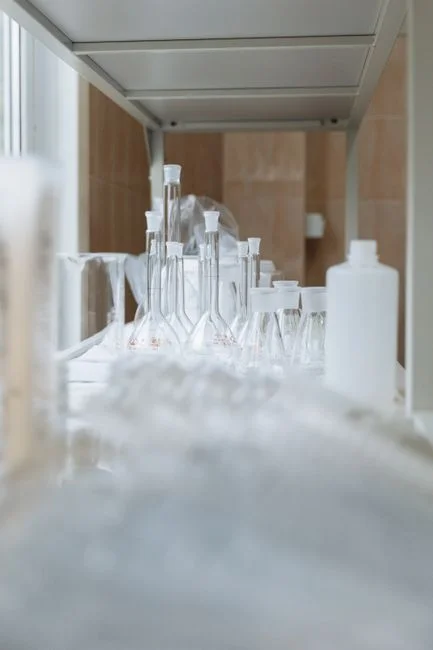
Each ETP stage should have a defined contaminant-removal job and a measurable outlet. A single unit cannot substitute for a complete train when the wastewater contains debris, floatables, biodegradable organic load and dissolved pollutants at the same time.
| Decision condition | Treatment step | Procurement question |
|---|---|---|
| Rags, plastics, fibers or suspended debris are present | Screening and pretreatment | What material is removed, at which flow and duty cycle, and how are screenings collected and disposed of? |
| Oil, grease, FOG, suspended solids or colloidal material is present | Dissolved Air Flotation | How is the DAF duty established from measured load and flow? What sludge or recovered float handling is included? See the industrial DAF system specification for the equipment scope. |
| Biodegradable organic loading must be removed | Biological treatment | Which organic load, flow variation and discharge target define reactor and aeration design? |
| Filtered effluent quality, compact footprint or reuse readiness justifies added complexity | MBR assessment | How does the integrated MBR wastewater treatment system address membrane cleaning, replacement and upstream load reduction? |
| Upstream treatment has reduced the load and a defined polishing need remains | Membrane polishing | What dissolved constituents must the membrane remove, and what pretreatment, recovery and reject-water provisions are required? |
| Micropollutant polishing is the defined research question | Constructed wetlands as a researched option | Does the proposed design address the target micropollutants, hydraulic conditions, footprint and maintenance conditions? |
Use screening or pretreatment to protect downstream pumps, aeration equipment and biological processes from rags, plastics, fibers and suspended debris. If wastewater contains oil, grease, FOG, suspended solids or colloidal material, evaluate DAF rather than assigning all solids removal to a downstream biological system. HydropureWater’s industrial DAF range is described as spanning 4–300 m3/h across 13 standard models, but the supplied evidence does not establish that any model is suitable for a particular Sylhet factory without the factory’s flow and load data. Once upstream solids are addressed, the remaining biological and polishing stages can be sized effectively.
Use biological treatment for biodegradable organic loading. Assess MBR when filtered effluent quality, footprint or reuse readiness justifies the added process complexity, including membrane cleaning and replacement. Consider membrane polishing only after upstream load reduction is defined. University of Twente research identifies nanofiltration as a candidate for polishing wastewater treatment plant effluent and for reclamation, not as a substitute for complete primary and biological treatment.
Constructed wetlands should likewise be treated as a researched polishing option rather than an automatic fit. Wageningen University and Research studied constructed wetlands for micropollutant removal from wastewater treatment plant effluent; the thesis was published on September 23, 2022. Its scope does not establish that a wetland is suitable for every textile effluent or replacement for the necessary upstream treatment.
Use the Sylhet industrial context without overgeneralizing
Square Denims Limited’s audited ETP provides a documented local reference, not a city-wide design standard. Kingsley Engineering Service audited the denim manufacturing facility in Habiganj, Sylhet, on October 31, 2022. The audit reported an upgrade plan to increase ETP capacity from 150 m3/hr to 165 m3/hr in response to the buyer’s requirements.
Use the project to ask informed procurement questions about local conditions. Can the supplier assess whether existing treatment stages can be upgraded? Will the proposal identify the operating changes that justify additional capacity? Does the bidder include an operational audit, process review and buyer-defined performance test? The DAF capacity upgrade guide is relevant when comparing retrofit options with installation of additional equipment. These questions ensure the proposed solution matches the specific operational reality of the site.
Do not copy the audited flow, treatment performance or upgrade plan into a new Sylhet tender. The source describes one factory, one audit and one buyer requirement; it does not establish typical flow for Sylhet factories, universal textile effluent characteristics or current numerical discharge limits. Those items must remain tied to the buyer’s measured wastewater and confirmed consent. This distinction matters during bid evaluation, as a supplier should be able to explain how it established its design flow from the buyer’s data rather than simply citing the Habiganj example.
Turn the selection into supplier acceptance criteria
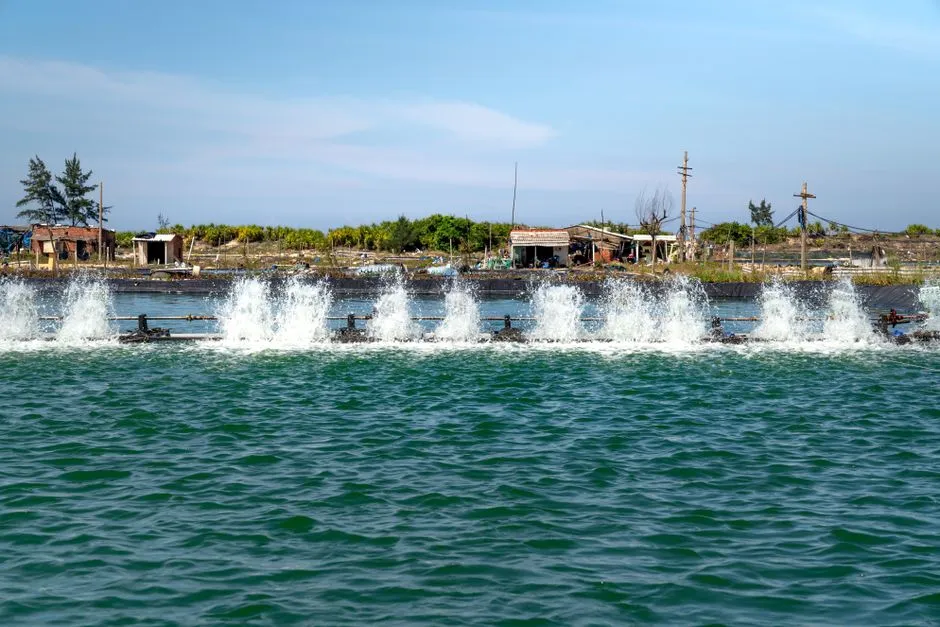
A comparable bid must state the complete process scope, design basis and responsibilities. Put these requirements into the tender document before opening the commercial comparison.
| Bid or acceptance item | Required response | Acceptance evidence |
|---|---|---|
| Process and sizing basis | Proposed process flow, design flow, duty cycle, equipment scope, utilities, controls, installation boundary, exclusions and operating assumptions | Supplier maps every stage to the confirmed influent envelope and discharge or reuse target. |
| Wastewater performance guarantee | Guarantee points tied to confirmed influent limits and measured parameters | Reject generic guarantees based on unsupported values or an undefined influent envelope. |
| Pilot or performance demonstration | Proposed pilot work or performance demonstration where variability, novel effluent or scale-up risk makes one reference installation insufficient | Define test protocol, test wastewater, operating period, measurements and acceptance decision before testing. |
| Commissioning and handover | Commissioning evidence, operator training, maintenance documentation and spare-parts support | Define cleaning, membrane replacement, maintenance intervals and responsibility for each activity. |
| Sludge handling | Expected sludge volume, characteristics, collection, handling and disposal responsibility | Assign responsibility and require a site-specific management plan. The supplied evidence does not establish a site-specific sludge-management standard. |
Require bidders to state the wastewater performance guarantee at named points in the train. A guarantee must connect the confirmed influent envelope to measured parameters and the confirmed discharge or reuse requirement. It should not rely on generic values that have not been tested at the factory.
Make pilot testing or a performance demonstration appropriate where wastewater variability, a novel effluent or scale-up risk makes a reference installation insufficient evidence. Define the test wastewater, protocol, operating conditions, sampling, analytical methods and pass/fail decision before work starts. Establishing these criteria early ensures that commissioning demonstrates the complete process, controls and handover requirements rather than only confirming that equipment starts.
Obtain operator training, maintenance documentation, spare-parts arrangements and written instructions for cleaning, membrane replacement and sludge handling. If mechanical sludge dewatering is part of the scope, define the interface and responsibility for equipment such as a plate-and-frame filter press; relevant valves, media and service items should be identified through the water-treatment parts, valves and media scope. Do not leave sludge as an unpriced residual; ask for estimated volume and characteristics under the proposed duty, the selected removal method, storage provisions and the party responsible for final disposal.
Frequently Asked Questions
How should an ETP be sized for a factory in Sylhet?
Size it from verified flow and wastewater data, not from the Habiganj example of 150 m3/hr upgrading to 165 m3/hr. The buyer should provide representative daily and peak flow, operating schedule, batch-discharge pattern and contaminant loads. Require the supplier to show how those inputs produce the proposed capacity and to identify any assumptions that remain unresolved.
How should buyers compare ETP suppliers and control the budget?
Compare complete treatment scope rather than headline equipment price. Request a cost breakdown for equipment, civil works, installation, utilities, controls, commissioning, operator training, maintenance, sludge handling and exclusions. Ask suppliers to state which costs depend on site conditions or pilot results. No supported quotation is available in the research, so obtain site-specific priced bids instead of using an assumed equipment cost.