Establish the Hungary site and discharge context
Wastewater from an expanded Samsung Electronics fab in Hungary requires a permit-driven, source-separated system rather than a combined effluent approach. First, confirm the current IPPC permit, water authorization, EIA status, and whether the final route is a municipal sewer or surface water. Characterize peak process flows, cleaning discharges, sanitary sewage, and potentially contaminated stormwater. A screening train may include equalization, DAF, biological treatment, and membrane polishing, with RO or advanced oxidation reserved for instances where measured chemistry and the reuse or discharge endpoint justify them. HydropureWater's related Göd analysis cites a 27,000 m³/day water demand and a 13 km wastewater-drainage route, but Samsung Electronics-specific effluent data and legal limits require independent verification.
The Göd site context must be separated into confirmed infrastructure, corporate benchmarks, and unresolved assumptions. Atlatszó reported in June 2023 that two Samsung plants in Göd were expected to use 27,000 m³/day of industrial and drinking water. This figure represents a water-demand statement, not a wastewater-flow rate, pollutant load, or permit limit.
The same June 2023 report described an 8.5 km Danube water-supply pipeline and a 13 km drainage route to a new wastewater treatment plant. The buyer must confirm the legal entity, installation, and current operating status of each pipeline; the public description alone does not establish which expansion will use them or whether the proposed discharge remains legally permitted.
The compliance stack identified in HydropureWater's 2026 Göd analysis comprises EU Industrial Emissions Directive 2010/75/EU, applicable BAT-AEL requirements, Hungarian Decree 314/2005 on EIA, Decree 27/2006 on point-source discharge provisions, renewed IPPC permission, and water authorization. Before equipment selection, obtain the current permit documents, authority comments, and confirmed sewer or surface-water route. The Samsung fab direct versus indirect discharge decision provides a useful decision frame, but only the Göd authorization can resolve the Hungarian route.
Separate wastewater streams before choosing equipment
Average combined flow cannot reveal the short contaminant peaks that determine equalization, pretreatment, and polishing capacity. HydropureWater's 2026 analysis calls for separate sampling and collection of semiconductor process wastewater, cleaning wastewater, sanitary sewage, and stormwater capable of contacting production areas. The battery-process parameters reported in that analysis serve as a sampling prompt rather than a characterization of Samsung Electronics semiconductor wastewater.
Building a robust system requires segmenting flows to ensure treatment efficacy. Build the sampling program around production campaigns, shifts, cleaning cycles, and first-flush conditions. Record instantaneous flow together with event duration, chemical inventory, and batch sequence. The resulting hydraulic and pollutant profiles should size mixing volume, transfer capacity, and peak treatment duty. This approach also prevents a cleaning-event discharge from being hidden in an annual-average water balance.
| Stream | Required characterization | Design basis and acceptance question | Named owner |
|---|---|---|---|
| Semiconductor process wastewater | Flow, pH, COD/TOC, metals, hardness, TDS, residual chemicals and stream-specific contaminants | Does measured peak load fall within the proposed equalization and polishing duty? | Fab process engineer; environmental manager |
| Cleaning wastewater | Cleaning-cycle flow, duration, pH, COD/TOC, metals, residual oxidants and relevant solvents | Can the receiving train accept the complete batch without an uncontrolled bypass or shock load? | Cleaning operations owner; treatment supplier |
| Sanitary sewage | Flow, COD, nitrogen and route-specific sewer requirements | Separate treatment or documented sewer discharge is required? | Facility manager; utilities owner |
| Stormwater | Catchment area, rainfall runoff, oil, suspended solids and site-specific production contaminants | Can contaminated first flush be segregated and discharged under an identified authorization? | Site EHS manager; civil/drainage lead |
| Reuse and residuals | Treated-water quality, recovery yield, concentrate chemistry and sludge characteristics | Do reuse and residual destinations balance with the confirmed permit and water plan? | Utilities manager; EHS manager |
Create one source-by-source water balance covering process make-up, wastewater generation, treatment yield, reuse, concentrate, sludge, and final discharge. Reuse and discharge volumes must reconcile with the permit and the expansion production plan. For broader equipment framing, the Samsung fab wastewater equipment decision illustrates how permit conditions and measured streams should precede a fixed treatment recipe.
Match the treatment train to the required endpoint
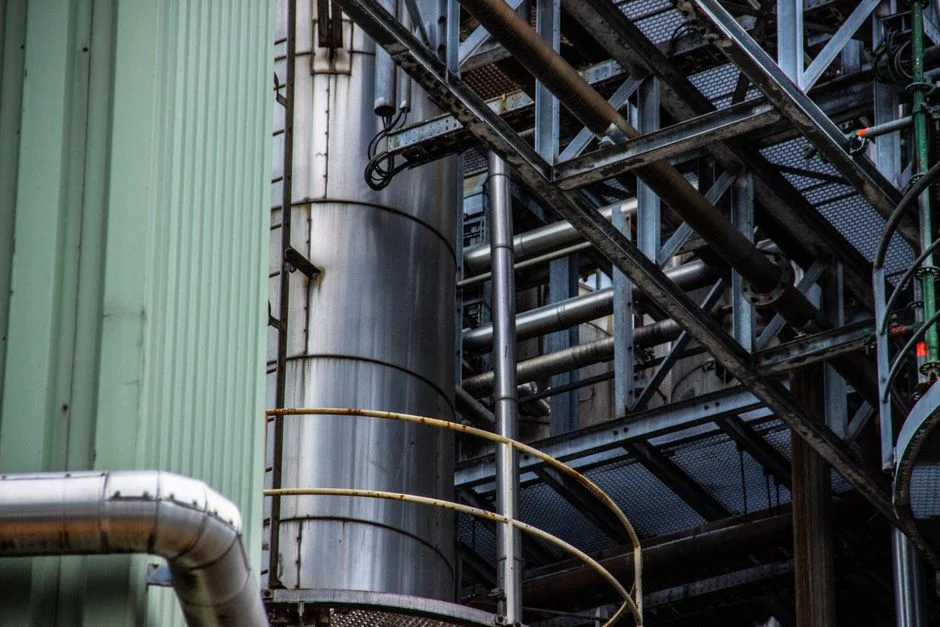
The treatment train should follow contaminant duty and the selected discharge or reuse endpoint, not a generic semiconductor recipe. HydropureWater's 2026 Göd analysis proposes equalization followed by DAF for suspended solids, oil, FOG, and colloidal material, then biological treatment or MBR where measured organics and reuse requirements justify it. DAF does not remove every dissolved contaminant; downstream biological and polishing duties must be defined from the post-DAF water quality.
| Process function | Selection condition | Acceptance information required | Residual-management issue |
|---|---|---|---|
| Industrial wastewater equalization | Required where batch cleaning or process discharges create hydraulic and load variation | Representative peak flow, batch profile, working volume, mixing and bypass provisions | Sediment and contaminated sludge removal |
| DAF pretreatment | Measured TSS, oil, FOG, emulsion or colloidal load makes flotation useful | Peak hydraulic duty, solids and emulsion loading, recycle, sludge removal and materials compatibility | DAF sludge characterization and confirmed destination |
| MBR wastewater treatment | Biological removal plus membrane solids separation is required by measured COD/TOC, biodegradability or reuse quality | Organic load, nutrients, membrane area, flux, cleaning strategy, redundancy and reuse specification | Retained sludge and membrane replacement waste |
| RO, ion exchange or advanced oxidation | Measured dissolved ions, residual organics or endpoint quality demonstrates a need | Feed chemistry, target quality, recovery, pretreatment, regeneration and concentrate volume | Spent RO or ion-exchange concentrate management |
Published catalogue ranges are screening references, not Göd sizing. HydropureWater's 2026 analysis lists DAF capacities of 4–300 m³/h across 13 models and integrated MBR capacities of 10–2,000 m³/day. Neither range establishes the required Göd equipment capacity; measured Göd peak flow, hydraulic calculations, and pollutant loads control selection. The industrial DAF wastewater pretreatment and integrated MBR wastewater treatment should be evaluated against those inputs rather than selected from catalogue capacity alone.
Use RO, ion exchange, or advanced oxidation only where measured fluoride, metals, hardness, TDS, residual organics, and the final endpoint establish the duty. HydropureWater cites industrial RO recovery of up to 95%, subject to feed chemistry and system design; this is not a Göd guarantee. The tender should also cover sludge handling, chemical storage, compatible materials, redundancy, bypass control, and the confirmed destination of concentrates and contaminated residues.
Build the permit-to-equipment compliance matrix
A compliant design converts every confirmed permit condition into a measurable equipment duty, sample point, record, and accountable owner. The matrix should distinguish untreated process wastewater, post-DAF, post-MBR, post-polishing, final-discharge, and reuse sampling locations so performance can be attributed to individual units rather than inferred from final effluent alone.
| Matrix field | Permit-to-equipment entry | Operational record | Owner |
|---|---|---|---|
| Limit or load condition | Enter the confirmed concentration, load, temperature or discharge condition and its source document | Design rationale, calculation and operating record against the applicable BAT conclusion | Process engineer; treatment supplier |
| Sample point and method | Define raw, intermediate, final-discharge or reuse location and the instrument or accredited laboratory method | Calibration method, sample method, frequency and retained results | Environmental manager; laboratory owner |
| Continuous and batch monitoring | Identify applicable flow, pH and TOC instruments; add representative laboratory campaigns for batch discharges | Calibration certificates, campaign records and data integration | Control-room lead; EHS manager |
| Escalation and bypass | Define approval thresholds, temporary bypass controls and notification procedure | Alarm history, bypass log, corrective-action record and authority communication | Operations manager; environmental manager |
| Route-specific compliance | Add sewer conformity, receiving-water assessment and water-pollution charge reporting only where applicable | Correspondence, sewer acceptance or receiving-water evidence and charge-return records | Legal/EHS workstream owner |
Continuous instruments should be supplemented by representative laboratory sampling, calibration records, and campaign-based measurements. Automated chemical dosing must be tied to measured demand rather than a fixed generic dose; the automatic chemical dosing system can be evaluated against the actual chemical inventory, storage requirements, and control philosophy.
Do not treat EU rules as a substitute for the site permit. Sewer acceptance conditions, receiving-water sensitivity, and reporting obligations depend on the confirmed discharge route. Where disinfection is specified by the authorization or reuse plan, include the UV water-treatment system as an option subject to the required dose, water matrix, and validation.
Issue a procurement-ready design-basis request
A defensible tender starts with measured data and current authorizations, not equipment selection. HydropureWater's 2026 analysis directs buyers to request measured flow and pollutant data, stream-segregation plans, current authorizations, authority comments, the discharge route, the expansion water balance, and the intended reuse schedule before equipment selection.
Require a mass and load balance covering water sources, wastewater generation, segregation, treatment, reuse, sludge, concentrates, and final discharge. Where existing data cannot establish performance across the chemical and operating envelope, require pilot work. Pilot acceptance criteria should state the feed chemistry, operating envelope, performance endpoint, and residual-management information needed to qualify full-scale equipment.
| Information request | Minimum submission | Bid comparison test | Owner |
|---|---|---|---|
| Legal and route basis | Current IPPC permit, water authorization, EIA status, authority comments and confirmed discharge route | Does the bid map every confirmed condition to equipment, monitoring and documentation? | Legal/EHS workstream owner |
| Measured design basis | Representative production and cleaning campaigns, flow profiles, pollutant data and first-flush observations | Are peak flow and pollutant loads used for sizing rather than corporate averages? | Fab process engineer; utilities owner |
| Water and residual balance | Make-up, generation, treatment yield, reuse, sludge, concentrates and discharge | Do stated yields and residual destinations reconcile? | Utilities manager; EHS manager |
| Commercial boundary | Fixed, unit-rate and excluded costs for civil works, equipment, controls, chemicals, residuals and commissioning | Are exclusions and sensitivity items assigned clearly? | Procurement lead; finance |
| Performance and handover | Confirmed effluent guarantees, compatibility evidence, cleaning strategy, backup power, bypasses, cybersecurity, spares, training and staged tests | Can each guarantee be tested with an agreed method and acceptance threshold? | Treatment supplier; project engineer |
HydropureWater's 2026 analysis gives an early-planning capital range of €15–45 million and annual operating costs of 10–15% of initial investment for an industrial plant with high-salinity and organic-solvent loads. These figures are not a Göd estimate or quotation. Require a site-specific price covering treatment complexity, solvent recovery where justified, civil works, membranes, controls, sludge and concentrate management, and commissioning.
Compare bids against the same confirmed inputs and performance tests. The battery-process wastewater treatment decision is relevant only as a diligence framework: Samsung SDI battery chemistry, permit conditions, and site data must not be transferred to a Samsung Electronics semiconductor installation.
Frequently Asked Questions
How should the treatment plant be sized for the expanded Samsung Electronics Hungary fab?
Size it from representative peak flow and pollutant mass loading, with equalization and pretreatment covering production campaigns and cleaning cycles. Use measured event duration, concentration, and flow—not an annual average or the published 27,000 m³/day water-demand figure—to establish working volume and treatment duty.
What
Frequently Asked Questions
How should wastewater from a Samsung Electronics fab expansion in Hungary be treated?
Wastewater from semiconductor facilities typically requires a multi-stage process to address high concentrations of fluorides, photoresists, and organic solvents. The treatment train should integrate physical-chemical precipitation for fluoride removal, followed by biological treatment using Membrane Bioreactors (MBR) for organic load reduction, and final polishing through advanced oxidation processes (AOP) or activated carbon to meet local Göd environmental discharge standards.
Due to the sensitivity of local water bodies, the system must include equalization tanks to buffer hydraulic surges and pH adjustment units to neutralize acidic or alkaline process streams before they reach sensitive biological stages. If high salinity is present, reverse osmosis (RO) or electrodialysis reversal (EDR) may be required to meet strict total dissolved solids (TDS) limits.
What wastewater data and permits are needed before selecting treatment equipment for the Hungary site?
Before selecting equipment, engineers must obtain a detailed chemical characterization report including peak hourly mass loading for COD (Chemical Oxygen Demand), BOD (Biochemical Oxygen Demand), total nitrogen, phosphorus, and specific heavy metals or fluorides. Site-specific permits from the Hungarian National Water Directorate must be reviewed to identify the exact discharge limits for parameters such as Ammonium-Nitrogen (typically < 1.0-5.0 mg/L) and AOX (Adsorbable Organic Halides).
Additionally, the facility must secure a water use permit and an integrated pollution prevention and control (IPPC) permit that dictates the maximum allowable discharge volume per day and the specific toxicity limits required for local industrial wastewater discharge compliance.
How do we size a DAF and MBR system for a Samsung fab without using annual-average flow?
Sizing must be based on the "maximum daily flow" (MDF) and "peak hourly flow" (PHF) scenarios derived from the fab's tool-set production schedule, rather than annual averages. Dissolved Air Flotation (DAF) units must be sized to handle the peak hydraulic loading rate (HLR) during batch discharges of high-solids waste, ensuring a sufficient surface overflow rate to prevent carryover.
The MBR system should be sized based on the organic loading rate (OLR) during the fab's peak production intensity. This requires calculating the maximum mass of COD/BOD generated per hour and ensuring the mixed liquor suspended solids (MLSS) concentration and membrane surface area are sufficient to maintain a hydraulic retention time (HRT) that prevents biological washout during peak influent surges.
What budget should we plan for an industrial wastewater treatment plant with organic-solvent and high-salinity loads?
Capital expenditure (CAPEX) for a complex semiconductor wastewater plant of this nature typically ranges from $15 million to $50 million USD, depending on the required throughput capacity and the level of advanced treatment required for solvent recovery and desalination. Systems requiring high-end tertiary treatment, such as RO or AOP, typically sit at the higher end of the cost spectrum due to membrane replacement cycles and energy consumption.
Operational expenditure (OPEX) should account for high chemical consumption for coagulation/flocculation, electricity for aeration, and specialized waste disposal fees for the concentrated brine or sludge generated by the system. Annual maintenance costs generally track at 5% to 10% of the initial CAPEX investment.
Can Samsung's corporate water-reuse target be used as the Göd wastewater design requirement?
Samsung’s corporate water-reuse targets, which often aim for high percentages of recycled process water, serve as a sustainability goal but are insufficient as a standalone design requirement for the Göd site. The treatment system must first be engineered to satisfy the mandatory legal discharge limits defined by the Hungarian environmental authorities and local municipal sewer requirements.
While corporate targets can drive the integration of a water reclamation plant (WRP) downstream of the primary treatment system, the initial design must prioritize compliance with the local environmental permit. Any water reuse strategy must be validated by secondary treatment quality metrics, such as silt density index (SDI) and specific conductivity, to ensure reclaimed water does not degrade the fab's ultrapure water (UPW) system or production tool performance.