Why the Hungary Expansion Changes the Wastewater Basis
The Samsung SDI Göd expansion requires a permit-controlled wastewater redesign, not simply a proportional increase in treatment capacity. HydropureWater’s 2026 analysis describes 43,000 m² of new halls, four additional battery-cell production lines, and intended annual capacity of 157,000 tonnes, presented as a 20% increase. More production can alter peak flow, pollutant concentrations, chemical inventories, hazardous-waste generation and internal water demand, even where average flow changes less. The design basis must therefore be built around measured streams and current authorizations rather than corporate averages.
Samsung SDI’s corporate water-reuse performance demonstrates policy and operating experience, but it does not establish Göd’s legal limit or final process capacity. Samsung SDI reports that its reuse systems are being extended to Hungary; the site-specific discharge route, expansion conditions and permit interpretation still control the equipment decision. The existing analysis also reports a permit dispute and connects expansion approval with a renewed IPPC pathway. Before procurement or commissioning, Hungarian environmental counsel and the competent authorities should verify the permit’s current legal status, the revised EIA requirements, water authorization and applicable discharge conditions. An approach to Hungary EV plant DAF sizing methodology can support hydraulic screening, while EV plant permit-transfer wastewater due diligence illustrates why authorization status must be resolved separately from equipment selection.
Characterize Each Wastewater Stream Before Equipment Selection
Battery-manufacturing effluent must be segregated before the contaminant profile can support defensible treatment selection. HydropureWater’s 2026 analysis identifies coating-related process wastewater, cleaning wastewater and sanitary sewage as distinct management requirements and warns against relying on one combined process stream. Stormwater should be assessed separately where it can contact production areas. The sampling program should cover flow, pH, COD, TOC, NMP, fluoride, cobalt, nickel, manganese, TSS, oil and grease, and toxicity where the permit or sewer authority requires it.
NMP is the primary carrier solvent for cathode and anode slurries and is identified in the 2026 analysis as a major COD contributor, with theoretical COD of approximately 1.67 g O₂/g NMP; the same source states that it is toxic to aquatic life above 50 mg/L. Fluoride is equally important to the design basis because LiPF₆ electrolyte hydrolysis can introduce inorganic fluoride. Neither parameter should be inferred from generic battery-wastewater data: testing must capture representative electrode production, humid-air exposure and alkaline cleaning events.
PVDF binder fines and carbon black must also be included in the solids assessment. HydropureWater characterizes them as fine, low-density particles that may settle poorly, making them relevant to equalization, flotation and membrane-fouling assessment. Sampling frequency should reflect production campaigns, shifts, cleaning cycles and first-flush conditions. Annual-average flow cannot reveal short solvent or electrolyte peaks that determine equalization, pretreatment and polishing capacity.
| Stream or event | Minimum characterization focus | Design implication |
|---|---|---|
| Coating-related process wastewater | Flow, pH, COD/TOC, NMP, fluoride, metals, TSS, oil and grease | Organic-solvent load, dissolved contaminants and treatment sequence |
| Cleaning wastewater | Cleaning-cycle flow, pH, COD/TOC, fluoride, metals and toxicity | Batch equalization, source control and peak-load treatment |
| Solids-bearing wastewater | TSS, PVDF fines, carbon black, oil/NMP emulsion | DAF performance, sludge handling and membrane protection |
| Sanitary sewage | Flow, COD, nitrogen and applicable sewer requirements | Separate treatment or documented sewer-discharge route |
| Stormwater, where applicable | Catchment area, rainfall run-off, oil and site-specific contaminants | Segregation, first-flush control and discharge authorization |
Select a Treatment Route That Supports Compliance and Reuse
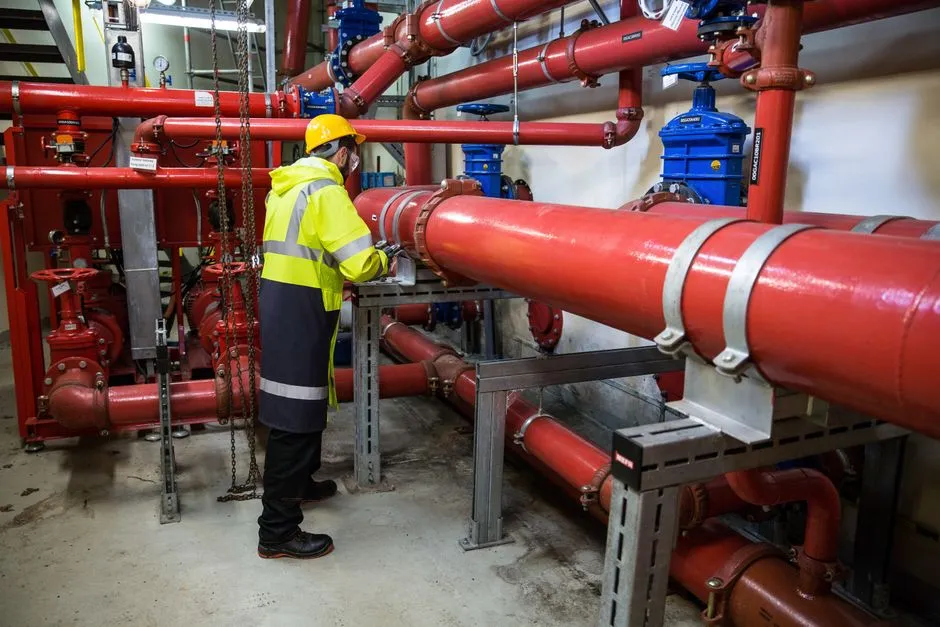
No single treatment device can reliably resolve the dissolved, suspended, emulsified and microbiological contaminants associated with battery manufacturing. HydropureWater’s 2026 screening concept proposes equalization followed by DAF, FOG treatment, MBR, ion exchange, RO and final UV or chlorine-dioxide disinfection. This is a route to test against measured effluent and the selected endpoint, not a predesigned configuration for Göd.
Equalization should absorb hydraulic and load variation. A DAF system for suspended solids, oil, and colloidal wastewater is a pretreatment option for TSS, oil, FOG, emulsified NMP, PVDF and carbon-black fines. HydropureWater states a DAF range of 4–300 m³/h across 13 models; the selected capacity must follow Göd peak-flow and hydraulic calculations rather than that catalogue range.
An MBR wastewater treatment for industrial reuse combines biological treatment with membrane solids separation and can provide compact polishing suitable for reuse applications. HydropureWater gives an integrated MBR range of 10–2,000 m³/day using submerged PVDF membranes. The MBR versus conventional activated sludge comparison is useful for evaluating biological capacity, footprint and solids handling, but Göd influent data and reuse targets determine the selection.
RO is a downstream option where dissolved salts or residual organics must be reduced before reuse or a sensitive receiving-water discharge. HydropureWater states industrial RO recovery rates of up to 95%, subject to feed chemistry and system design; that figure is not a Göd guarantee. Ion exchange, RO and advanced oxidation should be included only where actual effluent data and the permit endpoint demonstrate a need.
Chemical dosing must be treated as a controlled process, with automated dosing for coagulants, flocculants, pH adjusters and other specialty chemicals identified by the treatment design. The scope should also address covered sludge handling, chemical-resistant materials, redundancy, bypass control and safe handling of RO or ion-exchange concentrates. The disposal route for those concentrates and contaminated sludge must be confirmed before procurement.
| Unit | Principal role in the screening concept | Key design input | Procurement focus |
|---|---|---|---|
| Equalization | Flow and load stabilization | Representative peak flow and batch discharge profile | Working volume, mixing, aeration and bypass provisions |
| DAF and FOG treatment | Removal of TSS, oil, FOG and colloidal matter | Solids, emulsion and stormwater characteristics | Hydraulic loading, recycle, sludge removal and materials compatibility |
| MBR | Biological treatment and membrane solids separation | COD, TOC, NMP biodegradability, nutrients and solids | Membrane area, flux, cleaning, redundancy and reuse quality |
| Ion exchange and RO | Dissolved-ion and residual-organic polishing | Fluoride, metals, hardness, TDS, organics and recovery target | Resin or membrane regeneration, concentrate and pretreatment |
| UV or ClO₂ | Final microbial control | Discharge or reuse endpoint | Dose, contact conditions, monitoring and chemical safety |
Turn the Permit into Monitoring and Evidence Requirements
The Göd wastewater design must be translated into a compliance matrix, not treated as a presumption that generic EU limits settle every site-specific question. HydropureWater’s 2026 analysis identifies EU Industrial Emissions Directive 2010/75/EU, BAT-AEL requirements, Hungarian Decree 314/2005 on EIA, Decree 27/2006 point-source discharge provisions, renewed IPPC and water authorization as the governing compliance stack. The competent authority must confirm which provisions and BAT conclusions apply to the expanded installation.
The monitoring architecture should cover flow, pH, TOC, fluoride and every other parameter confirmed in the renewed authorization. Continuous instruments should be supplemented by representative laboratory sampling and calibration records. A broader industrial wastewater compliance framework can inform documentation structure, but it does not replace the Göd permit schedule.
Sample points should distinguish untreated process wastewater, post-DAF effluent, post-MBR effluent, post-polishing water, final discharge and reuse water. This separation allows operators to attribute performance to individual units rather than demonstrating only final compliance. Receiving-water status, municipal sewer conformity and water-pollution charge self-reporting remain discharge-route-specific due-diligence items.
| Requirement | Evidence required | Owner to be assigned |
|---|---|---|
| Permit concentration or load limit | Instrument or accredited sample result linked to a defined discharge point | Process owner and environmental manager |
| BAT-AEL demonstration | Design rationale, operating records and performance against the applicable BAT conclusion | Process engineer and treatment supplier |
| Monitoring and reporting | Calibration method, sample method, frequency, records and escalation procedure | Operations and EHS |
| Unit-performance attribution | Results from raw, intermediate, final-discharge and reuse sampling points | Treatment operator |
| Change management | Approval thresholds, temporary bypass controls and notification procedure | Plant manager |
Use Reuse as the Expansion Planning Objective
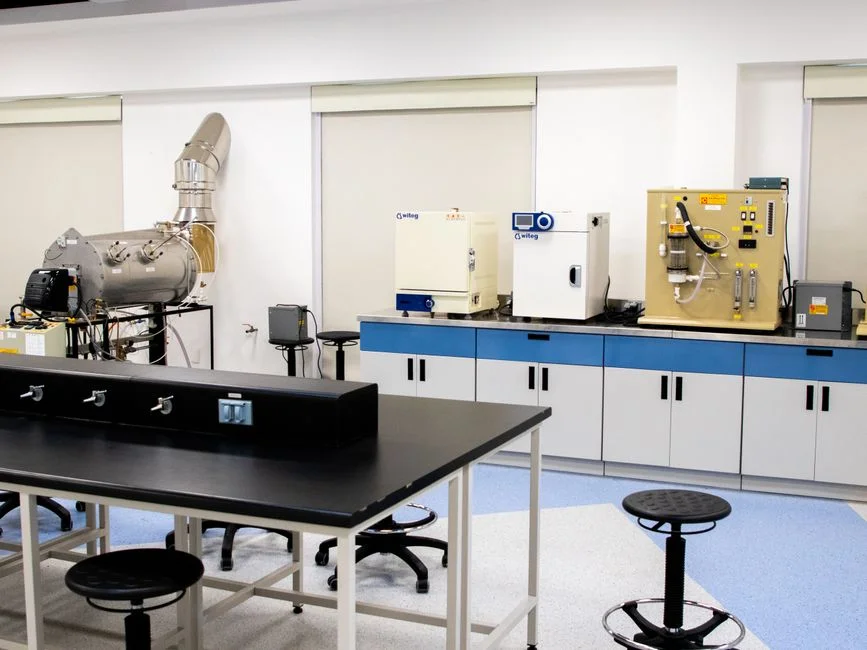
Samsung SDI reports a 42% water-reuse rate, equal to 6.24 million tons in 2024, and a target of 58% by 2030. The company’s disclosed reuse approach includes using treated battery-manufacturing wastewater as cooling-tower makeup and treating discharged wastewater through sand, activated-carbon and membrane filtration to convert it into industrial water. Its reuse system is being extended to Hungary.
These corporate figures provide a benchmark for planning, not a Göd reuse commitment. The expansion water balance must connect production growth to process make-up, stormwater, rainwater, wastewater generation, treatment yield, reuse, concentrate, sludge and final discharge. Yield variability must be considered alongside permit limits and receiving-water sensitivity.
Sewer discharge may require less polishing than a reuse endpoint, while surface-water discharge may require tighter control depending on the applicable authorization. Greater reuse can reduce freshwater demand and discharge volume but increases treatment intensity and concentrate management. The preferred case should therefore be selected only after comparing the renewal application, sewer acceptance conditions, measured water balance and site reuse strategy.
| Expansion case | Primary condition | Water-reuse objective | Key uncertainty |
|---|---|---|---|
| Municipal sewer discharge | Acceptance criteria and authorization permit discharge | Retain only reuse that is technically and operationally justified | Sewer limits, capacity and receiving-system constraints |
| Surface-water discharge | Renewed permit and receiving-water assessment | Reuse should be evaluated before discharge polishing | Effluent quality, discharge permit and ecological sensitivity |
| Expanded industrial reuse | Reuse target defined by process water quality | Increase reliable reuse while controlling concentrates and variability | Yield, membrane performance, water balance and storage |
Budget for Treatment, Reuse, and Compliance Uncertainty
HydropureWater’s 2026 analysis gives an indicative capital cost of €15 million to €45 million for an industrial wastewater treatment plant serving high-salinity and organic-solvent loads. It also states that annual operating costs, including reagents, energy, evaporation and hazardous-waste disposal for concentrated sludge, typically represent 10% to 15% of initial investment. These figures are suitable only for early planning; they are not a quotation or a Göd cost estimate.
A procurement budget should separate civil works, process equipment, membranes, electrical and controls, chemical storage, odor control, sludge handling, monitoring, commissioning, operator training and long-term spares. Solvent recovery should be priced as a separately evaluated option because its inclusion depends on the influent chemistry and recovery objective.
Permit delay, influent variability, concentrate management, membrane replacement, chemical consumption and sludge disposal should be treated as sensitivity items. A tender should identify which costs are fixed, which are unit-rate based and which exclusions could shift responsibility back to the owner.
| Budget element | Required pricing basis |
|---|---|
| Civil works and installation | Site conditions, foundations, access, piping and utilities |
| Process equipment and membranes | Design flow, load, recovery, redundancy and replacement assumptions |
| Controls and monitoring | Permit parameters, sample points, data integration and calibration |
| Sludge and concentrate management | Residual-generation rate, handling method and confirmed destination |
| Operation and maintenance | Energy, chemicals, membrane cleaning, replacement, labor and waste disposal |
| Compliance and commissioning | Training, performance testing, documentation and permit-interface support |
Build a Pre-Award Wastewater and Permit Checklist

Procurement should not freeze the treatment design until the current IPPC permit, water authorization, EIA status, sewer or surface-water conditions and the authority’s interpretation of the expansion are obtained. At least one representative production and cleaning campaign should establish shift-based flow, pollutant concentrations and first-flush behavior. The resulting mass and load balance must cover water sources, wastewater generation, segregation, treatment, reuse, sludge, concentrates and final discharge.
The tender should define performance guarantees around confirmed effluent values and the battery-manufacturing chemical and operating envelope. Pilot work should be required where the available data cannot establish full-scale performance. Supplier scope should include chemical compatibility evidence, membrane-cleaning strategy, backup power, controlled bypasses, cybersecurity, critical spares, operator competency and staged performance reviews.
If ownership or the operating entity changes, permit transfer or reissuance should be managed as a separate legal workstream. The existing analysis states that environmental authorizations must be transferred or reissued and reviewed by the authority. That process should not be assumed complete merely because an equipment supplier has accepted an order.
Frequently Asked Questions
What should an owner request before purchasing a battery-plant wastewater treatment system?
Request the current IPPC permit, water authorization, EIA status, authority comments, measured flow and pollutant data, stream-segregation plan, discharge route and intended reuse schedule. These inputs define the legal and process basis; equipment should not be selected first and fitted to unresolved permit conditions later.
How much does wastewater treatment for a Hungarian battery-plant expansion cost?
Use HydropureWater’s 2026 indicative range of €15 million to €45 million in capital cost and 10% to 15% of initial investment for annual operating cost only during early planning. Require a site-specific quotation covering capacity, treatment complexity, solvent recovery, civil works, controls, sludge, concentrate management and commissioning.
Is DAF alone sufficient for Samsung SDI-style coating wastewater?
No. DAF can remove suspended solids, oil, FOG and colloidal material, but dissolved organics, NMP, fluoride, metals, salinity and the required reuse or discharge quality must be evaluated separately. The appropriate downstream route should follow measured effluent and permit endpoints.
What determines whether the Göd treatment system should favor sewer discharge or water reuse?
The controlling inputs are the renewed permit, sewer acceptance criteria, receiving-water sensitivity, treatment targets, expansion water balance and Samsung SDI’s site reuse strategy. Compare the discharge options through one mass balance covering reuse yield, concentrate volume and residual discharge.
Can one copied wastewater treatment design be used for every new battery line?
No. Add production-stage sampling and design against the chemical inventory, cleaning regime, measured peak flows, permit envelope and expansion phase. A copied design may provide a screening framework, but it cannot establish contaminant loads, treatment duty or compliance without site data.