What Changes When BYD Takes Over a German EV Plant?
When BYD acquires an EV plant in Germany, wastewater becomes a transferable permit and operating liability, not an inherited utility. The buyer must reopen five legal layers: the BImSchG permit, indirect-discharge requirements under §58 WHG and IndV, applicable AbwV requirements, the local Wasserzweckverband specification, and any §51 WHG groundwater-protection overlay. The wastewater fingerprint must also be re-baselined for the planned LFP process. Treatment should match each stream, with DAF pretreatment, biological treatment, controlled chemical dosing and membrane polishing assessed against verified discharge limits.
The historical permit may remain relevant, but it does not establish that the approvals will issue to BYD or cover its intended production changes. The source material for this article identifies five layers that must be re-papered on an operator change, with the process fingerprint re-baselined against the planned LFP operation (HydropureWater, March 2026).
AbwV Annex 3 is relevant to inorganic and lithium-bearing streams, while Annex 22 may apply to surface treatment. The buyer’s engineer must verify which provisions actually map to the plant rather than inherit the seller’s interpretation. For LFP production, the source identifies refractory phosphorus, total nitrogen, fluoride, iron, COD and TSS as the controlling fingerprint (HydropureWater, March 2026).
| Legal or technical layer | Diligence question | Transaction implication |
|---|---|---|
| BImSchG Genehmigungsbescheid | Will the issuing authority amend or re-issue the approval for BYD as operator? | No valid approval covering BYD is a closing blocker. |
| §58 WHG and IndV | Will indirect-discharge approval be reissued against the re-baselined process? | Approval scope and process fit must be confirmed before closing. |
| AbwV | Which sector annexes and provisions apply to the actual LFP process? | Historic mapping cannot be assumed to cover changed operations. |
| Wasserzweckverband permit | Will the receiving authority accept the proposed flow and pollutant envelope? | Loss or restriction of the discharge route is a blocker. |
| §51 WHG groundwater protection | Do statutory prohibitions or monitoring obligations apply? | Unresolved prohibitions cannot be treated as ordinary permit conditions. |
This sequence is more useful for a BYD plant acquisition Germany review than a generic permit checklist because it links legal approvals directly to the future LFP wastewater fingerprint. The German gigafactory wastewater acquisition guide provides a related transaction perspective.
Build the Wastewater Permit Diligence File Before Signing
The permit file is complete only when each approval can be traced to a document, a responsible authority and a written statement of its applicability to BYD’s planned operation.
- Federal installation approval: Obtain the current Genehmigungsbescheid and every Nebenbestimmung. Ask the issuing authority directly whether it will amend or re-issue the approval for BYD as operator and for any production changes.
- Indirect-discharge approval: Collect the IndV permit, Wasserzweckverband correspondence, complete parameter list, flow cap and confirmation that the receiving sewage treatment plant has capacity.
- Groundwater protection: Obtain the applicable §51 WHG Schutzgebietsverordnung, monitoring-well records and any statutory prohibitions. The source warns that a Verbotstatbestand is a statutory prohibition rather than a negotiable permit condition (HydropureWater, March 2026).
- Process mapping: Give the buyer’s process engineer responsibility for re-mapping the planned drains, materials and treatment operations against AbwV Annex 3, Annex 22 and the WZV specification.
- Operating evidence: Request influent and effluent results, flow records, dosing logs, calibration records, bypass events, sludge records and corrective actions. Historical compliance cannot substitute for evidence that the system handled representative loading.
| Document | Specific request | Decision test |
|---|---|---|
| Genehmigungsbescheid | Approval and all Nebenbestimmungen; authority correspondence | Written pathway to re-issue or amendment naming the new operator |
| IndV and WZV permit | Full text, parameters, flow cap, monitoring conditions and amendments | Scope covers the planned process and receiving route |
| STP confirmation | Current hydraulic and pollutant-capacity statement | Acceptance is not inferred from historic discharge |
| §51 WHG documents | Protection-zone order, restrictions, monitoring records and site overlay | No unresolved statutory prohibition or evidence gap |
| Operating records | Flow, laboratory data, dosing, calibration, bypasses and sludge handling | Performance history supports the seller’s representations |
| Process baseline | Drain map, chemicals, LFP route, future production plan and AbwV mapping | Buyer’s process has a defensible permit interpretation |
Sweco’s acquisition of STEIN Ingenieure—approximately 60 experts and EUR 6.5 million turnover in 2025—shows continued German wastewater-infrastructure investment linked to modernisation, climate resilience and stricter requirements (Sweco Group, 2025). It is market context only; it does not establish the condition of any target site. The BYD factory acquisition ETP due-diligence guide is useful for structuring the document screen, but German approvals must be checked against German law and the actual receiving authority.
Characterize Each Stream Against the Actual Discharge Route
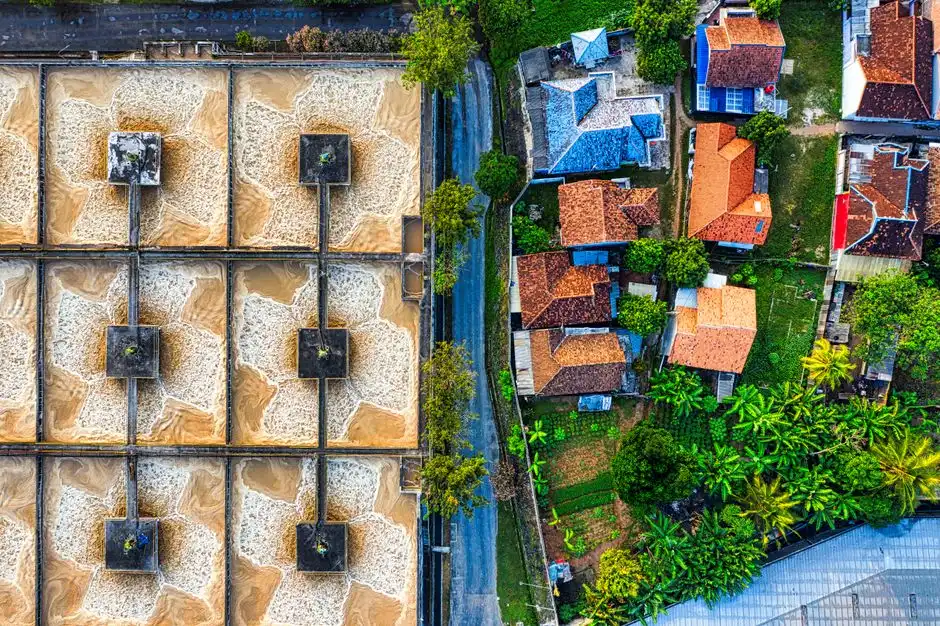
Separate process drains before assigning treatment because a blended average can conceal a batch stream that overloads equalisation, biology, dosing or polishing.
The required drain map should cover cathode-coating line rinse water, electrolyte spillage, cleaning-agent waste, cooling-tower blowdown, boiler blowdown and softener regeneration brine. The source reports that cooling-tower blowdown has high TDS but low phosphorus and nitrogen; boiler blowdown is low-volume and hot; and softener regeneration brine is high in NaCl and periodic (HydropureWater, March 2026).
Cathode-coating rinse water is the principal permit-exposure stream because it can carry concentrated organophosphate binders and organic nitrogen. Electrolyte spillage requires separate verification of the fluoride and organic load associated with LiPF6 solvent; the seller’s general description is not a substitute for representative sampling (HydropureWater, March 2026).
| Stream | Characterization finding | Routing and sampling priority |
|---|---|---|
| Cathode-coating rinse water | Refractory phosphorus and organic nitrogen identified as the main exposure | Sample by production campaign and verify phosphorus fractions, COD and flow |
| Electrolyte spillage | Separate fluoride and organic load associated with LiPF6 solvent | Characterise spill concentration, batch frequency and pH |
| Cleaning-agent waste | Potential organic, nitrogen and chemical loading | Identify products and separate incompatible cleaners |
| Cooling-tower blowdown | High TDS; low phosphorus and nitrogen | Test conductivity, salinity and scaling constituents |
| Boiler blowdown | Low volume and hot | Test temperature and chemistry before equalisation |
| Softener regeneration brine | High NaCl and periodic discharge | Quantify chloride, sodium, volume and batch timing |
Sampling should be representative of normal production, startup, shutdown, cleaning cycles and upset conditions. The buyer also needs the mass and concentration load, not only flow. This approach follows the stream separation principles in the cooling-blowdown treatment reference, while the nitrification troubleshooting playbook explains why batch nitrogen loading can affect biological performance.
Select Treatment Equipment by Function, Not by Template
The treatment train should remove each contaminant family under the verified flow and load regime, then demonstrate compliance across the complete permitted parameter list.
DAF pretreatment: Assess DAF before biological treatment where suspended solids, emulsified oil, FOG or colloidal material could overload downstream chemistry. The source identifies DAF as the upstream stage for removing suspended material and emulsified oil ahead of biology (HydropureWater, March 2026). The DAF pretreatment for industrial EV wastewater should be sized from measured flow, solids and oil loading rather than total plant flow.
Biological treatment: Biological treatment can address biodegradable organics and ammonium, but conventional biological phosphorus removal cannot solve refractory phosphorus because it removes orthophosphate rather than phosphorus bound in organophosphates, polyphosphates or complexing agents (HydropureWater, March 2026).
Controlled chemical dosing: FeCl3 or PAC may be used for refractory phosphorus removal, but jar or pilot testing must establish dose, pH response, residual performance and downstream sludge impact. HydropureWater’s 2026 field data reported in the source shows effluent total phosphorus below 1 mg/L at the design dose; that is equipment-performance evidence, not a German legal limit (HydropureWater, March 2026).
MBR polishing: Evaluate MBR where the permit or municipal inlet specification requires very low suspended solids or a defensible municipal-like effluent profile. The source identifies membrane polishing as the practical reference after biological treatment (HydropureWater, March 2026). An integrated MBR wastewater treatment system should be compared against the required outlet signature, not selected merely because MBR is more advanced. The MBR versus conventional activated-sludge comparison sets out the relevant decision context.
Equalisation and sludge handling: Equalisation protects biology and dosing from batch discharges, while automated monitoring provides an auditable response to excursions. Precipitation and biological treatment create a solids-management obligation, including the selected sludge consistency and dewatering route. A plate and frame filter press may be appropriate where the sludge characteristics justify it, but the supplier needs sludge analyses and destination data before selecting it.
| Contaminant or control need | Primary function | Acceptance evidence |
|---|---|---|
| Suspended solids, oil and colloidal material | DAF pretreatment | Representative solids and oil removal with verified hydraulic performance |
| Biodegradable organics and ammonium | Biological treatment | Load-based performance across representative batch and campaign conditions |
| Refractory phosphorus | FeCl3 or PAC dosing | Jar or pilot dose response, residual results and sludge review |
| Suspended-solids and municipal-signature risk | MBR polishing | TSS and all other applicable permit parameters demonstrated at the required flow |
| Batch hydraulic and chemical shock | Equalisation and automated monitoring | Verified mixing, retention and controlled dosing response |
| Chemical and biological solids | Sludge handling and dewatering | Mass balance, destination approval and tested dewatering route |
The sizing basis must be the verified fingerprint and flow regime, as identified in the source. The PLC-control engineering guide can inform the control specification, including interlocks, fail-safe dosing and operating records.
Confirm Municipal and EU Compliance Before Committing
The Wasserzweckverband specification and confirmed receiving-plant capacity form the effective discharge envelope for the transaction, provided they are consistent with all applicable federal and state requirements.
The WZV may impose parameters beyond the applicable BREF, so the buyer should compare its permit directly with AbwV, the BImSchG conditions and other legal requirements rather than treating the municipal specification as the only check. Historical acceptance of the seller’s discharge is also insufficient: request current written confirmation of hydraulic and pollutant capacity for BYD’s planned flow and water chemistry (HydropureWater, March 2026).
Directive 2024/3019 has a 2026 transposition deadline and, according to the supplied source, tightens nitrogen and phosphorus removal, extends micropollutant monitoring and requires energy neutrality at large STPs (HydropureWater, March 2026). The buyer should therefore allow for changes in the receiving STP’s inlet expectations and assess whether on-site pretreatment must meet a stricter future signature.
Sweco’s acquisition of STEIN Ingenieure, which involved approximately 60 experts and reported turnover of approximately EUR 6.5 million in 2025, confirms continuing investment in German water and wastewater infrastructure (Sweco Group, 2025). It does not prove that any target’s municipal system has sufficient capacity. That remains a site-specific question for the WZV and receiving operator.
Use a Go/No-Go Decision Framework for the Acquisition
A permit defect that prevents lawful discharge should be treated differently from a treatment-capacity gap that can be engineered, procured and tested after closing.
| Finding | Classification | Required transaction response |
|---|---|---|
| Federal approval cannot be transferred or reissued | Permit blocker | Counsel and regulator confirmation before closing |
| Statutory groundwater prohibition remains unresolved | Permit blocker | Do not accept an ordinary condition; require a legal and technical solution |
| Receiving STP rejects the proposed discharge | Commercial and permit blocker | Secure written capacity and route acceptance before bid confirmation |
| Material operating records are missing or misleading | Representation and warranty issue | Escalate through environmental due diligence and seek specific seller protection |
| Equalisation, DAF, biology, dosing or polishing is inadequate | Quantified retrofit item | Define design, acceptance tests, schedule and price protection |
| Monitoring, controls or staffing are inadequate | Operating-control item | Close before performance acceptance or handover |
Require representative influent and effluent sampling, hydraulic-capacity testing and proof that the selected train meets every applicable permit and municipal limit. Do not accept performance based on a generic EV-wastewater design.
Allocate pre-close contamination and permit-transfer failure to the seller through transaction protections. Operational exceedance should pass to the buyer only after the treatment systems, staffing, calibration and controls have been verified. Use milestone conditions covering permit re-issuance, design approval, installation, performance testing and documented operation before final acceptance.
The result is a defensible bid position: blocker findings remain conditions to closing, retrofit items receive defined scopes and acceptance criteria, and operating responsibilities become effective only after the evidence supports transfer. This decision structure extends the BYD factory acquisition ETP due-diligence guide into a German permitting context.
Frequently Asked Questions
Can BYD rely on the seller’s existing German wastewater permits after closing?
No. The supplied March 2026 source says the five legal layers must be re-papered for the new operator and the wastewater fingerprint re-baselined against the planned LFP process. The buyer should obtain written confirmation from the relevant authorities and sewer association before closing.
What equipment is most likely to be required for an LFP EV plant?
The supplied source gives DAF, biological treatment and PLC-controlled FeCl3 or PAC dosing as the starting concept, with MBR polishing evaluated against the verified discharge envelope. The final train must also address equalisation, monitoring and sludge handling; equipment selection should follow stream chemistry rather than the template alone.
How should the buyer size the wastewater system?
Request representative stream flows and concentrations, operating and batch records, equalisation data, the applicable permit limits and confirmed receiving-STP capacity. Headline plant flow alone is insufficient because refractory phosphorus, nitrogen, fluoride, salinity, temperature and batch discharges can drive different unit sizes.
How should the buyer compare wastewater treatment cost and supplier proposals?
Ask each supplier to separate civil work, equalisation, DAF, biological equipment, dosing, MBR or other polishing, instrumentation, sludge handling, commissioning and long-term consumables. Require the quotation to identify which costs are firm, which assumptions drive them, and what performance test applies. The supplied research contains no German equipment quotation, so a defensible budget cannot be produced without site data and a priced scope.
What information should a wastewater-equipment supplier receive before proposing a system?
Provide the stream-by-stream flow and chemistry schedule, permit and WZV limits, AbwV mapping, receiving-STP specification, temperature profile, batch-generation record, equalisation data, sludge route and required performance tests. The supplier should also return a mass balance, equipment sizing basis, control narrative, guarantees and acceptance-test method so that proposals can be compared consistently.
The MBR versus conventional activated-sludge comparison is relevant for the polishing decision, while the cooling-blowdown treatment reference helps separate high-salinity streams from the biological treatment concept.