Why the Tesla/Grünheide Case Sets the Compliance Floor for a BYD Deal
The Strausberg-Erkner Water Association (WSE) alleges that Tesla is "constantly and significantly" exceeding wastewater limits at the 300-hectare gigafactory in Grünheide, naming refractory phosphorus and total nitrogen as the two parameters in breach (smartwatermagazine.com, March 2026). An extraordinary WSE member assembly was scheduled for March 2026 to decide whether to discontinue wastewater acceptance — a decision that would halt production, not just trigger a fine. The contested parameters, not flow volume, are the legal pinch points (hydropurewater.com, 2026).
That distinction matters for any BYD acquirer. Flow volume is rarely the binding constraint at a gigafactory; refractory phosphorus and total nitrogen are. Refractory P is bound in organophosphates, polyphosphates, and complexing agents used in cathode-coating chemistries, and bypasses conventional biological P removal, which only strips orthophosphate. Total nitrogen at the receiving Münchehofe STP is sized for typical municipal loading (NH4-N, organic N), so industrial spikes from electrolyte spillage, cleaning agents, and cathode-line rinse water push the STP past its design capacity.
BYD's LFP chemistry is not the Tesla NMC/NCA signature — there is no cobalt or nickel in the LFP cathode — but the cathode-coating rinse water still concentrates organophosphate binders and organic N, and the electrolyte solvent (typically LiPF6 in carbonate solvents) drives a separate fluoride and organic load. A BYD plant still needs refractory-P polish even if the absolute phosphorus mass differs. The Tesla/Grünheide case sets the compliance floor for a BYD deal.
The Five-Layer Permit Stack That Re-Opens on Every Operator Change
Five legal layers stack on top of each other when an industrial buyer takes over a German plant, and each must be re-papered on change of operator. Counsel should map each layer to a specific data-room document before signing.
| Layer | Legal basis | Trigger on M&A | Document the seller must produce |
|---|---|---|---|
| 1 — Federal emissions permit | BImSchG (Genehmigungsbescheid) | Operator change requires re-issue or amendment | Current Genehmigungsbescheid with all Nebenbestimmungen |
| 2 — Indirect discharge | §58 WHG, Indirekteinleiterverordnung (IndV) | New operator must re-notify the WZV; permit re-issued in buyer's name | Existing IndV permit and WZV correspondence file |
| 3 — Sector limit values | Abwasserverordnung (AbwV), Annex 3 (inorganic chemicals, lithium) and Annex 22 (surface treatment) | Process fingerprint re-baselined to planned operations, not seller's historic permit | Wastewater flow schematics and current Annex mapping memo |
| 4 — Local STP inlet | Wasserzweckverband (WZV) indirect-discharge permit | Re-negotiate flow cap, parameter list, liability allocation | Full WZV permit text and STP capacity confirmation letter |
| 5 — Water protection overlay | §51 WHG, Schutzgebietsverordnung (Wasserschutzgebiet) | Stricter IndV limits, mandatory groundwater monitoring wells, statutory Verbotstatbestände for hydrocarbons, halogenated solvents, heavy metals | Schutzgebietsverordnung text and LfU (Brandenburg) or equivalent Landesamt overlay map |
Layer 1 is straightforward: without a re-issued Genehmigungsbescheid naming the buyer as operator, the new operator has no valid federal emissions permit. Layer 2 is the indirect-discharge permit under §58 WHG and the IndV — the buyer's process engineer must re-baseline, not the seller's historic permit. Layer 3 is where the AbwV ceiling kicks in (consolidated as of 17 April 2024 per UNEP LEAP). Layer 4 is the binding constraint — the WZV may impose parameters the IED BREF does not even address, which is the situation at the Münchehofe STP (hydropurewater.com, 2026). Layer 5 is the deal-killer if missed: a Verbotstatbestand is a statutory prohibition, not a permit condition you can negotiate.
AbwV Annex 3 vs Annex 22 vs WZV: Mapping BYD's LFP Process to the Right Annex
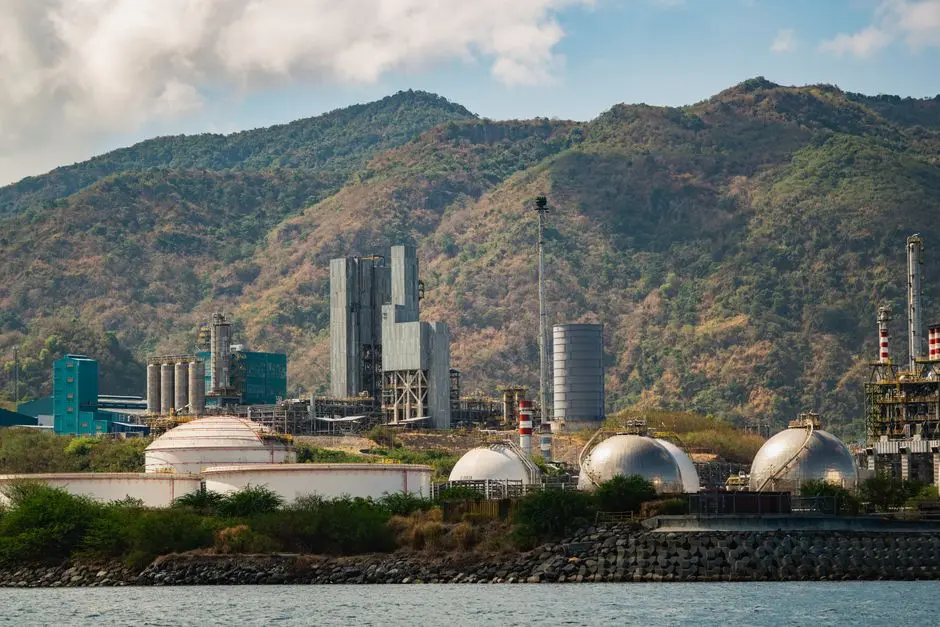
For a battery plant, two AbwV annexes typically apply. Annex 3 covers inorganic chemicals, including lithium-bearing streams; Annex 22 covers surface treatment of metals. The buyer's process engineer must decide which annex binds the LFP process and then layer the WZV inlet spec on top.
| Parameter (typical) | AbwV Annex 3 (inorganic / lithium) | AbwV Annex 22 (surface treatment) | Local WZV (binding) |
|---|---|---|---|
| Refractory total P | Yes (chemical-P branch) | Yes (rinse water) | Often tighter than BREF |
| Total N (NH4-N, organic N) | Site-specific | Site-specific | Municipal STP envelope |
| Li, Fe, Mn | Yes | Yes | WZV may add Cu, Zn, Ni, Co |
| Fluoride (from LiPF6 hydrolysis) | Yes | Limited | WZV may impose F cap |
| COD | Yes | Yes | Receiving STP envelope |
| AOX / hydrocarbons | Limited | Yes (degreasing) | Often WSG-triggered |
| Chloride (softener brine) | Site-specific | Yes | STP hydraulic limit |
BAT-AEL ranges under the IED are typically tighter than local WZV limits, but a WZV may impose parameters the BREF does not even address (hydropurewater.com, 2026). LFP changes the load profile versus NMC/NCA: no cobalt or nickel in the cathode, but the LFP precursor (iron phosphate) introduces iron and phosphate to the rinse water, and the LiPF6 electrolyte drives fluoride and organic load. The most common due-diligence miss is to inherit the seller's AbwV Annex mapping instead of re-baselining the wastewater fingerprint against the AbwV Annex values for the planned LFP process.
The On-Site Pre-Treatment Train That Makes the Indirect-Discharge Signature Look Municipal
The wastewater streams that concentrate the permit-exposure parameters at a lithium or EV plant are predictable. Cooling-tower blowdown is high in TDS but low in P and N; boiler blowdown is low volume and hot; softener regeneration brine is high in NaCl and periodic; cathode-coating line rinse water is the stream that drives permit exposure, with refractory P and organic N.
The standard 2026 train is: DAF for suspended solids and emulsified oil, followed by biological treatment for organics and NH4-N, then a PLC-controlled chemical dosing system feeding FeCl3 or PAC for refractory P, and a polishing stage for residual TSS. The upstream DAF system is sized to strip emulsified oil and lift TSS ahead of the biological stage so the downstream chemistry is not overloaded. Chemical precipitation with FeCl3 or polyaluminium chloride (PAC) is the standard polish step, with effluent total P typically <1 mg/L at design dose (HydropureWater field data, 2026).
The design objective is for the indirect-discharge signature to look municipal. This is the legal route Tesla argues at Grünheide (smartwatermagazine.com, March 2026) and the pragmatic 2026 answer for any acquirer. The same principle is being applied at the Szeged plant, as documented in the Tesla Hungary plant wastewater compliance guide, and is the same control logic that any India-plant project is converging on, per the Tesla India plant wastewater compliance guide. Membrane polishing — typically an MBR stage downstream of the biological step — keeps the "municipal" signature defensible, and the MBR installation and commissioning guide is the practical reference for that stage.
Pre-Closing Due-Diligence Checklist: Seven Items That Must Clear Before Signing
- Confirm the existing Genehmigungsbescheid can be re-issued to the new operator under BImSchG and WHG without a fresh Genehmigungsverfahren.
- Re-issue the IndV indirect-discharge permit in the buyer's name and re-baseline the wastewater fingerprint against the AbwV Annex values for the planned LFP process, not the seller's historic permit.
- Pull the Schutzgebietsverordnung text and confirm that none of the planned process chemistry triggers a Verbotstatbestand — a statutory prohibition cannot be negotiated away.
- Check for WSG, Heilquellenschutzgebiet, and Überschwemmungsgebiet overlays on the cadastral parcel.
- Re-negotiate the WZV local limits (flow cap, parameter list) and confirm the receiving STP has hydraulic and biological capacity for the planned load.
- Order a Phase II site investigation for legacy contamination that may transfer with the operator change under German soil protection law (BBodSchG).
- Map the 2026 EU recast (Directive 2024/3019) impact on the receiving STP's design envelope and size the on-site pre-treatment for the new municipal inlet, not the old one.
How EU Directive 2024/3019 Re-Opens Every Indirect-Discharge Permit in 2026
Directive 2024/3019, in force 2024 with a transposition deadline of 2026, tightens nitrogen and phosphorus removal, extends monitoring to micropollutants including PFAS and pharmaceuticals, and obliges energy neutrality at large STPs (hydropurewater.com, 2026). Because the receiving STP's design assumptions shift, every WZV indirect-discharge permit is effectively re-opened, and a gigafactory's on-site pre-treatment must be sized for the new municipal inlet envelope — not the old one.
Two further overlays sit on top of the directive. First, Brandenburg is a water-scarcity region, and the WSE's draft agreement with Tesla cuts the facility's water-supply commitment and offers 377,000 m³ of released water back to the association, signalling that any future plant will face volumetric caps, not just concentration limits. Second, local referenda against expansion are now a binding political risk: under Brandenburg state administrative practice, large industrial permits with documented public opposition increasingly see Genehmigungsverfahren extended by months (smartwatermagazine.com, March 2026). Sweco's 2025 acquisition of STEIN Ingenieure (EUR 6.5 million 2025 turnover, approximately 60 experts) confirms Germany's water sector is entering a period of major transition (Sweco Group, 2025).
Frequently Asked Questions
What wastewater requirements apply when BYD acquires a plant in Germany?
Five permit layers re-open on every operator change: the BImSchG Genehmigungsbescheid, the IndV indirect-discharge permit under §58 WHG, the AbwV sector annex (typically Annex 3 for inorganic/lithium streams and Annex 22 for surface treatment), the WZV local STP inlet spec, and any Wasserschutzgebiet overlay under §51 WHG. Each layer must be re-papered in the buyer's name, and the wastewater fingerprint must be re-baselined against the planned LFP process, not the seller's historic permit.
Which AbwV annex applies to a BYD LFP cell or pack assembly line?
Annex 3 (inorganic chemicals, lithium) and Annex 22 (surface treatment) are the two annexes that typically bind a battery plant. For LFP, the binding parameters are refractory P, total N, fluoride (from LiPF6 electrolyte), iron (from the iron-phosphate precursor), and standard COD/TSS limits. The WZV may impose additional parameters the BREF does not address.
How does the 2026 EU recast affect a freshly issued German wastewater permit?
Directive 2024/3019, with a transposition deadline of 2026, tightens nitrogen and phosphorus