
Tesla India requirements for plant wastewater compliance
Tesla India requirements for wastewater cover four re-issuable consents, a cathode-rinse-driven treatment train, and state ZLD pressure in Rajasthan, Gujarat, and Maharashtra. Binding limits focus on refractory phosphorus, total nitrogen, fluoride, metals, and TDS rather than flow. Consents must be re-issued in the buyer’s name within 90 days of acquisition for any EV or battery plant takeover.
India still has no operational Tesla plant, yet battery corridors already face overloaded municipal STPs. Earlier drafts cited roughly 5,723.8 MLD of installed STP capacity against about 20,236 MLD of sewage.
According to the CPCB National Inventory of Sewage Treatment Plants in India-2021 tabled in Lok Sabha, urban sewage generation is about 72,368 MLD. Installed capacity is 31,841 MLD, operational capacity 26,869 MLD, and actual utilization 20,235 MLD.
Progress reports to the Ministry of Jal Shakti through December 2024 raise installed STP capacity to 36,048 MLD. That overload matches the German standoff covered in the Tesla Germany plant wastewater compliance guide. A municipal STP cannot absorb industrial spikes of NH4-N and refractory phosphorus without re-baselining the indirect-discharge permit.
The parallel for the Tesla Malaysia DOE compliance guide is scheduled-waste categorisation under the Department of Environment. For an acquirer, the Indian Consent to Operate and the German WZV permit now share the same binding parameters. Only the statutory hooks differ. Scope is either a green-field Consent to Establish, or re-issue of all four Indian consents within 90 days of closing.
Why the India question differs from Germany or Malaysia
State Pollution Control Boards bind Indian battery plants, while Germany uses a single Genehmigungsbescheid and Malaysia uses DOE scheduled-waste codes. The engineering decision is identical in each market. Size the on-site train for cathode-line rinse chemistry, not for sanitary flow.
Most plants we size for battery coating run at the lower end of the DAF envelope until second-line rinse water comes online. Acquisition diligence therefore starts with operator-change paperwork and a re-baselined wastewater fingerprint, not with the seller’s historic permit narrative.
The four-layer Indian legal stack every acquirer must paper
Four statutes stack for any EV or battery plant in India, and each must be re-papered on change of operator. Layer 1 is Environmental Clearance under the EIA Notification 2006 (S.O. 1533 (E)). It applies to projects exceeding 5 ha of industrial area or handling more than 1 TPD of hazardous waste.
Transfer needs a fresh Form-1, Form-1A, and an updated EIA report from a QCI-NABET-accredited consultant.
Layer 2 is Consent to Establish and Consent to Operate under Section 25 of the Water (Prevention and Control of Pollution) Act 1974. The State Pollution Control Board issues plant-level consent, with CPCB oversight at the central level. Layer 3 is Consent under Section 21 of the Air (Prevention and Control of Pollution) Act 1981 for cathode-coating ovens, the electrolyte dryer, and DG sets.
Layer 4 is Authorisation under the Hazardous and Other Wastes (Management and Transboundary Movement) Rules 2016 (as amended 2022) for NMP recovery, electrolyte handling, and black-mass processing. Schedule I lists 17 categories. Categories 17.1 (battery waste) and 17.2 (lead-bearing) are the streams a gigafactory must declare.
All four layers must be re-issued in the buyer’s name within 90 days of acquisition.
| Layer | Statute | Trigger | Issued by | Re-issued on M&A? |
|---|---|---|---|---|
| 1 | EIA Notification 2006 | >5 ha or >1 TPD HW | MoEFCC / SEIAA | Yes — fresh Form-1/1A + EIA report |
| 2 | Water Act 1974, s.25 | Any discharge to stream/sewer | SPCB (plant) / CPCB (central) | Yes — Consent to Establish + Operate |
| 3 | Air Act 1981, s.21 | Any stack emission | SPCB | Yes — chimney + DG consent |
| 4 | HW Rules 2016 (amended 2022) | Generation of Schedule-I waste | SPCB | Yes — authorisation re-issue |
Process wastewater streams at an EV and battery gigafactory
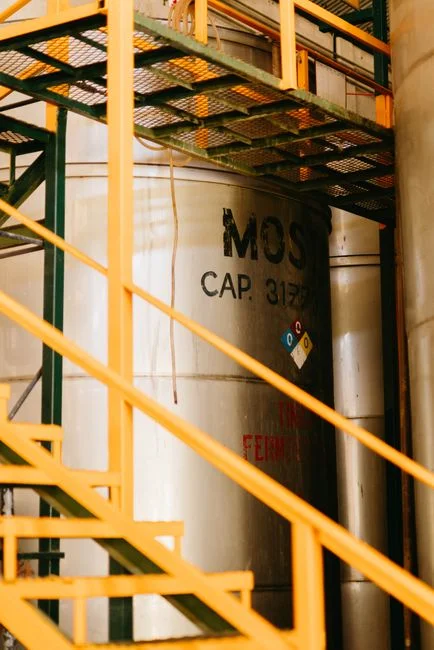
The wastewater fingerprint of a gigafactory is dominated by cathode-coating line rinse water, not by sanitary flow. Cooling-tower blowdown contributes high TDS at low P/N loading and is normally handled with side-stream filtration and a TDS bleed. Boiler blowdown is low-volume and hot, with softener-related chloride loading. Water-softener regeneration brine is periodic but high-NaCl.
Equalisation plus chloride-resistant biological treatment matches the precedent used in the Tesla Germany plant wastewater compliance guide. Cathode-coating rinse water is the binding stream: refractory phosphorus from organophosphate binders plus high organic nitrogen from binder wash-off.
Electrolyte spillage and black-mass processing water bring heavy metals (Li, Ni, Co, Mn) and fluoride from LiPF6 hydrolysis, handled under HW Rules categories 17.1 and 17.2.
Sanitary and kitchen streams are municipal-strength and segregated. They are the only legal counter-argument that the site discharges nothing industrial, mirroring Tesla’s stated position in Germany. Engineering reality is that cathode-line rinse water drives permit exposure.
| Stream | Volume | Key parameters | Handling logic |
|---|---|---|---|
| Cooling-tower blowdown | High | TDS, hardness | Side-stream filtration, TDS bleed |
| Boiler blowdown | Low | Temp, Cl⁻ | Cooling, equalise |
| Softener regeneration brine | Periodic | NaCl high | Equalise, chloride-resistant biology |
| Cathode-coating rinse water | Medium | Refractory P, organic N — BINDING | DAF → biological → FeCl3/PAC precipitation |
| Electrolyte spillage / black-mass water | Low, intermittent | Li, Ni, Co, Mn, F⁻ | Segregated equalisation, HW Rules 17.1/17.2 |
| Sanitary + kitchen | Municipal-strength | BOD, NH4-N | Separate collection, septic/biological |
What water levels apply for a Tesla plant in India?
Water levels that bind a Tesla-scale battery plant in India are concentration limits for refractory phosphorus, total nitrogen, fluoride, metals, and TDS — not absolute plant water demand. Flow volume is rarely the pinch point at a gigafactory. State PCB inlet limits for total phosphorus typically fall in the 2–5 mg/L range at the discharge point. The refractory P fraction must be polished chemically to below 1 mg/L (HydropureWater field data, 2026).
Total nitrogen limits typically run 50–100 mg/L. The municipal-STP inlet assumption of NH4-N only does not hold for industrial spikes from cathode-line rinse and electrolyte spillage. That is the same dynamic that pushed the Münchehofe STP past design capacity in Germany.
Fluoride is governed by the CPCB general standard of 2 mg/L for inland surface-water discharge. LiPF6 hydrolysis is the recognised source and is typically precipitated with lime upstream of biology. Heavy metals fall under Schedule II of the EPA 1986 / Hazardous Waste Rules — Ni 3 mg/L, total Cr 2 mg/L, Mn 2 mg/L. Black-mass processing triggers the strictest category.
The CPCB general TDS ceiling is 2,100 mg/L, but Rajasthan, Gujarat, and Maharashtra state PCBs are pushing ZLD for battery plants. That ZLD push is the Indian convergence signal with the EU UWWTD energy-neutrality trajectory. Lok Sabha material also notes 225 operational CETPs with 2,245 MLD combined designed capacity for industrial effluent. Those CETPs do not replace on-site pretreatment when state ZLD conditions apply.
| Parameter | Indian limit (2026) | Source | Treatment logic |
|---|---|---|---|
| Total P (refractory) | 2–5 mg/L state inlet, <1 mg/L polish | State PCB / HydropureWater field data, 2026 | FeCl3 or PAC precipitation after biology |
| Total N | 50–100 mg/L state PCB | State PCB | Nitrification/denitrification |
| Fluoride | 2 mg/L | CPCB general standard | Lime precipitation upstream of biology |
| Ni / Cr / Mn | 3 / 2 / 2 mg/L | Schedule II, EPA 1986 | HW Rules 17.1/17.2 segregation |
| TDS | 2,100 mg/L CPCB; ZLD in RJ/GJ/MH | CPCB + state PCBs | RO + brine management where ZLD applies |
The on-site treatment train that passes Indian state-PCB consent
The on-site train that brings an indirect-discharge signature within Indian state-PCB inlet specs is a five-stage sequence. Stage 1 is segregated equalisation and flow/load dampening for cathode-line rinse water and electrolyte-spill streams. It uses the same equalisation plus chloride-resistant biological precedent as the German playbook.
Stage 2 is the HydropureWater DAF system for suspended solids, fats/oils/grease, and emulsified oils from paint-shop and cathode-coating pre-rinse. The 4–300 m³/h envelope covers the gigafactory scaling band. Stage 3 is biological nitrification-denitrification, which strips only orthophosphate and biodegradable nitrogen.
Refractory P passes to Stage 4, where a PLC-controlled FeCl3 and PAC dosing skid precipitates residual total P to below 1 mg/L. Stage 5 is polishing: sand/multi-media filtration for residual TSS, plus MBR or UF where the state PCB pushes reuse-grade effluent. A HydropureWater plate-and-frame filter press dewaters sludge to HW Rules handling thresholds. The brine lithium extraction case in the brine lithium extraction wastewater treatment guide applies wherever upstream Li recovery is in scope.
| Stage | Unit operation | Removes | Equipment |
|---|---|---|---|
| 1 | Equalisation + flow dampening | Peak load, chloride shock | Lined EQ tank, mixers |
| 2 | DAF | TSS, FOG, emulsified oils | HydropureWater DAF, 4–300 m³/h |
| 3 | Biological nitrification/denitrification | NH4-N, organic N, BOD | MBBR or SBR, chloride-tolerant |
| 4 | Chemical precipitation | Refractory P to <1 mg/L | FeCl3 / PAC dosing skid, PLC-controlled |
| 5 | Polishing + sludge dewatering | Residual TSS, sludge cake to HW Rules | Sand/MMF or MBR/UF + plate-and-frame filter press |
What compliance testing does a treatment plant need?
Compliance testing for an Indian EV-plant treatment train must prove continuous match to Consent to Operate limits, not a one-time commissioning snapshot. CPCB has directed SPCBs and PCCs under the Water Act 1974 to require Online Continuous Effluent Monitoring Systems for self-surveillance of sewage treatment plants. State boards commonly extend the same OCEMS logic to industrial ETPs on red-category sites.
Buyers should therefore budget for continuous pH, flow, BOD/COD surrogate, and ammonia or TN monitoring at the final discharge chamber. Add periodic grab campaigns for fluoride, total P, Ni, Cr, Mn, and TDS against Schedule-VI and state category limits. Lab methods must sit on NABL-accredited protocols listed in the consent schedule.
Use composite sampling over a full production shift rather than a quiet-hour grab. Most plants we commission for cathode rinse water fail first audits when refractory P is inferred from orthophosphate alone. Re-test after FeCl3 or PAC dose changes, after NMP recovery upsets, and after any black-mass campaign that changes metal speciation. Keep the OCEMS data trail aligned with the monthly returns filed to the SPCB.
Gaps between online readings and lab composites are the usual trigger for show-cause notices. Treat that alignment as a closing condition when you inherit an operating ETP. Missing months of OCEMS archives are harder to repair after title transfer than a missing dosing pump.
Pre-close acquisition due-diligence checklist for an Indian EV plant
Seven items must clear before closing on an Indian industrial plant where wastewater is material. First, confirm the existing Consent to Operate can be transferred under Section 25 of the Water Act 1974 — the Indian parallel to German Genehmigungsbescheid re-issuance. Second, pull the EIA Notification 2006 EC transfer procedure: typically a fresh Form-1, Form-1A, and updated EIA report from a QCI-NABET-accredited consultant.
Third, re-baseline the wastewater fingerprint against CPCB Schedule-VI general standards and the relevant state PCB category standards for the planned process — not the seller’s historic permit. Fourth, check proximity to the CPCB list of 88 critically polluted industrial areas and any river or water-body setback that may trigger a statutory prohibition.
Fifth, confirm HW Rules authorisation covers Schedule-I categories 17.1 and 17.2, including NMP and black-mass streams. Sixth, verify the Central Ground Water Authority NOC for any new bore wells, given volumetric caps in water-stressed states.
Seventh, build a political-risk register: state industrial-policy alignment, public-hearing status, and pending PILs in the National Green Tribunal.
| # | Checklist item | Indian regulatory hook |
|---|---|---|
| 1 | CTO transferability | Water Act 1974, s.25 |
| 2 | EC transfer procedure | EIA Notification 2006, Form-1/1A |
| 3 | Re-baseline vs state PCB category limits | CPCB Schedule-VI + state PCB |
| 4 | CPIA / water-body setback check | CPCB 88-CPIA list, state EC conditions |
| 5 | HW Rules scope (17.1 / 17.2) | HW Rules 2016 (amended 2022) |
| 6 | CGWA NOC + volumetric cap | CGWA guidelines |
| 7 | Political-risk register (NGT PILs, public hearing) | NGT Act 2010 + state industrial policy |
Who this is for, who should look elsewhere, and next step
This guide is for EPC contractors, corporate M&A counsel, and plant engineers sizing an Indian battery or EV assembly wastewater train under SPCB consent. It is not a substitute for state-specific consent drafting or for municipal-only sites with no cathode chemistry. If you need a DAF-to-precipitation train sized against a draft Consent to Establish, request a process review through our project inquiry form with your state PCB category and expected rinse-water m³/h.
Frequently Asked Questions
What wastewater requirements apply when Tesla acquires a plant in India?
Four statutory layers govern any Tesla plant in India. They are Environmental Clearance under EIA Notification 2006, Water Act Consent to Establish and Operate, Air Act consent, and Hazardous Waste Rules authorisation. All four must be re-issued in the buyer’s name within 90 days of acquisition, mirroring the German operator-change pattern.
Which effluent parameters are binding for an Indian gigafactory?
Refractory phosphorus, total nitrogen, fluoride, heavy metals (Ni, Cr, Mn), and TDS — not flow volume. State PCB inlet limits typically fall at 2–5 mg/L total P and 50–100 mg/L total N, with the refractory P fraction requiring FeCl3 or PAC precipitation to below 1 mg/L (HydropureWater field data, 2026).
Do Indian state PCBs require ZLD for battery plants?
Rajasthan, Gujarat, and Maharashtra state PCBs are actively pushing ZLD for battery and EV plants, and the CPCB general TDS ceiling is 2,100 mg/L. The trajectory is converging with EU UWWTD energy-neutrality expectations and re-opens Consent to Operate conditions whenever state ZLD riders are added.
What is the cathode-coating line rinse water treatment requirement?
Cathode-coating line rinse water is the dominant source of refractory phosphorus and organic nitrogen. The required on-site train is DAF → biological nitrification-denitrification → FeCl3 or PAC precipitation, with chemical precipitation typically polishing total P to below 1 mg/L before sewer discharge or a ZLD polishing loop.
How often must an Indian EV plant ETP run compliance tests?
Consent schedules usually require continuous OCEMS for key surrogates plus monthly or quarterly NABL lab composites for metals, fluoride, total P, and TDS. Re-test after dose changes, NMP recovery upsets, or black-mass campaigns. Keep online and lab records aligned with SPCB monthly returns to avoid show-cause gaps.