Why Legacy ETP Risk is a Closing-Stage Deal Killer for Industrial Acquisitions
A non-compliant legacy effluent treatment plant (ETP) typically reduces enterprise value by 3–8% of deal size through retrofit capex, permit-delay risk, and unlimited future cleanup exposure (HydropureWater field data, 2026). For a BYD target acquisition, that band is the floor, not the ceiling, because Chinese law assigns retroactive responsibility to the current landowner and operator regardless of when contamination occurred.
Two statutes drive the exposure. The 2019 Soil Pollution Prevention Law (土壤污染防治法) imposes cleanup liability on whoever holds title to contaminated land, with no statutory limitation period. The 2018 Environmental Protection Tax Law (环境保护税法) taxes every kilogram of COD, ammonia nitrogen, and other regulated pollutants actually discharged, and the tax authority can reassess prior periods when permit records are incomplete. The 2020 nationwide rollout of the pollutant discharge permit system (排污许可证) compounds both: most legacy factories either hold a grandfathered permit in a form that no longer complies with the post-2020 template, or operate without one entirely, forcing the buyer to re-apply post-close.
BYD's internal benchmark is materially higher than what a typical chemicals or automotive-supplier target has on site. BYD's own CN214829589U catalyst effluent treatment plant patent describes a treatment train purpose-built for nickel, cobalt, manganese, and lithium-bearing wastewater streams — a parameter set rarely addressed by general-purpose ETPs installed before 2018 (source: Google Patents, CN214829589U). When that target site is the one being acquired, the gap between the existing ETP and BYD's operating standard is itself a diligence finding, not a future improvement project.
Phase 1 — Desktop Permit and Compliance-History Review (Pre-LOI, 5–10 Days)
Phase 1 is a data-room screen that runs before the Letter of Intent is signed, and it should produce a binary go/no-go on whether the deal team is willing to underwrite a Phase II program. The scope is document review, not sampling.
Use the ETP audit checklist as a baseline. Demand the discharge permit (排污许可证), ETP design flow rate, O&M manual, chemical dosing records, instrument calibration certificates, sludge disposal manifests, and the emergency response plan (S5 ETP Audit Checklist). Mark every item that the seller cannot produce in 10 business days as a Phase II trigger. Specifically, the "NEED TO CHECK" items in S5 — future production plans, water-bill breakdowns, instrument calibration certificates, and the action plan for in-limit exceedances — are the items that most reliably separate a defensible target from a remediation project.
Cross-check the target's self-monitoring data (自行监测数据) on the national排污许可证 information portal. Gaps post-2020 are the single most reliable red flag for an actively non-compliant ETP, because the discharge permit regulations require continuous upload of flow and key pollutant readings. Pull at least 36 months of: water bills, ETP inlet/outlet analytical records, sludge manifests, and any environmental penalty notices (行政处罚决定书) from the local ecology and environment bureau (生态环境局). A single confirmed penalty within the last 24 months should escalate Phase 1 directly into a scoped Phase II proposal.
| Document category | What to demand | Red flag if missing |
|---|---|---|
| Permits | 排污许可证 (current), local排污登记表 | No post-2020 permit or transfer pending |
| Design basis | Design flow (m³/day), process flow diagram, design influent/effluent | No as-built P&ID; flow rate not stated |
| Operating records | 36 months inlet/outlet lab data, shift logs, dosing logs | Gaps >30 days in any 12-month window |
| Sludge chain-of-custody | Sludge manifests, licensed hauler contract, disposal site permit | No manifests or unknown disposal route |
| Enforcement history | 行政处罚决定书, rectification reports | Any penalty <24 months old |
| Calibration | In-line analyser calibration certificates (pH, flow, COD) | No certificates or certificates >12 months expired |
Phase 2 — Phase I Environmental Site Assessment (Post-LOI, 15–25 Days)
Phase I characterises the site without breaking ground. The objective is to scope a defensible Phase II sampling program and to identify which ETP unit operations are misaligned with the wastewater chemistry actually generated on site.
Per the ETP engineering principle that a treatment train must match the wastewater chemistry rather than the total flow, Phase I must map every process drain to a wastewater stream and confirm that the existing unit operations address the pollutants each stream carries (S4 ETP Complete Guide). For a target that supplied batteries, cathode precursors, or catalyst materials to the EV supply chain, this means screening for Ni, Co, Mn, and Li in the process drainage map even if the seller describes the business as "general chemicals" or "electroplating".
Investigate the ETP's historical footprint: prior treatment technologies, decommissioned sludge drying beds, on-site landfill or lagoon footprints, and any solvent or acid storage that may have leaked to subsoil. Interview current ETP operators and review shift logs — a 24/7 ETP with documented operator coverage is materially lower risk than a daytime-only system with a single operator (S5 ETP Audit Checklist). Order a regulatory compliance check against GB 8978-1996 (Comprehensive Wastewater Discharge Standard), the sector-specific GB 30485 (Battery Industry) or GB 21900 (Electroplating), and any local effluent limits stricter than the national floor. Local limits in Guangdong, Jiangsu, and Shanghai frequently run 30–50% tighter than GB 8978-1996, so a national-only compliance opinion is not sufficient.
Phase 3 — Phase II Intrusive Sampling and ETP Performance Test (Pre-SPA, 30–60 Days)
Phase II is the workstream that converts the desktop opinion into a defensible retrofit cost. It must be run by a qualified Chinese environmental consulting firm with CMA certification (中国计量认证), and the analytical results must be issued under chain-of-custody so the data is admissible in a future environmental indemnity claim.
Influent and effluent sampling should be 24-hour composite samples collected across at least three operating days, taken at the ETP inlet, each biological stage outlet, and the final discharge. The analytical panel: pH, COD, BOD₅, SS, NH₃-N, total nitrogen, total phosphorus, total heavy metals, fluoride, petroleum hydrocarbons, and colour. The heavy-metal sub-panel must include Ni, Co, Mn, and Li regardless of the seller's process description, because BYD's own CN214829589U catalyst ETP patent confirms this is the relevant parameter set for any facility that has touched the battery materials supply chain (source: Google Patents, CN214829589U).
Soil and shallow groundwater sampling (0–6 m) is required beneath any current or historic sludge storage area, chemical dosing skid, or lagoon. The same heavy-metal panel plus TPH and BTEX should be analysed. Performance-test the ETP against its design flow rate — both the designed capacity and a 12-month inlet/outlet record are required inputs to this test (S5 ETP Audit Checklist), and a system that fails to meet design flow is the single highest retrofit-cost indicator. Finally, verify equalisation adequacy. Equalisation is the most important practical ETP component for protecting downstream biological and chemical systems (S4 ETP Complete Guide), so an undersized equalisation tank — typically less than 8 hours of design flow — indicates systemic performance problems that no amount of polishing-stage upgrades will fix.
| Parameter | GB 8978-1996 Tier 1 limit (mg/L, pH excepted) | Why it matters here |
|---|---|---|
| pH | 6–9 | Outside range fails biological stage instantly |
| COD | 100 | Standard ceiling for new permits; older permits often 500 |
| NH₃-N | 15 | Tightest limit in most local GB variants |
| Total Ni | 1.0 | Battery supply chain indicator |
| Total Co | 1.0 | Cathode precursor indicator |
| Total Mn | 2.0 | Cathode precursor indicator |
| Total Li | No national limit; local 0.5–1.0 typical | No legacy treatment removes Li — ZLD likely |
| Fluoride | 10 | Electrolyte and fluoride-salt exposure |
When the influent data shows heavy-metal loading beyond what the existing chemical precipitation stage can handle, the retrofit path is typically a DAF pre-treatment system ahead of the biological stage to remove suspended metals before they poison the biomass. Where the target has been operating with a daytime-only equalisation tank, the Phase II report should explicitly recommend an equalisation expansion sized to a minimum 12 hours of design flow, with the MBR commissioning guide used as the reference for sizing the downstream biological train.
Quantifying the Retrofit Capex Band and Sizing the Escrow
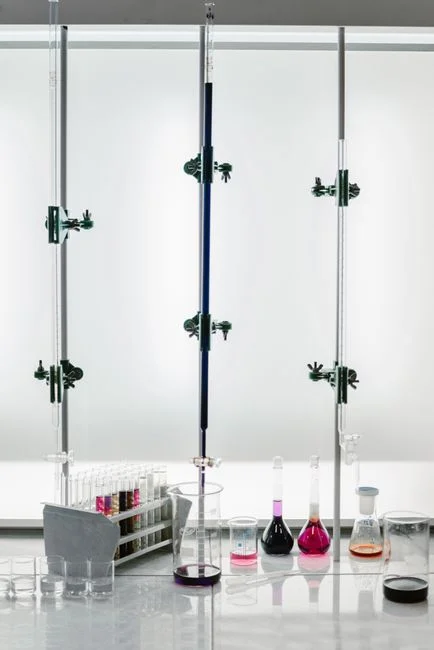
Retrofit cost is driven by design flow, influent loading, and the discharge destination. The bands below are derived from Chinese industrial ETP retrofit projects completed between 2024 and 2026 (HydropureWater field data, 2026), and they should be read as order-of-magnitude, not fixed quotations.
| Tier | Design flow | Likely scope | Capex band (USD) |
|---|---|---|---|
| Tier 1 | <50 m³/day | Equalisation + pH correction + DAF pre-treatment | 80,000–250,000 |
| Tier 2 | 50–500 m³/day | Biological upgrade + MBR retrofit train + PLC-controlled chemical dosing skid | 250,000–900,000 |
| Tier 3 | >500 m³/day | Full MBR + RO reuse loop + ZLD polishing | 900,000–2,500,000 |
Soil and groundwater remediation under the 2019 Soil Pollution Prevention Law adds a separate 30–100% multiplier on top of the water-side retrofit capex when Phase II confirms legacy contamination beneath sludge lagoons or dosing skids. The recommended deal mechanic is a 1.5x contingency-loaded escrow held for 36 months post-close, with release tied to verified discharge permit renewal and 12 consecutive months of compliant self-monitoring data uploaded to the排污许可证 portal. The 1.5x factor is not generous; it reflects the typical 20–40% cost overrun observed on Chinese industrial ETP retrofits where influent characterisation was incomplete at the design stage (HydropureWater field data, 2026).
Deal-Document Drafting: Indemnity, R&W Insurance, and Permit Transition
Technical findings are only useful if they survive contract negotiation. The deal-document workstream should run in parallel with Phase II so the SPA language is finalised before the technical report is signed off.
Require an environmental indemnity with no cap and a survival period equal to the longer of (a) the 2019 Soil Pollution Prevention Law liability period, or (b) 10 years post-close, because Chinese soil liability has no statutory limitation. Specify that the target delivers a valid排污许可证 in the target's name with all transfer-of-permit filings pre-completed — the local ecology bureau typically requires 30–90 days for permit transfer, and any gap between closing and transferred permit places the buyer in unauthorised discharge. Secure representations and warranties insurance for environmental matters as a backstop, but never as a substitute for the escrow, because Chinese environmental claims are frequently excluded from standard R&W policy coverage under the "known contamination" and "gradual pollution" exclusions. Allocate clean-up responsibility as follows: pre-close contamination = seller; post-close operational exceedance = buyer; permit-transfer failure = seller for 12 months post-close.
For the post-close integration timeline, the first 30 days should focus on permit transfer completion and baseline self-monitoring re-calibration; days 31–60 on contractor procurement and engineering design for any retrofit scope confirmed during Phase II; days 61–90 on construction mobilisation, with the escrow released in tranches tied to mechanical completion, performance test, and 12 months of compliant operation.
Frequently Asked Questions
What is the difference between a Phase I and Phase II ESA for an industrial ETP?
A Phase I Environmental Site Assessment is a desktop and visual review of historical operations, regulatory records, and site layout, used to scope the need for sampling. A Phase II ESA is an intrusive sampling program that collects wastewater, soil, and groundwater data under chain-of-custody, used to quantify contamination and inform retrofit cost. For an ETP acquisition, Phase I alone is never sufficient to support a binding bid.
Does BYD inherit environmental liability for contamination that occurred before acquisition?
Yes, under the 2019 Soil Pollution Prevention Law (土壤污染防治法) and the 2018 Environmental Protection Tax Law (环境保护税法), the current landowner and operator bear retroactive responsibility for pre-close contamination regardless of when the pollution occurred. Successor liability has no statutory limitation period, which is why an uncapped environmental indemnity with a minimum 10-year survival is standard in the SPA.
Which Chinese discharge standards apply to a battery-industry ETP acquisition?
The applicable standards are GB 8978-1996 (Comprehensive Wastewater Discharge Standard) as the national floor, GB 30485 (Battery Industry) as the sector-specific standard, and any local effluent limits stricter than the national floor. For the battery materials supply chain, the parameter set must include Ni, Co, Mn, and Li in addition to the standard COD, NH₃-N, and fluoride panel.