
What Samsung SDI Actually Acquired in 2026
Samsung SDI’s August 11, 2026 announcement concerns New Carlisle, Indiana, where it acquired GM’s 49.99% stake in the SynergyCells joint venture; it does not identify a Texas acquisition. If Samsung SDI acquires a Texas battery plant, wastewater should be handled as a transition-risk issue: verify or transfer the TCEQ authorization, document local discharge rights, characterize every stream for 12 months, segregate cathode, anode, electrolyte and general effluents, and assess chemical recovery, biological treatment, membrane polishing and residual disposal against verified flow and chemistry. No treatment train should be inherited or purchased before permit, baseline and asset-condition checks are complete.
Samsung SDI announced on August 11, 2026 that it had acquired GM’s 49.99% interest in SynergyCells, establishing its first independently operated battery production base in North America. The New Carlisle plant remains under construction. Samsung SDI plans to begin with batteries for energy storage systems and says the facility could later include prismatic cells jointly developed with GM for potential electric-vehicle applications (Samsung SDI, 2026-08-11).
That distinction matters because Indiana transaction terms do not establish the permits, discharge routes or operating history of a hypothetical Texas target. The verified transaction also demonstrates why production plans must be translated into wastewater mass loads: a shift toward energy-storage-system batteries can change electrolyte handling, solvent ratios and contaminant concentrations even if the plant building and treatment assets remain the same.
The Samsung SDI wastewater framework provides an initial Texas screening structure, but the requirements below are a conditional acquisition framework. They are not facts about the confirmed New Carlisle transaction. WardsAuto reports that the original joint venture was planned with roughly $3.5 billion of investment, production in 2027 and approximately 1,600 jobs (WardsAuto, 2026-08).
Wastewater Risk Created by a Change of Ownership
A wastewater permit does not transfer merely because the buyer purchases the treatment equipment. Before accepting operational control, the buyer must establish who holds the authorization, whether it remains valid, whether the ownership change requires approval or amendment, and whether the physical discharge route remains legally available.
Under 30 TAC §305.64, a Texas Pollutant Discharge Elimination System permit is not assignable without written TCEQ approval. The supplied Texas acquisition reference identifies Form TCEQ-00204 and a transfer request within 30 days of the ownership change (HydropureWater, 2026). If the plant discharges to a publicly owned treatment works, 40 CFR Part 403 pretreatment obligations also apply; the supplied reference identifies a Significant Industrial User application before first discharge under new ownership.
A site over the Edwards Aquifer recharge or contributing zone requires a separate review of 30 TAC §213 water-pollution-control-plan requirements and whether a change in operation triggers re-certification. Permit status does not settle local property rights. Easements, pipe crossings, drainage-district requirements and flow rights must be verified independently.
| Diligence item | Evidence required before closing | Decision consequence |
|---|---|---|
| TPDES authorization | Current permit, transfer provisions, compliance reports, notices of violation and corrective-action plans | Proceed only if authorization is valid, transferable or supportably replaced |
| Pretreatment obligations | SIU status, discharge authorization, local limits, monitoring and reporting history | Resolve applicable requirements before discharge under new ownership |
| Water-pollution-control plan | Site location, Edwards Aquifer overlay analysis and current certification | Determine whether operational changes require re-certification |
| Physical discharge route | Easements, property rights, crossing agreements, drainage-district records and route maps | Do not assume a state permit resolves local access rights |
| Operational program | Laboratory methods, sampling frequency, meter records, chain-of-custody procedures and responsible personnel | Correct unreliable records before accepting the compliance baseline |
This sequence follows the evidence-based approach in the Texas battery-plant acquisition wastewater due-diligence guide: obtain the current permit and operating records, map every discharge point, and test the legal status of the route rather than inferring compliance from the presence of an outfall.
Characterize the Wastewater Before Sizing Equipment
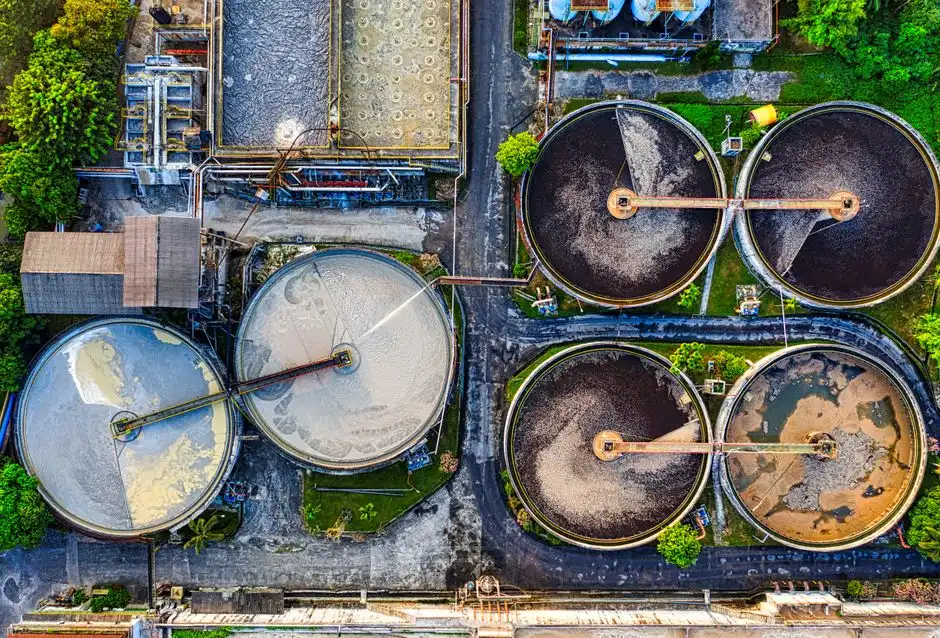
Treatment capacity cannot be established credibly from plant area, battery throughput or an equipment inventory alone. The buyer needs a source-characterized baseline that connects verified flows and chemistry to production, cleaning cycles and reuse destinations.
Request 12 months of operating and monitoring data for every major wastewater stream and discharge point. Reconcile those records with production schedules, maintenance outages, chemical purchases and destinations for reused water. Map cathode coating wash water, anode coating wash water, electrolyte salt flush, general plant effluent, domestic sewage, stormwater, boiler blowdown, HVAC condensate, cooling-tower blowdown and off-spec production wastewater separately.
The supplied battery acquisition reference reports concentrated cathode wastewater characteristics of COD 5,000–25,000 mg/L, fluoride 50–500 mg/L, suspended solids 500–3,000 mg/L and pH 2–4 (HydropureWater, 2026). These values are a reference envelope, not confirmed measurements for a Samsung SDI site. Use them to identify sampling priorities, not to size inherited equipment.
| Stream | Principal baseline questions | Sizing implication |
|---|---|---|
| Cathode coating wash water | What are the flow, COD, fluoride, suspended solids, pH and NMP concentrations under representative production and cleaning conditions? | Determine whether solvent recovery and pretreatment need dedicated capacity |
| Anode coating wash water | What binder and solids loads are present, and can the stream remain isolated? | Provide source-specific solids and COD treatment |
| Electrolyte salt flush | What fluoride, phosphate, lithium and salt loads enter the collection system? | Verify precipitation, polishing and residual-management requirements |
| General effluent and utility wastes | What organic, dissolved-solids and flow variation reaches the inherited train? | Test biological and membrane capacity against representative combined flows |
| Domestic sewage and stormwater | Are they hydraulically or chemically connected to regulated process streams? | Separate sanitary, stormwater and process obligations |
Reconcile laboratory results from sample point to permit report, verify meter calibration and investigate missing data. Where representative data cannot be obtained before the production transition, use controlled temporary monitoring rather than extrapolating from generic battery-industry values. Do not use dilution in equalization to make a variable coating stream appear compatible with conventional biological treatment; that can conceal both the true contaminant load and the need for recovery.
Separate Wastewater by Stream and Treatment Objective
Battery-manufacturing wastewater should be segregated because its principal streams have different contaminants, recovery opportunities and regulatory objectives. The sequence is source segregation, chemical recovery where viable, residual treatment, reuse polishing and verified residual disposal.
Cathode coating wash water should remain isolated because the supplied reference identifies NMP at roughly 1–5 wt%. Its reference recovery process uses vacuum distillation at 50–100 mbar and 80–120 °C to produce greater than 99.5% reusable-grade solvent (HydropureWater, 2026). Remove coarse solids, separator-film fragments and binder residues before solvent recovery. Correct pH and equalize the feed so the recovery unit receives a controllable stream.
After recovery, staged chemical precipitation and clarification can address residual fluoride and metal loads. The supplied Texas reference identifies a typical 30 TAC §307.6 fluoride limit of 4 mg/L chronic and 16 mg/L acute, subject to site-specific applicability (HydropureWater, 2026). Confirm the applicable permit condition rather than designing to the typical limit alone.
Lower-strength residual flows may be directed to biological treatment. The supplied reference uses an A²/O or sequencing-batch configuration followed by submerged PVDF membranes in an MBR. For pretreatment of colloidal solids, a DAF system for colloidal solids removal may require evaluation against measured particle characteristics and existing equipment.
| Treatment objective | Applicable stream | Reference treatment | Key acquisition check |
|---|---|---|---|
| Recover solvent | Cathode coating wash water | Solids removal, pH correction, equalization and vacuum distillation | Confirm NMP concentration, recovery yield, fouling and return-to-production quality |
| Remove fluoride and metals | Post-recovery coating waste and segregated electrolyte streams | Staged chemical precipitation and clarification | Validate dose, sludge generation and permit limit |
| Remove residual organics and solids | Lower-strength residual flows | A²/O or sequencing-batch biology followed by submerged PVDF membranes | Compare MBR versus conventional activated sludge using residual COD and fouling evidence |
| Produce reusable water | MBR permeate | 5 μm cartridge filtration, antiscalant dosing and high-pressure RO | Verify feed chemistry, scaling risk and required recovery rate |
| Manage residuals | RO concentrate and chemical sludge | Concentration or crystallization, dewatering and authorized disposal | Confirm residue classification, receiver capacity, transport and reuse rights |
The reference MBR permeate targets are below 1 mg/L suspended solids and SDI below 3. The reference RO process operates at 70–80% recovery and directs the resulting 20–30% concentrate toward ZLD (HydropureWater, 2026). Neither target establishes a requirement at an acquired site. The buyer must verify reuse rights, brine management, energy demand and residual classification before committing to this route.
Dewater chemical- and metal-bearing sludge before characterization and disposal. Dewatering reduces water content; it does not change the residue’s regulatory status. An integrated MBR membrane bioreactor system also requires site-specific verification of feed quality, membrane condition, controls and achieved permeate quality.
Match the Wastewater Strategy to the Acquisition Timeline
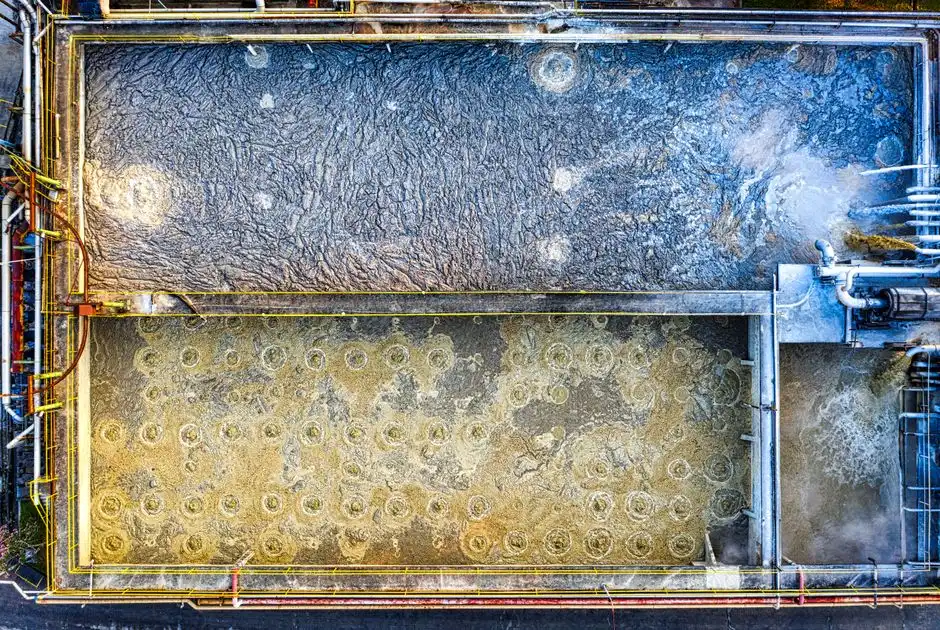
The acquisition should close only when permit ownership, discharge rights, operating responsibility and treatment performance are defined. A 30-60-90-day diligence sequence converts those requirements into go/no-go decisions without assuming that inherited equipment can support future production.
| Period | Required work | Go/no-go gate |
|---|---|---|
| Days 0–30 | Complete the permit, discharge-route, laboratory, monitoring and treatment-asset audit. Identify missing records, unresolved violations, invalid measurements and undocumented easements. | Do not accept responsibility for an unidentified, expired or unsupported authorization |
| Days 31–60 | Sample every major stream under representative conditions; verify the hydraulic balance, meter calibration and laboratory quality; model the inherited train against current and planned production. | Proceed only if flow, chemistry and asset capacity reconcile with permit and production requirements |
| Days 61–90 | Resolve permit ownership, easements, discharge notifications and drainage-district coordination. Assign personnel and confirm chemical suppliers, disposal routes and utility interfaces. | Approve capital only when compliance, operations and residual routes have accountable owners |
Require bidders to price segregation piping, solvent recovery, chemical dosing, MBR, RO, residual management, sludge dewatering, utilities, controls, commissioning and permit support as separate scope items. A generic treatment-train price should remain provisional until site flow, chemistry, permit conditions, reuse objectives and residual-disposal scope are verified.
Ask each bidder to state which design values are measured, which are assumed, and what additional evidence would convert allowances into firm pricing. The Texas acquisition wastewater due-diligence guide provides a useful audit structure, while the MBR versus conventional activated sludge comparison helps frame the biological-treatment decision.
Three outcomes should drive capital allocation: acceptable assets can be retained if authorizations are transferable, performance records are reliable, and staffing and maintenance are ready; recoverable deficiencies can be corrected through targeted testing, repair or augmentation; and process changes, reuse requirements or residual routes that cannot be demonstrated reliably require a source-characterized redesign and a confirmed permit pathway.
Frequently Asked Questions
Does the wastewater permit transfer automatically after the acquisition?
No. Under 30 TAC §305.64, written TCEQ approval is required for a TPDES permit transfer. The supplied Texas reference identifies Form TCEQ-00204 and a request within 30 days of the ownership change; if discharge to a POTW occurs, the buyer must also resolve the applicable pretreatment and SIU requirements. Confirm the filing date and acceptance with TCEQ and the POTW before closing.
What should a buyer request when comparing wastewater-treatment prices?
Request a priced bill of quantities with separate items for segregation, recovery, chemical dosing, biological treatment, membrane polishing, residuals, sludge dewatering, utilities, controls, commissioning and permit support. No defensible capital price can be stated without verified site flows, chemistry, permit conditions, existing-asset condition, reuse targets and residual-disposal scope. Require bidders to label every provisional allowance and identify the evidence needed to fix it.
How should treatment equipment be sized for the acquired battery plant?
Size from representative stream data, measured peak loads and the production plan. Reconcile 12 months of flow, chemistry, production and cleaning-cycle records, verify meters and laboratory methods, and model the inherited train under current and anticipated conditions. A generic battery-industry design is not an acquisition-grade basis.
What capability should a treatment supplier demonstrate?
Require evidence of source segregation, NMP recovery, fluoride and solids control, biological treatment, membrane integration, PLC controls, commissioning and residual management. Review proposed performance against representative site data, current TCEQ conditions and future production scenarios. Also request evidence of the supplier’s laboratory, operating, maintenance and permit-support resources rather than relying only on a process diagram.